Top 12 Castles around Laßnitzhöhe
Best castles around Laßnitzhöhe are found in the surrounding region, offering historical and architectural experiences. While the municipality of Laßnitzhöhe itself does not feature prominent castles, nearby areas like Gössendorf and the city of Graz host several notable sites. The terrain around Laßnitzhöhe provides access to these historical landmarks. This region combines natural landscapes with significant cultural heritage.
Best castles around Laßnitzhöhe
- The most popular castles is Lustbühel Castle, a castle that was originally a 17th-century pleasure palace. It…
Last updated: June 17, 2026
Graz Clock Tower (Uhrturm)
Highlight • Monument
Translated by Google •
Tip by

Ruins of the St. Thomas Chapel on the Graz Schlossberg
Highlight • Historical Site
Translated by Google •
Tip by

Sign up now to discover places like this
Get recommendations on the best single tracks, peaks, & plenty of other exciting outdoor places.
Sign up for free
Lustbühel Castle
Highlight • Castle
And …
Translated by Google •
Tip by

Double Spiral Staircase, Graz Castle
Highlight • Castle
Translated by Google •
Tip by
Mühlegg Castle
Highlight • Castle
Translated by Google •
Tip by

Sign up for free to discover even more castles around Laßnitzhöhe.
Sign up for free
Already have an account?
Start today with a free account
Your next adventure awaits.
Login or Signup
Popular around Laßnitzhöhe
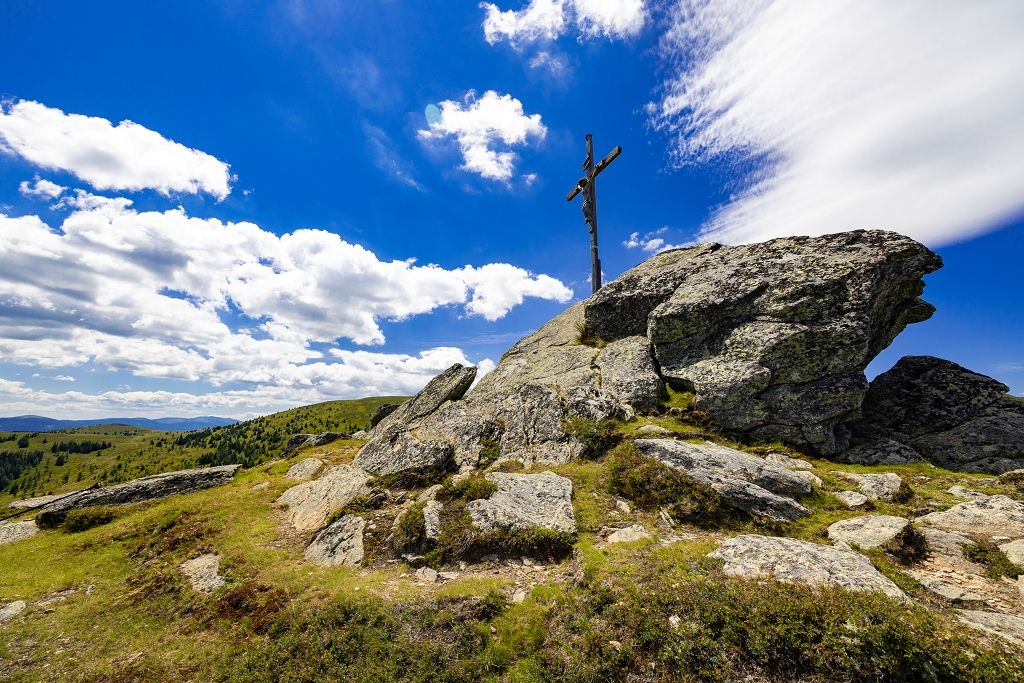
From the city to the countryside in ten minutes – hiking around Graz
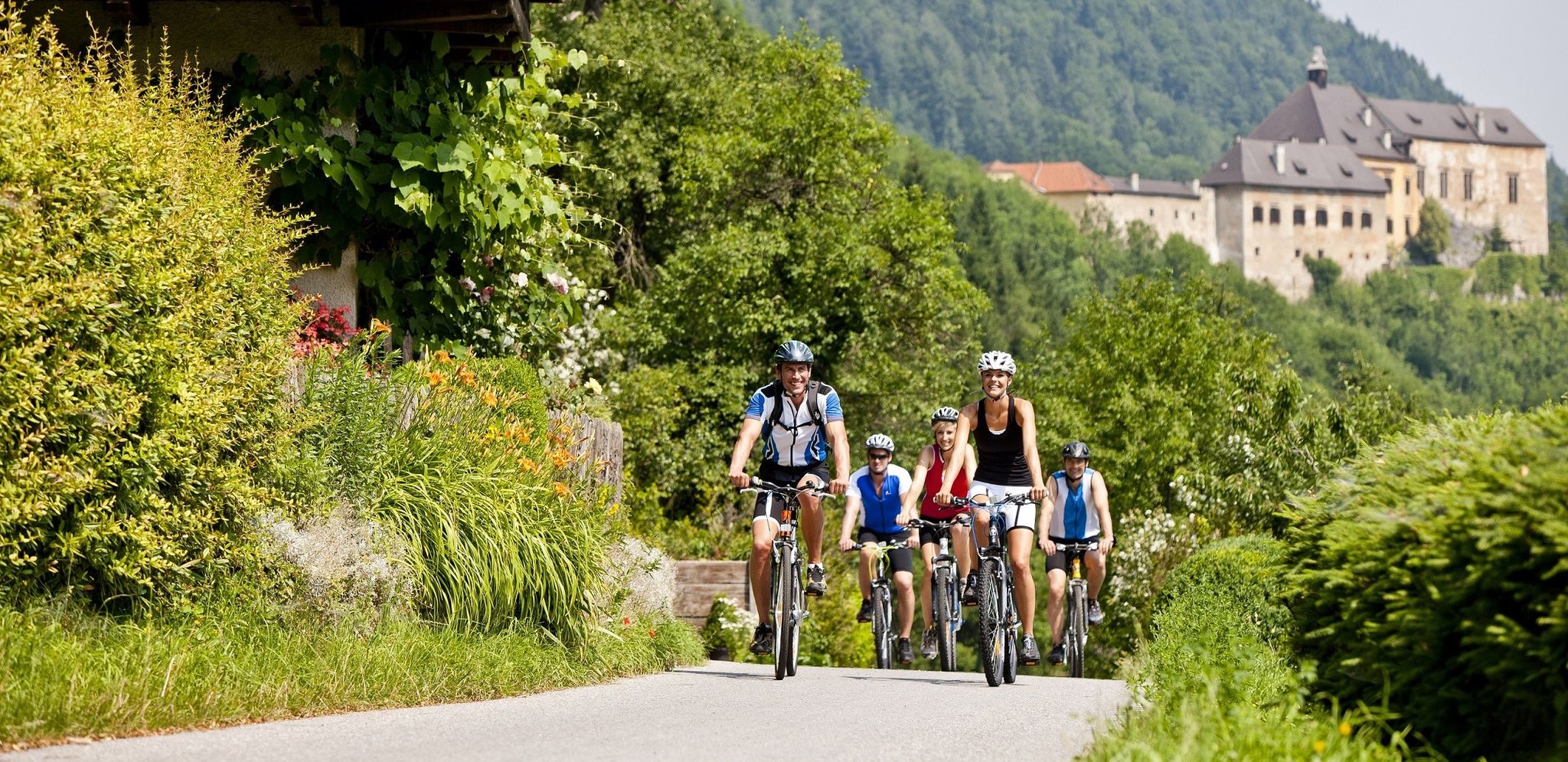
Have fun on two wheels – cycling in Austria’s Graz Adventure Region
Hiking around Laßnitzhöhe
Cycling around Laßnitzhöhe
Road Cycling Routes around Laßnitzhöhe
MTB Trails around Laßnitzhöhe

Gravel biking around Laßnitzhöhe
Running Trails around Laßnitzhöhe

Tips from the Community


The Graz double spiral staircase, officially known as the Twin Spiral Staircase, fascinated me. Also called the Reconciliation Staircase, it consists of two opposing staircases that briefly merge on each floor, then separate and rejoin. It is open to the public, and you can walk up and down the stairs (free of charge). It is the most important staircase in the architecture of Central Europe. However, it is not the only one, nor the oldest of its kind. It is carved from sandstone. It is located in Graz Castle, which houses the state government. Opening hours: Daily, 7:30 a.m. - 8:00 p.m.
0
0

Always good for a rest.
1
0

Entrance fee is €2, which is definitely worth it.
8
0

The Graz double spiral staircase, a twin spiral staircase (that is its official name), was built by stonemasons in the years 1499/1500 during the reign of the German king and later emperor Maximilian I by an unknown master builder from a medieval construction workshop in the Graz Castle.
0
0
Graz Castle is located in the east of the old town of Graz, near Graz Cathedral, and was built from 1438 by Duke Friedrich V, later Holy Roman Emperor Friedrich III. Due to its low defensive value, the castle was connected to the fortress on the Schloßberg via a hidden passage. From 1564, Graz was the capital of Inner Austria and the castle became the seat of the Inner Austrian Archdukes. Due to this position, it was rebuilt and enlarged. After Archduke Ferdinand II was crowned Emperor in 1619 and moved to Vienna, the castle lost its function as the seat of the sovereign and was neglected.
1
0
Until 1810, the castle chapel dedicated to the Apostle Thomas stood next to the bell tower. It was a Romanesque round building that was probably built in the 12th century. The building was spared from the French demolitions, but its copper roof was removed. The chapel fell into disrepair due to the effects of the weather and was eventually partially demolished. Today, only the foundations are visible and can be seen via a steel walkway next to the bell tower. The chapel of the Imperial Palace in Goslar is directly related to St. Thomas. The Romanesque lions from the chapel entrance are in the Hatzendorf State Vocational School, and copies are in the Joanneum State Museum. Parts of the frescoes have also been transferred to a castle (the citizens "helped themselves").
0
0

You should make a detour here when visiting the Schlossberg. The well-maintained grounds give an idea of what the chapel might have looked like when it existed.
0
0
Frequently Asked Questions
Which castles near Laßnitzhöhe offer a unique historical experience?
For a deep dive into history, consider visiting Mühlegg Castle in Gössendorf. Its history dates back to the mid-14th century, and it notably hosted astronomer Johannes Kepler for a period. Today, it serves as a boarding school, but its historical significance remains.
Are there any castles near Laßnitzhöhe that are particularly family-friendly?
Yes, Lustbühel Castle is an excellent choice for families. Originally a 17th-century pleasure palace, it now houses a kindergarten and features a farm with a petting zoo and a children's playground. There's also a cider tavern on the property, making it a pleasant stop for all ages.
What are the best castles for panoramic views near Laßnitzhöhe?
The Graz Clock Tower (Uhrturm), located on the Schlossberg in Graz, offers expansive views of the city. It's an iconic landmark and a great spot to enjoy the scenery, especially at sunset.
Can I find any unique architectural features in castles around Laßnitzhöhe?
Absolutely. The Double Spiral Staircase within Graz Castle is an architecturally impressive structure. It features two opposing staircases that briefly merge and separate on each floor, often interpreted as a symbol for eternity.
Are there any castle ruins or ancient sites to explore?
Yes, on the Graz Schlossberg, you can explore the Ruins of the St. Thomas Chapel. Its foundations are visible from a footbridge next to the bell tower, revealing the original round building structure of this Romanesque rotunda, which dates back to the 11th century.
What outdoor activities can I do near the castles around Laßnitzhöhe?
The region around Laßnitzhöhe offers various outdoor activities. You can find numerous road cycling routes, running trails, and mountain biking trails that allow you to explore the natural landscapes while visiting historical sites.
What is the best time of year to visit castles near Laßnitzhöhe?
While castles can be visited year-round, spring and autumn offer pleasant weather for exploring the grounds and nearby hiking trails. Summer is also popular, especially for outdoor activities, but can be warmer. Winter visits can be charming, particularly if you enjoy a quieter atmosphere.
Are there any cafes or restaurants near the castles?
Yes, Lustbühel Castle has a small cider tavern on its property. In Graz, the Schlossberg, home to the Clock Tower and St. Thomas Chapel ruins, features cafes and restaurants, offering options for refreshments and meals with a view.
How accessible are the castles near Laßnitzhöhe by public transport?
While Laßnitzhöhe itself is a smaller municipality, the city of Graz, which hosts several significant castles like Schlossberg and Schloss Eggenberg, is well-connected by public transport. From Laßnitzhöhe, you would typically use regional buses or trains to reach Graz, and then local transport within the city to access the castle sites.
Are dogs allowed at the castles or on nearby trails?
Regulations for dogs can vary by specific castle and trail. Generally, dogs on a leash are often permitted on outdoor castle grounds and hiking trails. However, access to interior castle buildings may be restricted. It's advisable to check specific rules for each location before your visit.
What kind of terrain can I expect when visiting castles in the region?
The terrain around Laßnitzhöhe and Graz varies. While some castles like Lustbühel are easily accessible, others, such as those on the Graz Schlossberg, involve uphill walks or stairs. The Schlossberg itself is a hilltop fortress, so expect some elevation changes and paths suitable for walking.
Most popular routes around Laßnitzhöhe
Most popular attractions around Laßnitzhöhe

Get inspired with the komoot mobile app


Explore more
Looking for the best castles somewhere else? Discover other guides around Laßnitzhöhe:
