Top 20 Lakes around Elm
Lakes around Elm, Switzerland, are situated in the Glarus Alps, a region known for its mountain landscapes. This area features a variety of lakes, from accessible spots to high-altitude reservoirs. The geological history of the region, including ancient landslides, has shaped many of these lake formations. Visitors can find both natural lakes and those integrated into hydropower systems.
Best lakes around Elm
- The most popular lakes is Lake Cauma, a lake that is considered one of the most beautiful…
Last updated: June 24, 2026
Lake Cauma
Highlight • Lake
Translated by Google •
Tip by

Panoramic view of Lake Cauma
Highlight • Viewpoint
Translated by Google •
Tip by

Sign up now to discover places like this
Get recommendations on the best single tracks, peaks, & plenty of other exciting outdoor places.
Sign up for free
Oberblegisee
Highlight • Lake
Translated by Google •
Tip by

Muttsee Reservoir
Highlight • Lake
Translated by Google •
Tip by

Lake Prau Tuleritg
Highlight • Lake
Translated by Google •
Tip by

Sign up for free to discover even more lakes around Elm.
Sign up for free
Already have an account?
Start today with a free account
Your next adventure awaits.
Login or Signup
Popular around Elm
Sardona World Heritage Trail – Where the Alps once formed
Via Alpina – The 15 stages of the Green Route
Hiking in the Swiss Tectonic Arena Sardona – Segnes Trek
Hiking around Elm

Gravel biking around Elm
MTB Trails around Elm
Road Cycling Routes around Elm
Running Trails around Elm
Cycling around Elm

Mountain Hikes around Elm


Tips from the Community

one of the most beautiful turquoise lakes in Switzerland
0
0


The Muttsee (formerly Mutten See, Muttensee) is a reservoir on the Muttenalp in the southernmost part of the municipality of Glarus South in the canton of Glarus in Switzerland.
2
0
In 1957, the newly founded Kraftwerke Linth-Limmern AG (KLL) began to realize the power plants that had been planned since the beginning of the 1940s by the Nordostschweizerische Kraftwerke (NOK), into which the Muttensee was to be integrated.
2
0
Until 1917, the official name was "Mutten See", then the spelling "Muttensee" appeared. From 1963, the spelling "Muttsee" appeared. The Hühnerbühl is now known in dialect as Hüenderbüel.[3] The kidney-shaped mountain lake was about 1000 meters long and 400 to 500 meters wide. On the Muttenalp plateau known as Hühnerbühl, it covered an area of about 42 hectares. The height of the lake surface was given as 2442 m until 1899, and 2448 m from 1900 to 1962. In the southeast, the lake was drained by a stream, which after a few hundred meters, at about 2400 m, disappeared into the Muttsee cave in the karst subsoil of the Muttenalp.[6] A little to the south, from about 2450 m, the Muttenbach collected the snow water from the Latten via various small tributaries.[5] It led this into the Limmernbach via the Mörthal and the Ochsenblanken.
2
1
The lake is registered in the cantonal landscape register as a landscape of regional importance.[4] In the karst area of the Muttenalp there are - in addition to the Muttsee cave and the Muttsee hut - various other small lakes, most of them distributed southwest of the Muttsee over the Hüenderbüel. The largest neighbor, the Ober See, lies north of the Muttsee at 2474 m. It is the only lake on the Muttenalp that is connected to the Muttsee via its outflow.
2
0
The lake is located at the crossing from Linthal-Tierfehd over the Kistenpass to Brigels. It lies in the 2.95 square kilometer basin of the Muttenalp above the Hüenderbüel. The alp is surrounded by high mountains such as Nüschenstock (2892 m) in the west, Rüchi (2849 m) in the northwest, Hinter Sulzhorn (2737 m) in the northeast, Ruchi (3105 m) in the east and Muttenstock (3088 m) in the southeast. The arena opens to the southwest. It drops steeply over the Muttenwand into the Limmerental and over the Muttenchopf (2482 m) to the Limmerensee.
3
0
As part of significant expansion measures for the power plants between 2009 and 2017, the dam built in 1963 was replaced by a concrete dam wall. This has a length of 1054 meters, making it the longest dam wall in Switzerland. The water level reaches a height of 2474 m when fully filled. This makes the Muttsee the highest reservoir in Switzerland, with a capacity of more than 10 million m³. The highest reservoir under the supervision of the federal authorities is the Viderjoch reservoir in the Silvretta Arena, which lies at 2664 m.[1][2] Since 2021, the largest alpine photovoltaic system in Switzerland has been under construction on the dam wall.
4
0
Frequently Asked Questions
What are some of the most beautiful lakes around Elm?
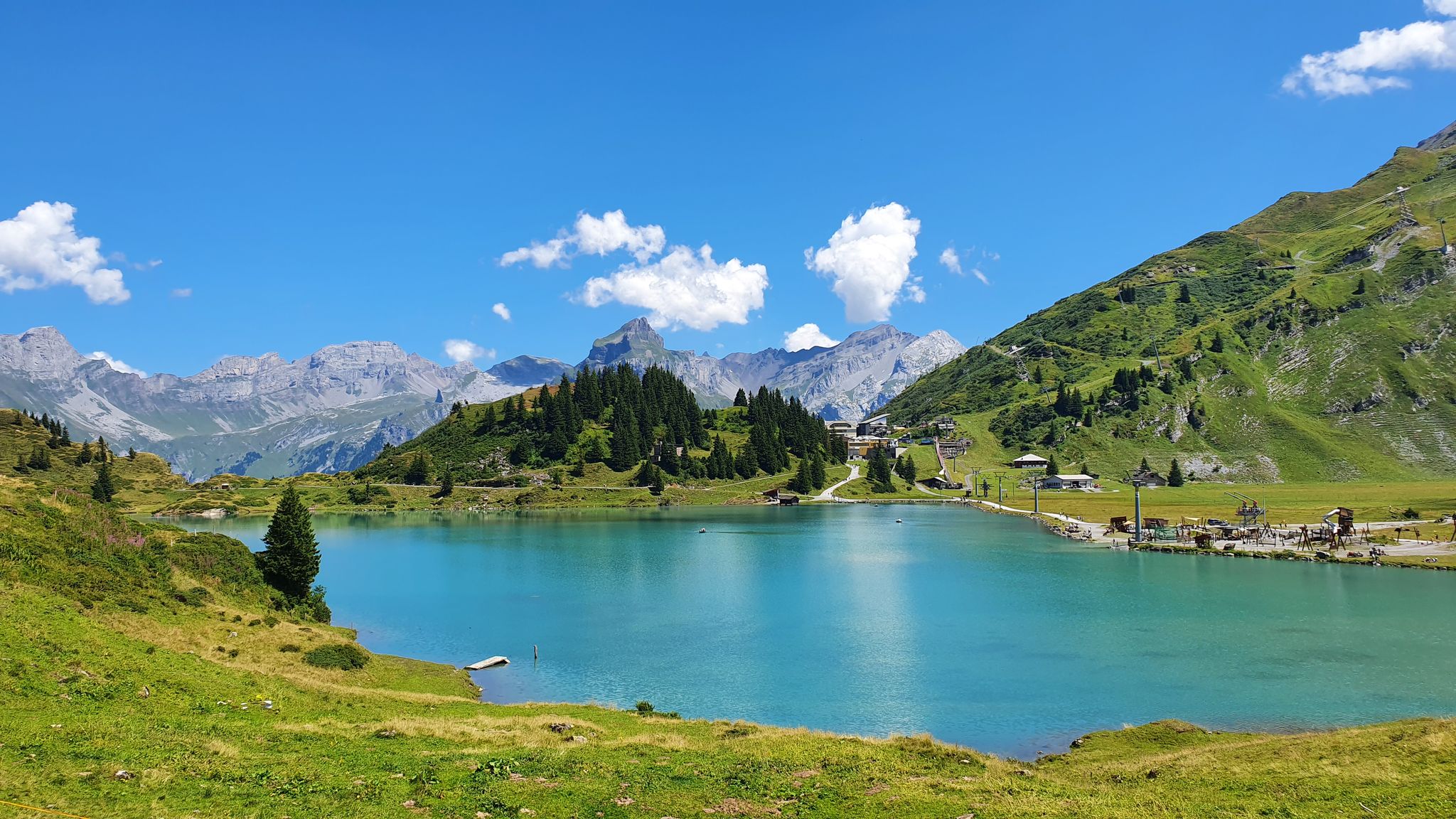
Lake Cauma is widely regarded as one of Switzerland's most beautiful mountain lakes, famous for its striking turquoise, blue, and green waters. Another must-see is Oberblegisee, a quiet mountain lake offering a stunning contrast between its shallow waters and the steep southern wall of the Glärnisch.
Are there any unique or temporary lakes in the Elm region?
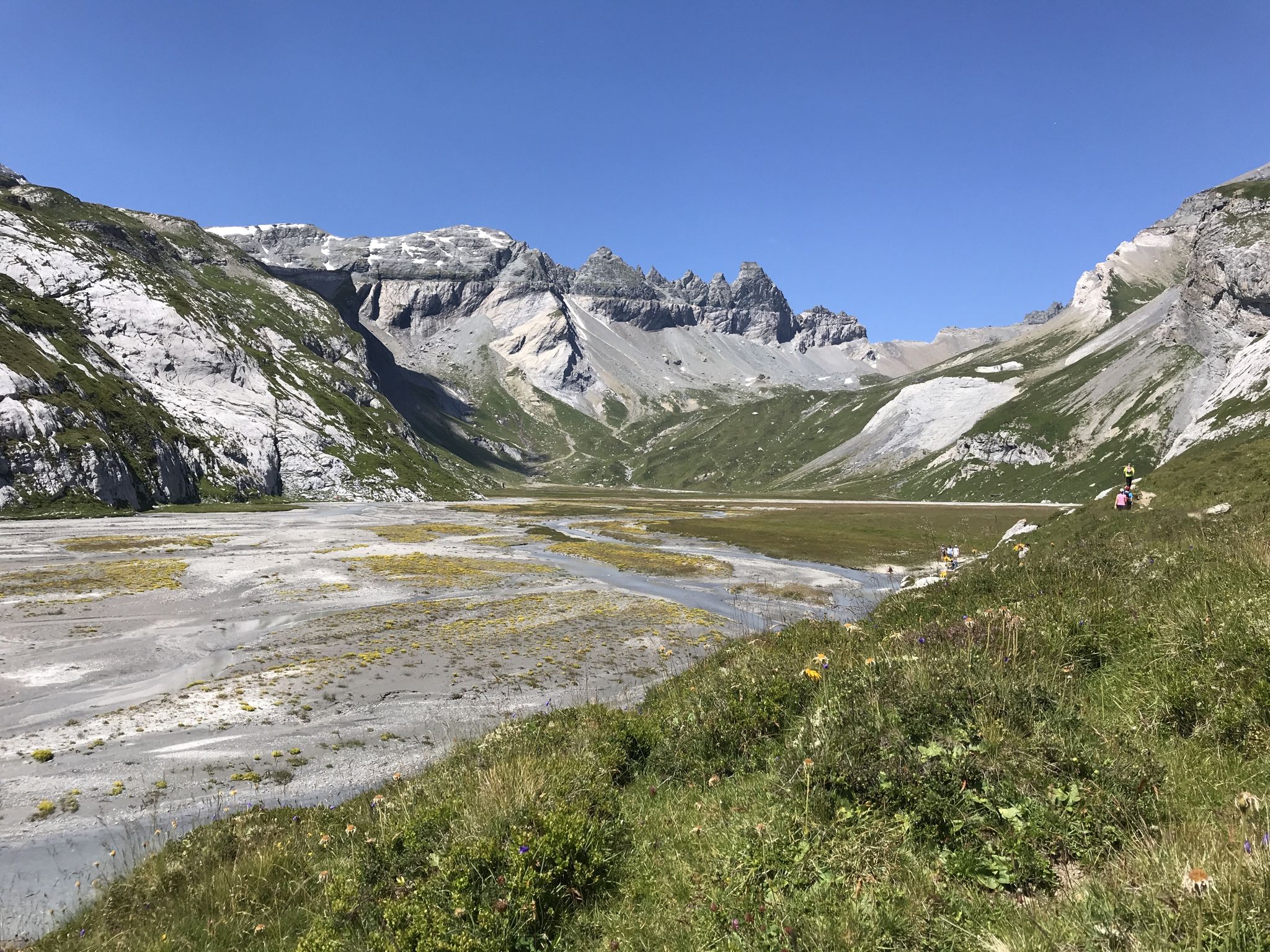
Yes, Lake Prau Tuleritg is a unique temporary lake. It typically dries up by the end of summer due to underground seepage and then refills each spring with meltwater from the mountains. It lacks tourist infrastructure but is beautifully embedded in the landscape.
Which lakes around Elm are suitable for families?
Lake Cauma is considered family-friendly, offering amenities like a beach and restaurant. While the approach can be steep, it's accessible via a train, making it easier for families with children. Lake Prau Tuleritg is also listed as family-friendly, though it has no infrastructure.
Can I access any of the lakes around Elm by public transport?
Lake Cauma is accessible, even with its steep approaches, via a train, which can be considered a form of public transport or assisted access, making it convenient for visitors without a car.
What kind of natural features can I expect to see around the lakes?
The lakes are nestled in the Glarus Alps, offering stunning mountain landscapes. You'll find dense forests, natural monuments, and viewpoints. The region's geological history, including ancient landslides, has shaped many of these lake formations. For instance, Lake Cauma was formed by the largest landslide in the Alps.
Are there any lakes integrated into hydropower systems?
Yes, the Muttsee Reservoir is a prime example. It is the highest reservoir in Switzerland when fully filled and has been integrated into hydropower energy generation since 1968. Since 2021, it also features Switzerland's largest alpine photovoltaic system on its dam wall.
What do visitors enjoy most about the lakes around Elm?
Visitors frequently praise the stunning natural beauty, especially the vibrant colors of the water at Lake Cauma. The quiet and relaxing atmosphere of lakes like Oberblegisee is also highly appreciated. The unique geological stories behind lakes like Lake Prau Tuleritg also captivate many.
What outdoor activities can I do near the lakes around Elm?
The region offers a variety of outdoor activities. You can explore numerous cycling routes, including gravel biking, road cycling, and touring bicycle routes. For example, there are routes like the 'Three Lakes Tour from Flims' or the 'View of Lake Klöntal – Klöntalersee loop from Elm'. You can find more details on these activities in the dedicated guides for Gravel biking around Elm, Road Cycling Routes around Elm, and Cycling around Elm.
Are there good viewpoints to see the lakes from above?
Yes, for Lake Cauma, the Panoramic view of Lake Cauma is highly recommended. It's considered the best spot to see the lake from above, where its turquoise, blue, and green colors truly shine. Many hiking trails also offer elevated perspectives of the various lakes.
When is the best time to visit the lakes around Elm?
While the lakes are beautiful year-round, visiting Lake Cauma early in the morning and during the week is advised to avoid crowds, especially in summer. In winter, it transforms into a peaceful haven. For Lake Prau Tuleritg, spring and early summer are ideal to see it full of water before it dries up later in the season.
Are there facilities available at any of the lakes?
Lake Cauma offers facilities including a restaurant and a beach, making it a comfortable spot for visitors. Other lakes, like Lake Prau Tuleritg, are more natural and lack tourist infrastructure.
Most popular attractions around Elm

Get inspired with the komoot mobile app


Explore more
Still not found your perfect lake around Elm? Check out the guides of these regions to see even more beautiful places.
