Top 20 Castles in Landkreis Amberg-Sulzbach
Best castles in Landkreis Amberg-Sulzbach offer a journey through the region's rich history, from medieval fortifications to stately homes. Located in Bavaria, Germany, this area features a diverse landscape that provides a scenic backdrop for historical exploration. Many sites are nestled within the Bavarian Jura, offering panoramic views and opportunities for outdoor activity. The castles and ruins here reflect centuries of architectural and cultural development.
Best castles in Landkreis Amberg-Sulzbach
- The most popular castles is Lichtenegg Castle Ruins, a…
Last updated: October 11, 2026
Lichtenegg Castle Ruins
Highlight • Castle
Translated by Google •
Tip by

Breitenstein Castle Double Chapel
Highlight • Religious Site
Translated by Google •
Tip by

Sign up now to discover places like this
Get recommendations on the best single tracks, peaks, & plenty of other exciting outdoor places.
Oberes Schloss Schmidmühlen (Town Hall)
Highlight • Castle
Translated by Google •
Tip by

Neidstein Castle
Highlight • Castle
Translated by Google •
Tip by
Kastl Monastery Castle
Highlight • Castle
Translated by Google •
Tip by

Hartenfels Summit and Castle Ruins
Highlight • Summit
Translated by Google •
Tip by
Poppberg Castle Ruins
Highlight • Castle
Translated by Google •
Tip by

Schweppermannsburg castle ruins, Pfaffenhofen
Highlight • Castle
Pfaffenhofen is part of the core area of the powerful Counts of Sulzbach. The castle was part of their alodic property, so it was not taken as a fief …
Translated by Google •
Tip by

Rossstein Castle Ruins
Highlight • Castle
Roßstein is located near Schmidmühlen and Hohenburg in the middle of the lonely Taubenbacher Forest.
Chunrad Oerelheimer named himself after the castle for the first time in 1331, …
Translated by Google •
Tip by
Rupprechtstein
Highlight • Castle
Translated by Google •
Tip by

Sign up for free to discover even more castles in Landkreis Amberg-Sulzbach.
Already have an account?
Start today with a free account
Your next adventure awaits.
Popular around Landkreis Amberg-Sulzbach
Bavaria-Bohemia long-distance cycling trail – Crossing borders
Jurasteig — hiking in the heart of Bavaria
Five Rivers Cycle Path — 5 stages along Bavaria's most beautiful rivers
The National Natural Landscapes in Bavaria
Cycling through the Nuremberg metropolitan region – nature & enjoyment
City, country, lake – VGN leisure tips 2025
Nature, the outdoors and adventure – hiking through the VGN's nature parks
11 Days on the Erzweg Quality Hiking Trail
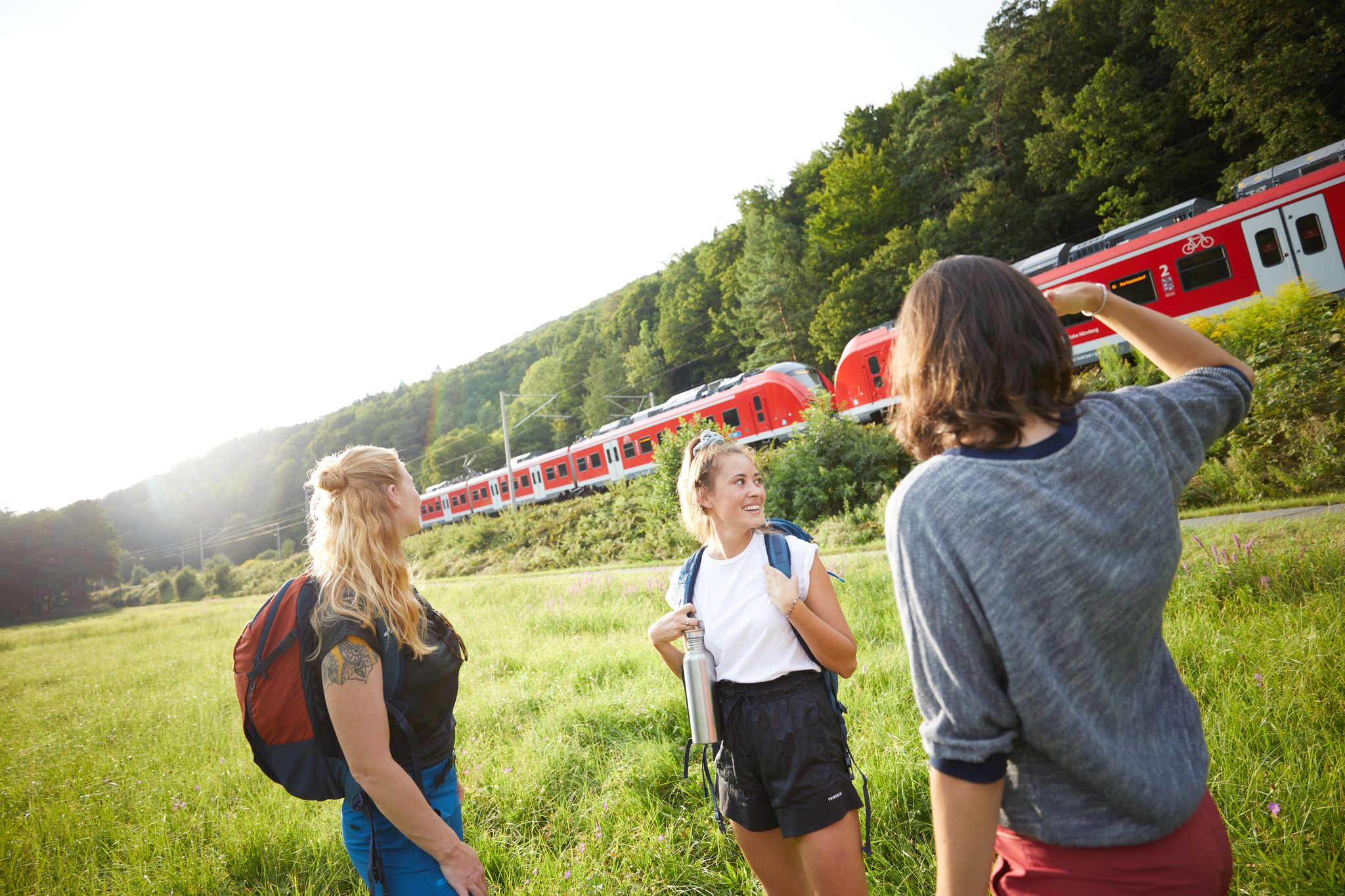
All aboard for summer hiking with Germany’s VGN
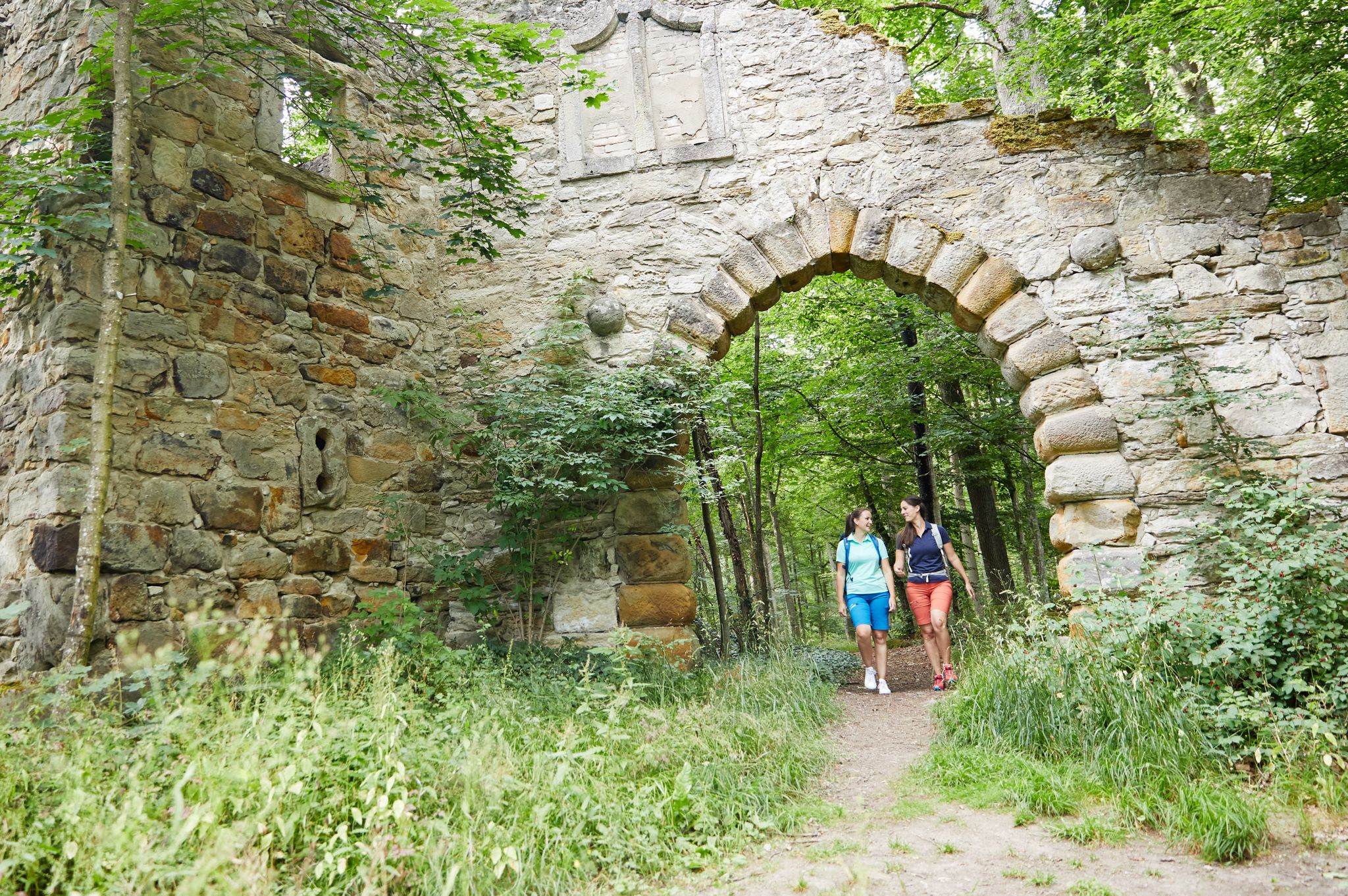
Full of views and fun – VGN leisure tips 2022
Other adventures in Landkreis Amberg-Sulzbach


Tips from the Community

Schweppermannsburg Pfaffenhofen – The home of the brave knight In the middle of the small town of Pfaffenhofen near Kastl, the impressive castle complex rises up. It was the historical residence of the famous medieval commander Seyfried Schweppermann (c. 1257–1337), whose loyalty to Emperor Louis the Bavarian remains unforgettable to this day. The legendary egg quote: After the victorious Battle of Mühldorf (1322), there was hardly any food left for the starving troops. The Emperor distributed the meager supplies and spoke the words that have since become famous: “One egg for every man, two for the brave Schweppermann!” Mighty residential tower: The massive residential tower made of natural stone masonry, visible from afar, is the heart of the complex and an imposing testament to medieval architecture. History by the wayside: A fantastic stopover in the Lauterachtal valley that makes real Upper Palatinate history tangible and close up!
1
0
Klosterburg Kastl – Impressive landmark above the Lauterachtal valley Mighty and visible from afar, the historic monastery castle sits enthroned on the Klosterberg above the market town of Kastl. Founded in the 12th century, the Benedictine abbey is one of the most significant medieval monastery complexes in the Upper Palatinate. Architecture & History: The impressive Romanesque monastery church of St. Peter with its characteristic twin towers and the venerable inner courtyard make the long history of the monastery tangible. Historical feature: For many centuries, the mummified Princess Anna, the three-year-old daughter of Emperor Ludwig the Bavarian who died here in 1319, rested in the castle – a unique piece of local history. Panoramic view: From the old walls, there is a fantastic panoramic view over the rooftops of Kastl and the idyllic Lauterachtal valley. Perfect for a stopover on the Jurasteig!
1
0

Upper Castle The Upper Castle was built as a moated castle by the Lords of Schmidmühlen. From the mid-12th century, they are documented here, starting with Ernst von Schmidmühlen (1166–1170). Georg Hausner von Winbuch (1595–1614), administrator in Regenstauf, was the builder of the present castle. The year 1600 is located on one of the magnificent door frames of the Knights' Hall. The Upper Castle is a three-story, plastered, solid building with a gable roof. An octagonal stair tower is attached, and another extension to the west. In this castle, there was also a small chapel on the ground floor, which, however, has long been filled in and walled up. At the top of the tower is a round ceiling, painted with flowers and rosettes, supported by a delicate wooden column. The entire second upper floor belongs, due to its furnishings, to the most interesting holdings of the German Renaissance. The profane wall paintings located there are reminiscent of those in the ducal castle Trausnitz in Landshut. During the Second World War and afterwards, the Upper Castle suffered greatly from billeting by the occupying forces. Thus, a valuable ceramic stove was destroyed on the second floor. In 1937, the castle came into the possession of the market town of Schmidmühlen. Since the post-war period, the castle has served the market town of Schmidmühlen as its town hall. Between 1977 and 1980, a thorough restoration took place, during which the castle and also the castle garden changed their appearance. The renovation was completed in 2003. The local history and association museum of Schmidmühlen is also housed in the castle. In front of the castle, on the well, stands the cast image of a Moriskentänzer, reminiscent of the Schmidmühlen sculptor Erasmus Grasser, who created the famous late Gothic Moriskentänzer for the festival hall in the Old Town Hall of Munich. Source: Wikipedia
4
0

An old hilltop castle, long used as a monastery by various religious orders. Today it houses the police academy. It lies on a dolomite spur above the valley. This is also where the "Hochholz Trail" begins, which is not to be missed.
0
0

The Kastl castle complex has towered over the Lauterach Valley since the 10th century. In 1098, it was decided to convert the castle into a monastery. Description: It was founded in 1103, and the choir and St. Egidius Chapel were consecrated in 1129. Construction of the monastery church was completed at the end of the 12th century. Through constant renovations and expansions, the church acquired its present appearance. In 1782, it became the property of the Knights of Malta. The basilica has been used as a parish church since 1808. A late Gothic main portal, a four-bay barrel vault, the alternating support of columns and pillars in the nave, and the Gothic stone tomb in the vestibule, which was once the tomb of the deceased Princess Anna, make the church a true gem. Princess Anna was the daughter of King Ludwig the Bavarian and died in 1319. The mummy of the one-and-a-half-year-old "Kastl Child" was preserved until the end of 2013 and can be viewed again. The antechamber also houses the sarcophagus of General Schweppermann. [ Source: https://www.ostbayern-tourismus.de/attraktionen/klosterburg-kastl-fd22a56fae ]
1
0

Very beautiful monastery castle currently serves as a police training center
0
0

Poppberg Castle Ruins It is difficult to determine from the sources when the castle was built. It is particularly unclear whether the mentioned castles and lords of the "Puchberg," "Puckberg," or "Pocksberg" are identical with the Poppbergs. A coat of arms of the "Pocksberg" appears in the Kastl monastery church in the row of founders' coats of arms on the south side of the nave. It can be assumed that the castle was founded to control the "high road" from Prague to Nuremberg, perhaps even under the Counts of Sulzbach, who ruled until 1188. In any case, the village of Poppberg is mentioned as belonging to the Fürnried parish as early as 1139. However, the castle's existing buildings show no signs of such an early foundation; they are more consistent with the period after 1300, when tower-like residential buildings became fashionable. The first truly confirmed reference to the castle appears in 1373, when the so-called New Bohemian Lands of Emperor Charles IV passed into the hands of the Bavarian duke. Poppberg was part of this Bohemian territory on Upper Palatinate soil, founded by Charles in 1353, but dissolved after his death. The Bavarian dukes pawned the castle to their Palatinate relatives in 1395, but redeemed the pledge in 1451. What seems odd is that two years later the castle is described as "deserted and desolate," meaning it was already abandoned. In 1505, after the Landshut War of Succession, Poppberg passed to the Duchy of Palatinate-Sulzbach, and in 1791 to Bavaria, but remained abandoned and fell into disrepair until the present day. The entrance to the castle is protected by a narrow tower on a pointed rock formation that forms the highest point of the castle. The upper part of the tower is occupied by a recently built, concreted shelter, which served as an air observation post during World War II. A circular wall adjoins the rock formation, forming a clearly visible edge of the terrain and extending extensively around the entire area. Traces of soil near the entrance suggest several utility buildings. The most impressive part of Poppberg is the residential building, a typical late medieval mixture of residential tower and palace dating from after 1300. The lower floor of the building probably served as a pantry and kitchen. The second floor is much more residential, with larger windows and two large entrances leading to the former battlements on either side. A third floor is suspected. Source: www.burgenseite.de
5
0
Frequently Asked Questions
Are there hiking trails around the castles in Landkreis Amberg-Sulzbach?
Yes, many castles in the region are integrated into hiking routes. For example, the Lichtenegg Castle Ruins are a popular destination for hikers, offering stunning views. You can find various hiking options, including easy and moderate trails, in the Hiking in Landkreis Amberg-Sulzbach guide, which features routes like the "Hansel and Gretel Rocks – Turk's Rock loop from Burgruine Lichtenegg".
How much time should I plan for visiting the castles in this region?
The time needed varies depending on the castle. For ruins like Lichtenegg Castle Ruins or Poppberg Castle Ruins, you might spend 1-2 hours exploring and enjoying the views. Larger sites like Schloss Theuern, which houses the Mining and Industrial Museum, could easily take half a day to fully experience the exhibitions and industrial monuments.
Are there family-friendly castles in Landkreis Amberg-Sulzbach?
Absolutely. Many castles, especially those with accessible ruins and scenic surroundings, are great for families. The Lichtenegg Castle Ruins are freely accessible and have tables and benches for resting, making them suitable for a family outing. Oberes Schloss Schmidmühlen (Town Hall) is also listed as family-friendly and offers facilities.
What kind of historical insights do the castles offer?
The castles provide a deep dive into the region's past. Sites like Burgruine Lichtenegg, first documented over 700 years ago, showcase medieval aristocratic life and later reconstructions. Schloss Theuern, now the Mining and Industrial Museum, offers unique insights into East Bavaria's industrial heritage, once known as the 'Ruhr area of the Middle Ages' due to its rich ore deposits.
Can I visit castles that are still well-preserved or only ruins?
Landkreis Amberg-Sulzbach offers a mix of both. You can explore extensive ruins like Poppberg Castle Ruins, which are well-preserved and offer a magical feel. On the other hand, the Electoral Palace in Amberg, though partially rebuilt, stands as a significant historical building, and Schloss Theuern is a preserved late Baroque castle now housing a museum.
Are there any castles with unique architectural features?
Yes, the region boasts unique architectural elements. The Electoral Palace in Amberg is notable for its connection to the Zeughaus (armory) across the Vils river via the fortified bridge known as the "Stadtbrille" (city spectacles). Also, the Breitenstein Castle Double Chapel is particularly unique as the only two-storey double chapel from the Romanesque era in the Upper Palatinate.
What outdoor activities can I do near these castles besides hiking?
Beyond hiking, the region offers excellent cycling opportunities. You can find routes like the "Burgenland cycle with culinary delights" or the "Lauterachtal Cycle Path loop from Utzenhofen" in the Cycling in Landkreis Amberg-Sulzbach guide. These routes often pass by or near historical sites, combining outdoor activity with cultural exploration.
Are there any castles that offer panoramic views?
Many castles in the region are situated to provide excellent views. The Lichtenegg Castle Ruins are renowned for their magnificent panoramic views across the Bavarian Jura to the Fichtelgebirge. Similarly, Poppberg Castle Ruins, located on the highest elevation in the Franconian Alb, also offers impressive vistas.
What do visitors enjoy most about the castles in Landkreis Amberg-Sulzbach?
Visitors frequently appreciate the combination of historical exploration and natural beauty. The freely accessible ruins with stunning views, like those at Lichtenegg, are highly praised. The well-preserved nature of sites like Poppberg, offering a 'magical feel,' also resonates with visitors. The opportunity to combine castle visits with hiking and cycling in picturesque landscapes is a major draw.
Are there any castles that are privately owned and not publicly accessible?
Yes, some castles in the region are privately owned and not open to the public. For instance, Neidstein Castle, once owned by actor Nicolas Cage, is currently privately owned and cannot be visited inside. However, the surrounding area still offers beautiful hiking trails where you can admire its exterior.
Can I find food and drink options near the castles?
Yes, some castle locations offer nearby amenities. For example, directly below the Lichtenegg Castle Ruins, there is a traditional inn, the Alter Schloss-Wirt Lichtenegg, which serves regional specialties and has a beer garden. Kastl Monastery Castle also has a cafe on-site.
What is the best time of year to visit the castles?
The castles are generally enjoyable year-round, but spring, summer, and early autumn offer the most pleasant weather for exploring the outdoor ruins and hiking trails. During these seasons, the views are often clearest, and nearby inns and cafes are typically in full operation. Winter can offer a unique, serene experience, especially for walks, but some facilities might have reduced hours.
Most popular routes in Landkreis Amberg-Sulzbach
Most popular attractions in Landkreis Amberg-Sulzbach

Get inspired with the komoot mobile app


Didn’t find what you were looking for?
Explore Landkreis Amberg-Sulzbach’s best castles region by region:
Explore more
Looking for the best castles somewhere else? Discover other guides in Landkreis Amberg-Sulzbach:
