Top 20 Caves in Nuremberg
Best caves in Nuremberg and its surrounding region offer a diverse underground landscape, from historical rock-cut cellars beneath the city to natural stalactite caves in the nearby Franconian Switzerland. The city's sandstone geology has allowed for extensive subterranean passages. This region is known for its karst formations and unique geological features, providing a range of underground experiences.
Best caves in Nuremberg
- The most popular caves is Gustav Adolf Cave, a cave located directly on the Schwarzach in the Schwarzach Gorge. This site is notable for its historical connections, including a visit by Swedish King Gustav Adolf II.
- Another must-see spot is Löwengrube rock cellar, a rock cellar that was a former quarry near Altdorf, later used as a beer cellar. It offers a unique historical experience, though a flashlight is recommended for exploration.
- Visitors also love Karl's Cave, a cave-like washout formed by the erosive action of the Schwarzach. It is a highlight on the path through the gorge, which has been a nature reserve since 1936.
- Nuremberg is known for historical rock-cut cellars, natural stalactite caves, and sandstone gorges with cave elements. Visitors can explore a variety of underground formations, from ancient brewing cellars to impressive natural dripstone caves.
- The caves in Nuremberg are appreciated by the komoot community. Users have contributed more than 3600 upvotes and nearly 2000 photos, highlighting the appeal of these underground attractions.
Last updated: October 4, 2026
Karl's Cave
Highlight • Cave
Translated by Google •
Tip by

Gustav Adolf Cave
Highlight • Cave
Translated by Google •
Tip by

Sign up now to discover places like this
Get recommendations on the best single tracks, peaks, & plenty of other exciting outdoor places.
Teufelskirche (Devil’s Church) — Waterfall and Cave
Highlight • Gorge
Translated by Google •
Tip by

Löwengrube rock cellar
Highlight • Cave
Translated by Google •
Tip by

Devil's Church Sandstone Gorge and Waterfall
Highlight (Segment) • Gorge
Translated by Google •
Tip by

Sign up for free to discover even more caves in Nuremberg.
Already have an account?
Start today with a free account
Your next adventure awaits.
Other adventures in Nuremberg

Tips from the Community

Devil's Gorge currently closed until further notice due to wind damage
8
0

The sandstone cave in the Schwarzachklamm got its name from the Swedish king Gustav Adolf, who is said to have attended a sermon given by the Nuremberg pastor Cornelius Mareius there in 1632 after a battle victory in the Thirty Years' War. It is the largest of the erosive washes in the Schwarzach Gorge. https://urlaub.nuernberger-land.de/detail/id=6220ae58f24f424775ea02b6
14
0

The waterfall now consists of a small trickle in summer, at most to wash your hands.
11
0
Visiting the large rock cellar is really fun. Already at the entrance you feel a coolness. A flashlight is a must, just to get around the wet, greasy spots on the floor.
10
1
In fact, everything has already been said here. The hiking trail between the Schwarzach and Karlshöhle is unparalleled. But not on the weekend.
17
2
The cave together with the Schwarzach is a highlight in the area. Avoid walking on Sundays and public holidays. It starts with the parking lot.
22
1

The Karlshöhle with its small spring outlet is one of the two largest caves here in the Schwarzachklamm.
13
0
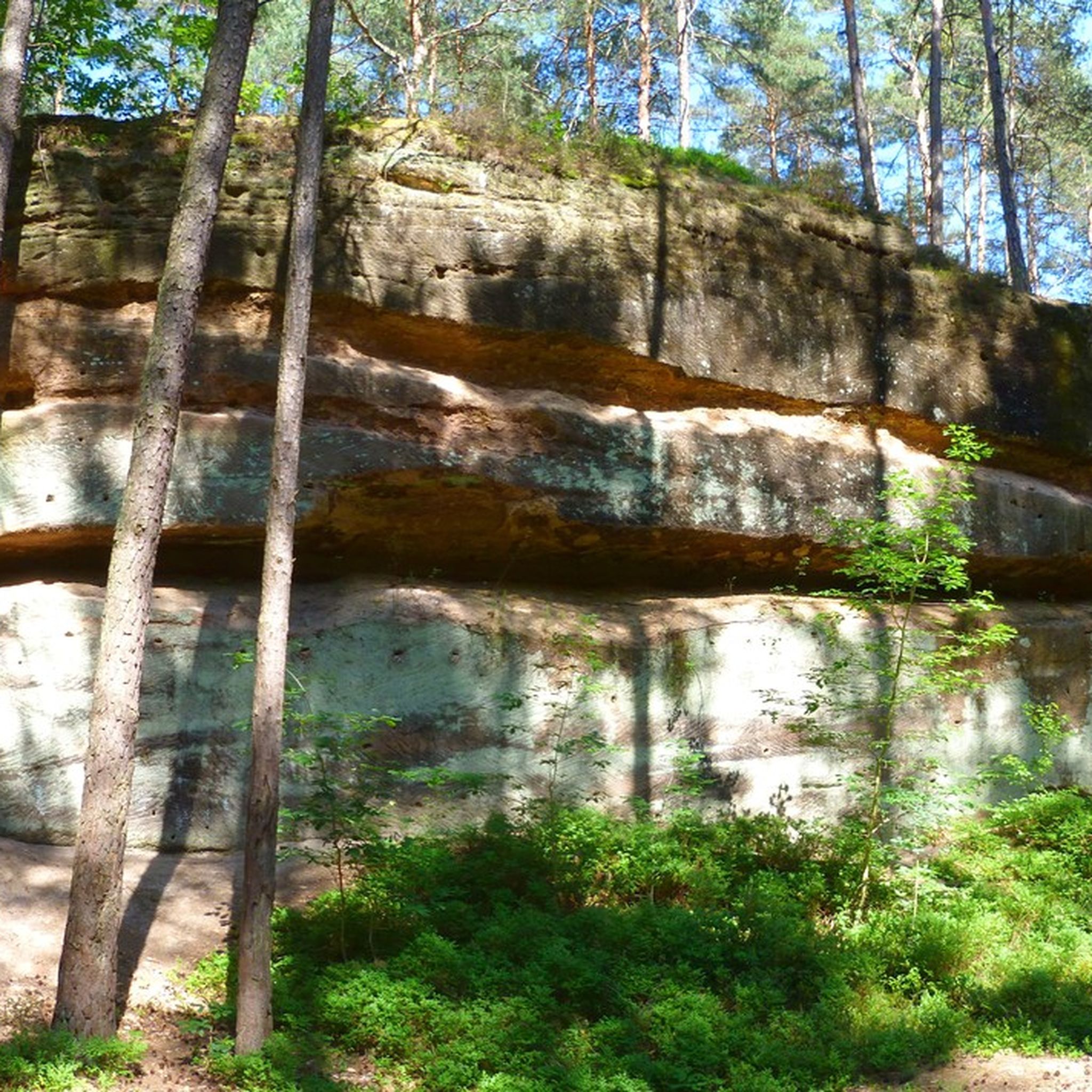
The small river Schwarzach has cut deep into the Burgsandstein between the Schwarzenbruck district of Gsteinach and the bridge canal of the Ludwig-Danube-Main Canal. The middle castle sandstone was formed about 215 million years ago during the Mesozoic (Triassic). This type of rock is widespread in western and southern Middle Franconia[6]. Hard and resistant rock like the Burgsandstein narrows a valley to a gorge. The erosive power of the river could only cut into the rock along fissures and faults. The hard sandstone types form the steep gorge walls. Less hard rock layers such as clay layers and weak zones led to the riparian areas being undermined, especially during high water. This resulted in scours, overhanging roofs and surf caves. The two largest caves of this type are the Karl's Cave and the Gustav Adolf Cave. Source: Wikipedia
14
0
Frequently Asked Questions
What types of underground experiences can I find in the Nuremberg region?
The Nuremberg region offers a diverse range of underground experiences. Within the city, you can explore historical rock-cut cellars, such as the extensive Historische Felsengänge, which were used for beer storage and as air-raid shelters. Just a short drive away in Franconian Switzerland, you'll find spectacular natural stalactite caves like the Devil's Cave and Bing Cave, known for their impressive formations.
What are the Historische Felsengänge in Nuremberg, and what can I see there?
The Historische Felsengänge are extensive rock-cut cellars beneath Nuremberg's Old Town, dating back to 1380. Originally used for beer fermentation and storage, they also served as an art bunker during WWII, protecting valuable artworks. Guided tours offer a journey through centuries of history, showcasing the labyrinthine passages and their various uses. It's advisable to wear warm clothing as temperatures remain consistently cool.
Are there natural stalactite caves near Nuremberg?
Yes, the Franconian Switzerland region, a short drive from Nuremberg, is home to several natural stalactite caves. Notable examples include the Devil's Cave (Teufelshöhle) near Pottenstein, one of Europe's largest show caves, and the Bing Cave (Binghöhle) near Streitberg, known for its vast galleries and bizarre formations. These caves offer guided tours to explore their geological wonders.
Are there any family-friendly caves to visit in the Nuremberg area?
Many caves in the region are suitable for families. Natural caves like the Devil's Cave and Bing Cave offer accessible guided tours that are engaging for all ages. Additionally, highlights such as Karl's Cave and Gustav Adolf Cave are located within scenic gorges, providing an adventurous yet family-friendly experience. When visiting the Historische Felsengänge, some tours are designed to be educational and engaging for children.
What historical significance do the caves in Nuremberg hold?
Nuremberg's underground world is rich in history. The Historische Felsengänge were crucial for the city's brewing tradition and later served as air-raid shelters and an art bunker during World War II. Other sites like the Löwengrube rock cellar near Altdorf, originally a quarry, were repurposed as beer cellars, reflecting the region's historical uses of its subterranean spaces. The Historische Felsengänge are a prime example of this rich history.
What should I wear when visiting caves in the Nuremberg region?
For most caves, especially the natural ones and the Historische Felsengänge, the temperature remains consistently cool, often around 9°C (48°F), regardless of the outside weather. Therefore, it's highly recommended to wear warm clothing, even in summer. Comfortable, sturdy, and waterproof footwear is also advisable, particularly for natural caves or gorge explorations like the Teufelskirche (Devil’s Church), where paths can be muddy or uneven.
Are there any less crowded or hidden gem caves to explore near Nuremberg?
While popular caves like the Devil's Cave can get busy, the broader Franconian Switzerland region offers numerous other natural caves. The Sophienhöhle cave near Rabenstein is known for its fantastic and colorful stalactites and is located near the picturesque Rabenstein Castle. The König-Otto-Tropfsteinhöhle is another beautiful dripstone cave that might offer a more serene experience. For a more rugged adventure, consider exploring the gorges with cave elements like Teufelskirche (Devil’s Church).
What outdoor activities can I combine with a cave visit in the Nuremberg area?
The Nuremberg region, particularly Franconian Switzerland, is excellent for outdoor activities. You can find numerous hiking trails, such as those around the Schwarzach Gorge where Karl's Cave and Gustav Adolf Cave are located. For more ideas, explore the Hiking in Nuremberg guide. There are also options for mountain biking and cycling, with routes like those found in the MTB Trails in Nuremberg and Cycling in Nuremberg guides.
How long do cave tours typically last in the Nuremberg region?
The duration of cave tours varies. Guided tours of the Historische Felsengänge in Nuremberg usually last around an hour. For natural show caves like the Devil's Cave (Teufelshöhle), guided tours are typically about 45 minutes. Shorter explorations of gorge-side caves like Karl's Cave can be integrated into a longer hike.
Are there any caves in the Nuremberg region that are open during winter?
Many of the major show caves, including the Historische Felsengänge in Nuremberg and some natural caves in Franconian Switzerland, operate year-round, though specific opening hours might vary in winter. It's always best to check the official websites of individual caves for their current winter schedules. The consistent cool temperatures inside make them a unique destination regardless of the season.
What kind of geological formations can I expect to see in the natural caves near Nuremberg?
The natural caves in Franconian Switzerland are renowned for their impressive karst formations. You can expect to see a variety of stalactites (hanging from the ceiling), stalagmites (rising from the floor), and stalagnates (where the two have met). Caves like the Devil's Cave and König-Otto-Tropfsteinhöhle feature intricate dripstone formations, sinter pools, and sometimes even cave bear skeletons, offering a glimpse into ancient geological processes.
Can I explore any caves independently, or are guided tours always required?
For major attractions like the Historische Felsengänge and most natural show caves (e.g., Devil's Cave, Bing Cave), guided tours are typically mandatory for safety and preservation reasons. However, some smaller cave-like formations or rock cellars, such as the Löwengrube rock cellar, might be accessible for independent exploration, though a flashlight is highly recommended. Always check local regulations and safety advice before entering any cave without a guide.
Most popular routes in Nuremberg
Most popular attractions in Nuremberg

Get inspired with the komoot mobile app


Explore more
Extend your search for the best caves by checking out these guides of the top ones in Nuremberg:
