The best walks and hikes around Auensee
4.6
(10428)
59,910
hikers
16
hikes
Hiking around Auensee, located in the northwest of Leipzig, Germany, offers diverse landscapes centered around a 12-hectare lake. The area is integrated into the larger Leipzig Riverside Forest, characterized by deciduous trees and groundwater-fed wetlands. Trails here generally feature minimal elevation gain, providing accessible paths through lush greenery and forested environments. The terrain is predominantly flat, making it suitable for various activity levels.
Best hiking trails around Auensee
- The most popular hiking route is Bridge over the Neue Luppe –…
Last updated: June 26, 2026
4.7
(13)
68
hikers
Easy hike. Great for any fitness level. Easily-accessible paths. Suitable for all skill levels.
4.6
(8)
46
hikers
Easy hike. Great for any fitness level. Easily-accessible paths. Suitable for all skill levels.

Sign up for free
4.6
(12)
53
hikers
7.62km
01:59
50m
50m
Easy hike. Great for any fitness level. Easily-accessible paths. Suitable for all skill levels.
4.7
(9)
34
hikers
Easy hike. Great for any fitness level. Easily-accessible paths. Suitable for all skill levels.
4.6
(5)
21
hikers
5.73km
01:27
20m
20m
Easy hike. Great for any fitness level. Easily-accessible paths. Suitable for all skill levels.
Get access to more routes and recommendations from other explorers.
Sign up for free
Already have an account?
Our route recommendations are based on thousands of hikes, rides, and runs completed by other people on komoot.
Start today with a free account
Your next adventure awaits.
Login or Signup
Tips from the Community

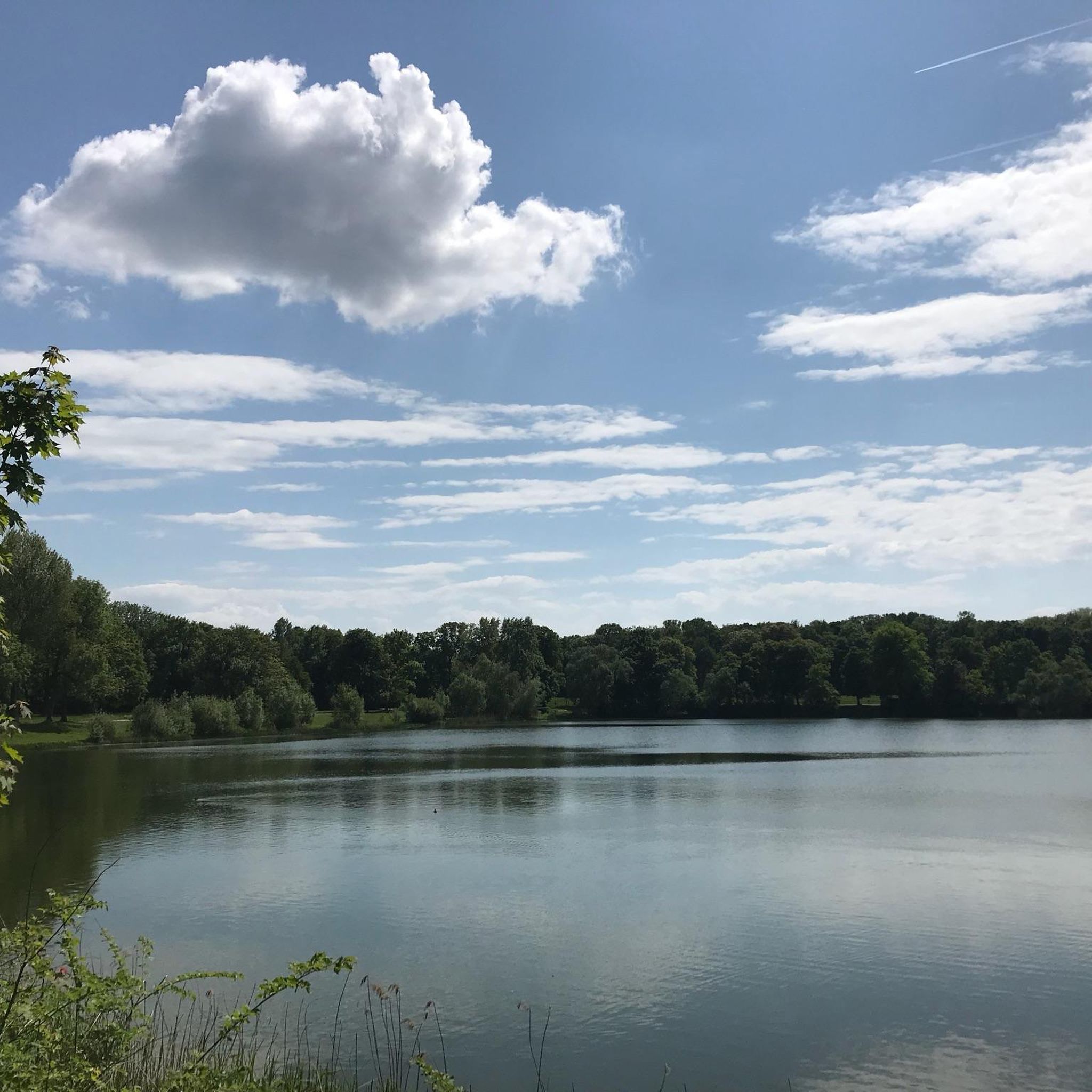
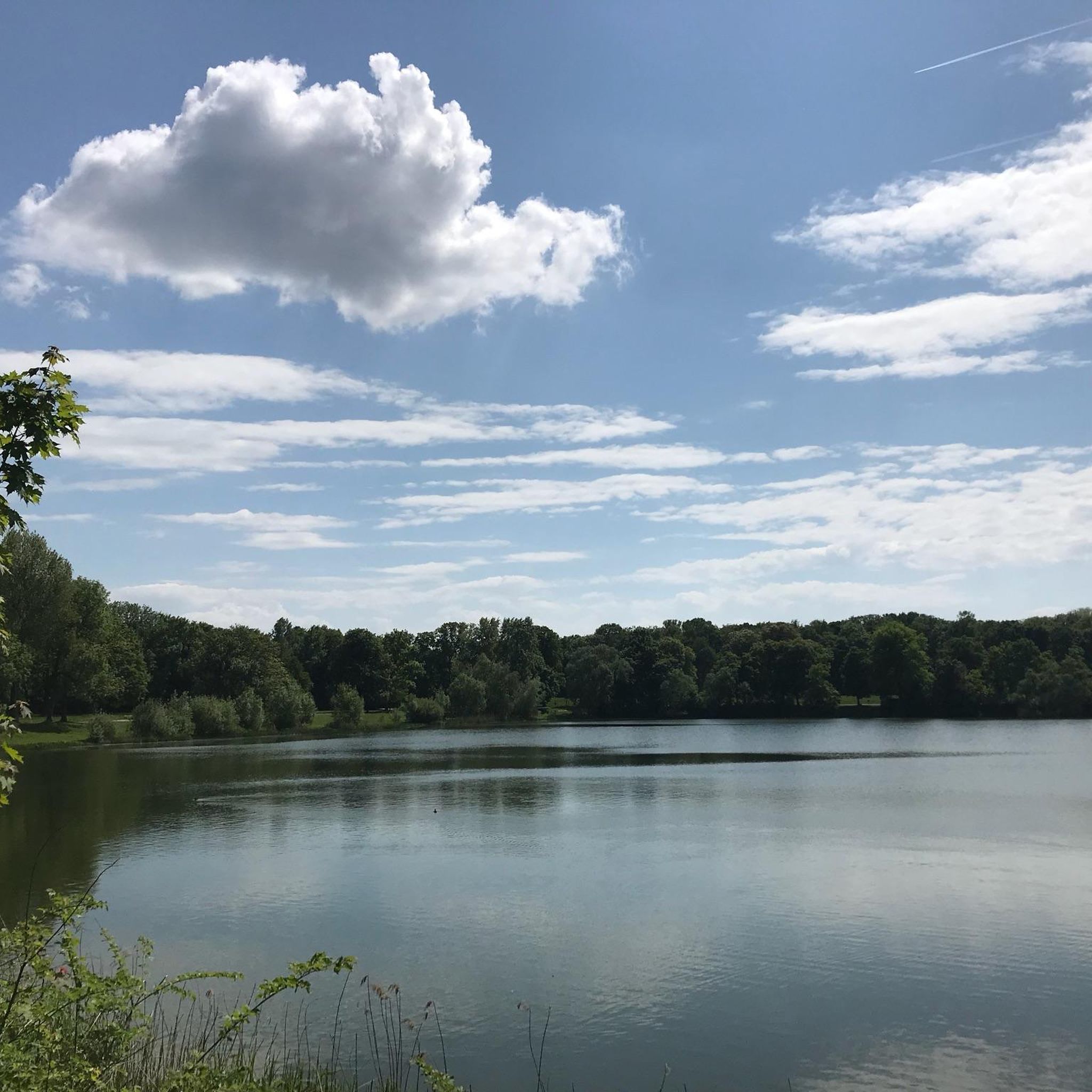
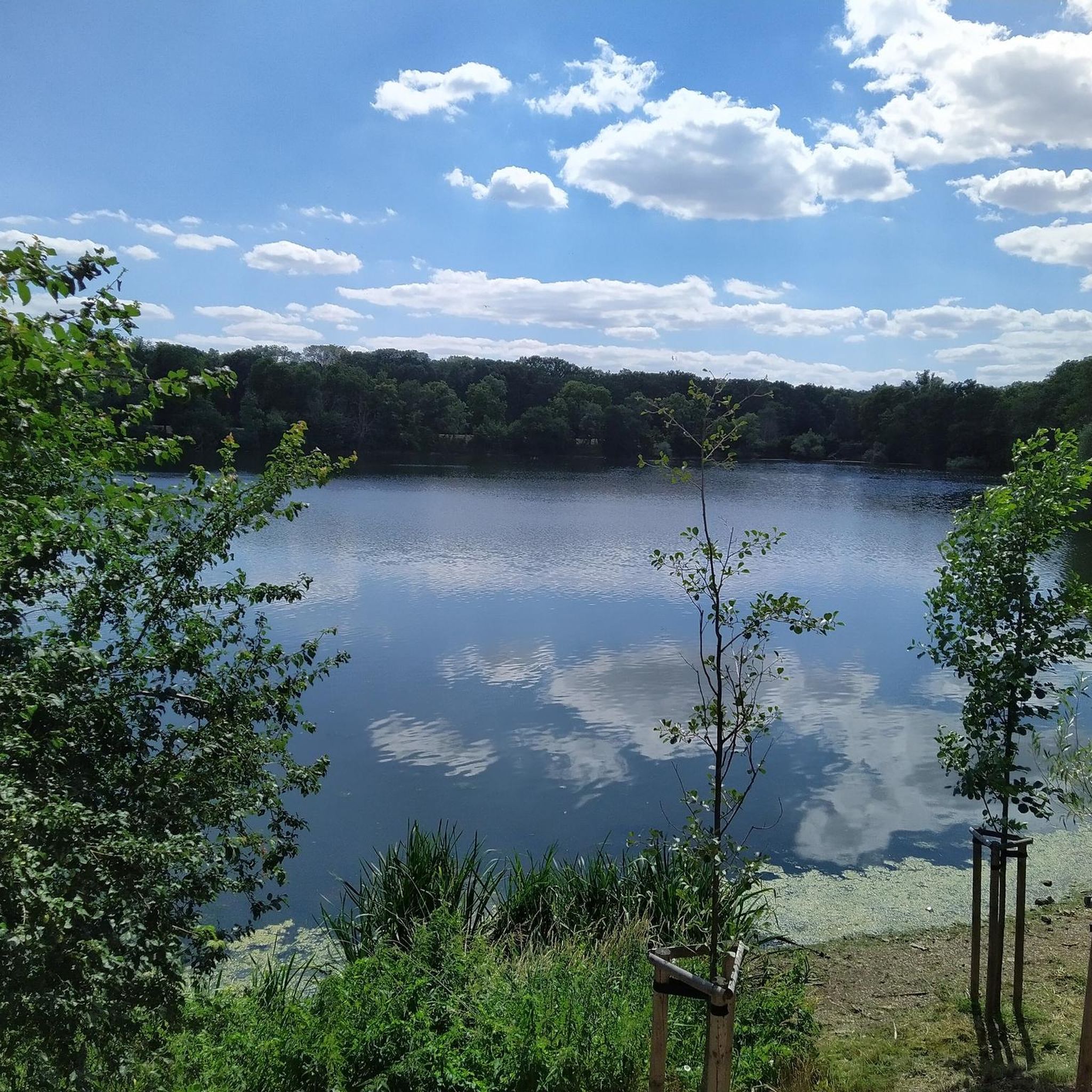
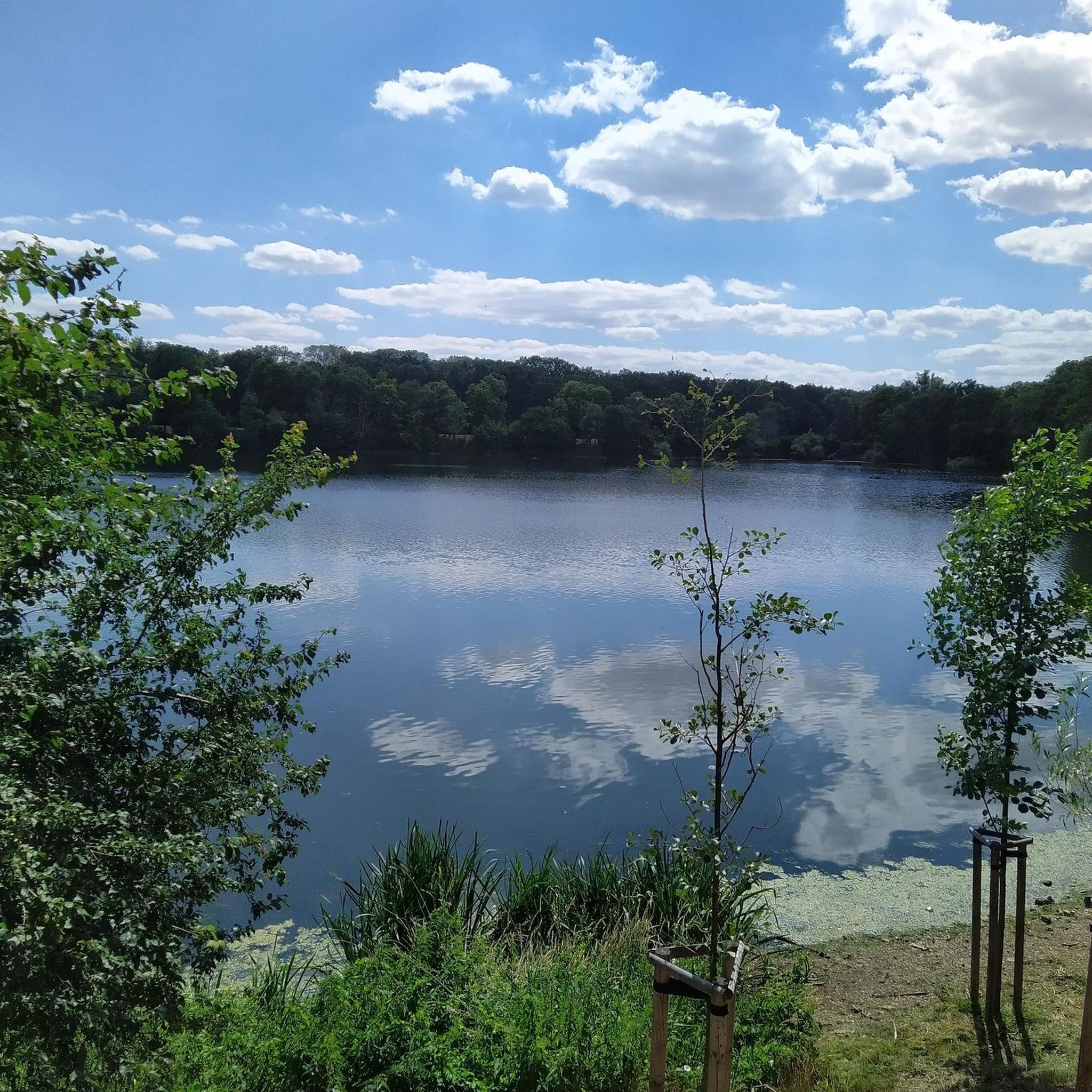
The 12-hectare Auensee, while a popular destination, has been suffering from recurring blue-green algae problems for decades. Auensee is a highly eutrophic lake with no inflow or outflow, fed exclusively by groundwater heavily loaded with nutrients. When temperatures are high in summer and little fresh water is supplied, the oxygen content in the water can drop drastically. Fish – especially sensitive species and large, established populations – then suffer from acute oxygen deficiency. Under unfavorable weather conditions or further stress such as nutrient input, a critical situation arises, regularly leading to significant losses of animal life. For the affected fish, this means great suffering, as the suffocation or oxygen deficiency often extends over hours. In addition to fish, numerous other animals in and around the water are also affected: insects, waterfowl, and small mammals lose an important food source, and the ecological balance is thrown off. Repeated fish kills indicate fundamental deficits in water management and a lack of protective measures. From an animal welfare perspective, this should be counteracted – for example, through sustainable management (e.g., better fresh water supply, reduction of nutrient inputs, technical aeration in midsummer). Only in this way can the body of water be developed back into a species-rich and animal-welfare-friendly habitat. Measures aimed at long-term improvement of water quality and the prevention of fish kills are indispensable for a functioning urban ecosystem and the preservation of biodiversity. The Green Party faction has repeatedly advocated for improving the lake's condition through additional oxygen input. Since spring 2012, three deep water aeration systems (TIBEAN) have been in use, supplying the lake with oxygen. However, the fundamental problem of high sludge volumes in the lake cannot be solved by this alone. This station is part of the Discover Green Corners tour "Animal welfare in Leipzig" - gruene-ecken-entdecken.de
0
0

It always looks beautiful when you walk past it
0
0

In addition, the steam-powered railway
0
0

Free parking is available near the Auensee. Arrive early to secure good spots in good weather!
0
0

The Burgauenbach branches off from the Nahle in the Leipzig district of Alt-West in the Leutzsch district above the Nahle weir. Over the next three kilometers, it passes through three culverts, first the Kleine Luppe, then the Leipzig–Leutzsch railway line (the Wahren–Leutzsch railway line that follows shortly afterwards is crossed in a tunnel) and finally Gustav-Esche-Straße. In this area, a branch leads approx. 0.2 m³ of water per second to the Bauerngraben.[3] At the nearby border with the Burgaue district in the Wahren district, the Burgauenbach has almost completed half of its journey. After about 3.5 km of flow, a trough bridge directs the Burgauenbach over the Bauerngraben, which runs almost two meters lower. The Burgauenbach joins it after a total of 5.374 km and, according to the common definition, ends at this long-standing body of water. However, according to the criterion of greater water flow, the Bauerngraben flows into the Burgauenbach, shortly before its confluence with the Neue Luppe.
2
0
The Leipzig floodplain forest (also colloquially known as floodplain forest or floodplain forest[1]) is a floodplain forest area that lies mainly in the area of the city of Leipzig. It used to be a softwood floodplain (alder) and was regularly flooded by the floods of the Pleiße, Weiße Elster and Luppe. Due to human influence (especially regulation of the flowing waters), a hardwood floodplain (ash, oak, maple) has now prevailed. The Leipzig floodplain forest is one of the largest remaining floodplain forests in Central Europe. Despite the various human interventions and the proximity to a large city, parts of the Leipzig floodplain forest have retained a very natural character. Around 1163 hectares of the floodplain forest belong to the Leipzig city forest. Parts of the floodplain forest stretch far through the city and even border the city center via parks such as the Rosental. The floodplain forest can be easily reached on foot or by public transport in many places. The network of footpaths, cycle paths and bridle paths in the floodplain forest is in some places as dense as in a park. There are numerous excursion destinations in the Leipzig floodplain forest area. Forestry use plays a subordinate role.
0
0
The Kleine Luppe is one of the numerous tributaries of the White Elster in its anastomosing river course (often referred to as the inland delta). It flows exclusively in the city of Leipzig and is a water body of the first order in terms of water law.[2] The Kleine Luppe branches off from the White Elster in Leipzig above the Palmengarten weir as a left tributary, is regulated by a weir in Lindenau, passes under Kuhturmstrasse at the Angerbrücke and flows into the Nahle in the Leipzig Auwald near Leutzsch. In Lindenau, in the area of Lützner Strasse, it split into the western course of the same name and the eastern course called Kuhburger Wasser, which has since been filled in. The latter merged in the area of the Amelungswehr in Niederholz with the Nahle, which had branched off from the White Elster shortly before, and which merged with the Kleine Luppe a little later. From here on, it was only called the Luppe, but today bears the name of the Nahle, which was expanded for flood protection. The Kleine Luppe is a section of the Luppe, which was split several times during the construction of the Neue Luppe and still flows separately into the Saale today.
0
0

On August 5, 1951, the second pioneer railway of the former GDR was put into operation in Leipzig. It covers a distance of 1.9 km on its circular route. There is a station and three stops. From the beginning of April to the end of October, on weekdays and on Sundays and public holidays, the park railway, a locomotive with a track width of 381 mm, makes its rounds around the idyllic Auensee across meadows and through densely wooded areas. This lake was created in 1909 from a gravel pit that provided material for the construction of Leipzig Central Station. The railway is operated by the Parkeisenbahn Auensee e.V. association in cooperation with the city of Leipzig. However, as has been the case since its founding, the trains are operated by children and young people in their free time.
3
0
Frequently Asked Questions
How many hiking trails are available around Auensee?
There are over 15 hiking trails around Auensee, with the majority being easy to moderate. You'll find 11 easy routes and 6 moderate routes, offering options for various fitness levels.
Are the hiking trails around Auensee suitable for families?
Yes, many trails around Auensee are very family-friendly. The terrain is predominantly flat with minimal elevation gain, and paths like the Auensee Loop are easily accessible and even stroller-friendly. The Auensee Park Miniature Railway Station and the Nahle Outflow Structure – Burgaue Forest Playground loop are popular choices for families.
What kind of terrain can I expect on the Auensee hiking trails?
The terrain around Auensee is predominantly flat, characterized by its integration into the Leipzig Riverside Forest. You'll hike through diverse deciduous trees and groundwater-fed wetlands, with minimal elevation gain. This makes most trails accessible and pleasant for various activity levels.
Are there any circular hiking routes around Auensee?
Yes, many of the trails around Auensee are circular, allowing you to start and end at the same point. For example, the Auensee and Haus Auensee – Auensee Park Railway loop is an easy 5.6 km circular route, and the Auensee Park Railway – Auensee and Haus Auensee loop offers a longer, moderate 11.1 km circular option.
What natural features or landmarks can I see while hiking around Auensee?
While hiking around Auensee, you'll experience the serene Lake Auensee itself, surrounded by lush greenery and diverse trees of the Leipzig Riverside Forest. You might also pass by the historic Auensee Park Miniature Railway Station and the architectural landmark of Haus Auensee.
Is Auensee a good place for dog-friendly hikes?
Auensee is generally a great area for dog-friendly walks, with its extensive forested paths and lakeside trails. The natural environment provides plenty of space for dogs to enjoy. Always ensure your dog is on a leash where required and respect local regulations regarding wildlife and other visitors.
What do other hikers enjoy most about the trails in Auensee?
The trails in Auensee are highly rated by the komoot community, with an average score of 4.5 stars from over 4,700 reviews. Hikers often praise the tranquil lakeside views, the well-maintained paths through the riverside forest, and the overall peaceful atmosphere that provides a great escape within the city.
Where can I find parking when visiting Auensee for a hike?
There are parking options available near Auensee, particularly around the Haus Auensee area. It's advisable to check local signage for specific parking regulations and availability, especially during peak times.
How can I reach Auensee using public transport?
Auensee is well-connected by public transport in Leipzig. You can reach the area via train stations like 'Bf Auensee' or 'Hp Gustav-Esche-Straße', which are common starting points for many of the hiking routes. This makes it convenient to access the trails without a car.
Are there any cafes or places to eat near the hiking trails?
Yes, there are cafes and refreshment options available around Auensee, particularly near the main recreational areas and Haus Auensee. These spots offer a chance to relax and refuel before or after your hike.
What is the best time of year to hike around Auensee?
Auensee offers pleasant hiking experiences throughout much of the year. Spring and summer bring vibrant wildflowers and lush greenery, with ample shade from the deciduous trees. Autumn provides beautiful fall foliage. Even in winter, the flat terrain can be suitable for walks, though conditions may vary.
What is the typical duration for a hike around Auensee?
Hiking durations around Auensee vary depending on the route you choose. Shorter, easy loops like the Auensee Loop can take around 1 hour 20 minutes for about 5 km. Longer, moderate routes, such as the Auensee Park Railway – Auensee and Haus Auensee loop, can take over 3 hours for 11 km.
Most popular routes around Auensee
Most popular attractions around Auensee

Get inspired with the komoot mobile app


Explore more
Browse the best Hikes in other regions.
