Attractions and Places To See in Chugach National Forest - Top 20
Best attractions and places to see in Chugach National Forest span nearly 7 million acres in Southcentral Alaska, covering the Kenai Peninsula, Prince William Sound, and the Copper River Delta. This extensive area features diverse landscapes including jagged mountains, pristine lakes, fjords, salmon-filled rivers, alpine tundra, glaciers, wetlands, and temperate rainforests. It provides abundant recreational opportunities and serves as a habitat for a variety of wildlife. Approximately 30% of the forest is covered by glaciers.
Best attractions and places to see in Chugach National Forest
- The most popular attractions is Russian River Falls Bear Viewing, a waterfall known for observing salmon and bears. It features viewing platforms for wildlife observation.
- Another must-see spot is Exit Glacier, a natural monument that springs from the Harding Icefield. The area offers trails for hiking and views of the glacier.
- Visitors also love Shoreline of Portage Lake, a lake shoreline that serves as a turnaround point for hikes. Visitors can observe icebergs and potentially see glacier calving.
- Chugach National Forest is known for its glaciers, waterfalls, and diverse natural landscapes. The region offers a variety of attractions to see and explore, from accessible trails to remote wilderness areas.
- The attractions in Chugach National Forest are appreciated by the komoot community, with 13 upvotes and 3 photos shared across its highlights.
Last updated: July 6, 2026
Shoreline of Portage Lake
Highlight • Lake
If you see a small cruise ship on the water that is the M/V Ptarmigan, which cruises from the visitor center on the far side of the lake to within good views of the face of Portage Glacier; more information here: graylinealaska.com/portage-glacier-cruises
Finally, some hikers do choose to continue hiking left (south) from here, in hopes of getting closer to the face of the glacier itself. Be warned, there is a not-insignificant stream crossing in the way, and it's very dangerous to walk on, underneath, or in front of the glacier itself, as chunks of ice can and do break off of it at random intervals.
Tip by

Lowell Point State Park hike to Tonsina Creek
Highlight (Segment) • Trail
From the trailhead, a gradual climb takes you along the shoreline of Resurrection Bay where you’ll have occasional views of the water through the spruce and hemlock trees. Across the first section of Tonsina Creek, you’ll find a beautiful metal expansion bridge. If you’re here from late June through September, stop and look for salmon spawning in the waters below. In late June blooming irises take over the surrounding marsh and meadows. The trail then leads into a beautiful forest with large cottonwood, hemlock, and spruce. And look for the typical rainforest feature of sphagnum moss hanging from limbs, commonly found in wet northern environments. You’ll then come to a long wooden expansion bridge over another section of the creek, which leads to an easy-to-reach portion of the shoreline. Enjoy the coastline and beach before heading back.
Note: The parking lot for this trailhead is near the community of Lowell Point. Park for free in town and walk a bit more or park behind the state park sign and pay for parking. alaska.org/detail/tonsina-creek-trail
komoot.com/tour/5017336
Tip by

Sign up now to discover places like this
Get recommendations on the best single tracks, peaks, & plenty of other exciting outdoor places.
Sign up for free
Exit Glacier
Highlight • Natural Monument
Translated by Google •
Tip by

Glacier floodplain
Highlight • Natural
The other hazard to be aware of is that sometimes ice falling off the glacier creates a dam that blocks the meltwater from the glacier. Eventually that ice thaws and the meltwater comes rushing out in a flash flood, which would be very dangerous if you were on this plain. Do not count on warning signs being posted about this possibility; it can happen at any time.
Tip by
Caines Head Trail - Lowell Point State Recreation Site
Highlight • Trail
If you plan to hike all the way to Caines Head, please be aware that some parts of the trail are underwater at high tide. Alaska has some of the most extreme tidal differentials in the world, and the water is cold and fast-moving. Alaska State Parks recommends leaving Seward at least two hours before low tide to make sure you don't get stranded, but you'll also need to make sure the tide is sufficiently low for you to cross those areas; get more information here: dnr.alaska.gov/parks/aspunits/kenai/cainesheadsra.htm
It's too far to hike out to Caines Head and back in a single tide, so if you do go, either arrange for a water taxi to meet you at the beach and bring you back, or be prepared to wait until the next low tide (about 12 hours). This is also a very popular backpacking destination; people sometimes hike there with tents and other camping gear, then camp out overnight as they wait for another tide. If you plan to do this, be aware that the shale beach can make it challenging to properly stake out a tent, so you might need to employ some creative solutions (like tying guy lines to driftwood, if there is any available).
Tip by
Sign up for free to discover even more attractions in Chugach National Forest.
Sign up for free
Already have an account?
Start today with a free account
Your next adventure awaits.
Login or Signup

Other adventures in Chugach National Forest

Tips from the Community

What a unique place. Hikes of varying difficulty levels allow everyone to enjoy a breathtaking view of the glacier. In a few years, however, you will have to climb a few more meters in altitude to still be able to see the glacier tongue.
0
1

Absolutely unique landscape. You get very close to a glacier very quickly.
0
0

Expect to pay $5 for parking in this trailhead lot. From here, you can make the relatively easy hike out to Tonsina Point, or you can hike all the way to Caines Head (sometimes known as North Beach, because you arrive at the north beach of Caines Head). If you plan to hike all the way to Caines Head, please be aware that some parts of the trail are underwater at high tide. Alaska has some of the most extreme tidal differentials in the world, and the water is cold and fast-moving. Alaska State Parks recommends leaving Seward at least two hours before low tide to make sure you don't get stranded, but you'll also need to make sure the tide is sufficiently low for you to cross those areas; get more information here: https://dnr.alaska.gov/parks/aspunits/kenai/cainesheadsra.htm It's too far to hike out to Caines Head and back in a single tide, so if you do go, either arrange for a water taxi to meet you at the beach and bring you back, or be prepared to wait until the next low tide (about 12 hours). This is also a very popular backpacking destination; people sometimes hike there with tents and other camping gear, then camp out overnight as they wait for another tide. If you plan to do this, be aware that the shale beach can make it challenging to properly stake out a tent, so you might need to employ some creative solutions (like tying guy lines to driftwood, if there is any available).
2
0
In a typical trail it's easy to get out onto the glacier floodplain, or outwash plain, from this point to explore. However, there are some serious hazards you should be aware of. The first is the streams cutting through the floodplain: They are so full of silt that you cannot see how deep they are, and in some of them you could easily drown. The water is also fast-moving and very cold. The other hazard to be aware of is that sometimes ice falling off the glacier creates a dam that blocks the meltwater from the glacier. Eventually that ice thaws and the meltwater comes rushing out in a flash flood, which would be very dangerous if you were on this plain. Do not count on warning signs being posted about this possibility; it can happen at any time.
1
0
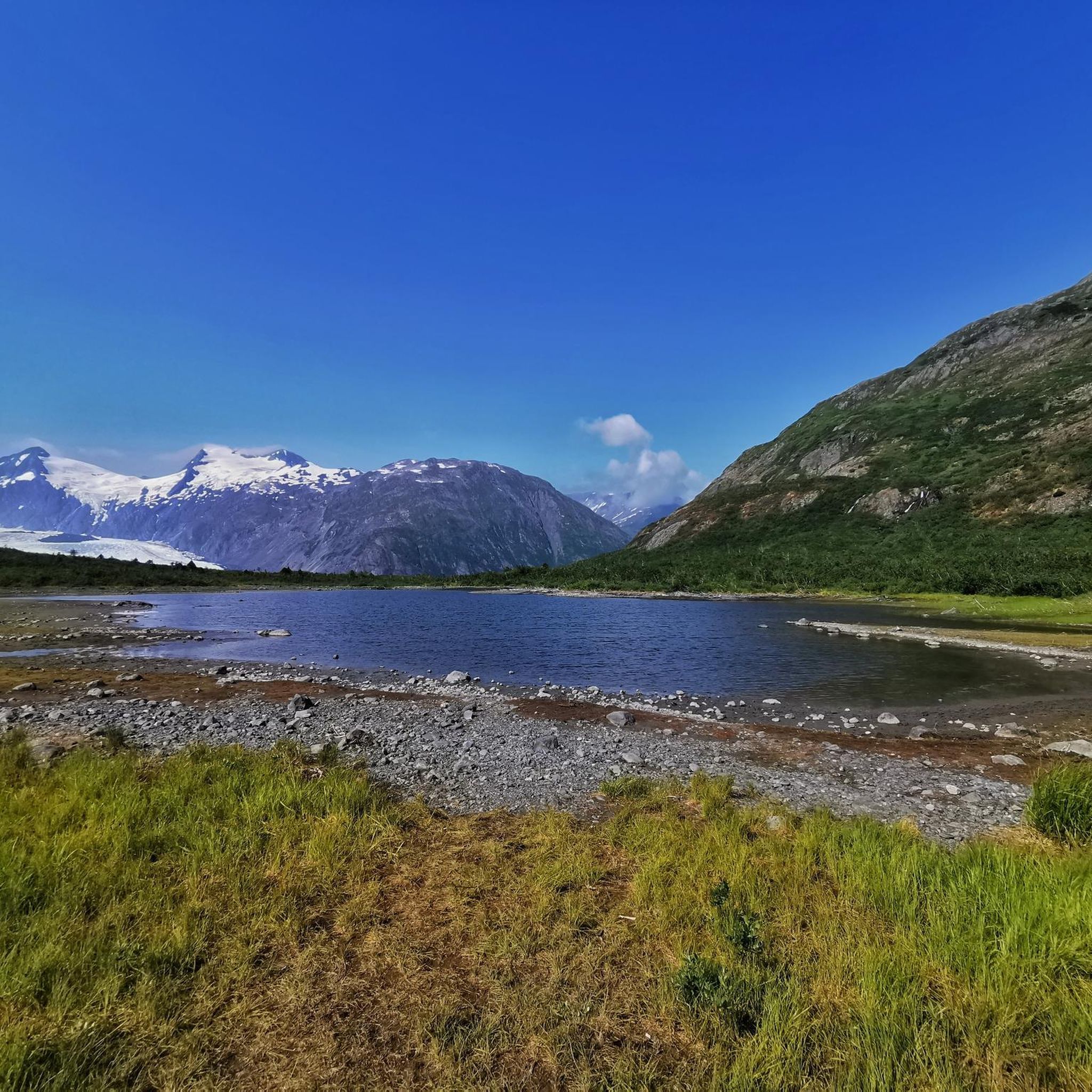
For most people, the broad, sandy shoreline of Portage Lake marks the turnaround point of this hike — or the perfect picnic spot. The glacier is not terrible active but it does sometimes calve (break off) chunks of ice into the water. If you're in the right place at the right time you might see and hear this happen, and sometimes the resulting icebergs even make it close to shore. If you see a small cruise ship on the water that is the M/V Ptarmigan, which cruises from the visitor center on the far side of the lake to within good views of the face of Portage Glacier; more information here: https://www.graylinealaska.com/portage-glacier-cruises/ Finally, some hikers do choose to continue hiking left (south) from here, in hopes of getting closer to the face of the glacier itself. Be warned, there is a not-insignificant stream crossing in the way, and it's very dangerous to walk on, underneath, or in front of the glacier itself, as chunks of ice can and do break off of it at random intervals.
2
0

A single trail, quite frequented and around 1000 HM over approx. 6-7 km. And still beautiful. From blooming meadows, past marmots to the windswept Icefield and back!
0
0

End of the paved road, south of Seward. A dirt foot trail continues a few more mile along the water into the park to Caines Head.
0
0
The trailhead is a great starting point for hikes on the Caines Head Trail to North and South Beach. Parts of the trail are only accessible at low tide, see http://dnr.alaska.gov/parks/aspunits/kenai/lowellptsrs.htm
0
0
Frequently Asked Questions
What are some of the most popular natural attractions in Chugach National Forest?
Visitors frequently enjoy the stunning glaciers and wildlife viewing opportunities. Highlights include Russian River Falls Bear Viewing, known for observing salmon and bears, and Exit Glacier, a natural monument springing from the Harding Icefield. The Shoreline of Portage Lake is also a popular spot to see icebergs and potentially witness glacier calving.
What unique natural features can I explore in Chugach National Forest?
The forest is renowned for its diverse landscapes, including jagged mountains, pristine lakes, fjords, salmon-filled rivers, alpine tundra, glaciers, wetlands, and temperate rainforests. You can explore numerous glaciers like Portage Glacier and Spencer Glacier, or experience the marine environment of Prince William Sound with its coves, bays, and waterfalls.
What kind of wildlife can I expect to see in the Chugach National Forest?
The Chugach National Forest is home to abundant wildlife. On land, you might spot brown and black bears, moose, Dall sheep, and mountain goats. The Copper River Delta is a crucial habitat for over 20 million birds annually. In Prince William Sound, marine wildlife such as Dall porpoises, harbor seals, sea otters, sea lions, orcas, and humpback whales are often seen.
Are there any historical sites or cultural points of interest in the area?
Yes, the Chugach National Forest has several historical points. Portions of the historic Iditarod National Historic Trail run through the forest. You can also visit the historic gold rush communities of Hope and Sunrise City, or explore areas like Palmer Creek Road, associated with early gold and lode mining. The Anton Anderson Memorial Tunnel (Whittier Tunnel) also holds significant historical importance from World War II.
Are there family-friendly activities or attractions in Chugach National Forest?
Many attractions cater to families. Russian River Falls Bear Viewing offers accessible viewing platforms for wildlife. Exit Glacier has trails suitable for various abilities. Spencer Glacier is also considered a family-friendly destination for camping, hiking, and nature walks, accessible by train.
What are the best times to visit Chugach National Forest?
The best time to visit largely depends on the activities you plan. Summer (June to August) is ideal for hiking, wildlife viewing, and water activities due to warmer weather and longer daylight hours. For viewing salmon runs, late summer to early fall is prime. Winter offers opportunities for snow-based activities, though accessibility to some areas may be limited.
Are there accessible trails or viewing areas for all abilities?
Yes, some areas are designed for greater accessibility. Russian River Falls Bear Viewing features wheelchair-accessible viewing platforms. The Begich Boggs Visitor Center at Portage Glacier also offers accessible facilities and information.
Where can I go hiking in Chugach National Forest?
The forest boasts over 500 miles of maintained trails. Popular options include the Johnson Pass Trail, Resurrection Pass Trail, Russian Lakes Trail, and the Trail of Blue Ice in Portage Valley. For more detailed routes and options, you can explore the running trails guide for Chugach National Forest, which also covers many hiking paths.
What kind of outdoor activities are available besides hiking?
Beyond hiking, the Chugach National Forest offers a wide range of outdoor activities. You can enjoy cycling on routes like the Bird to Gird Pathway, as detailed in the cycling guide. Fishing is popular, especially for salmon in the Russian River. Prince William Sound is excellent for boating, kayaking, stand-up paddleboarding, and jet skiing.
What do visitors particularly enjoy about the attractions here?
Visitors frequently highlight the immersive natural experiences. For instance, at Russian River Falls Bear Viewing, many appreciate the opportunity to see salmon and bears in their natural habitat. At the Shoreline of Portage Lake, the chance to observe icebergs and potentially glacier calving is a memorable experience. The dramatic landscapes and abundant wildlife are consistently praised.
Are there any less-known spots or unique experiences in the forest?
For a unique experience, consider visiting Black Sand Beach in Barry Arm, popular with sea kayakers for its dramatic views and sea life. Byron Glacier offers an easy hike and is known for its ice worms. Tern Lake is a prime location for wildlife viewing, where you might spot Dall sheep, mountain goats, moose, and various birds. The Copper River Delta is also a globally significant shorebird habitat.
Can I go camping in Chugach National Forest?
Yes, the Chugach National Forest offers numerous camping opportunities. Popular campgrounds include Williwaw Campground in Portage Valley, Porcupine Campground near Hope, and the Russian River Campground. Many visitors also enjoy backpacking to remote areas like Caines Head, often camping overnight.
Most popular routes in Chugach National Forest
Most popular attractions in Chugach National Forest

Get inspired with the komoot mobile app


Explore more
Still not found the Highlight you’re looking for? See guides of the top attractions in other regions:
