The best walks and hikes around Slotssøen
4.5
(220)
1,896
hikers
226
hikes
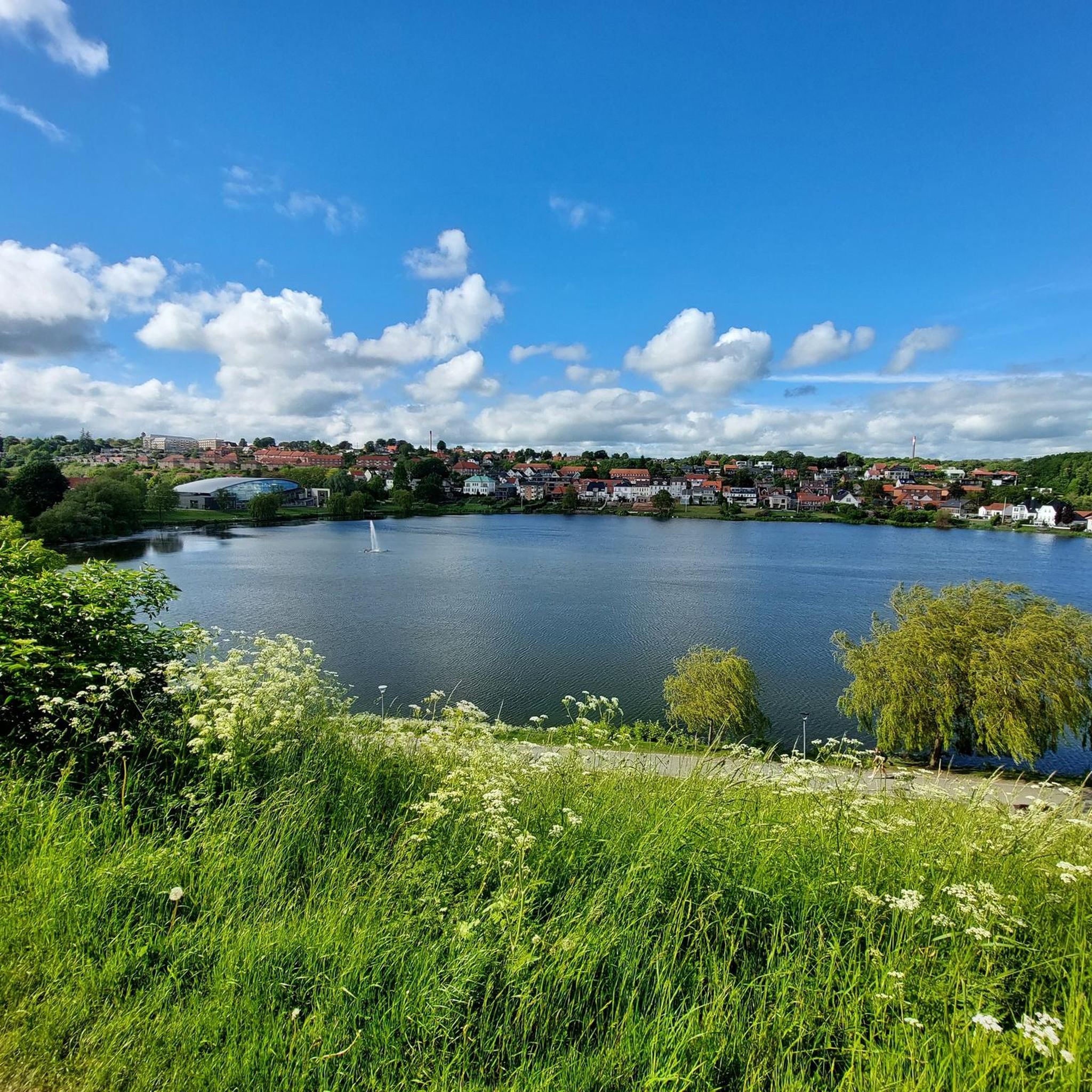
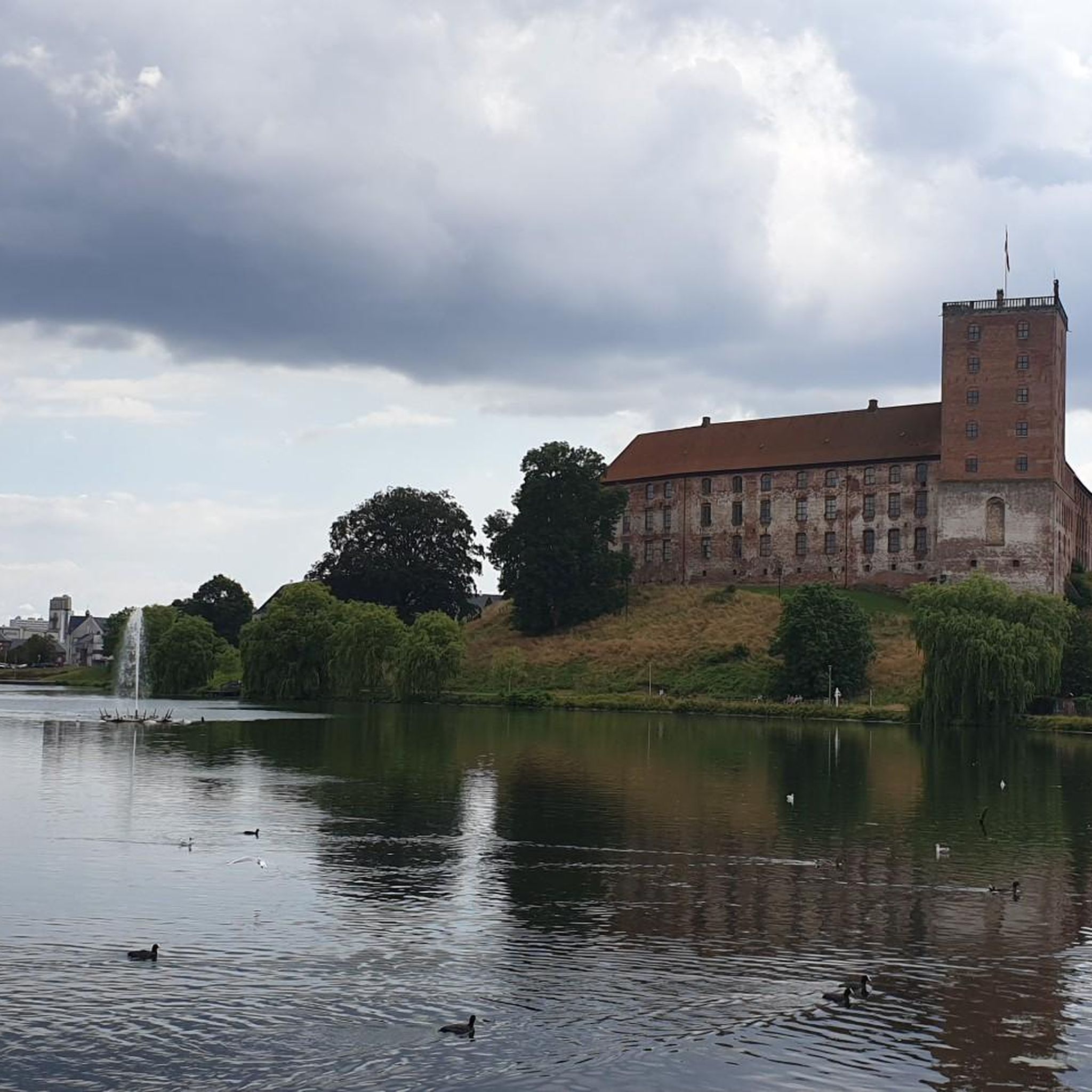
Hiking around Slotssøen features well-maintained paths encircling tranquil lake waters, often reflecting historical castles like Koldinghus. The region is characterized by tree-lined paths that offer continuous scenic views of medieval fortresses and surrounding park greenery. These accessible trails are suitable for various fitness levels, providing a blend of natural beauty and historical context. Slotssøen is also home to diverse birdlife, adding to the natural environment.
Best hiking trails around Slotssøen
- The most popular hiking route is Koldinghus – Koldinghus Castle…
Last updated: July 7, 2026
4.0
(5)
27
hikers
20.7km
05:24
140m
140m
Hard hike. Very good fitness required. Easily-accessible paths. Suitable for all skill levels.
4.4
(5)
26
hikers
10.8km
02:51
100m
100m
Hike the moderate 6.7-mile Kolding Ådal Clover Trail, exploring river valleys, forests, and historical sites near Kolding, Denmark.

Sign up for free
4.7
(7)
60
hikers
11.6km
03:01
80m
80m
Moderate hike. Good fitness required. Easily-accessible paths. Suitable for all skill levels.
4.5
(4)
47
hikers
5.64km
01:29
50m
50m
Easy hike. Great for any fitness level. Easily-accessible paths. Suitable for all skill levels.
5.0
(4)
32
hikers
Easy hike. Great for any fitness level. Easily-accessible paths. Suitable for all skill levels.
Get access to more routes and recommendations from other explorers.
Sign up for free
Already have an account?
Our route recommendations are based on thousands of hikes, rides, and runs completed by other people on komoot.
Start today with a free account
Your next adventure awaits.
Login or Signup
Tips from the Community


Kolding Station in Denmark Kolding Station is a major public transport hub in Denmark. It offers a wide range of connections and services that are of great importance to travelers. Here is some of the most important information about Kolding Station:
0
0
Discover the over 750-year-old castle, which has served as a medieval fortress, a Renaissance castle, and a royal residence. After the great fire of 1808, the castle was restored and transformed into a museum. Explore the castle's history, see the Flora Danica tableware, and try on royal costumes. Visit the imposing tower of Christian IV for fantastic views or enjoy lunch in the Food Cellar.
0
0
Slotssøen is a lake in Kolding, Denmark. It was the millpond for the castle mill, which Queen Dorothea built in 1570[1] or 1566, right next to Koldinghus Castle. The castle island belongs to the monarch, so fishing or sailing on the lake is not permitted. However, there is a rowboat that, according to old regulations, is available for use by royal guests who wish to fish.[2] The old regulation has since been repealed, and nowadays the boat is maintained voluntarily by the St. George's Guild in Kolding.[3] The parking lot in front of the Kolding Library is a reclaimed section of Castle Lake. This occurred when the Castle Sea Road was built as a ring road in 1970.[1] To walk around Castle Lake, you must go to Søgade on the opposite side of Koldinghus Castle. The lake is located on the island. In the 20th century, several water closets were built in the city, but these had to be banned, partly because some of the sewage pipes ended in two open ditches that ran directly from Låsbygade into Castle Lake. The outflow otherwise went directly into the river or fjord. In 1921, following a report prepared by the city engineer in October 1921, the city council decided to launch a comprehensive sewage project for the built-up area of Kolding. By the end of the work in 1923, only a quarter of the city's wastewater had been discharged into Castle Lake. From 1926 onward, the sewage system was extended to the southern part of the city. With the completion of the new sewage system, toilets without septic tanks could be installed.
0
0
The Kolding Stables (Staldgården) are located east of and adjacent to Koldinghus Castle and were founded around the same time: in the 14th century. The current buildings were constructed in the 17th century, consist of three wings, and were primarily used by the military. [1] The first buildings on the site formed a kind of forecourt to the main castle, Koldinghus. From the mid-16th century onward, they were used as the king's stables and in the residence of Christian IV. In the 19th century, there were strong, tower-like pavilions in the two eastern corners. These were later removed. From the late 17th century, Staldgården had an increasing tactical military influence on the positioning of the military's cavalry regiments. Christian V had divided the crown's estates into cavalry districts, whose purpose was to provide cavalry in times of war. Frederick IV continued this system, and in 1718 Staldgården became the cavalry headquarters, initially for the Koldinghus Cavalry District and later for the Holstein Lance Regiment. During the Anglo-English Wars of 1808–1814, the large buildings were used to store military equipment. Koldinghus burned down on the night of March 28–29, 1808, but the fire did not reach the stables. [1] After about 200 years of horses at Staldgården, this ended in 1923 when the military ceased breeding and riding horses. The buildings were subsequently used as a military depot, and after World War II, Staldgården served as the supply base for the Danish Brigade in Germany from 1947 to 1958. In 2008, Staldgården housed the Kolding Air Reporting District, the Kolding Home Guard Company, the Kolding Naval Home Guard Company, the Kolding Air Home Guard Company, and the conservation workshop for the Koldinghus Museum. [1] As of January 1, 2021, the Kolding Local History Museum is located at Staldgården. Here you will find an exhibition about Kolding during the occupation, where you can visit Cell II, Denmark's only remaining Gestapo cell. The Kolding Museum also has sites in Skamlingsbanken and Christiansfeld. [2]
0
0
After the death of Frederick VI in December 1839, he began working on the newspaper Fædrelandet. Journalism became his life's work. The rise of the "Academicum," stemming from the rejection of the more refined "Studenterforening," gave him a leading position among the students, and his work at Fædrelandet, where he became editor in 1841, connected him with the opposition. His ideals were political freedom, national identity in Denmark, and Scandinavian unity.
0
0
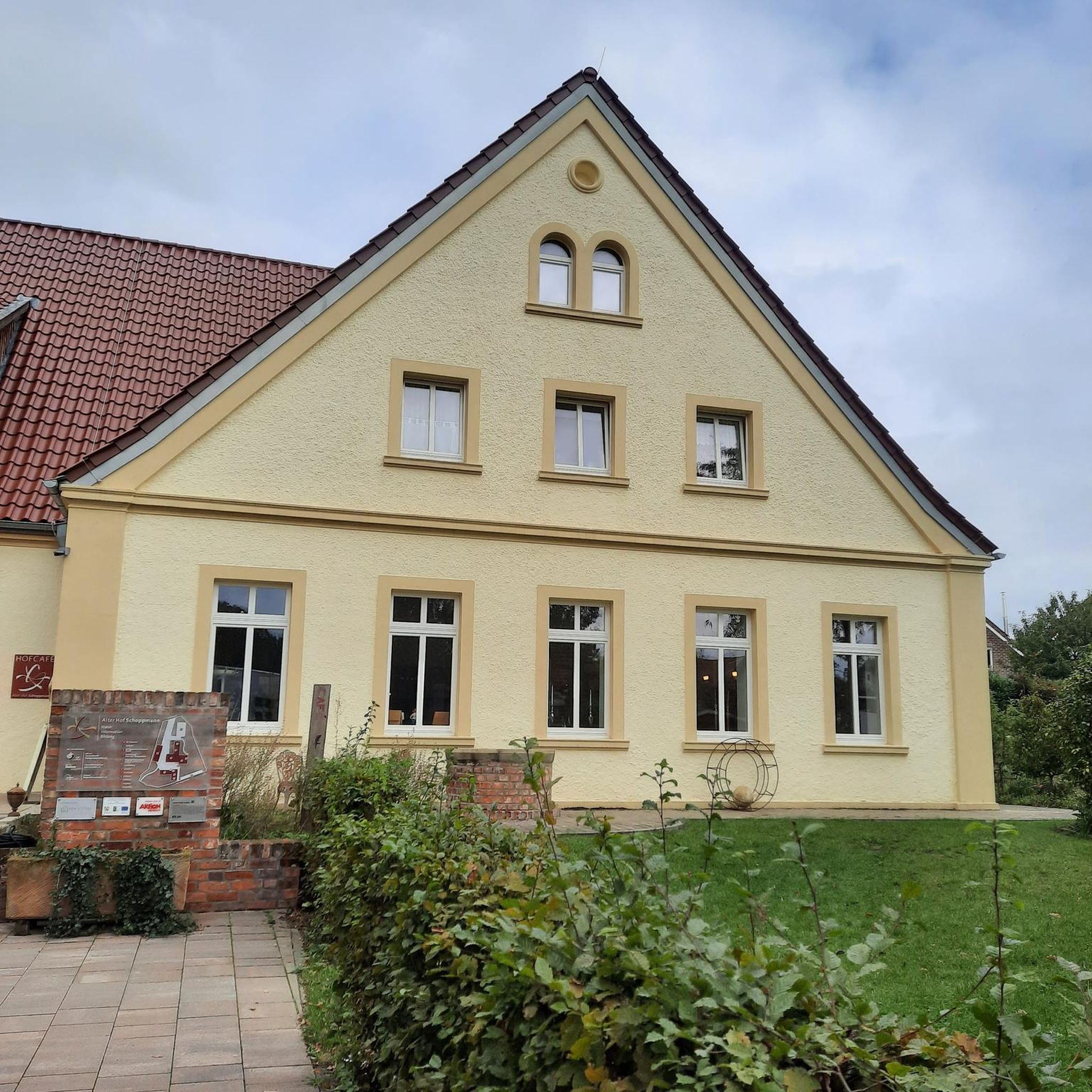
In 1830, when Jens Sophus Borch bought the large merchant's house, it was said to have been built in 1595 by the pharmacist Hermann Reiminch and his wife Margrethe, who had immigrated to Germany from Westphalia in the early 1580s. Until 1674, the courtyard housed a pharmacy and a wine cellar; after that, only a wine cellar and a distillery remained until 1796. The house is one of the best-preserved examples in Denmark of a Renaissance burgher house, a timber-framed building constructed of heavy oak, decorated with, among other things, cherub heads. The year 1595 and the initials H R and M R, representing Hermann Reiminch and his wife Margrethe Reiminch, are inscribed on the lintel above the entrance to Borch's house. Above the door in the gateway is another oak panel. On one side is an open hand with an open eye and the letters I.S. Below it are the letters V.C.P. The tablet dates from 1607. The open hand can be compared to a wooden tablet in St. Nicholas Church, bearing the same drawing and inscription, "Videndum cui fidendum," which was erected by Jens Sørensen, pastor in Kolding from 1591 to 1612. The Latin inscription means "One must be careful before trusting someone." In 1911, a real estate company acquired the buildings, which, in addition to the main house facing Akseltorv, also included numerous stables and warehouses on what is now the parking lot. The last of these disappeared around 1970. The main house was thoroughly restored in 1959, and the facade was renovated in 1990. More recently, the building housed a surveying company and municipal offices. In 1911, a real estate company acquired the buildings, which, besides the main house facing Akseltorv, also included numerous stables and warehouses on what is now the parking lot. As can be seen in the reproduction of Borchs Farm in Fyhns Kolding Book of 1848, the present gabled house had a slightly smaller counterpart to the east, which was demolished to make way for the plot on which Discoteque Tordenskiold was located. As can be seen, the rosette in the upper triangle is not original but was added in connection with the house's repair by the architect L. A. Winstrup in the 1880s. The house's wind vane comes from Kolding's oldest town hall, dating from 1582.
0
0
The Kolding Å is a 9 km long river in the Kolding Municipality in Denmark, which flows through the city of Kolding.
0
0
Frequently Asked Questions
How many hiking trails are available around Slotssøen?
There are over 240 hiking routes available around Slotssøen, catering to various preferences and fitness levels. The komoot community has explored these trails over 1900 times, highlighting the area's popularity.
What is the general difficulty level of the hikes around Slotssøen?
The majority of hikes around Slotssøen are considered easy, with 182 easy routes. There are also 58 moderate trails and 8 more challenging options for those seeking a longer adventure. This makes the area suitable for all fitness levels, from leisurely strolls to more extended explorations.
What makes hiking around Slotssøen a unique experience?
Hiking around Slotssøen offers a unique blend of historical grandeur and natural beauty. You'll find well-maintained paths encircling tranquil lake waters, often reflecting majestic castles like Koldinghus Castle. The area is also rich in diverse birdlife, and the tree-lined paths offer continuous scenic views that change beautifully with the seasons.
Are there family-friendly hiking options around Slotssøen?
Yes, Slotssøen is an excellent destination for families. The trails are generally easy and level, ideal for leisurely strolls. Many routes are suitable for all ages, offering ample space for children to explore the fairytale-like atmosphere of the castles and nature. The Koldinghus – Koldinghus Castle loop from Kolding is a short, easy option perfect for a family outing.
Can I bring my dog on the hiking trails around Slotssøen?
The well-maintained paths around Slotssøen are generally suitable for walks with dogs. However, it's always advisable to keep your dog on a leash and be mindful of local regulations, especially near historical sites or areas with abundant wildlife. Please ensure to clean up after your pet.
What interesting landmarks or attractions can I see along the hiking trails?
The trails around Slotssøen are dotted with points of interest. You can explore the 13th-century Koldinghus Castle, enjoy the serene views of Slotssøen (Kolding Castle Lake) itself, or visit historical sites like Staldgården, Kolding. For families, Legeparken Kolding is also nearby.
Are there circular hiking routes available?
Yes, many of the routes around Slotssøen are circular, offering convenient loop trails. For instance, the Marieland Dam – Koldinghus Castle loop from Kolding is an easy 5.6 km path that allows you to experience the area's beauty without retracing your steps.
What do other hikers say about the trails around Slotssøen?
The trails around Slotssøen are highly regarded by the komoot community, boasting an average rating of 4.5 stars from over 190 reviews. Hikers often praise the continuous scenic views of the castles and lake, the well-maintained paths, and the peaceful atmosphere, making it a favorite for both locals and visitors.
When is the best time of year to go hiking around Slotssøen?
Slotssøen offers beautiful hiking experiences year-round. The tree-lined paths change character with the seasons, from vibrant spring foliage and warm autumn colors to picturesque winter scenes. Birdlife is abundant throughout the year, making any season a good time to visit, depending on your preference for scenery.
Are there options for longer hikes around Slotssøen?
While many trails are easy and short, there are options for longer, more moderate hikes. The Koldinghus Museum – Marieland Dam loop from Kolding is a 12.2 km trail that leads through varied terrain, typically taking around 3 hours to complete, offering a more extended exploration of the area.
Is there parking or public transport access to the hiking trails?
Slotssøen is an accessible destination. Given its proximity to Koldinghus Castle and city parks, there are typically parking facilities available nearby. The area is also well-integrated with public transport networks, making it convenient to reach the starting points of many trails without a car.
Most popular routes around Slotssøen
Most popular attractions around Slotssøen

Get inspired with the komoot mobile app


Explore more
Browse the best Hikes in other regions.
