The best walks and hikes in Katmai National Park
5.0
(2)
53
hikers
9
hikes
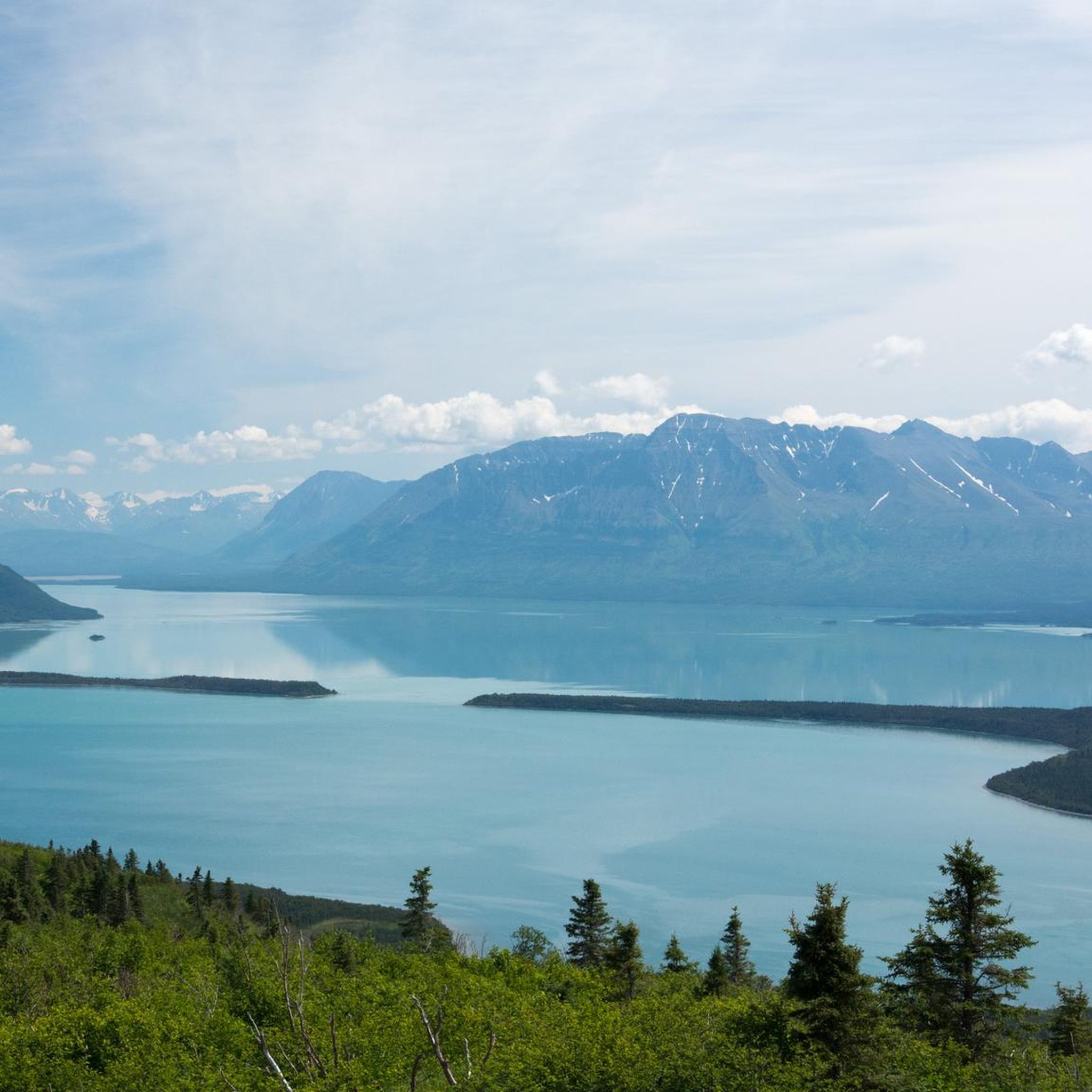
Hikes in Katmai National Park explore a remote Alaskan landscape defined by active volcanoes, large lakes, and wild rivers. The region's terrain is largely undeveloped, with most marked trails concentrated around the Brooks Camp area. These routes offer access to views of Naknek Lake and the vast, ash-covered Valley of Ten Thousand Smokes, a landscape formed by the 1912 Novarupta eruption.
Best hiking trails in Katmai National Park
- The most popular hiking route is Dumpling Mountain Overlook — Katmai National…
Last updated: July 8, 2026
7
hikers
5.48km
01:34
80m
240m
Easy hike. Great for any fitness level. Easily-accessible paths. Suitable for all skill levels.
2
hikers
2.08km
00:32
10m
0m
Easy hike. Great for any fitness level. Easily-accessible paths. Suitable for all skill levels.

Sign up for free
5.0
(1)
25
hikers
3.78km
00:58
10m
10m
Easy hike. Great for any fitness level. Easily-accessible paths. Suitable for all skill levels.
8
hikers
4.13km
01:24
220m
220m
Easy hike. Great for any fitness level. Easily-accessible paths. Suitable for all skill levels.
3
hikers
834m
00:13
0m
0m
Easy hike. Great for any fitness level. Easily-accessible paths. Suitable for all skill levels.
Get access to more routes and recommendations from other explorers.
Sign up for free
Already have an account?
Our route recommendations are based on thousands of hikes, rides, and runs completed by other people on komoot.
Start today with a free account
Your next adventure awaits.
Login or Signup
Popular around Katmai National Park
Tips from the Community

Here at the end of the Confluence Trail you can to Three Forks where the Lethe and Windy Creek merge to form the Ukak River, also known as Knife Creek. The water flows downstream from here to Ukak Falls.
0
0

The two-tiered Brooks Falls viewing platform is the most popular place to be in Katmai National Park, because it offers great overlooks of the biggest and most dominant bears fishing around the waterfall. It can get crowded in July, so you should expect to wait a while before being allowed onto the platform. Your time on the platform may also be limited, usually to about an hour. There are restrictions on tripod use as well.
0
0
The most dominant bears tend to do their fishing around Brooks Falls, visible from the Falls viewing platform. However the Riffles platform, situated about 100 yards downstream from the Falls platform, has some advantages. There is usually no time limit for occupancy, and you are allowed to use tripods here. It's also a great place to watch sows teaching their cubs how to fish, and subadults trying out their new skills. You can view bears fishing in the Riffles via a NPS webcam: explore.org/livecams/brown-bears/brown-bear-salmon-cam-the-riffles
0
0
The campground has vault toilets, potable water, and an electric fence to deter bears. Capacity is limited to 60 people and fills up quickly during the summer.
0
0
The Dumpling Mountain Overlook marks the end of the maintained trail. You can continue cross-country to the summit of Dumpling Mountain, which adds around another 5 miles round-trip.
0
0
Ukak Falls, a mighty cascade of ash-laden water, is one of the common destinations on ranger-led hikes from the Robert F. Griggs Visitor Center in Katmai National Park. Use caution if you wander near the canyon rim — its edge can be unstable.
0
0
The Robert F. Griggs Visitor Center sits at the end of the Valley of Ten Thousand Smokes Road. It can only by bus (or very, very long walk) from Brooks Camp. Brooks Camp, in turn, can only be reached by float plane or, on rare occasions, small boats from nearby communities. For more information: nps.gov/katm/planyourvisit/directions.htm
0
0
The Brooks Camp Visitor Center, usually open June through late September, is your initial point of entry to Brooks Camp. This is where you'll get your mandatory introduction to bear etiquette. You can also chat with park rangers, attend ranger-led events, and shop the Alaska Geographic store, which include books and souvenirs. The camp has water and bathrooms and makes a great pitstop.
0
0
Frequently Asked Questions
How do I get to Katmai National Park? Can I drive there?
No, you cannot drive to Katmai National Park. It is a remote wilderness area accessible only by plane or boat. The most common route is to fly from Anchorage to King Salmon, and then take a smaller floatplane to Brooks Camp, the park's main visitor hub.
What is hiking in Katmai actually like? Are there many marked trails?
Hiking in Katmai is a true wilderness experience. The park has less than five miles of officially maintained trails, most of which are located in the Brooks Camp area. Beyond these paths, hiking often involves navigating unmarked terrain, a practice known as 'bushwhacking', which requires excellent navigation skills and self-sufficiency.
What are the main challenges of backcountry hiking in Katmai?
The primary challenges are the remote, undeveloped terrain and the high concentration of brown bears. Hikers must be completely self-sufficient, carrying all necessary gear, food, and bear safety equipment. Navigating through dense brush, across rivers, and over volcanic terrain requires significant experience. Weather can also change rapidly.
What are the best hiking areas for bear viewing?
The Brooks Camp area is the premier location for bear viewing while hiking. The easy Brooks Falls — Katmai National Park trail leads directly to viewing platforms where you can safely watch bears fishing for salmon. While bears can be encountered anywhere in the park, this area offers the most reliable and safest viewing opportunities.
Are there any easy hikes suitable for beginners?
Yes, the trails around Brooks Camp are generally easy and well-suited for most visitors. Besides the trail to the falls, the Brooks Camp Cultural Site Trail is a very short, flat walk that offers historical insights. For a slightly longer but still easy walk, the Lake Brooks Road provides a relatively flat route.
What should I know about bear safety when hiking in Katmai?
Bear safety is critical. Always carry bear spray and know how to use it. Make noise while you hike by talking or clapping to avoid surprising a bear. Never run from a bear. All visitors to Brooks Camp must attend a mandatory bear safety briefing upon arrival. For more detailed park-specific rules, you can consult the official NPS hiking page.
Can I hike in the Valley of Ten Thousand Smokes?
Yes, but it's a challenging undertaking. There are no marked or maintained trails in the valley itself. Most visitors experience it via a bus tour from Brooks Camp. Hiking in the valley is a multi-day backcountry expedition requiring careful planning for river crossings and navigation across the vast ash flow. The Valley of Ten Thousand Smokes Road tour follows the access road but does not enter the valley floor.
What is the best time of year to hike in Katmai?
The main visitor season, and the best time for hiking, is from June through September. July is particularly popular as it coincides with the peak of the sockeye salmon run at Brooks Falls, offering incredible bear viewing. Weather is most favorable during these summer months, but you should still be prepared for rain and cool temperatures at any time.
What do other hikers enjoy most about Katmai National Park?
The area is highly rated by the komoot community. Reviewers often praise the unparalleled wildlife viewing opportunities, especially observing the brown bears in their natural habitat. The unique and dramatic volcanic landscapes, like those seen from the Dumpling Mountain Overlook, are also frequently highlighted as a memorable part of the experience.
Do I need a permit for backcountry hiking or camping?
While there are no permits required for backcountry hiking itself, you do need a permit to camp in the backcountry. It's also mandatory to check in with park rangers before and after your trip. For camping at the developed Brooks Camp Campground, reservations are required and must be made far in advance due to extremely high demand.
What should I pack for a day hike in Katmai?
For any hike, even a short one, you should be prepared. Essential items include sturdy, waterproof hiking boots, layered clothing, rain gear, water, snacks, a map, and a compass or GPS. Most importantly, you must carry bear spray and have it readily accessible.
Most popular routes in Katmai National Park
Most popular attractions in Katmai National Park

Get inspired with the komoot mobile app


Explore more
Browse the best Hikes in other regions.
