Attractions and Places To See around Aughagranna - Top 9
Attractions and places to see around Aughagranna include historical landmarks, significant cultural sites, and natural features. Situated in County Tyrone, Northern Ireland, the area offers expansive views and connections to Irish heritage. Visitors can explore ancient sites, castles, and tranquil natural settings. The region provides a variety of outdoor experiences.
Best attractions and places to see around Aughagranna
- The most popular attractions is Maghery Footbridge at Lough Neagh, a viewpoint that offers views of Lough Neagh, the largest freshwater…
Last updated: June 29, 2026
Maghery Footbridge at Lough Neagh
Highlight • Viewpoint
Showing Translation
Tip by

Mountjoy Castle
Highlight • Historical Site
Translated by Google •
Tip by

Sign up now to discover places like this
Get recommendations on the best single tracks, peaks, & plenty of other exciting outdoor places.
Sign up for free
Dungannon Park Weir
Highlight • Natural Monument
Tip by

View of Coney Island from Maghery
Highlight • Lake
Translated by Google •
Tip by
St Mary’s
Highlight • Religious Site
Showing Translation
Tip by
Sign up for free to discover even more attractions around Aughagranna.
Sign up for free
Already have an account?
Start today with a free account
Your next adventure awaits.
Login or Signup
Popular around Aughagranna
Tips from the Community

On Maghery Road, a stone's throw from the shores of Lough Neagh, stands St. Mary's Church. This church, also known as Our Lady, Queen of Peace, is a beautiful example of a simple yet graceful neo-Gothic village church. The current church dates from the early 19th century (c. 1827) and immediately stands out with its square tower rising above the village rooftops. The local sandstone walls give the building a warm, robust appearance that perfectly complements the rustic landscape of the lake shores.
7
0
For cyclists following the 'Lough Neagh Cycle Way' (National Cycle Route 94), the Maghery footbridge is an iconic resting point and an essential link. This elegant, modern bridge spans the mouth of the Upper Bann as it enters the lough.
8
0
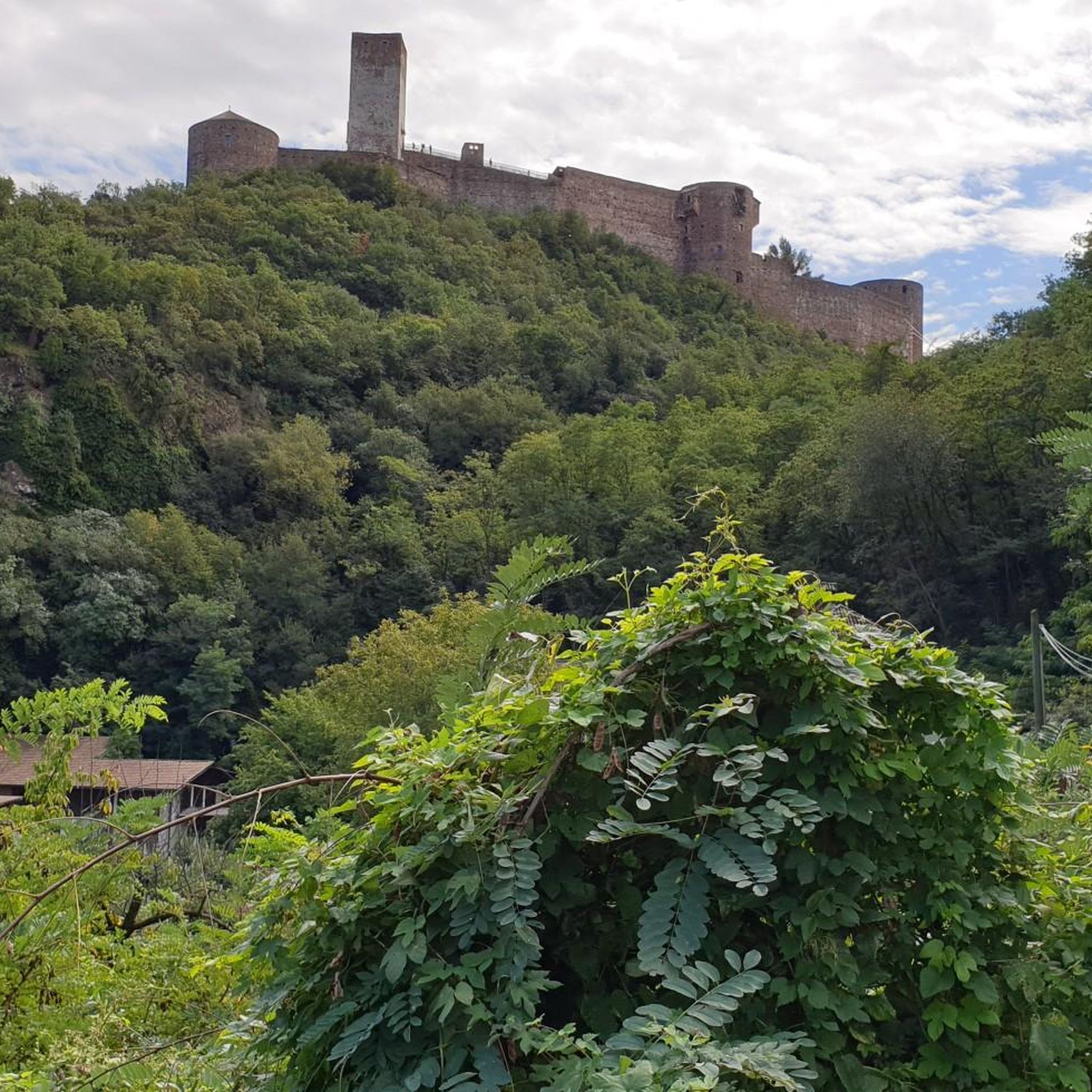
On the banks of Lough Neagh, near the village of Brockagh, you will find the impressive ruin of Mountjoy Castle. This castle was built between 1602 and 1605 by Lord Mountjoy and served at the time as a crucial military stronghold during the turbulent years of the Nine Years' War. Unique is the special combination of building materials: the lower floor is constructed from rough natural stone, while the upper floor consists of locally fired red brick. Although the castle has been a ruin since 1648, the central block and the characteristic arrow-shaped corner towers are still clearly recognizable in the landscape.
8
0

The Maghery Footbridge on the edge of Lough Neagh offers a small moment of peace in the midst of the expansive landscape. As you cross the bridge, your gaze glides over the gentle waters of the largest lake in the British Isles. In good weather, the clouds are impressively reflected on the surface of the water, making the scene look almost like a painting. Even when the sky is cloudy, the lake has a special atmosphere that invites you to linger rather than to quickly pass by. The paths around the bridge are mostly flat, but you should be prepared for occasional sections with unpaved surfaces. This could be a bit slippery, especially in wet weather, but this is not a problem. The connection to the National Cycle Network, Route 94, also offers you many other opportunities to explore the area. A little tip: Maghery itself does not have much to offer apart from the bridge, but a short detour to the nearby Oxford Island nature reserve is definitely worth it. This means you can easily combine a visit to the bridge with a larger circular tour.
4
0
From the shore at Maghery, the view falls directly on Coney Island, which lies quietly in Lough Neagh. The rough waters of the lake, which are constantly in motion, create a special atmosphere that alternates between calm and turmoil. The cool breeze carries the scent of the wild vegetation on the shore, while the sound of the waves sets the tone for the moment. Coney Island itself seems almost untouched, a small spot in the vastness of the lake that seems to tell stories of times gone by. It may be tempting to imagine what it would be like to row there and explore the island. But from here it remains a place of longing in the distance - close enough to arouse curiosity, but far enough to keep a certain mystery. The view is impressive, but on stormy days you realize that nature can be rough here. Perhaps not the ideal place for a long rest, but a place that is worth a moment's pause before continuing on the path.
1
0
In the shadow of Northern Ireland's vast skies, the mysterious Mountjoy Castle rises on a hill above Lough Neagh. This ruined castle, whose Irish name "Caisleán Mhuinseo" whispers into the wind, stands like a proud sentinel in the village of Mountjoy, County Tyrone. The castle was built in 1602 by order of Charles Blount, 1st Earl of Devonshire and 8th Baron Mountjoy. But times have not always been kind to this building: as early as 1643, a devastating fire left scars on the walls of the castle. What remained is a two-story brick building with the ground floor clad in stone. The architecture speaks of a time of defense and vigilance - a central rectangular block protected by four spear-shaped towers, crisscrossed by embrasures. The north-western tower testifies to the fragility of time - partially collapsed, while the western curtain wall has lost its presence. The entrance, once on the south side of the eastern curtain wall, seems to whisper stories of days gone by, while wide windows on the upper floor capture the eyes of visitors. Unfortunately, an extension at the back keeps some of the castle's secrets hidden, and the interior area is closed to visitors' eyes. But even in its ruined state, Mountjoy Castle embodies the soul and history of Northern Ireland. Not only is it a State Care Historic Monument in the townland of Magheralamfield in the Mid Ulster District, but it is also a silent testament to time, inviting every walker to pause for a moment and listen to the whispers of history.
4
0

The weir at Dungannon park trickles down like a waterfall into a fresh pool of water surrounded by lush green nature.
1
0
Pull up a picnic blanket and enjoy the beautiful views over this weir in Dungannon Park. The water trickles down like a waterfall into a fresh pond surrounded by lush green nature.
2
0
Frequently Asked Questions
What historical sites can I visit around Aughagranna?
You can explore several significant historical sites. Visit Mountjoy Castle, a ruined castle from 1602 offering views above Lough Neagh. Tullyhogue Fort is an important site where the O'Neills were crowned Chiefs of Ulster, now offering expansive countryside views. Further afield, the Ulster American Folk Park details the journey of Irish emigrants, and the ancient Beaghmore Stone Circles provide a tangible connection to the past.
Where can I find scenic views or natural beauty spots?
For serene natural beauty, visit the Maghery Footbridge at Lough Neagh, offering peaceful views over the largest freshwater body in Ireland and the UK. Dungannon Park Weir provides a tranquil spot with water trickling into a pond. You can also enjoy the panoramic views from the Hill of The O'Neill & Ranfurly House in Dungannon, overlooking seven of Ulster's nine counties.
Are there family-friendly attractions in the Aughagranna area?
Yes, several attractions are suitable for families. Dungannon Park Weir is a lovely spot for a picnic amidst lush greenery. The Ulster American Folk Park is an engaging outdoor museum for all ages, detailing emigration history. Tullyhogue Fort is also considered family-friendly, offering space to explore and views.
What outdoor activities are available near Aughagranna?
The region offers various outdoor activities. The Sperrins mountain range is ideal for outdoor enthusiasts, with peaks, forests, moors, and rivers. You can find woodland trails in Gortin Glens and Gortin Glen Forest Park, where canoeing is also possible on the lakes. For structured routes, explore the nearby cycling routes and running trails.
Are there cycling routes near Aughagranna's attractions?
Yes, there are several cycling opportunities. The paths around the Maghery Footbridge at Lough Neagh are mostly flat and connect to National Cycle Network, Route 94. You can find a variety of routes, including easy to difficult options, in the cycling guide for Aughagranna, such as the Castle Caulfield & Ballysaggart Lough loop.
Can I find running trails around Aughagranna?
Absolutely. There are numerous running trails available, ranging from moderate to difficult. For example, you can explore the Rath loop or various running loops from Ballybeg and Reenaderry. More details and options can be found in the running trails guide for Aughagranna.
Are there any unique or lesser-known attractions worth visiting?
Consider visiting the OM Dark Sky Park and Observatory in Davagh Forest for an out-of-this-world experience with advanced technology and stargazing opportunities in an official Dark Skies location. The An Creagán Visitor Centre also offers a unique insight into the landscape's heritage and archaeology.
What cultural heritage sites are there to explore?
Beyond historical landmarks, you can delve into cultural heritage at the Ulster American Folk Park, which is an outdoor museum. The Hill of The O'Neill & Ranfurly House in Dungannon is considered one of Ireland's most important heritage sites. The An Creagán Visitor Centre and the Dun Uladh Cultural Heritage Centre also serve as points of cultural interest.
Is there a place for stargazing or astronomy nearby?
Yes, the OM Dark Sky Park and Observatory in Davagh Forest is an excellent choice for stargazing. Located within the Sperrins, an official Dark Skies location, it offers advanced technology, including holographic installations, virtual reality headsets, and a large telescope for an immersive astronomical experience.
What can I see or do around Lough Neagh?
Around Lough Neagh, you can visit the Maghery Footbridge for expansive views over the largest freshwater body in the UK and Ireland. From Maghery, you also get a view of Coney Island. Additionally, the ruined Mountjoy Castle stands on a hill overlooking the lough.
Are there parks for relaxation or picnics?
Yes, Dungannon Park Weir is a serene spot within Dungannon Park, perfect for a picnic with its lush greenery and trickling water. Gortin Glen Forest Park also offers woodland trails and tranquil settings for relaxation.
What do visitors particularly enjoy about the attractions around Aughagranna?
Visitors appreciate the blend of historical significance and natural beauty. They enjoy the peaceful views from the Maghery Footbridge and the tranquil atmosphere of Dungannon Park Weir. The historical depth of sites like Mountjoy Castle and Tullyhogue Fort also captivates those interested in the region's past.
Most popular routes around Aughagranna

Get inspired with the komoot mobile app


Explore more
Still not found the Highlight you’re looking for? See guides of the top attractions in other regions:
