The best walks and hikes around Stoke Wake
4.6
(276)
1,575
hikers
181
hikes
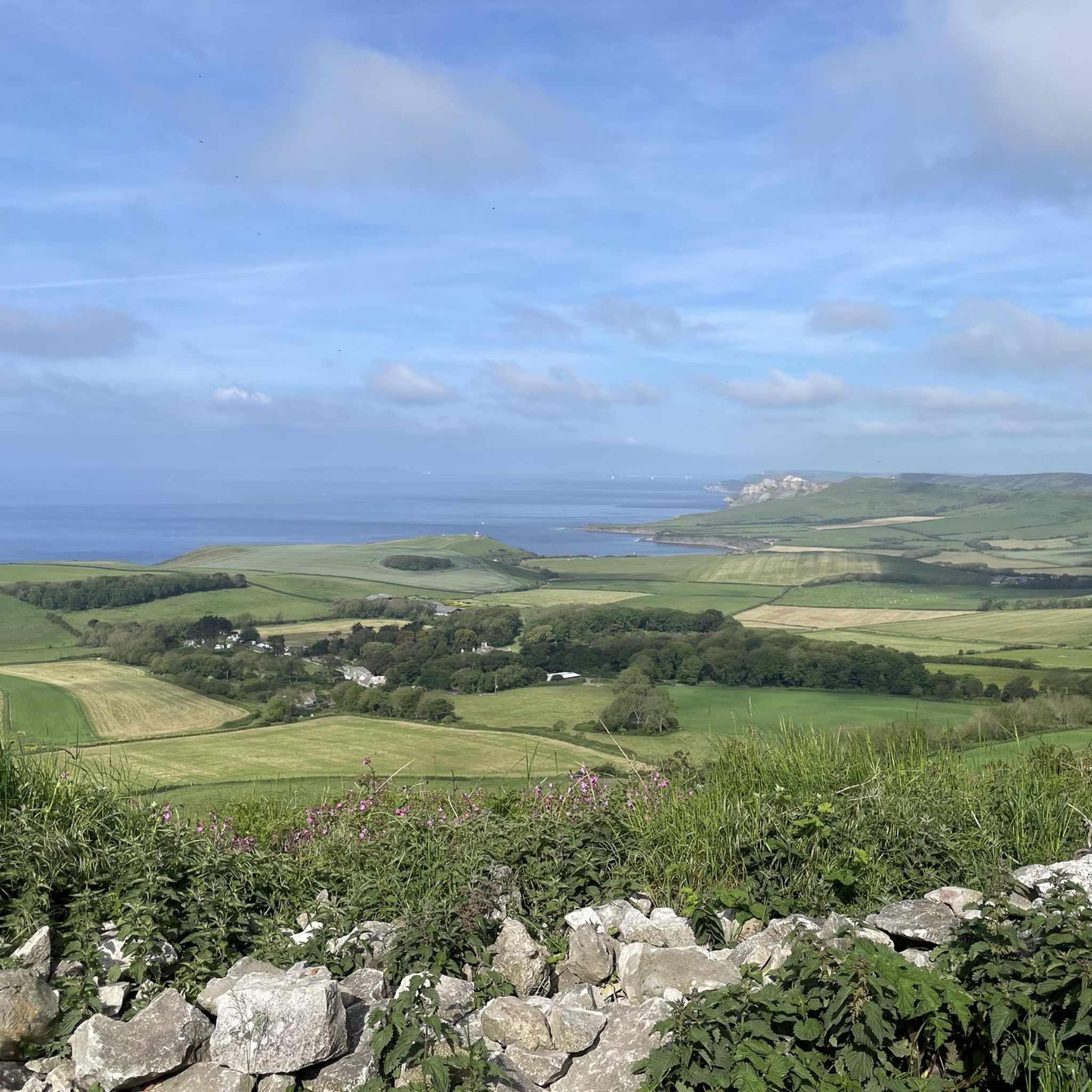
Hiking around Stoke Wake reveals a landscape characterized by prominent hills, including Bulbarrow Hill, one of Dorset's highest points, and the historic Iron Age hill forts of Hambledon Hill and Hod Hill. The region is situated within the Blackmore Vale, offering expansive views across green fields and distant hills. These features provide varied terrain for hiking, from gentle ascents to more challenging climbs.
Best hiking trails around Stoke Wake
- The most popular hiking route is Rawlsbury Camp, Lower Ansty, Hilton…
Last updated: April 28, 2026
4.7
(3)
15
hikers
12.0km
03:25
270m
270m
Moderate hike. Good fitness required. Easily-accessible paths. Suitable for all skill levels.
4.5
(4)
10
hikers
26.1km
07:17
500m
500m
Hard hike. Very good fitness required. Mostly accessible paths. Sure-footedness required.

Sign up for free
4.7
(13)
52
hikers
13.9km
03:56
290m
290m
Moderate hike. Good fitness required. Easily-accessible paths. Suitable for all skill levels.
4.0
(2)
8
hikers
6.66km
01:54
150m
150m
Easy hike. Great for any fitness level. Easily-accessible paths. Suitable for all skill levels.
6
hikers
6.09km
01:47
170m
170m
Easy hike. Great for any fitness level. Easily-accessible paths. Suitable for all skill levels.
Get access to more routes and recommendations from other explorers.
Sign up for free
Already have an account?
Our route recommendations are based on thousands of hikes, rides, and runs completed by other people on komoot.
Start today with a free account
Your next adventure awaits.
Login or Signup

Tips from the Community

All Saints Church in Hilton, Dorset, is a remarkable Grade I listed building, primarily dating from the 15th and 16th centuries. Its unique architecture features masonry, windows, and carved corbels (including a bagpipe player) salvaged and reused from the nearby Milton Abbey after the Dissolution. The church also houses two beautiful panels of early 16th-century paintings of the Apostles, which were also transferred from the Abbey. It retains a square 12th-century font in Purbeck marble.
0
0
* It lies southeast of the deserted medieval village of Bingham's Melcombe, the remains of which can still be seen in the surrounding fields.
0
0
* Architectural Features: The church exhibits features typical of the 14th and 15th centuries, including reticulated tracery in some windows, ogee-headed lights, and a tower with an embattled parapet. The south chapel has panel tracery. * Interior Elements: Inside, you can find a Norman font (brought from a nearby chapel in 1951), a pulpit bought in 1723, and 17th-century communion rails. A unique feature is a stuffed owl intended to deter bats! * Horsey Chapel Screen: The oak screen separating the Horsey Chapel from the nave is particularly interesting, featuring the initials S.T.F. (for Sir Thomas Freke) and the date 1619 on the reverse. Location and Setting: * The church is situated in the grounds of Bingham's Melcombe, a significant medieval manor house.
0
0
A church has stood on this site since at least 1150 AD, with records dating back to that time held in the County Museum Library. * 14th Century Core: The present stone and flint building largely dates back to the mid-14th century. This includes the nave and the lower stage of the west tower. * 15th Century Additions: The upper stage of the tower and the rebuilding of the south (Horsey) chapel occurred in the 15th century. The Horsey Chapel is separated from the nave by a notable oak screen. * 19th Century Chancel: The chancel was added in 1844 and features a window with reticulated tracery, in keeping with some of the earlier styles.
0
0
* Dissolution: Following the Dissolution of the Monasteries in 1539, the Abbey and estate were acquired by Sir John Tregonwell, a lawyer for Henry VIII. The Abbey church was allowed to become the parish church. * 18th Century Changes: In the late 18th century, Joseph Damer, Lord Milton (later Earl of Dorchester), decided the nearby market town of Milton (or Middleton) disturbed his ideal of rural peace. He had the entire town demolished and created the planned village of Milton Abbas. He also commissioned the landscape gardener Capability Brown to design the parkland around a new mansion he built on the site of the old Abbey buildings, keeping only part of the church. * Restoration: The church was restored around 1790 by James Wyatt and again in 1865 by Sir George Gilbert Scott.
0
0
The first church on the site was founded around 934 AD by the Saxon King Athelstan, grandson of Alfred the Great. It is said he had a vision of defeating the Danes while camping nearby and built the church in gratitude. * Benedictine Abbey: About thirty years later, King Edgar established a Benedictine monastery there. * Fire and Rebuilding: A fire caused by lightning destroyed the Norman church in 1309. The current Abbey Church of Saint Mary, Saint Sansom and Saint Branwalader largely dates from the 14th century, with some 15th-century additions like the north transept and tower extension. The nave as originally planned was never built.
0
0
notable for being one of the first planned settlements in England. In the 1770s, the owner of Milton Abbey, Joseph Damer (later Lord Milton and Earl of Dorchester), decided the original village of Middleton was spoiling his view and commissioned architect Sir William Chambers and landscape gardener Capability Brown to design a new village in a nearby wooded valley. The old village was demolished, and most of its residents were relocated to this new model village, now known as Milton Abbas. The village is characterized by its single, sinuous main street lined with 36 almost identical whitewashed and thatched cottages. These were originally designed to house two families each.
0
0
The church was built in 1786. This was during the creation of the new village of Milton Abbas by Joseph Damer, the Earl of Dorchester. He had the original market town of Milton (or Middleton), which was too close to his mansion (now Milton Abbey School), demolished and a new model village constructed to house his estate workers. * Replacing an Older Church: There was an earlier St James' Church serving the parish before the new village was built. Its exact location is uncertain, though some speculate it might have been near the south door of Milton Abbey. Registers of this earlier church date back to 1650. * Materials from the Abbey: It is believed that some of the materials used to build St James' Church came from the demolished abbey barn. * Victorian Enhancements: In 1886, the church underwent significant alterations. The chancel was enlarged, the chancel and tower arches were rebuilt, and a south aisle was added.
1
0
Frequently Asked Questions
How many hiking trails are available around Stoke Wake?
There are over 180 hiking trails around Stoke Wake, offering a wide variety of options for different skill levels and interests. The komoot community has explored more than 1600 of these routes.
Are there easy hiking trails suitable for beginners or casual walkers?
Yes, Stoke Wake offers a good selection of easy trails. You'll find over 60 routes categorized as easy, perfect for a relaxed stroll. An example is the Bulbarrow Down – View from Bulbarrow Hill loop from Ansty, which is 6.7 km long and takes about 1 hour 54 minutes.
What are some of the more challenging hiking options in the Stoke Wake area?
For experienced hikers seeking a challenge, Stoke Wake features several difficult routes. One notable option is The Dorset Gap loop from Bulbarrow Hill, a 26.1 km path with significant elevation gains and panoramic vistas.
Are there any circular hiking routes around Stoke Wake?
Many of the trails around Stoke Wake are circular, allowing you to start and end at the same point. For instance, the Milton Abbas Village – View from Bulbarrow Hill loop from Woolland is an 8.6-mile circular trail that takes you through varied terrain.
What historical sites or landmarks can I see while hiking near Stoke Wake?
The Stoke Wake area is rich in history. You can explore ancient Iron Age hill forts like Hambledon Hill and Hod Hill, both managed by the National Trust. Bulbarrow Hill itself features the visible remains of Rawlsbury, a Celtic encampment. Other nearby points of interest include the Cerne Abbas Giant and the Shillingstone Railway Station & Museum.
What do other hikers enjoy most about the trails in Stoke Wake?
The trails in Stoke Wake are highly rated by the komoot community, with an average score of 4.6 stars from over 280 reviews. Hikers frequently praise the stunning panoramic views from prominent hills like Bulbarrow Hill, the historical intrigue of Iron Age forts, and the natural beauty of the Blackmore Vale.
Are there any family-friendly hiking options in Stoke Wake?
While specific family-friendly routes aren't highlighted, the presence of over 60 easy trails suggests many suitable options for families. Look for shorter, less strenuous loops with minimal elevation gain, such as the Bulbarrow Down – View from Bulbarrow Hill loop from Ansty, which offers manageable distances and beautiful scenery.
Can I bring my dog on the hiking trails around Stoke Wake?
Many trails in the UK countryside are dog-friendly, but it's always best to check local signage for specific restrictions, especially in areas with livestock or nature reserves. Generally, dogs are welcome on leads on public footpaths. The diverse landscape of the Blackmore Vale offers plenty of open spaces for walks with your canine companion.
What is the best time of year to go hiking in Stoke Wake?
Stoke Wake offers beautiful hiking opportunities throughout the year. Spring and summer bring lush green landscapes and abundant wildflowers, particularly on the calcareous grasslands of Hod Hill. Autumn provides vibrant foliage, while winter can offer crisp, clear views, though some paths might be muddy. The panoramic views from Bulbarrow Hill are impressive in any season.
Are there pubs or cafes near the hiking routes in Stoke Wake?
While Stoke Wake itself is a hamlet, the surrounding Blackmore Vale region has charming villages with pubs and cafes. For example, the View from Bulbarrow Hill – The Ibberton Pub loop from Woolland specifically incorporates a pub into its route, offering a convenient stop for refreshments.
What kind of views can I expect on hikes around Stoke Wake?
Hiking around Stoke Wake offers truly expansive and 'surpassing imagination' views. From high points like Bulbarrow Hill, you can see for miles across the green fields of the Blackmore Vale, distant blue-grey hills, and even into neighboring counties. Iron Age hill forts like Hambledon Hill also provide breathtaking vistas over the River Stour and the surrounding countryside.
Most popular attractions around Stoke Wake

Get inspired with the komoot mobile app


Explore more
Browse the best Hikes in other regions.
