The best cycling routes around Lake Studzienickie
4.9
(6)
34
riders
6
rides
Touring cycling routes around Lake Studzienickie traverse a landscape characterized by rolling terrain and a mix of natural and historical features. The area includes various lakes and offers routes that pass by historical sites such as old mills and churches. Elevations are generally moderate, with routes featuring gradual ascents and descents suitable for touring bicycles. The region provides a network of paths connecting small towns and natural areas.
Best touring cycling routes around Lake Studzienickie
- The most popular touring cycling…
Last updated: May 16, 2026
3
riders
29.8km
02:33
190m
190m
Hard bike ride. Good fitness required. You may need to push your bike for some segments of this route.
2
riders
24.8km
01:43
120m
120m
Hard bike ride. Great for any fitness level. You may need to push your bike for some segments of this route.

Sign up for free
5.0
(1)
2
riders
26.9km
01:45
140m
140m
Easy bike ride. Great for any fitness level. Mostly paved surfaces. Suitable for all skill levels.
5.0
(1)
2
riders
44.0km
03:13
220m
220m
Moderate bike ride. Good fitness required. Mostly paved surfaces. Suitable for all skill levels.
5.0
(1)
5
riders
29.6km
01:55
130m
130m
Hard bike ride. Great for any fitness level. You may need to push your bike for some segments of this route.
Our route recommendations are based on thousands of hikes, rides, and runs completed by other people on komoot.
Start today with a free account
Your next adventure awaits.
Login or Signup
Popular around Lake Studzienickie
Tips from the Community

The place and the building itself are rich in history. Since the last fire in 1834, the church has survived relatively unchanged.
0
0

Do you like nature? Then this is worth a look! Nature in abundance. Simply beautiful!
0
0

The church was built in the years 1772-1781. The former medieval church was destroyed in a fire in 1771 and was demolished. The new church was built according to the design of the builder Holsche from Berlin. The building represents the classicist style. It is a single-body, rectangular hall church with a presbytery on the longitudinal axis of the eastern facade and a tower on the axis of the western facade. The church was built on a stone foundation made of brick and plastered. The interior is covered with a wooden ceiling, mirrored and plastered. A historic rectory is located next to the church.
1
1
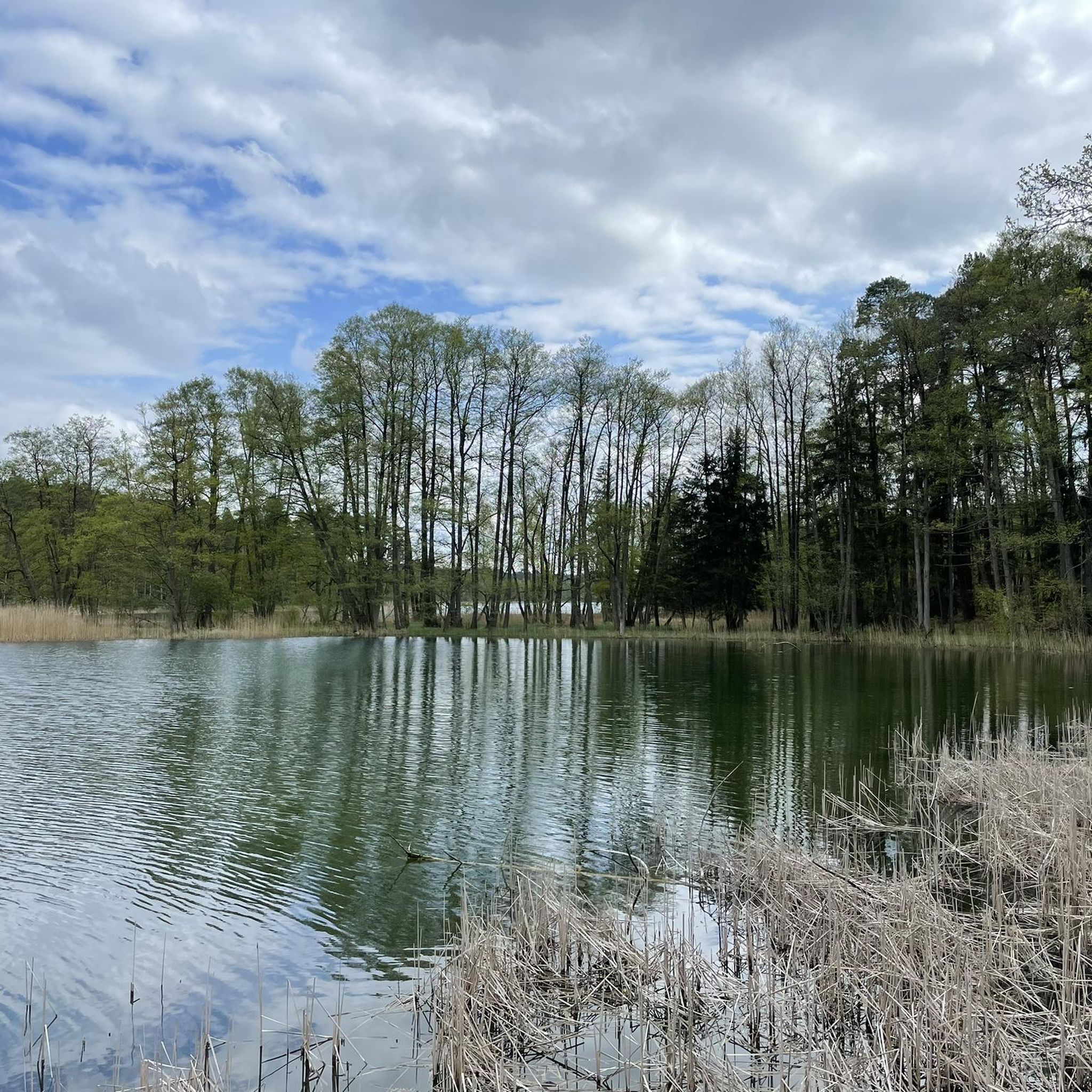
Lake Młyńskie was considered the most beautiful in Kalisz Pomorski until the 1930s. Then, after the beach and walking paths above Bobrów Wielki were built, it lost its preeminence. Although it remains picturesque to this day. Where does the name of the lake come from: Młyńskie? The Drawica River flowing from it turned the mills (the city and the castle). And when the areas around the city began to be drained and expanded at the end of the 19th century, the mills were moved to the suburbs. The lake, on the other hand, was incorporated into the resort complex that Kalisz Pomorski (then Callies) became.
2
1
Right next to the Town Hall stands the "Beczuś" Cucumber - the mascot of the Kalisz Pomorski Commune - the symbol of the Fair at the Cucumber Lake
2
1
The largest preserved granary in the commune is the one on Janowiecka Street in Kalisz Pomorski, built in 1901 for the Credit Society. The turret has not survived from its original state.
1
1
The single-storey rectory building at the parish of Our Lady Queen of Poland was built around 1800. It was designed on a rectangular plan. The house was covered with a hipped roof. An interesting entrance leads to the rectory, decorated with an arched portal. Since 1963, the building has housed the sixteenth-century epitaph of Ernst Joachim von Wedel, transferred from the church in Giżyno.
2
1
The first church in the village had a simple structure (it was called All Saints, and it was probably founded in the 13th century). In 1349 the church is mentioned in the list of parishes. In 1641, a branch chapel of the parish in Tuczno was built, and in 1630 or 1680 the present half-timbered church was built, which was enlarged in the second half of the 18th century with the change of windows. Perhaps also in the eighteenth century, a sacristy that is difficult to date was added. In 1980, the building underwent renovation. The building is oriented, on the projection of an elongated rectangle (three-sided closure from the east), hall-like, situated in the center of the village, in a basin of the area. The church (cemetery) area is limited by a wall made of field stones. There are two monumental lime trees by the goal from the east. The structure is half-timbered with a stone foundation, plastered, and the gable wall is boarded. Brick sacristy. The nave is covered with a bare ceiling. Collar beam roof truss. The rafters are partly original. The gable roof is covered with plain tiles. On the ridge there is a cross on a pedestal made of galvanized sheet
1
2
Frequently Asked Questions
How many touring cycling routes are available around Lake Studzienickie?
There are over 5 touring cycling routes around Lake Studzienickie, offering a variety of experiences for different skill levels.
What kind of terrain can I expect on the touring cycling routes around Lake Studzienickie?
The touring cycling routes around Lake Studzienickie traverse a landscape characterized by rolling terrain and a mix of natural and historical features. You can expect routes featuring gradual ascents and descents, making them suitable for touring bicycles.
Are there routes suitable for beginners or less experienced touring cyclists?
Yes, there is at least one easy touring cycling route available. For example, the Bike loop from Biały Zdrój Południowy is rated as easy and covers 26.9 km with moderate elevation changes.
What historical sites or landmarks can I see along the touring cycling routes?
The routes often pass by historical sites. You can explore places like the Ruins of Cramper Mill, which is featured on routes such as the Ruins of Cramper Mill – Church of Martew loop from Nowa Studnica. Another route, the View of Tuczno Castle – Tuczno Castle loop from Biały Zdrój Południowy, offers views of Tuczno Castle.
Are there any challenging touring cycling routes for experienced riders?
Yes, there are several challenging routes. For instance, the Ruins of Cramper Mill – Church of Martew loop from Nowa Studnica is rated as difficult, covering nearly 30 km with significant elevation gain. Another difficult option is the Town church in Kalisz Pomorski – Młyńskie Lake loop from Pruszcz.
Are there any circular touring cycling routes around Lake Studzienickie?
Many of the touring cycling routes in the area are designed as loops. Examples include the Ruins of Cramper Mill – Church of Martew loop from Nowa Studnica and the Ruins of Cramper Mill loop from Bralin, allowing you to start and end at the same point.
What do other touring cyclists say about the routes around Lake Studzienickie?
The touring cycling routes around Lake Studzienickie are highly rated by the komoot community, with an average score of 4.75 stars from over 4 reviews. Cyclists often appreciate the varied terrain and the opportunity to explore historical sites and natural surroundings.
Do the routes pass by any lakes or natural water features?
Yes, the region is characterized by various lakes, and many routes pass alongside them. For example, the Town church in Kalisz Pomorski – Młyńskie Lake loop from Pruszcz specifically includes Młyńskie Lake.
What is the typical duration for a touring cycling route in this area?
Route durations vary depending on length and difficulty. For example, the moderate View of Tuczno Castle – Tuczno Castle loop from Biały Zdrój Południowy, at 44 km, typically takes around 3 hours and 13 minutes to complete, while shorter routes like the Ruins of Cramper Mill loop from Bralin can be done in about 1 hour and 43 minutes.
Are there routes that connect small towns in the region?
Yes, the network of paths around Lake Studzienickie is designed to connect small towns and natural areas, allowing cyclists to experience the local culture and landscapes between settlements.
Most popular routes around Lake Studzienickie

Get inspired with the komoot mobile app


Explore more
Browse the best Cycling routes in other regions.
