Attractions and Places To See around L'Espunyola - Top 20
Best attractions and places to see around L'Espunyola include a blend of historical sites, natural beauty, and cultural points of interest. This rural municipality in the Berguedà region of Catalonia offers diverse landscapes, from dramatic cliffs to extensive forests. Visitors can explore Romanesque architecture, medieval bridges, and serene natural areas. The region provides opportunities for outdoor activities amidst its mountainous terrain and picturesque environment.
Best attractions and places to see around L'Espunyola
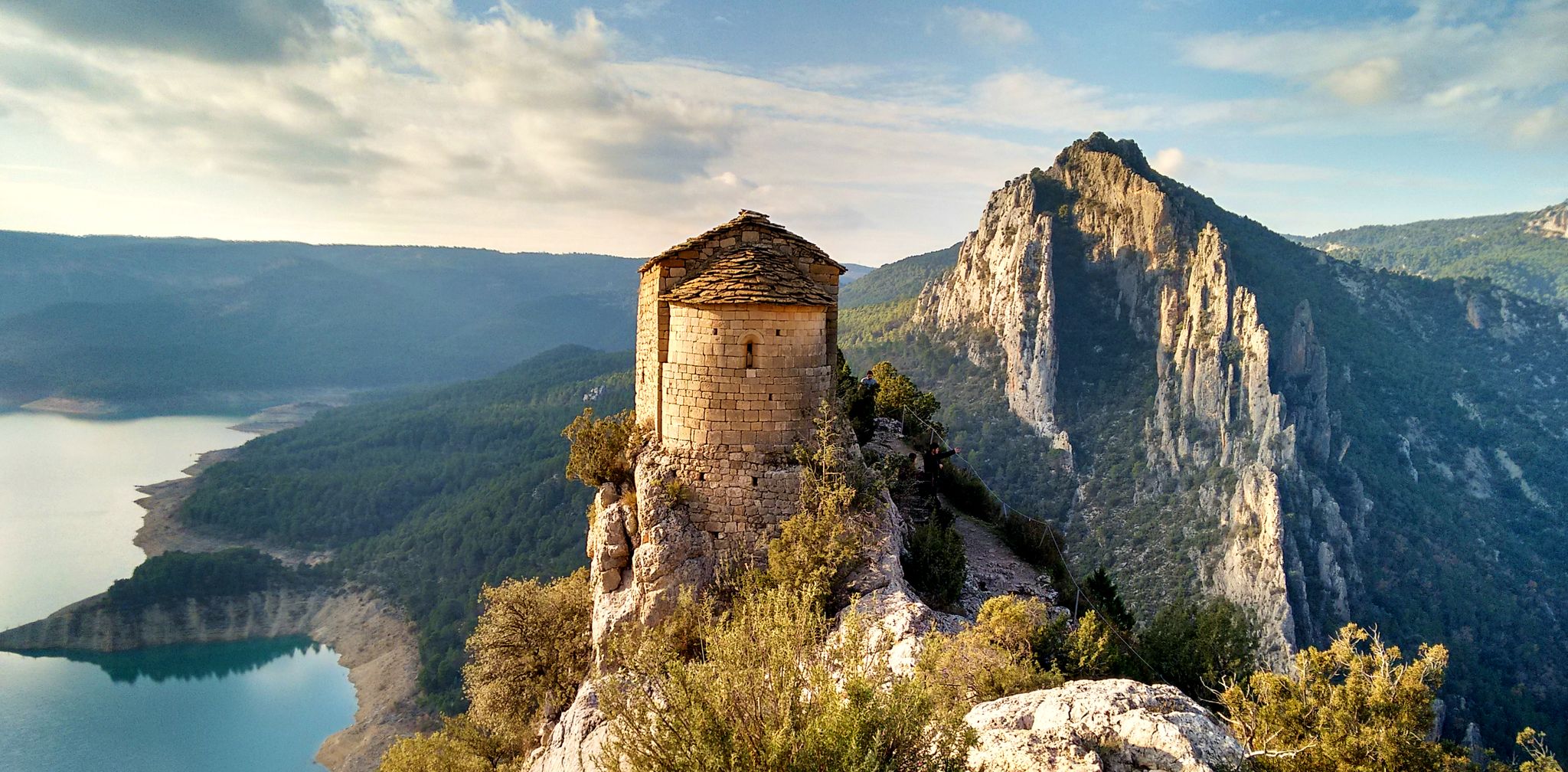
- The most popular attractions is Queralt Sanctuary,…
Last updated: July 6, 2026
Queralt Sanctuary
Highlight • Religious Site
Translated by Google •
Tip by

Pedret Bridge
Highlight • Bridge
Translated by Google •
Tip by

Sign up now to discover places like this
Get recommendations on the best single tracks, peaks, & plenty of other exciting outdoor places.
Sign up for free
Rasos de Peguera
Highlight • Climb
Tip by

Abandoned Village of Peguera
Highlight • Settlement
Translated by Google •
Tip by
The Capolatell (Busa Prison)
Highlight • Natural Monument
Translated by Google •
Tip by

Sign up for free to discover even more attractions around L'Espunyola.
Sign up for free
Already have an account?
Start today with a free account
Your next adventure awaits.
Login or Signup

Other adventures around L'Espunyola

Tips from the Community

A viewpoint of Catalonia. Pogacar and Merckx have won stages on this peak
0
0

This spiritual place has such a view that it is called the balcony of Catalonia. The Baroque interior is also worth a visit.
1
0
Located at an altitude of 1,600 meters, Peguera is an abandoned village belonging to the municipality of Fígols. Its peak mining activity was experienced in the late 19th and mid-20th centuries, thanks to the high level of mining activity. The abandonment of the coal mines further depopulated Peguera, leaving it in its current state, where most of the houses are in ruins.
0
0

An interesting place for its history The Queralt sanctuary is located in the Queralt mountain range, at an altitude of about 1,200 metres.
2
0

Splendid place a few km from Berga. From there, the old lane leads to Cal Rosal.
1
0

Spectacular climb to one of the most demanding peaks in Catalonia. Long climb, with sustained percentages and reaching almost 2000 meters. It is characterized by long straights and a very twisty and spectacular final stretch. Road in perfect condition.
0
0

Nestled in the majestic Sierra de Queralt, the Sanctuary of Queralt is a place of spiritual tranquility and natural beauty. Located around 1,200 metres above sea level, this sanctuary combines centuries of history and faith. When you stand here, you are not only looking at an impressive architectural masterpiece located in the heart of Catalonia, but also at a witness to the times. The original sanctuary was built in the 14th century, and although the current church dates back to the 18th century, you can feel the centuries-old reverence and deep spirituality that surround this place. The view from up here is simply breathtaking. The panorama stretches far across the Catalan landscapes, and amidst this silence, you almost feel as if time has stood still. If you are looking for a place where history, faith and nature blend harmoniously, then the Sanctuary of Queralt is an absolute must on your hiking route through Catalonia.
4
0

The sanctuary of Queralt is located in the Sierra de Queralt, at about 1,200 meters above sea level. The original religious building was built in the 14th century, although the current church dates from the 18th century. The views from the sanctuary are truly spectacular.
3
0
Frequently Asked Questions
What historical landmarks can I visit in and around L'Espunyola?
L'Espunyola is rich in history. You can explore the partially ruined L'Espunyola Castle, a Romanesque-style Cultural Asset of National Interest. Don't miss the medieval Pedret Bridge, dating back to 1286, or the Romanesque Sant Climent Church. Further afield, the Abandoned Village of Peguera offers a glimpse into the region's mining past.
Are there any significant religious sites in the area?
Yes, L'Espunyola is home to several notable religious sites. The Queralt Sanctuary, often called the 'balcony of Catalonia,' offers panoramic views and a rich history. Within the municipality, you can also visit the Sanctuary of the Mare de Déu dels Torrents, which preserves a Romanesque carving of the Virgin, and the Ermita de Santa Maria del Bosc.
What natural attractions are there for nature lovers?
Nature enthusiasts will find plenty to explore. The Torrent del Gorg Negre is known for its beautiful waterfalls and natural pools, accessible via a path from Serrat del Grau. The region also boasts diverse forests, including pine, holm oak, and oak groves, providing scenic landscapes. The Serra de Noet offers impressive views, and L'Espunyola is nestled at the foot of the dramatic Cingles de Capolat cliffs.
What kind of outdoor activities can I do near L'Espunyola?
L'Espunyola is an excellent destination for active tourism. You can enjoy extensive networks of trails for hiking and mountain biking through forests and along torrents. In autumn, the abundant forests are popular for mushroom foraging. For specific routes, check out the hiking trails around L'Espunyola, MTB trails, and running trails.
Are there any challenging climbs or viewpoints for experienced adventurers?
Absolutely. Rasos de Peguera is a well-known climb and mountain pass offering challenging ascents, smooth tarmac, and fantastic views. The Capolatell (Busa Prison) is another dramatic natural monument with a viewpoint that offers breathtaking vistas from its cliff-surrounded plain.
What is the best time of year to visit L'Espunyola for outdoor activities?
The region is beautiful year-round, but spring and autumn are particularly pleasant for hiking and mountain biking due to milder temperatures. Autumn is also ideal for mushroom foraging in the abundant forests.
Are there any unique or 'hidden gem' attractions in the area?
Beyond the main landmarks, consider visiting the historic farmhouses (Masies) like Cal Fuster or Cal Majoral, which offer a glimpse into the region's agricultural heritage. The megalithic tomb known as the 'Bressol de la Mare de Déu del Bosc' near Ermita de Santa Maria del Bosc is another intriguing spot.
What do visitors enjoy most about the attractions around L'Espunyola?
Visitors frequently praise the stunning panoramic views, especially from sites like the Queralt Sanctuary and Rasos de Peguera. The blend of historical architecture, like the Pedret Bridge, with serene natural environments, is also highly appreciated. Many enjoy the tranquility and the opportunities for active exploration.
Can I find Romanesque architecture in L'Espunyola?
Yes, Romanesque architecture is a prominent feature of the region. The L'Espunyola Castle, though partially in ruins, has Romanesque elements. The Sant Climent Church is a prime example of Romanesque construction, with parts dating back to the 11th and 12th centuries. You can also find the 12th-century Romanesque Església romànica de Santa Margarida del Mercadal nearby.
Are there any places with significant historical events or stories?
The Capolatell (Busa Prison) has a fascinating history, having been used as a natural prison for Napoleon's soldiers during the French War of Independence. The Abandoned Village of Peguera tells the story of a once-thriving mining community and its eventual depopulation.
What types of forests can I expect to see while hiking?
The municipality is rich in diverse forests, providing varied scenery for hikers. You can expect to traverse through pine, holm oak, and oak groves, offering different atmospheres and ecosystems throughout your journey.
Most popular routes around L'Espunyola
Most popular attractions around L'Espunyola

Get inspired with the komoot mobile app


Explore more
Still not found the Highlight you’re looking for? See guides of the top attractions in other regions:
