The best road cycling routes around Palomares Del Río
4.3
(115)
5,297
riders
95
rides
Road cycling routes around Palomares Del Río are set within the Aljarafe region of Seville, Spain, characterized by its mild relief and extensive agricultural lands. The terrain primarily features mostly paved surfaces, making it well-suited for road cycling. The landscape includes vast olive groves and cultivation fields, offering scenic and relatively flat sections. Proximity to the Pudio and Guadalquivir Rivers contributes to green corridors and riverine ecosystems, providing varied environments for cyclists.
Best road cycling routes around Palomares Del Río
…Last updated: July 5, 2026
4.0
(1)
169
riders
60.5km
02:31
310m
310m
Moderate road ride. Good fitness required. Some segments of this route may be unpaved and difficult to ride.
3.5
(2)
82
riders
115km
04:37
520m
520m
Moderate road ride. Good fitness required. Mostly well-paved surfaces and easy to ride.

Sign up for free
46
riders
102km
04:31
660m
660m
Moderate road ride. Good fitness required. Mostly well-paved surfaces and easy to ride.
5.0
(1)
44
riders
50.7km
02:13
360m
360m
Moderate road ride. Good fitness required. Mostly well-paved surfaces and easy to ride.
36
riders
51.7km
02:06
250m
250m
Moderate road ride. Good fitness required. Mostly well-paved surfaces and easy to ride.
Get access to more routes and recommendations from other explorers.
Sign up for free
Already have an account?
Our route recommendations are based on thousands of hikes, rides, and runs completed by other people on komoot.
Start today with a free account
Your next adventure awaits.
Login or Signup
Tips from the Community

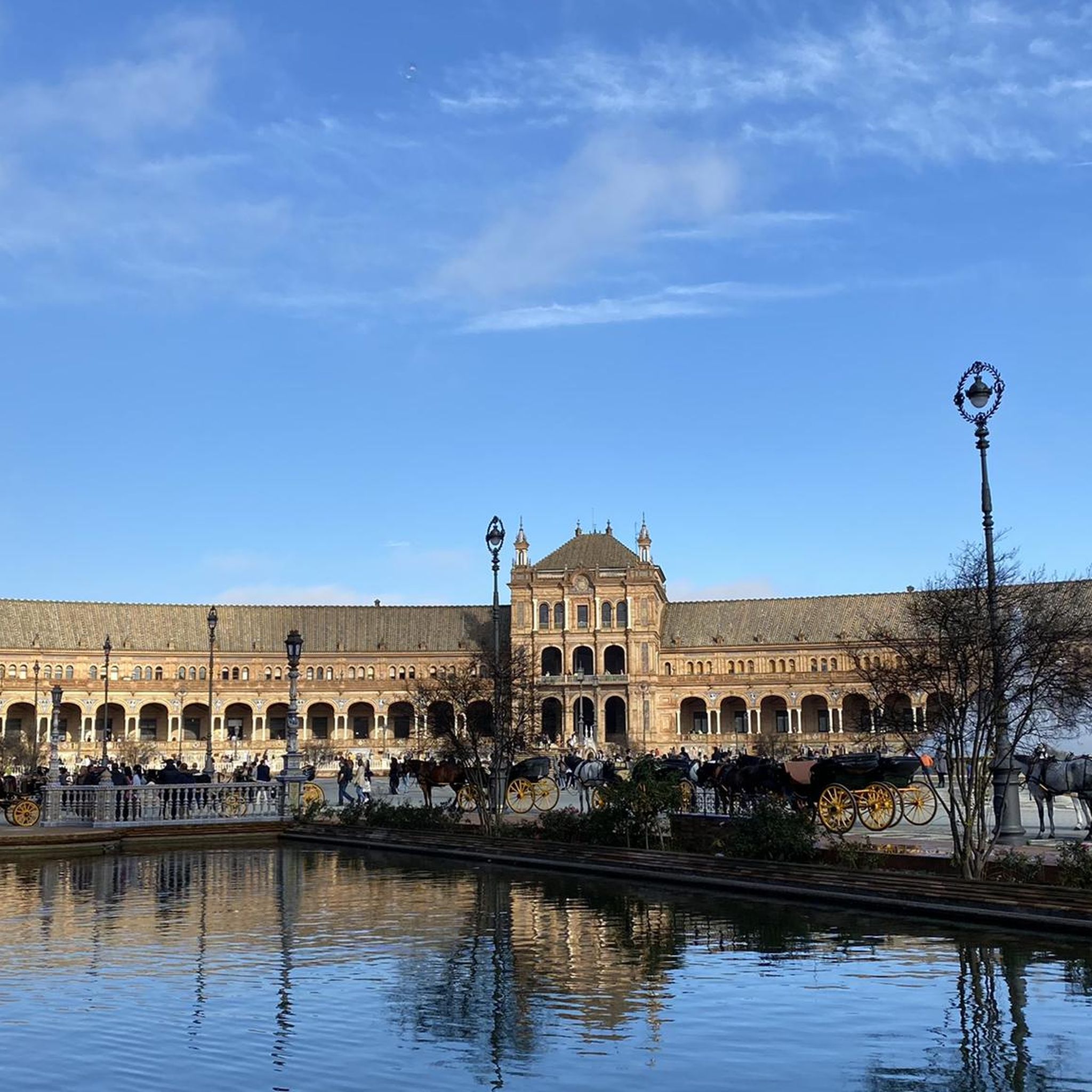
For me, the best way to get to Seville is through its history…
3
0

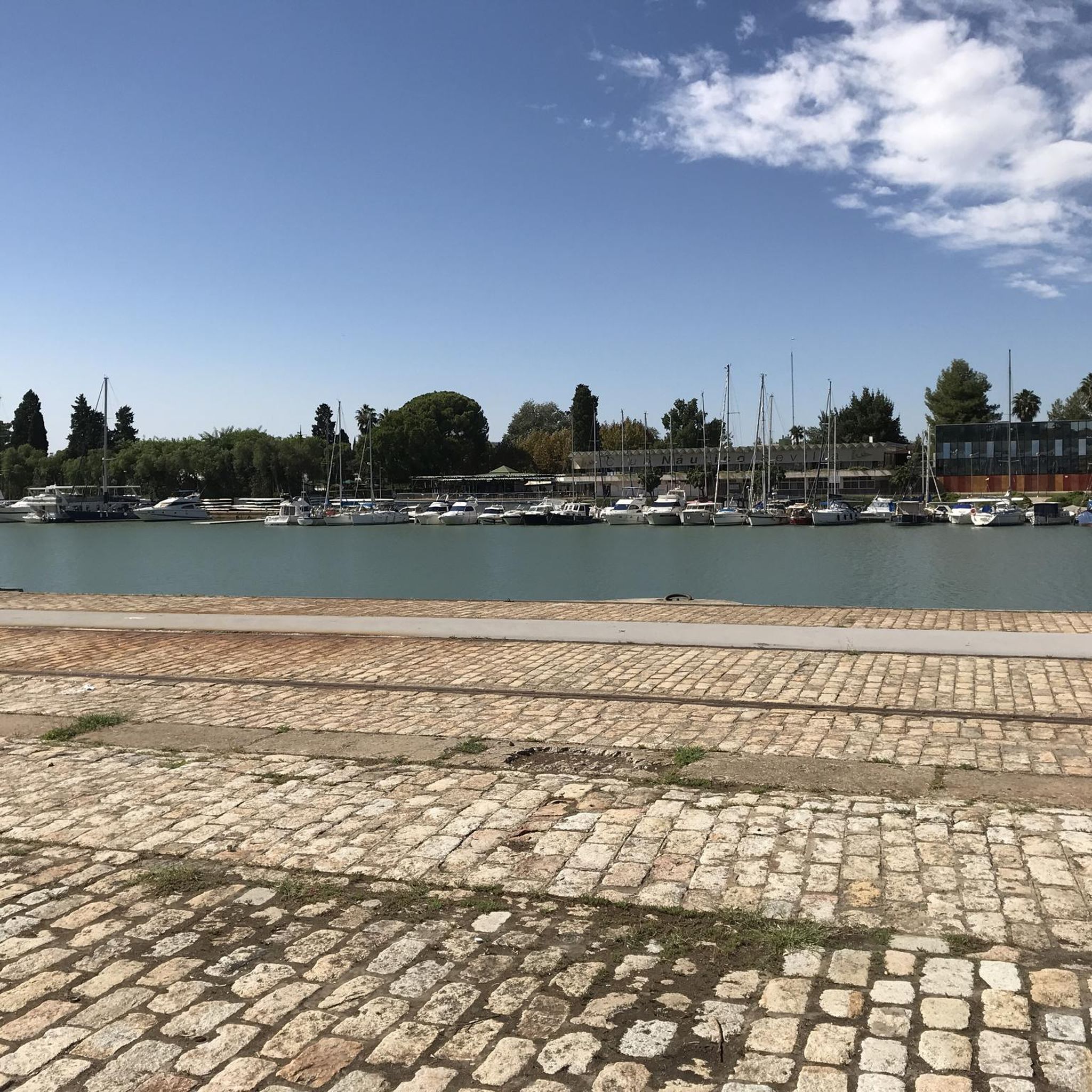
Iron bridge that connects the town of Seville with San Juan de Aznalfarache by bicycle.
3
0

The best option to go up to Aljarafe and the Merida highway area
2
1

The Parish Church of Santa María de la Purificación, due to its volumetric force and its location in an elevated part of the town, becomes the most representative architectural landmark. Despite being initially located away from the urban center, it is a remarkable example of a Sevillian church, in which the Mudejar and Baroque styles converge, following a very characteristic approach to 18th-century construction practice in the area. Built according to Mudejar principles in its original construction, which appears to date from the 15th century, it would later be practically rebuilt after the damage caused by the 1755 earthquake, conforming to the Baroque guidelines prevailing in the second half of the 17th century. A reconstruction in which Pedro de Silva, Antonio Matías de Figueroa, and José Álvarez participated. Among them, Antonio Matías de Figueroa stands out for the significance of his intervention in the complex. His work on the Manzanilla church can therefore be considered one of the last examples of this family's distinctive style—the so-called triumphal baroque—and one of the first signs of the change of direction demanded by the changing times, in their preference for the primacy of Rococo lines over Baroque masses. The appearance of neoclassical elements (the Gospel nave portal), derived from the presence of José Alvarez (1782–1783) as director of the works, also speaks to the formal evolution of the style toward the last quarter of the century. Finally, the tower (1760-1779) stands out, attributed to Lucas Cintora and Francisco Díaz Pinto, and one of the most beautiful examples in the province. It perfectly fits one of the two characteristic typologies of 18th-century Andalusia, originating from the Giralda in Seville. It forms part of a unique group of towers in Huelva, along with that of the Temple of San Pedro in Huelva and that of the Church of San Juan Bautista (La Palma del Condado), all of which follow a very similar model. This building represents another example of the intense religious construction activity that characterized 18th-century Huelva architecture, motivated by a fortunate combination of economic, demographic, and natural circumstances (earthquakes), and which has come to be known as its Golden Age.
0
0
Large wetland park on the west side of the Guadalquivir river, crossed by a bikeable trail and a boardwalk.
1
0


This monastery was founded in 1301 by Guzmán El Bueno, who played a heroic role in the conquest of Tarifa (1294). From the 19th century onwards it was successively a women's prison, a brewery and a tobacco factory. In 1872 the buildings were declared a national heritage, after which they were restored for many years before being opened to the public. The fortified complex includes a double Gothic church with influences from the Languedoc and the Almohad Mudejar style. In the 15th century the monastery was inhabited by monks of the Hieronymite order. The Patio de los Evangelistas is decorated with murals depicting saints and geometric or floral motifs in pure Mudejar style. In one of the chapels there is a beautiful 17th-century altarpiece by Juan Martínez Montañés.
7
0

La Cañada de los Pájaros is a naturalized space that had other uses in the past but which currently represents a wetland area where you can see a large number of birds, some that migrate and others that are always there. The area is private and has a cost, however, services such as a restaurant appear there.
1
0
Frequently Asked Questions
What is the general terrain like for road cycling around Palomares Del Río?
The Aljarafe region around Palomares Del Río features a mild relief with extensive agricultural lands, particularly olive groves. The terrain is mostly paved, making it ideal for road cycling. You'll find scenic, relatively flat sections, along with green corridors near the Pudio and Guadalquivir Rivers, offering varied environments.
Are there many road cycling routes available in the area?
Yes, there are over 100 road cycling routes around Palomares Del Río, catering to various skill levels. Approximately 46 of these are considered easy, 54 are moderate, and a few are more difficult, ensuring options for everyone from beginners to experienced cyclists.
What kind of natural features can I expect to see on road cycling routes?
Road cycling routes often pass through vast olive groves and cultivation fields, characteristic of the Aljarafe region. You'll also encounter riverine ecosystems and green corridors along the Pudio and Guadalquivir Rivers, which are home to diverse wildlife. The area's natural environment is shaped by these rivers and agricultural landscapes.
Are there any historical or cultural landmarks along the cycling routes?
While cycling, you might pass by traditional olive-growing haciendas, some of which are now cultural centers. Palomares Del Río itself boasts historical sites like 12th-century Arab Baths and the Mudejar-style Church of Nuestra Señora de la Estrella. For more prominent historical sites, the nearby city of Seville offers attractions like the Real Alcázar of Seville and San Jorge Castle.
What is the best time of year for road cycling in Palomares Del Río?
The region generally experiences mild weather, making spring and autumn ideal for road cycling. These seasons offer comfortable temperatures and less extreme heat than the summer months, allowing for more enjoyable rides through the agricultural fields and riverine landscapes.
Are there any easy or beginner-friendly road cycling routes?
Yes, nearly half of the routes in the area are classified as easy, making them suitable for beginners or those looking for a relaxed ride. These routes typically feature gentle topography and mostly paved surfaces, perfect for enjoying the scenery without significant challenge.
Can I find longer or more challenging road cycling routes?
Absolutely. For those seeking a greater challenge, routes like the Aznalcázar – Aldea de El Rocío loop from Ciudad Expo, which spans over 72 miles (116 km), offer diverse scenery and moderate difficulty. Another option is the Olivar del Zaudín Park – Aznalcázar loop from Ciudad Expo, a 63-mile (101 km) trail with varied natural features.
Are there any circular road cycling routes available?
Many of the road cycling routes around Palomares Del Río are designed as loops, allowing you to start and end in the same location. Examples include the Path Through the Dehesa – Cañada de los Pájaros loop from Ciudad Expo and the San Juan Bridge – Super road for racing bikes loop from Palomares del Río.
What do other cyclists say about road cycling in Palomares Del Río?
The road cycling routes in Palomares Del Río are highly regarded by the komoot community, with an average score of 4.4 stars from over 100 reviews. More than 5,000 road cyclists have explored the area, often praising the varied terrain, from olive groves to riverine paths, and the well-suited paved surfaces.
Is Palomares Del Río a good base for exploring other attractions in the region?
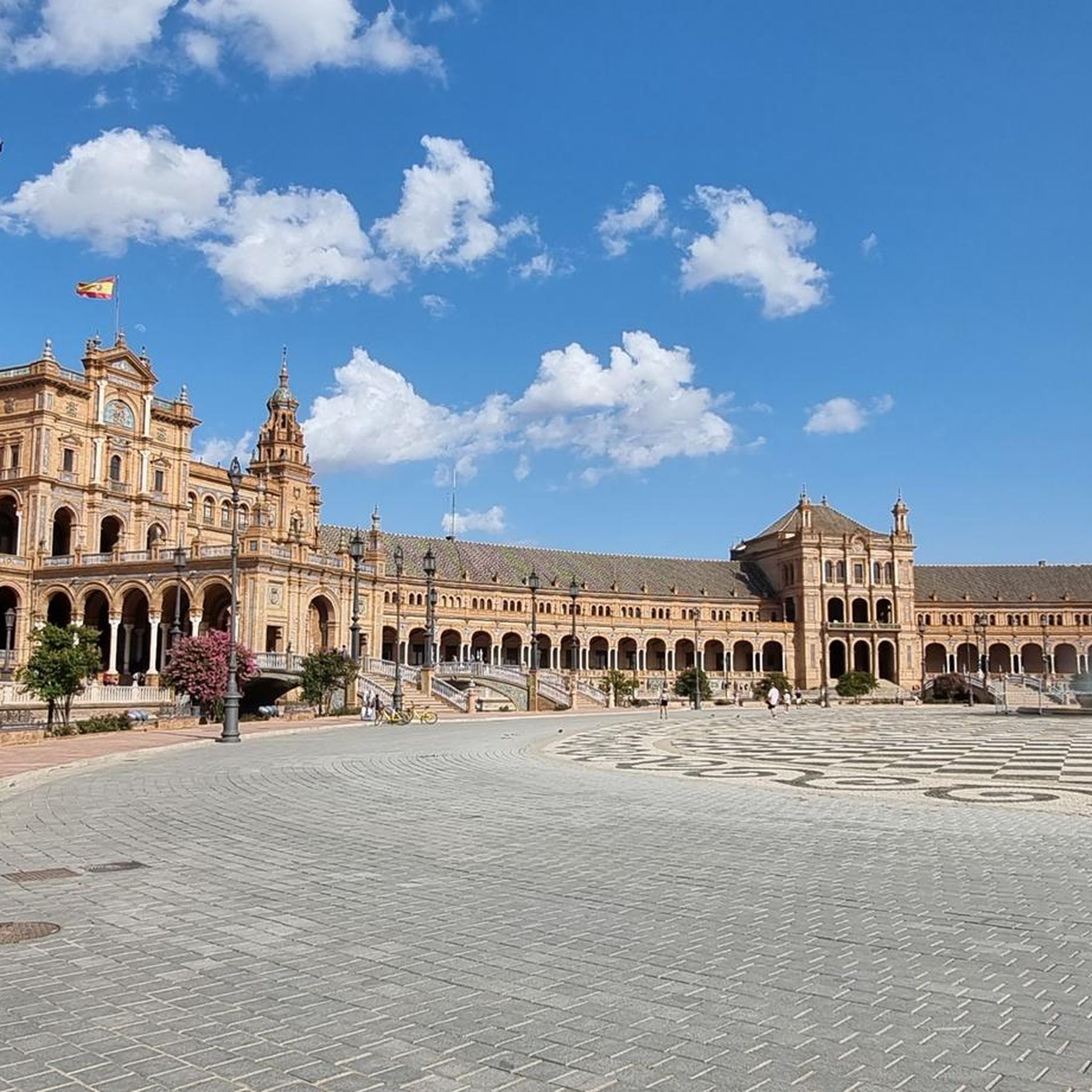
Yes, Palomares Del Río's proximity to Seville makes it an excellent base. You can easily access world-renowned attractions in Seville such as the Cathedral, Giralda, and Plaza de España. The town itself offers a charming old town with narrow streets and whitewashed houses for local exploration.
Are there options for family-friendly cycling routes?
Given the number of easy routes and the generally mild relief of the Aljarafe region, many paths are suitable for families. The landscape of olive groves and cultivation fields provides scenic and relatively flat terrain, making for pleasant rides for all ages. Always check individual route details for specific difficulty and length.
Where can I find information about parking for cyclists?
While specific parking areas for cyclists are not detailed in the route information, starting points for many routes, such as Ciudad Expo or Palomares del Río itself, are typically accessible by car. It's advisable to check local parking regulations or look for public parking facilities in these towns before your ride.
Can I use public transport with my bike to access routes?
Palomares Del Río is part of the metropolitan area of Seville. While specific rules for bikes on public transport (buses, metro) can vary, it's generally possible to combine cycling with public transport in larger Spanish cities. We recommend checking the current policies of local transport providers in Seville and the surrounding municipalities for carrying bikes.
Most popular routes around Palomares Del Río
Most popular attractions around Palomares Del Río

Get inspired with the komoot mobile app


Explore more
Browse the best Road cycling routes in other regions.
