The best road cycling routes around Bádenas
27
riders
4
rides
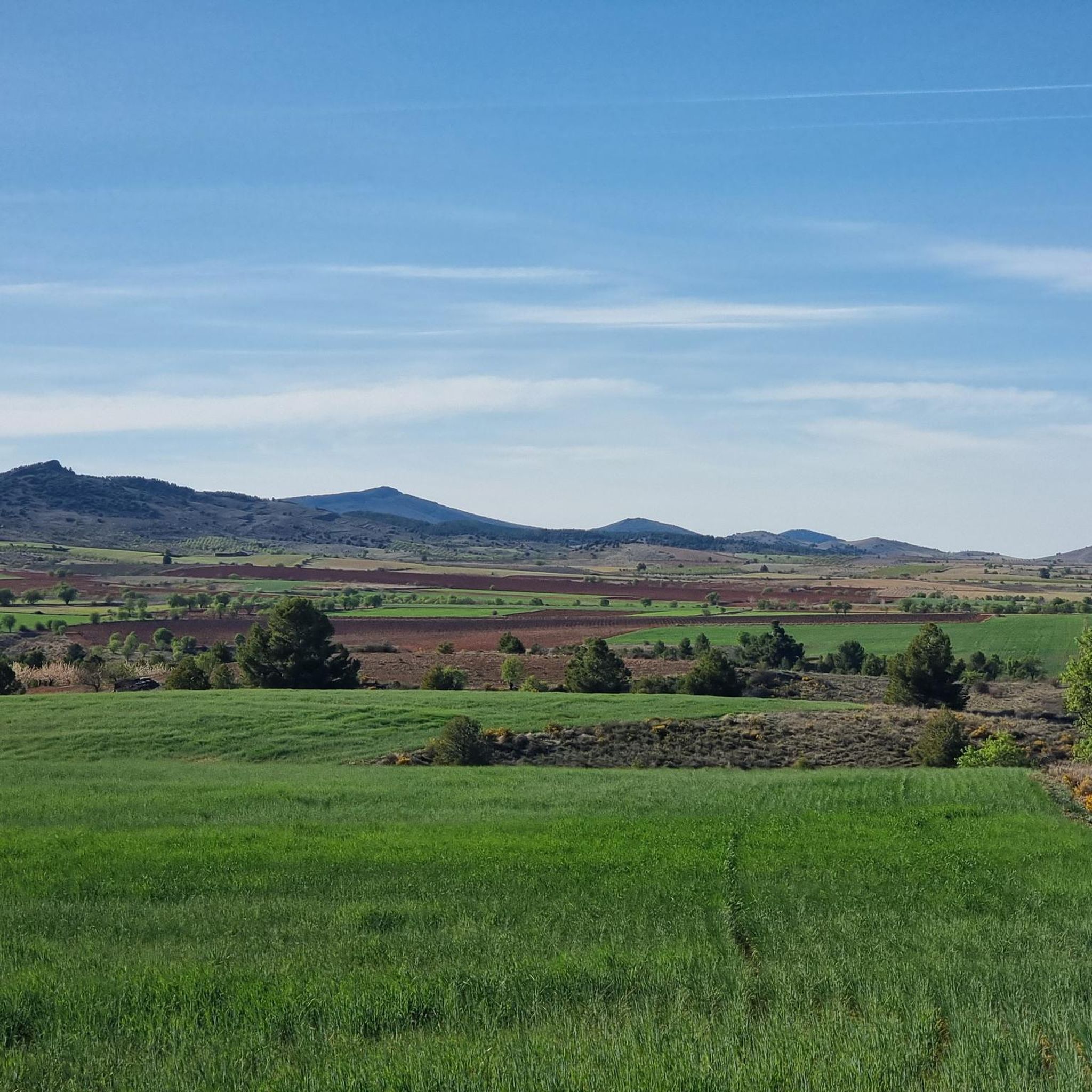
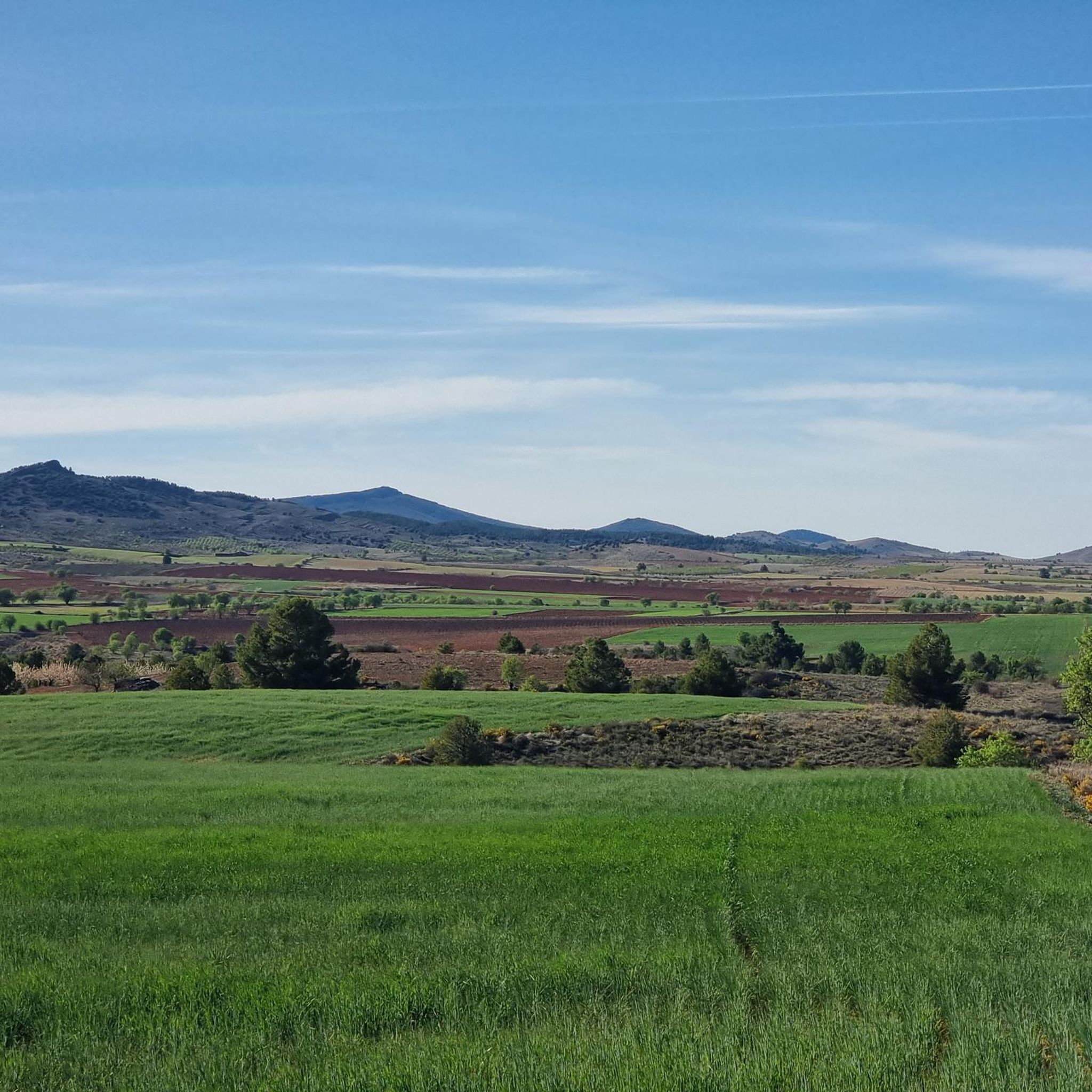
Road cycling around Bádenas, a UNESCO Biosphere Reserve, offers routes through a unique semi-desert landscape in Navarre, Spain. The region is characterized by arid, eroded terrain, featuring rust-colored cliffs, surreal rock formations, and extensive open gravel plains. Cyclists encounter tabletop hills and snakelike gorges, providing a distinct backdrop for road cycling. This area presents an otherworldly experience with its striking geological formations.
Best road cycling routes around Bádenas
- The most popular road cycling route is Sierra de Herrera Loop,…
Last updated: July 2, 2026
3
riders
107km
05:50
1,190m
1,190m
Hard road ride. Very good fitness required. Some segments of this route may be unpaved and difficult to ride.
2
riders
37.5km
02:01
640m
640m
Moderate road ride. Good fitness required. Mostly well-paved surfaces and easy to ride.

Sign up for free
8
riders
62.6km
02:53
770m
770m
Moderate road ride. Good fitness required. Mostly well-paved surfaces and easy to ride.
7
riders
62.0km
02:55
720m
720m
Moderate road ride. Good fitness required. Some segments of this route may be unpaved and difficult to ride.
7
riders
54.0km
02:34
510m
510m
Moderate road ride. Good fitness required. Some segments of this route may be unpaved and difficult to ride.
Our route recommendations are based on thousands of hikes, rides, and runs completed by other people on komoot.
Start today with a free account
Your next adventure awaits.
Login or Signup


Tips from the Community

It is the main point of interest of the route. The sanctuary is located at an altitude of about 1,350 m and offers spectacular views of the Iberian Sierras and the Huerva valley. It is one of the most emblematic places in the entire Campo de Daroca region.
0
0
Watched over by the remains of its ancient castle, Daroca emerges, one of the most beautiful cities in Aragon. Without a doubt, one of the charms of the town is to walk along its walls, with their imposing towers, until you reach the castle, from which you can enjoy a beautiful panoramic view.
0
0

Huesa del Común is a small town in the Cuencas Mineras region, located in a spectacular setting next to the Aguasvivas River, which forms a limestone canyon ideal for climbing and via ferrata. The remains of the Peñaflor Castle, of Muslim origin, rise on a rocky outcrop, and a late medieval bridge stands out in the town center. The town is also known for its pottery-making tradition, vestiges of which can still be seen in the Las Ollerías neighborhood.
1
0
Monforte de Moyuela is a small village in the Jiloca region of Teruel, located at an altitude of over 1,000 meters and surrounded by the Oriche mountain range. It preserves remains of its 12th-century castle and a Roman dam, as well as several chapels and the parish church of La Asunción, rebuilt in the 19th century after the Carlist Wars. The town is part of the Route of El Cid, which makes it even more attractive for those cycling along historic, less-traveled paths. The terrain is mountainous, and it's advisable to bring good equipment and plenty of water, as services are limited in the area.
1
0
The Lower Gate is the most emblematic entrance to Daroca and one of the most impressive defensive monuments in Aragon. Its two robust towers flank a large arch that, in addition to serving as a passageway, also facilitated the drainage of water during periods of heavy rain. Built between the 13th and 16th centuries, it reflects the military and architectural evolution of the city, with Gothic and Renaissance elements such as the gallery of arches and the imperial coat of arms of Charles V. Today, restored, it houses the Center for Daroca Studies and is a must-see for those exploring the city's walls and historic streets.
2
0

Water fountain at the entrance to the town of Herrera de los Navarros.
0
0
Water source without sanitary guarantees in the town of Luesma. Take advantage of it to cool off as it is an area without major centers.
0
0

This Castle corresponds to the Major Castle of Daroca, of Muslim origin and built in the 11th Century.
0
0
Frequently Asked Questions
How many road cycling routes are available in Bádenas?
There are over 5 road cycling routes around Bádenas, offering a variety of experiences through its unique semi-desert landscape. These routes cater to different skill levels, from moderate to difficult.
What kind of terrain can I expect on road cycling routes in Bádenas?
Road cycling in Bádenas takes you through a unique semi-desert landscape characterized by arid, eroded terrain. You'll encounter rust-colored cliffs, surreal rock formations, tabletop hills, and extensive open gravel plains. The area offers an otherworldly experience with striking geological features, making for a visually dramatic ride.
Are there road cycling routes suitable for beginners or families in Bádenas?
While the guide primarily features moderate to difficult routes, the region itself offers varied terrain. Some areas within the Bardenas Reales Natural Park have unpaved farming tracks that are generally manageable. For a moderate experience, consider routes like the Santuario Virgen de Herrera Vuelta, which is 23.3 miles (37.5 km) long.
What is the best time of year for road cycling in Bádenas?
The best times for road cycling in Bádenas are spring (March–May) and autumn (September–November). During these seasons, temperatures are mild, typically ranging from 15–25°C, providing optimal conditions for riding. Summer can be extremely hot, often exceeding 40°C, making early morning rides essential or postponing the activity altogether.
Are there any challenging road cycling routes in Bádenas?
Yes, Bádenas offers challenging routes for experienced road cyclists. A notable difficult route is the Sierra de Herrera Loop, which spans 66.8 miles (107.5 km) with significant elevation gain, typically taking around 5 hours 50 minutes to complete. Another difficult option is the Fombuena – Herrera de los Navarros loop from Badules.
What unique geological features can I see while road cycling in Bádenas?
Bádenas is renowned for its unique geological formations. As you cycle, you can witness rust-colored cliffs, dramatic badlands, and surreal rock formations sculpted by centuries of erosion. Iconic landmarks include the clay pinnacle of Castildetierra, the striking striped cliffs of Barranco de las Cortinas, and the stark desert basin of Pisquerra Valley.
Are there any circular road cycling routes in Bádenas?
Yes, many of the routes in Bádenas are designed as loops, allowing you to start and end at the same point. Examples include the Sierra de Herrera Loop and the Monforte de Moyuela – Muniesa loop from Monforte de Moyuela, which offers a balanced ride through the region's characteristic landscapes.
What should I bring for road cycling in Bádenas?
Given the semi-desert environment, it's crucial to bring plenty of water, sun protection (sunscreen, hat, sunglasses), and appropriate clothing for varying temperatures. A sturdy bike, gravel bike, or a road bicycle with sufficiently wide tires is recommended due to some unpaved sections. Always carry a repair kit and a map or GPS device.
What attractions or landmarks can I visit along the road cycling routes?
While cycling, you can explore several points of interest. Consider visiting the Sanctuary of the Virgin of Herrera or the Hermitage of Our Lady of the Sierra de Herrera for a cultural stop. The settlements of Herrera de los Navarros and Monforte de Moyuela also offer glimpses into local life.
Are there specific recommendations for road cycling in Bádenas?
To enhance your experience, it's recommended to visit on weekdays to avoid crowds and reduce dust from vehicles. Cycling during the early morning is also advisable, especially during warmer months, to avoid the heat. Always check with the Information Centre for permitted cycling paths, as some areas may have restrictions.
Can I find routes with significant elevation gain in Bádenas?
Yes, Bádenas offers routes with notable elevation gains. For instance, the Sierra de Herrera Loop features an ascent of over 1,190 meters, providing a challenging workout amidst the stunning landscape. Another route, Fombuena – Herrera de los Navarros loop from Badules, includes over 1,300 meters of climbing.
What makes Bádenas a unique destination for road cycling?
Bádenas, a UNESCO Biosphere Reserve, offers an unparalleled road cycling experience due to its unique semi-desert landscapes. The region's arid, eroded terrain, featuring rust-colored cliffs, surreal rock formations, and extensive open gravel plains, creates an otherworldly backdrop that feels more akin to a lunar landscape than northern Spain. This distinct scenery, combined with an extensive network of trails, makes it a truly memorable cycling destination.
Most popular routes around Bádenas
Most popular attractions around Bádenas

Get inspired with the komoot mobile app


Explore more
Browse the best Road cycling routes in other regions.
