Attractions and Places To See around Fuentes De Magaña - Top 17
Best attractions and places to see around Fuentes De Magaña, a village in the Tierras Altas region of Soria, Spain, offers a blend of natural beauty and historical landmarks. The area is characterized by its rugged landscape, barrancos, and numerous springs, surrounded by the Alcarama and Rodadero mountain ranges. It provides opportunities to explore ancient settlements, significant religious buildings, and diverse natural environments. This region is ideal for those interested in history, culture, and outdoor activities.
Best attractions and places…
Last updated: July 2, 2026
Castle of la Nava del Marqués de Magaña
Highlight • Castle
Translated by Google •
Tip by

San Pedro Manrique
Highlight • Settlement
Translated by Google •
Tip by

Sign up now to discover places like this
Get recommendations on the best single tracks, peaks, & plenty of other exciting outdoor places.
Sign up for free
Río Montes Canyon Trail
Highlight (Segment) • Trail
Translated by Google •
Tip by

Sarnago
Highlight • Settlement
Translated by Google •
Tip by
San Pedro Church
Highlight • Religious Site
Translated by Google •
Tip by

Sign up for free to discover even more attractions around Fuentes De Magaña.
Sign up for free
Already have an account?
Start today with a free account
Your next adventure awaits.
Login or Signup

Tips from the Community

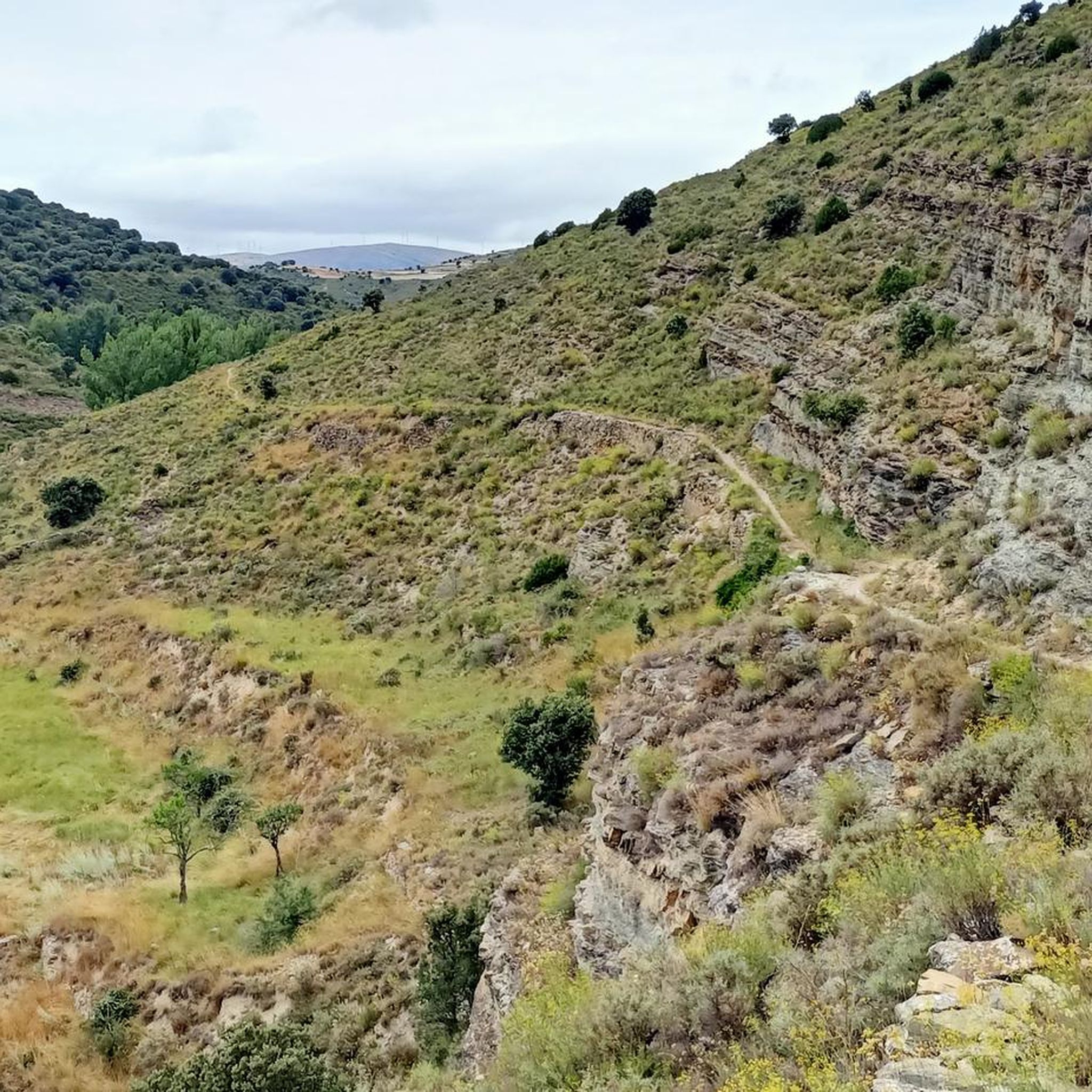
Spectacular trail, it only has one really complicated step, S4, which you have to know where to take.
0
0
Small and pretty town, area with lots of interesting mountain bike trails
0
0
The entire Tierras Altas area is a delight for mountain biking and hiking.
0
0

San Pedro Manrique is a municipality in Soria in the Tierras Altas region, in the community of Castilla y León. Its origin dates back to the Celts, Vascones, Iberians and Romans. With the passage of time, other neighboring towns such as Sarnago, Las Fuentes de San Pedro, Matasejún, Palacio de San Pedro, Taniñe, Valdenegrillos and Ventosa de San Pedro have been incorporated into the municipal area. San Pedro Manrique is well known for his particular way of celebrating San Juan Day. On the night of San Juan the well-known "paso del fuego" is carried out, in which the embers of a bonfire are stepped on by the town's natives, barefoot and carrying someone on their backs. Among its heritage, the hermitage of the Virgen de la Peña, the church of San Miguel, the remains of a castle on the outskirts and the ruins of the convent of San Pedro el Viejo stand out.
0
0
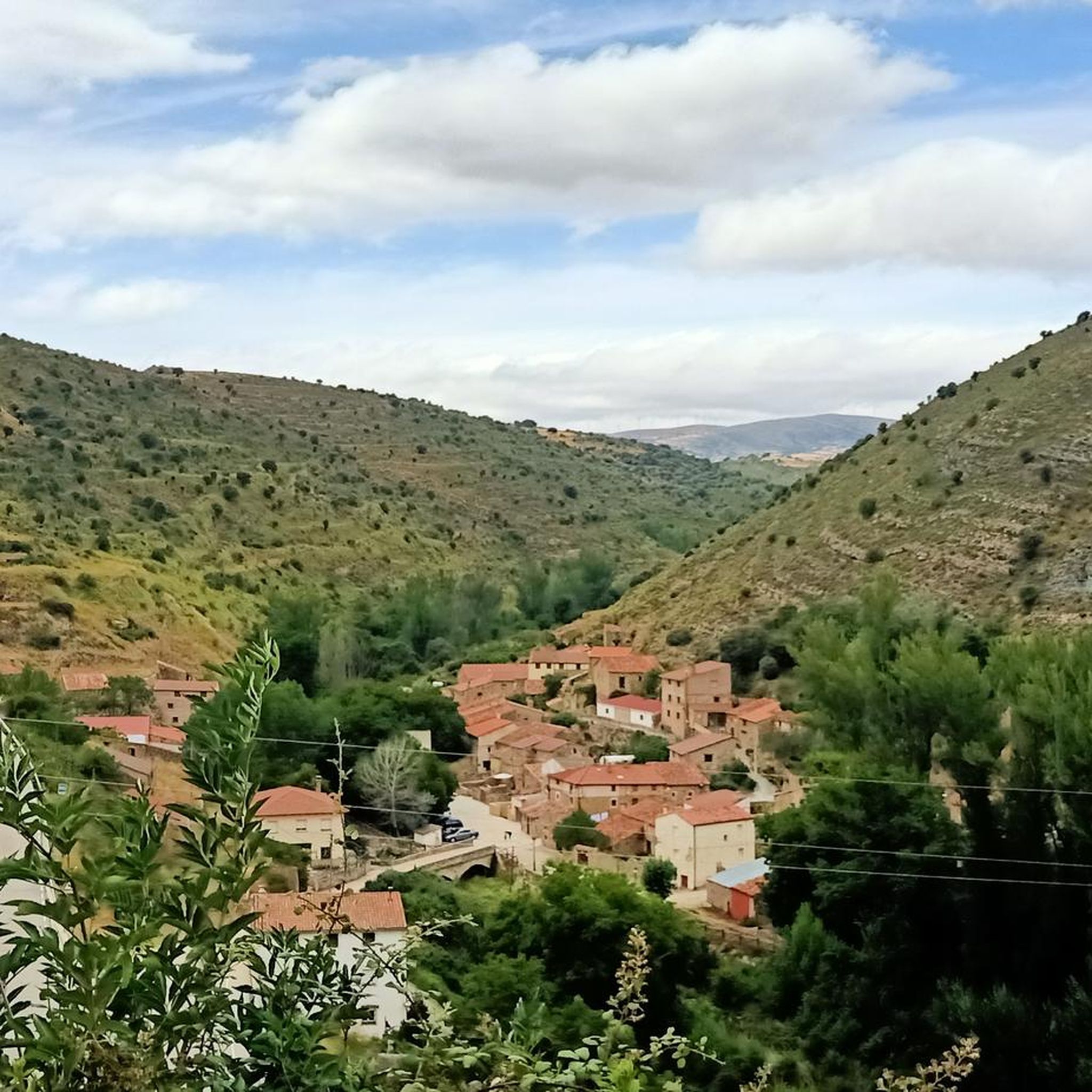
Sarnago is a town in the Tierras Altas region, in the province of Soria, community of Castilla y León. It belongs to the municipality of San Pedro Manrique since 1972. The origins of Sarnago may date back to pre-Roman times, since a nearby mountain known as "el Castiillo" could have been the location of a surveillance watchtower. The time of greatest splendor of Sarnago was during the period of the Mesta (from the 13th to the 19th centuries), an organization created by Alfonso This small town has been losing population with the passage of time and the abandonment of rural activities, but an association founded in 1980 is recovering and restoring different infrastructure and heritage of Sarnago, such as the public fountain, the washing places, as well as the public lighting. . A project has recently been launched to create a "coliving" and attract population to the town.
1
0
Magaña Castle is a medieval fortress located on a hill overlooking the town of the same name, in the province of Soria, Tierras Altas region, community of Castilla y León. It is believed to have been built during two stages throughout the 15th century. The inner enclosure would be built in the first stage, and the outer barrier in a second. Due to its architectural characteristics, it belongs to the typology of stately castle of the Valladolid school, very common in the north of Castile in the second half of the 15th century.
2
0

On the outskirts of Cerbón is the surprising Romanesque church of San Pedro. The temple, despite its austere appearance, has the beauty of bare stone, especially when the sun hits it directly.
1
0
Magaña is one of those towns that surprises you greatly the first time you go. It is located on a promontory above the Alhama River valley and at the highest part stands the Nava del Marqués castle, built in the 15th century from a 10th century Berber tower. From the castle wall you can see a beautiful panoramic view of the town, in the foreground the church of San Martín de Tours stands out, built in the 16th century on a Romanesque hermitage.
1
0
Frequently Asked Questions
What historical sites can I explore around Fuentes de Magaña?
The area is rich in history. You can visit the medieval Castle of la Nava del Marqués de Magaña, which offers excellent views. Don't miss the Romanesque San Pedro Church in Cerbón, known for its bare stone beauty. Other notable sites include the Church of the Inmaculada Concepción, the Ermita de San Sebastián, and the unique Rollo de Justicia (Pillory of Justice). The nearby settlement of San Pedro Manrique also has historical roots dating back to Celtic and Roman times, with remains of a castle and a hermitage.
Are there any family-friendly activities or attractions in the area?
Yes, families will enjoy the Miraflores Icnitas Site, one of the most extensive dinosaur footprint sites in the region, featuring over 300 fossilized footprints and a life-sized dinosaur replica. For an easy outdoor activity, the Ruta Circular de las Fuentes is a short, accessible path suitable for all ages. The settlement of San Pedro Manrique is also categorized as family-friendly.
What natural features and outdoor activities are available?
Fuentes de Magaña is surrounded by the rugged Sierras de Alcarama and del Rodadero, offering a rich natural environment. You can explore the Las Rutas Naturales de Fuentes de Magaña, a hiking circuit highlighting the importance of water, including the accessible Ruta a Fuente de Hoyamanera. A section of these routes overlaps with the GR-86, the Sendero Ibérico Soriano, a long-distance path through diverse mountain landscapes and forests. The Río Montes Canyon Trail is a beautiful and fun, though technical, trail for those seeking a challenge.
What kind of hiking trails can I find near Fuentes de Magaña?
You'll find a variety of hiking experiences. The Ruta Circular de las Fuentes is a short and accessible option, while the Ruta a Fuente de Hoyamanera offers an accessible 1.2 km walk to a natural spring. For more challenging adventures, the Río Montes Canyon Trail, part of the GR-86, provides a scenic and technical route through a canyon. You can find more detailed hiking routes and guides at komoot.com/guide/1647292/attractions-around-fuentes-de-magana.
Are there any accessible trails for wheelchairs or strollers?
Yes, the Ruta a Fuente de Hoyamanera is a 1.2 km accessible walk that leads to a natural spring surrounded by vegetation, making it suitable for wheelchairs and strollers.
What cycling opportunities are there around Fuentes de Magaña?
The region offers excellent cycling opportunities, particularly for mountain biking and road cycling. You can find numerous routes, such as the 'San Pedro Manrique – Arroyo Montes de Magaña Trail loop from Fuentes de Magaña' for MTB enthusiasts, or the 'San Pedro Manrique from Magaña — circular via Santa Cruz de Yanguas and Castilfrío de la Sierra' for road cyclists. Explore more cycling guides and routes at komoot.com/guide/1647289/cycling-around-fuentes-de-magana for touring bicycles, komoot.com/guide/1647287/mtb-trails-around-fuentes-de-magana for MTB, and komoot.com/guide/1647288/road-cycling-routes-around-fuentes-de-magana for road cycling.
What is the best time to visit Fuentes de Magaña for outdoor activities?
Given its rugged landscape and mountain ranges, spring and autumn generally offer the most pleasant weather for hiking and cycling, with milder temperatures. Summers can be warm, but the numerous springs and barrancos provide refreshing spots. Winters can be cold, especially in the higher elevations.
Are there any unique cultural traditions in the nearby villages?
Yes, the nearby settlement of San Pedro Manrique is famous for its unique 'paso del fuego' tradition during San Juan Day, where locals walk barefoot over burning embers while carrying someone on their backs.
What do visitors enjoy most about the attractions around Fuentes de Magaña?
Visitors particularly appreciate the stunning views from historical sites like the Castle of la Nava del Marqués de Magaña. The natural beauty of the trails, especially the Río Montes Canyon Trail, is often highlighted as a 'real delight' and 'very nice and fun.' The Romanesque architecture of churches like San Pedro Church also receives positive remarks for its austere beauty.
Can I find any 'hidden gems' or less-known spots?
Beyond the main attractions, you might discover the remnants of ancient fortified settlements (castros) and the medieval depopulated area called La Mora, where some believe old church ruins can still be seen. The unique Rollo de Justicia (La Horca) also offers a glimpse into the region's past.
Is the area good for wildlife spotting?
The region is part of the Natura 2000 network, specifically the Community Interest Site known as Oncala-Valtajeros, underscoring its ecological significance. This designation indicates a rich biodiversity, making it a potential area for observing local wildlife, especially birds and other species adapted to mountain environments.
How long should I plan for visiting the attractions?
To fully appreciate the historical sites and enjoy some of the shorter, accessible trails like the Ruta Circular de las Fuentes or Ruta a Fuente de Hoyamanera, a full day would be beneficial. If you plan to undertake more challenging hikes or explore multiple villages and their cultural sites, consider dedicating two to three days to the area.
Most popular routes around Fuentes De Magaña

Get inspired with the komoot mobile app


Explore more
Still not found the Highlight you’re looking for? See guides of the top attractions in other regions:
