Attractions and Places To See around Casasbuenas - Top 20
Best attractions and places to see around Casasbuenas, a municipality in the province of Toledo, Spain, offers a blend of historical landmarks, traditional charm, and natural beauty. Situated in the heart of the province and part of the Montes de Toledo region, it provides points of interest for visitors. The area features historical sites, traditional wells, and natural landscapes, including olive groves and views of surrounding mountains.
Best attractions and places to see around Casasbuenas
- The most popular attractions is…
Last updated: July 7, 2026
Toledo Cathedral
Highlight • Religious Site
Translated by Google •
Tip by

El Arco de la Sangre, unique gate with statue
Highlight • Monument
Translated by Google •
Tip by

Sign up now to discover places like this
Get recommendations on the best single tracks, peaks, & plenty of other exciting outdoor places.
Sign up for free
San Martín Bridge
Highlight • Bridge
Destroyed in the …
Translated by Google •
Tip by
Alcántara Bridge
Highlight • Bridge
Originally built by …
Translated by Google •
Tip by
Bisagra Gate
Highlight • Historical Site
Translated by Google •
Tip by
Sign up for free to discover even more attractions around Casasbuenas.
Sign up for free
Already have an account?
Start today with a free account
Your next adventure awaits.
Login or Signup




Tips from the Community

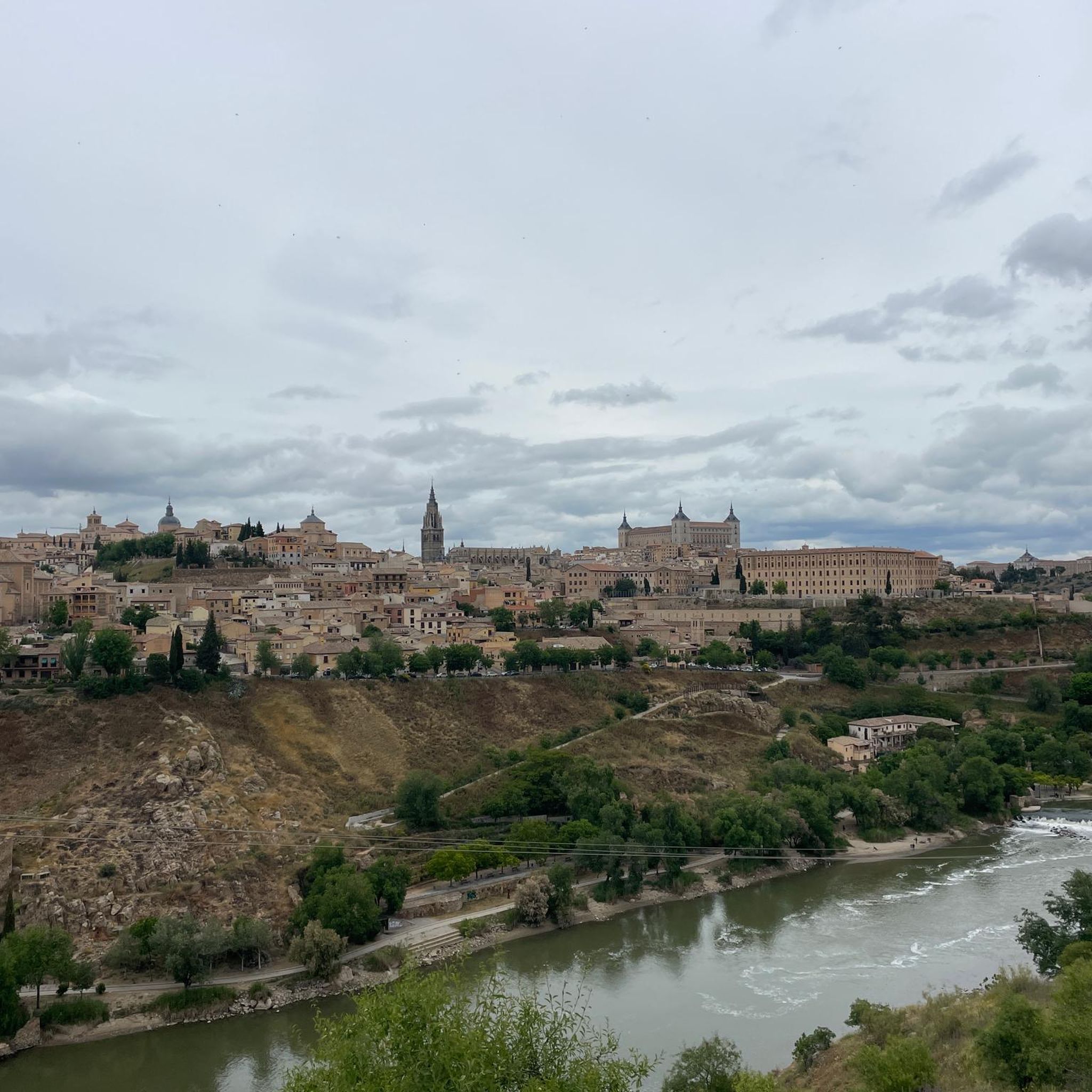
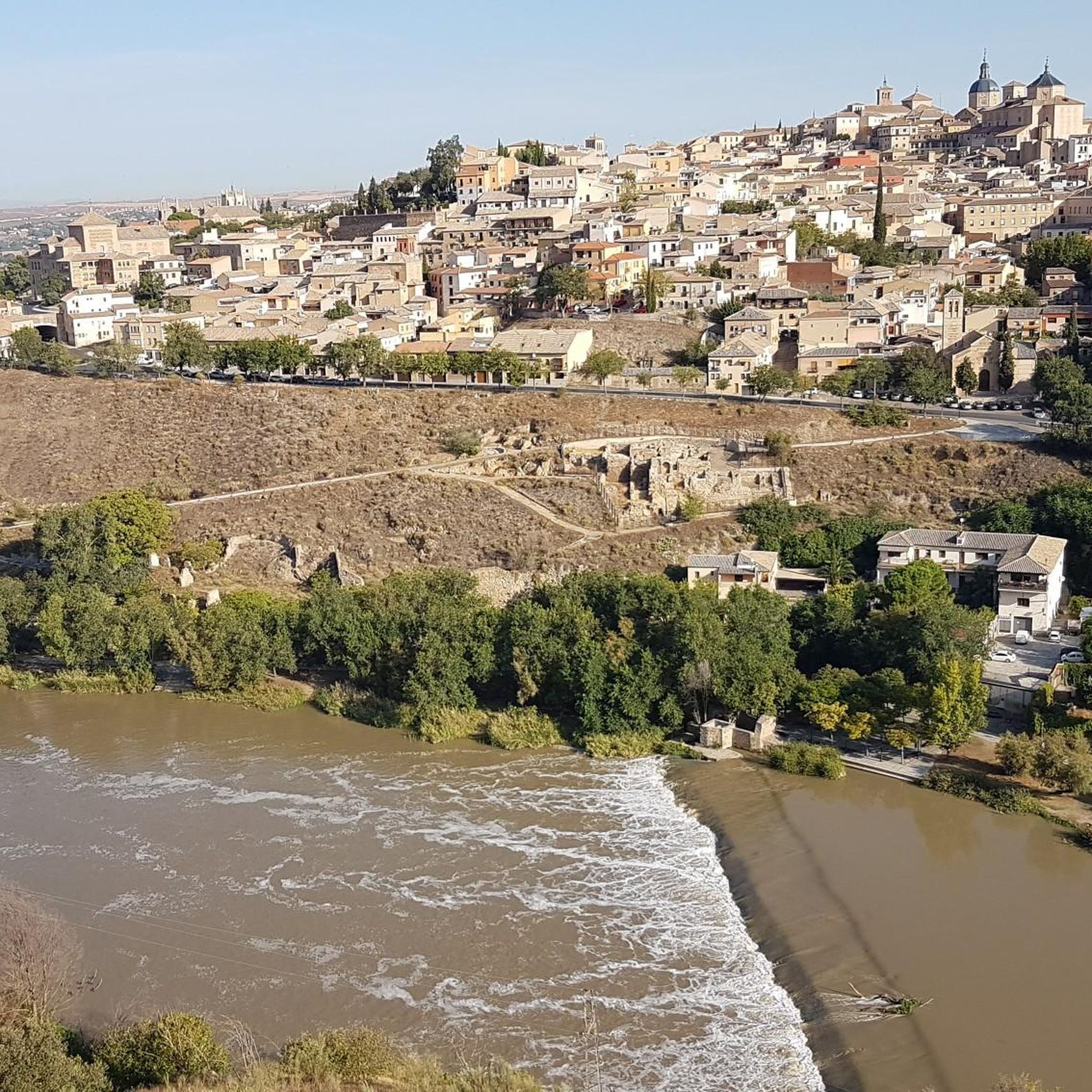
How beautifully the Tagus winds around Toledo
8
1

The large archway in the middle of the building is the Arco de la Sangre (Arch of Blood).
1
0

The Bisagra Gate is one of Toledo's most iconic monuments and a monumental entrance to its historic center. Muslim Origin: The original gate, known as the Old Bisagra Gate or Bab al-Saqra ("Sacred Gate"), was built in the 9th century during Islamic rule. Renaissance Reconstruction: In the 16th century, under the reigns of Charles V and Philip II, the New Bisagra Gate was built, the gate that remains today. Construction began around 1540 and was completed in 1576. Notable Architects: Alonso de Covarrubias, Nicolás de Vergara the Elder, Juan de Benavides, Eugenio Sánchez, among others, participated.
10
0
Toledo Cathedral, also known as the Primate Cathedral of Spain, is one of the masterpieces of Gothic art in Europe and a symbol of the city. Its construction began in 1226 during the reign of Ferdinand III and lasted for more than two centuries. It is dedicated to Saint Mary and stands on the site of an old mosque, which in turn was built on the site of a Visigothic church.
12
0
The Alcántara Bridge is one of Toledo's most iconic monuments, with a history dating back to Roman times and an architecture that has evolved over the centuries. Originally built by the Romans in the 3rd century AD, as part of the network of roads that connected the Empire. Its name comes from the Arabic "al-qanṭarah," meaning "the bridge," given by the Muslims after its reconstruction in the 10th century.
10
0

Its current name comes from the fact that the image of Christ of the Blood is hidden above this horseshoe arch, in a small, usually closed chapel visible from Plaza de Zocodover. The image comes from an old brotherhood founded during the reign of Sancho III, but the chapel wasn't created until the reign of Henry IV. This unusual location follows the Arab custom of placing an oratory above some gates and arches to ensure safe travel for anyone leaving the city and crossing the gate.
2
1

Mandatory visit point in Toledo. The square is beautifully illumimated in the evening. It is surrounded mainly by the City Hall and the Saint Maria de Toledo Cathedral. Cathedral visit is also a strong point. Full of art (El Greco is well represented) and heavy deco in a classic Gothic architecture.
1
3
The Cathedral is the most grandiose and monumental building in the city. It is a Gothic cathedral started in the 13th century, although over the centuries that its construction lasted it has Renaissance, Baroque and Neoclassical elements. In addition, it contains very important works of art such as the Custodia for the Corpus Christi procession, the Baroque Transparente made by Narciso Tomé and the Expolio by the painter El Greco. Its sacristy houses an impressive treasure trove of works of art. It has 19 works by El Greco alone, but to these we must add others by painters such as Goya, Caravaggio, Titian, Van Dick, Goya, Morales, Orrente or Tristan. Also noteworthy are the Chapter House, the chapel of San Ildefonso, the sacristy, the chapel of Reyes Nuevos, the choir, the cloister... Therefore it is a monument that must be visited, to discover all the treasures it holds within.
3
3
Frequently Asked Questions
What historical landmarks can I explore in and around Casasbuenas?
Casasbuenas and its surroundings are rich in history. You can visit the Church of Santa Leocadia, known for its unique tower and architectural style. Another significant site is the Palace of Don Diego López de Ayala, a 16th-century stately home. Nearby Toledo offers iconic historical sites such as the Toledo Cathedral, a masterpiece of Gothic art, and the historic Alcántara Bridge, with roots dating back to Roman times.
Are there any natural attractions or features to see near Casasbuenas?
Yes, Casasbuenas offers several natural points of interest. The Guajaraz Stream flows through the area, leading to the Embalse de Guajaraz (Reservoir), which features clear waters and small natural beaches, popular for sport fishing. The region is also characterized by extensive olive groves and offers views of nearby mountains like Pico de Noez. The natural environment is ideal for outdoor activities.
What outdoor activities can I do around Casasbuenas?
The natural environment around Casasbuenas is perfect for outdoor enthusiasts. You can enjoy hiking, running, and cycling through olive fields and towards the Guajaraz reservoir. For detailed routes, explore the Hiking around Casasbuenas guide, the Running Trails around Casasbuenas, or the Cycling around Casasbuenas guide.
Are there family-friendly attractions or activities in the Casasbuenas area?
Many attractions in the wider Casasbuenas area are family-friendly. Historical sites like the Toledo Cathedral, San Martín Bridge, and Alcántara Bridge are generally suitable for families. The natural areas around the Guajaraz Reservoir and the olive groves also provide pleasant settings for family walks and picnics.
Where can I find the best panoramic views of the region?
For breathtaking panoramic views, especially of the historic city of Toledo, head to the Public Fountain (Parking lots) viewpoint. From this spot, you can see the Alcázar, the Primate Cathedral, and both the Alcántara and San Martín Bridges, with the Tagus River winding through the landscape.
What is the significance of 'Los Pozos' (The Wells) in Casasbuenas?
Los Pozos, particularly the twin wells in the Plaza del Egido, are traditional wells that hold historical significance for Casasbuenas. They were historically used as washhouses, and local tradition suggests that the initial settlement of the municipality originated around these wells, making them a unique cultural landmark.
What kind of wildlife can be found in the Casasbuenas region?
The region around Casasbuenas is known for its rich game fauna. Nature enthusiasts might spot deer, wild boars, hares, rabbits, and partridges, especially in the more rural and mountainous areas surrounding the municipality.
What is the best time to visit Casasbuenas for outdoor activities?
While specific data on the best time is not provided, the climate of the Montes de Toledo region generally makes spring and autumn ideal for outdoor activities like hiking and cycling. Temperatures are milder, and the natural landscape is vibrant. Summers can be hot, and winters can be cooler, but still suitable for some activities.
Are there any unique architectural features in Casasbuenas?
Beyond the historical buildings, the Church of Santa Leocadia stands out with its distinctive tower, featuring three sections topped with a pyramidal structure and flanked by two smaller circular towers. The Palace of Don Diego López de Ayala also showcases traditional 16th-century architecture with its rammed earth and brick construction.
What is the 'Aceite Montes de Toledo' Designation of Origin?
Casasbuenas is situated in an area known for its extensive olive groves. These groves are dedicated to the production of olive oil that carries the 'Aceite Montes de Toledo' Designation of Origin, signifying a high-quality olive oil produced according to specific standards within this geographical region.
Can I find any ancient bridges near Casasbuenas?
Yes, the nearby city of Toledo is home to two magnificent ancient bridges. The Alcántara Bridge, with its Roman origins, and the San Martín Bridge, rebuilt in the 14th century, both offer impressive architecture and historical significance over the Tagus River.
What is the Plaza del Ayuntamiento like in Casasbuenas?
The Plaza del Ayuntamiento (Town Hall Square) in Casasbuenas is a charming, recently restored, and pedestrianized area. It features a town hall building constructed with exposed brick and masonry, crowned with a clock, providing a pleasant central gathering space in the municipality.
Most popular routes around Casasbuenas
Most popular attractions around Casasbuenas

Get inspired with the komoot mobile app


Explore more
Still not found the Highlight you’re looking for? See guides of the top attractions in other regions:
