Attractions and Places To See around Rubí De Bracamonte - Top 16
Best attractions and places to see around Rubí De Bracamonte offer a glimpse into rural Castilian life, characterized by historical landmarks and natural beauty. This tranquil municipality in the province of Valladolid features gentle plains, vast cereal fields, and the serene banks of the Bajoz river. Visitors can explore a variety of cultural sites and enjoy the authentic rural environment.
Best attractions and places to see around Rubí De Bracamonte
- The most popular attractions is Collegiate Church of San Antolín…
Last updated: May 17, 2026
Collegiate Church of San Antolín
Highlight • Religious Site
The collegiate church is, along with the La Mota Castle, one of …
Translated by Google •
Tip by

Castle of La Mota
Highlight • Castle
Translated by Google •
Tip by
Sign up now to discover places like this
Get recommendations on the best single tracks, peaks, & plenty of other exciting outdoor places.
Sign up for free
Palacio de Dueñas Courtyard
Highlight • Historical Site
Translated by Google •
Tip by

Church of Saint James the Royal
Highlight • Religious Site
Translated by Google •
Tip by
Convent of St. Joseph – Discalced Carmelites
Highlight • Religious Site
The construction is very similar to that of the …
Translated by Google •
Tip by
Sign up for free to discover even more attractions around Rubí De Bracamonte.
Sign up for free
Already have an account?
Start today with a free account
Your next adventure awaits.
Login or Signup



Tips from the Community

Built in the 16th century by Diego Beltrán, a nobleman and member of the Royal Council of the Indies, around 1528–1533, on a site previously used on Santiago Street. Its design is attributed to the royal architect Luis de Vega. From 1602 to 1604, it housed the Royal Chancery; later, it served as the residence of the Marquis of Ensenada during his exile. In 1916, it was acquired by the Marquises of Argüeso; in 1950, it passed into the hands of the State and was used as a vocational institute, currently functioning as an educational center.
5
0
It was the second foundation established by Saint Teresa of Ávila as part of the Carmelite reform, officially founded on August 15, 1567, thanks to houses donated by María Juárez de Herrera. Over the following decade, the convent was expanded by acquiring adjacent land. In 1654, the architect Mateo Martínez reinforced the structures and added another story to the cloister. Here, Saint Teresa first met Saint John of the Cross, who had been living in another local Carmelite convent since 1563.
5
0
Parish Church of Santiago el Real, in Medina del Campo. Medieval origins: a church dedicated to Saint James already existed in 1177, located on Santa Teresa Street. It was renovated in the 16th century and used until 1770. The current building was initially the church of the Jesuit novitiate dedicated to Saints Peter and Paul. The first stone was laid in July 1553 by Saint Francis Borgia, and it was opened for worship around 1563. After the expulsion of the Jesuits, around 1770 it became the parish church of Saint James, retaining only the church from the original complex. It was declared a Site of Cultural Interest on January 18, 1968 (RI-51-0003793).
4
0
Also known as the Main Parish Church of San Antolín. The original parish dates back to 1177, founded by settlers from the north (Palencia) and dedicated to Saint Antolín. In 1480, the Catholic Monarchs obtained a papal bull from Pope Sixtus IV elevating its status to a collegiate church with a free abbey. Construction of the current church began in 1502 and continued into the 18th century, with prominent architects such as Juan Gil de Hontañón, Rodrigo Gil, and the Gutiérrez brothers. It lost its collegiate church status in 1851, becoming simply the main parish church.
9
0

This is a Renaissance building constructed in the 16th century. It was designed by Luis de Vega, who was the architect of Charles V. Importantly, the Marquis of Ensenada lived in exile and died in this building in December 1781.
11
0
We are looking at another imposing building belonging to the Discalced Carmelite nuns, whose name is the Convent of San José. The construction is very similar to that of the other religious buildings, where exposed brick is the predominant material, especially in the towers and upper sections, while carved stone is used for the main and secondary doors and facades.
11
0
Located a considerable distance from the city center, this imposing church stands like a solitary sentinel, its exposed brick structure very similar to the other local buildings, where part of the building is constructed of carved stone and the rest of the aforementioned exposed brick. Today we couldn't go inside because it was closed, but under normal circumstances it can be visited during the hours posted on the door.
11
0
This Gothic-style building began construction in 1503, although, as is often the case with such complex structures, it wasn't completed until almost two centuries later. It is a relatively large church, notable for the balcony of the Virgin of the People and the clock tower. The main entrance dates from the 18th century, while the side entrance is from the 16th.
11
0
Frequently Asked Questions
What historical landmarks can I explore in Rubí de Bracamonte?
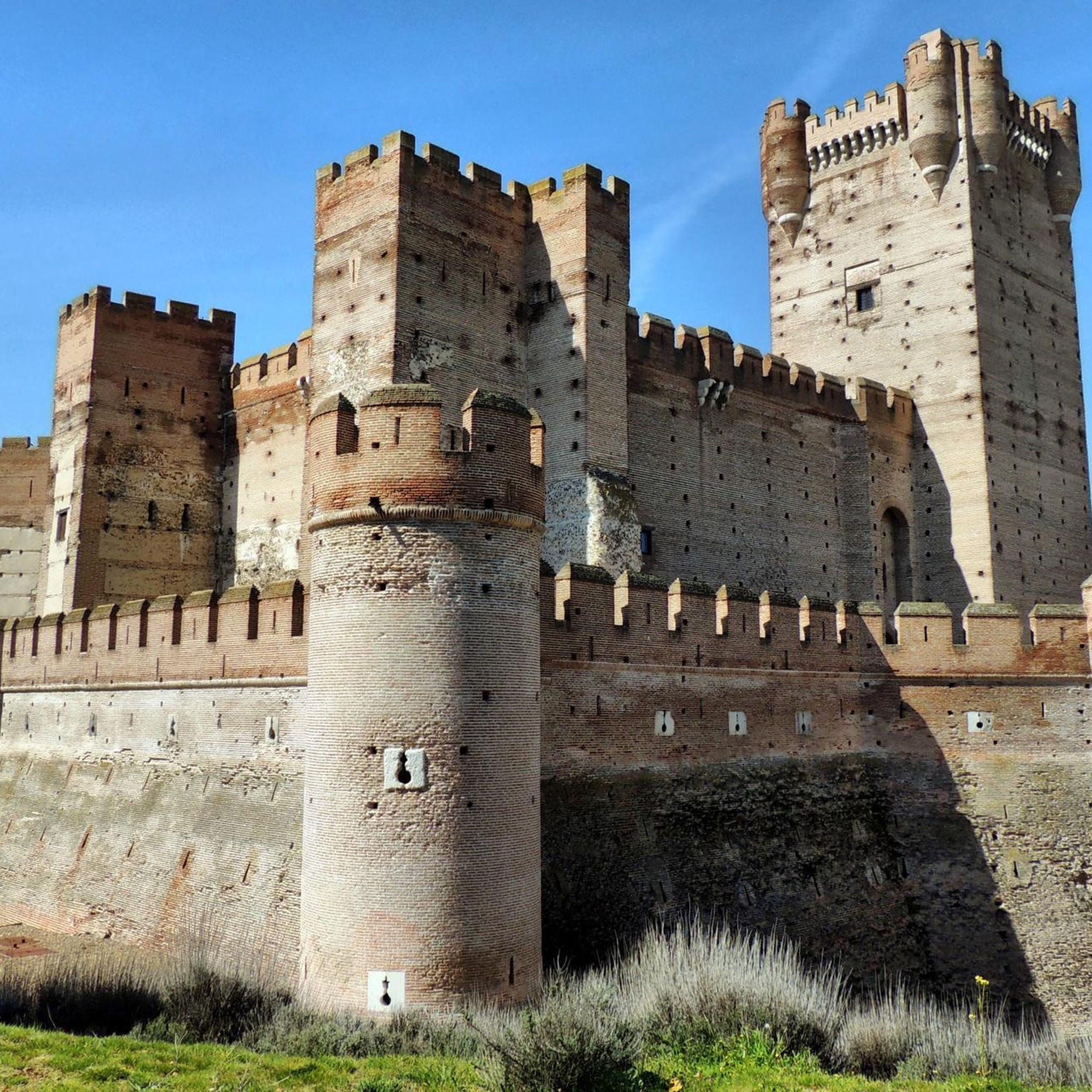
Rubí de Bracamonte offers a rich historical experience. You can visit the Church of Santa María del Castillo, the principal monument in the municipality, showcasing Gothic and Mudejar influences. Additionally, the remains of the Castle of Rubí de Bracamonte provide insight into its medieval past. Nearby, you can also explore the impressive Castle of La Mota in Medina del Campo, known for its reddish brick architecture.
Are there any significant religious sites to visit near Rubí de Bracamonte?
Yes, the area is home to several notable religious buildings. In Rubí de Bracamonte itself, the Church of Santa María del Castillo is a must-see. Further afield, you can visit the Collegiate Church of San Antolín in Medina del Campo, a significant historical building with Gothic and other styles. Other religious sites include the Church of Saint James the Royal and the Convent of St. Joseph – Discalced Carmelites.
What natural features characterize the landscape around Rubí de Bracamonte?
The landscape around Rubí de Bracamonte is defined by gentle plains, vast cereal fields, and the serene banks of the Bajoz river. Located within the Southern Campiñas of Valladolid province, the area features soft forms and scattered low hills, offering a tranquil rural environment perfect for walks and enjoying nature.
Are there hiking trails or walking routes available near Rubí de Bracamonte?
Yes, for those interested in walking, the Ruta de las Grullas (Crane Route) is an approximately 7 km trail that allows you to explore the local natural landscape. For more options, you can find various routes in the Hiking around Rubí De Bracamonte guide, including easy city tours and moderate loops like the 'Balneario Palacio de las Salinas — circular por las lagunas de Medina del Campo'.
Can I go cycling near Rubí de Bracamonte?
Absolutely! The Ruta de las Grullas is suitable for both hiking and cycling. For dedicated cycling routes, explore the Cycling around Rubí De Bracamonte guide. You'll find options like the 'Medina del Campo and Moraleja de las Panaderas Loop' and the 'Ruta de Carlos V - Medina del Campo Loop', offering moderate challenges through the region's scenic landscapes.
Are there family-friendly attractions around Rubí de Bracamonte?
Yes, several attractions are suitable for families. The Castle of La Mota is considered family-friendly and offers guided tours and cultural activities. The Palacio de Dueñas Courtyard is another historical site that families can enjoy, appreciating its elegant architecture and patios.
What cultural traditions or festivities are celebrated in Rubí de Bracamonte?
Rubí de Bracamonte has vibrant local traditions. The town celebrates its patron saint, San Antonio de Padua, on June 13th with traditional dances. A unique custom involves single individuals pulling on the saint's cord to wish for a partner. Another major festival is held on August 5th for Nuestra Señora de las Nieves, featuring a popular cycling tour. San Miguel Arcángel is celebrated on September 29th with verbenas, processions, and encierros.
What is the best time of year to visit Rubí de Bracamonte for outdoor activities?
The best time to visit Rubí de Bracamonte for outdoor activities is generally during spring (April to June) and early autumn (September to October). During these periods, the weather is typically mild and pleasant, ideal for hiking, cycling, and exploring the rural landscape without the intense heat of summer or the chill of winter.
Are there opportunities for wine tourism in the area?
Yes, the Valladolid province, where Rubí de Bracamonte is located, is renowned for its wine production, particularly the D.O. Cigales. Within Rubí de Bracamonte, you can find Bodega Verderrubí, which offers tours and focuses on ecological wine production. Many other wineries are located in nearby towns like Olmedo, Medina del Campo, and Rueda, providing extensive wine tourism experiences.
Are there any unique local spots or 'hidden gems' in Rubí de Bracamonte?
Beyond the main church, the Lavadero Municipal, an old washing place in the town center, offers a glimpse into traditional customs and local life. Exploring the quiet streets and the serene banks of the Bajoz river also provides an authentic experience of rural Castilian life.
What kind of terrain can I expect on trails around Rubí de Bracamonte?
The terrain around Rubí de Bracamonte is characterized by gentle plains and vast cereal fields, with the presence of the Bajoz river. This means most trails, like the Ruta de las Grullas, will likely be relatively flat or have soft, rolling hills, making them generally accessible for walking and cycling. The Southern Campiñas region is known for its soft forms and scattered low hills.
Where can I find accommodation or dining options in Rubí de Bracamonte?
As a tranquil municipality, Rubí de Bracamonte offers a glimpse into rural life. While specific establishments are not detailed, you can expect to find local casas rurales (rural houses) for accommodation and traditional eateries that reflect Castilian cuisine. For a wider range of options, nearby larger towns would provide more choices for dining and lodging.

Get inspired with the komoot mobile app


Explore more
Still not found the Highlight you’re looking for? See guides of the top attractions in other regions:
