Attractions and Places To See around Quintanar De La Orden - Top 20
Best attractions and places to see around Quintanar De La Orden include a variety of historical sites, religious buildings, and monuments. This region in Castilla-La Mancha offers a glimpse into its past, with structures dating back centuries. Visitors can explore locations connected to local history and cultural narratives. The area provides opportunities to discover hidden gems and significant landmarks.
Best attractions and places to see around Quintanar De La Orden
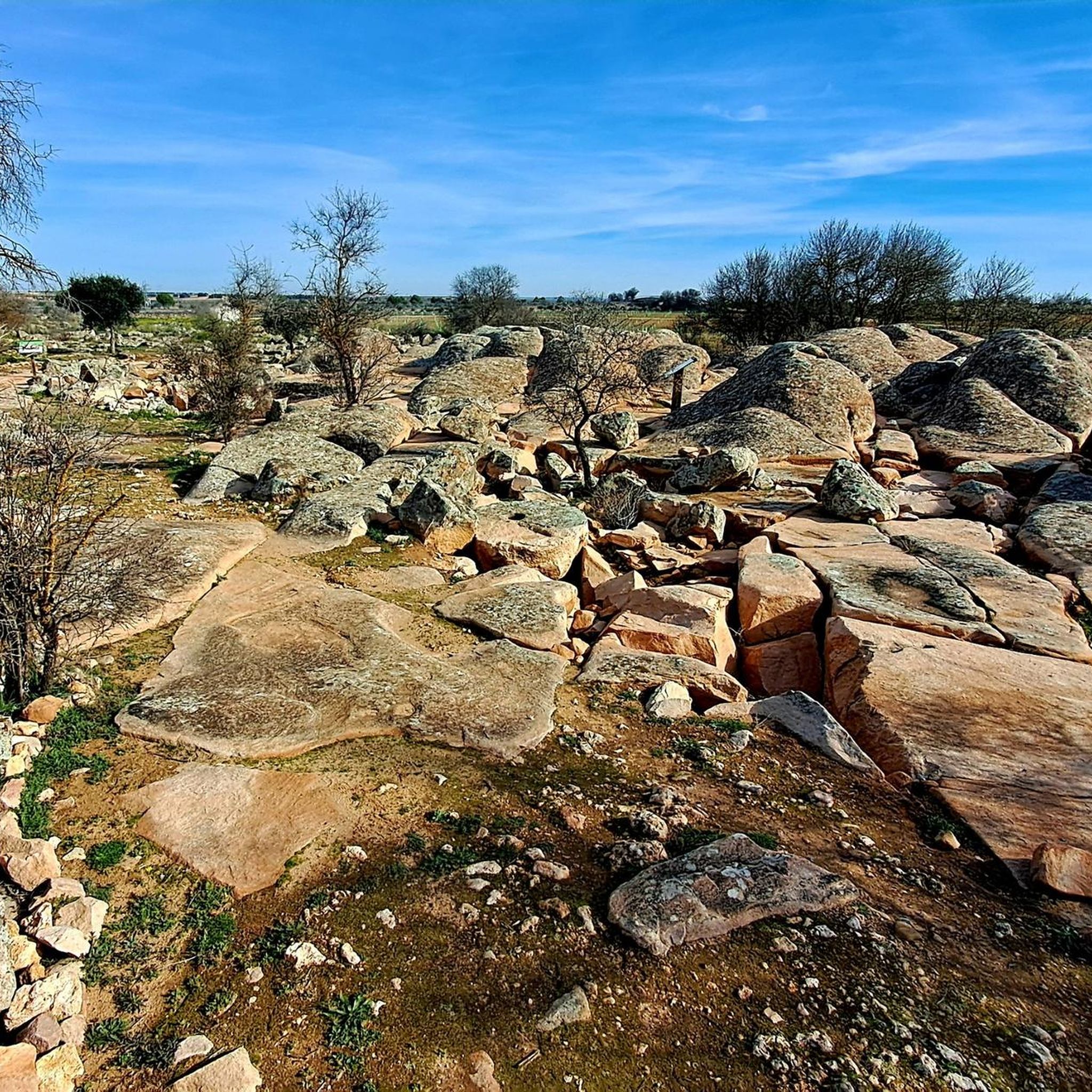
- The most popular attractions is Ruins of the Hermitage of Santa Ana, a religious building built on a rocky promontory. It was once a large chapel, likely dating back to the 14th or 15th century. It offers a sense of history on land that once hosted important events.
- Another must-see spot is Statue of Quixote and Dulcinea, a man-made monument. This monument in El Toboso is linked to the Cervantes universe, located in the main square. The sculptures are made of sheet iron and depict Don Quixote and his platonic love.
- Visitors also love La Puebla de Almoradiel – Parish Church of San Juan Bautista and La Femme de la Terre Statue, a religious building in a town with origins linked to an Iberian and Celtic fortress. The parish church of San Juan Bautista and its hermitages are notable features in this historical town.
- Quintanar De La Orden is known for its historical sites, religious buildings, and monuments. The region offers a range of historical sites, religious buildings, and monuments to explore.
- The attractions around Quintanar De La Orden are appreciated by the komoot community, with 9 upvotes and 3 photos shared.
Last updated: August 25, 2026
Ruins of the Hermitage of Santa Ana
Highlight • Religious Site
In any case, one feels a positive energy when one sets foot on this land that once hosted important events in our history.
Translated by Google •
Tip by

Statue of Quixote and Dulcinea
Highlight • Monument
The sculptures are made of sheet iron, not cast iron, giving them a handcrafted and robust appearance.
Translated by Google •
Tip by

Sign up now to discover places like this
Get recommendations on the best single tracks, peaks, & plenty of other exciting outdoor places.
Sign up for free
El Toboso
Highlight • Settlement
The town is very picturesque and its history not only revolves around the famous Quixote, it has also been of great importance in the history of Spain, being the place where the battle of Navas de Tolosa was fought in 1212 and later it will form part of the domain of the Order of Santiago.
Undoubtedly a town worth visiting with the whole family.
Translated by Google •
Tip by

Convent of the Conception of the Poor Clares
Highlight • Religious Site
Hours for purchasing monastic pastries: in the winter, Monday to Friday, 10:00 a.m. to 2:00 p.m. and 4:30 p.m. to 6:00 p.m.; Saturdays and Sundays from 11:00 a.m. In the summer, Monday to Friday, 10:00 a.m. to 2:00 p.m. and 5:00 p.m. to 7:00 p.m.; Saturdays and Sundays from 11:00 a.m.
Translated by Google •
Tip by

La Puebla de Almoradiel – Parish Church of San Juan Bautista and La Femme de la Terre Statue
Highlight • Religious Site
The ancient city stood on the Cigüela River, but was abandoned in 1276 due to epidemics.
Repopulated by the Order of Santiago in the Middle Ages, it received a town charter in 1315 and the privilege of town status in 1341.
Translated by Google •
Tip by
Sign up for free to discover even more attractions around Quintanar De La Orden.
Sign up for free
Already have an account?
Start today with a free account
Your next adventure awaits.
Login or Signup


Tips from the Community

The ruins of the Ermita de Santa Ana in El Toboso (Toledo) are the remains of a 16th-century Renaissance temple. It is located outside the village, on a deserted hill.
2
0

La Puebla de Almoradiel: Its origins are linked to an Iberian and Celtic fortress, inhabited by Romans, Visigoths, and, during the Muslim era, by the Almoravids. The ancient city stood on the Cigüela River, but was abandoned in 1276 due to epidemics. Repopulated by the Order of Santiago in the Middle Ages, it received a town charter in 1315 and the privilege of town status in 1341.
4
0
This is the Convent of Poor Clare Franciscan Nuns, founded in 1515 and converted into a convent in 1546. It follows the Rule of Saint Francis and is dedicated to the Conception of Our Lady. Although renovated in the 20th century, it retains its original Renaissance façade. The nuns lead a contemplative life and support themselves by making artisanal sweets, such as the town's famous "pelusas." Hours for purchasing monastic pastries: in the winter, Monday to Friday, 10:00 a.m. to 2:00 p.m. and 4:30 p.m. to 6:00 p.m.; Saturdays and Sundays from 11:00 a.m. In the summer, Monday to Friday, 10:00 a.m. to 2:00 p.m. and 5:00 p.m. to 7:00 p.m.; Saturdays and Sundays from 11:00 a.m.
3
0
The statue of Don Quixote and Dulcinea in El Toboso is one of the town's most emblematic monuments, deeply linked to the Cervantes universe. It stands in the main square of El Toboso, dedicated to Juan Carlos I, in the heart of the town. The sculptures are made of sheet iron, not cast iron, giving them a handcrafted and robust appearance.
4
0
Along a walk through the town we can see the “Roman Bridge”, the parish church of San Juan Bautista, the hermitage of Nuestra Señora del Egido, the hermitage of Santísimo Cristo de la Salud, the hermitage of Santa Ana, numerous wells that once served as a water supply...
0
0
This convent belongs to the Clarisse Sisters. The most notable feature is the church door, built in 1670 and today the only element that remains from the original construction. Its origins date back to 1515, when there was a house of Beatas as a hermitage, which later, in 1546, was converted and founded as a Franciscan Monastery by Don Antón Martínez, a cleric from this town. In the Relations of Felipe II, from 1575, this place is already mentioned as a monastery of beatas, subject to the Order of San Francisco, called La Sentencia, dedicated to the Conception of Our Lady. Currently, all the dependencies of the convent are reconstructions of the old ones, including the church, since from the original Church of the convent only the first section of the vault, in simple baroque style, remains; The rest of the main factory is modernist, the result of the extensive reconstruction carried out between 1973 and 1976. The nuns who live there live in a cloistered setting and are dedicated to the artisanal production of sweets.
2
0
If you visit El Toboso, don't miss the Monastery of the Trinitarian Nuns, the Church of San Antonio Abad, the Cervantino Museum and more...
4
0

El Toboso is the town where Dulcinea lived - the lady of Don Quixote from the famous Cervantine work. Here in the square you can find the statue of Quixote and Dulcinea. El Toboso is worth a visit. It is also recommended to see the parish church of San Antonio Abad, called "La Mancha Cathedral".
2
1
Frequently Asked Questions
What historical sites can I explore around Quintanar De La Orden?
The region is rich in history. You can visit the Ruins of the Hermitage of Santa Ana, a 14th or 15th-century religious building on a rocky promontory. Another significant site is the Parish Church of San Juan Bautista in La Puebla de Almoradiel, a town with origins linked to Iberian and Celtic fortresses. The Convent of the Conception of the Poor Clares, founded in 1515, also offers a glimpse into the area's past.
Are there any attractions related to Don Quixote in the area?
Yes, in El Toboso, you can find the Statue of Quixote and Dulcinea. This emblematic monument, made of sheet iron, is located in the main square and is deeply linked to the Cervantes universe, depicting Don Quixote and his platonic love.
What are some family-friendly attractions near Quintanar De La Orden?
Families can enjoy exploring the town of La Puebla de Almoradiel, which features the Parish Church of San Juan Bautista and the La Femme de la Terre Statue. The Quintanar de la Orden Town Center itself is also considered family-friendly, offering a charming environment with historical buildings and a local graffiti route.
What kind of outdoor activities can I do near Quintanar De La Orden?
The area offers various outdoor activities. You can find numerous running trails, such as the easy 'Running loop from Miguel Esteban' (4.5 km) or moderate 'Charcones de Miguel Esteban loop' (7 km). For hiking, consider the 'El Toboso and Miguel Esteban Lagoons Loop' (16.8 km) or the easier 'La Puebla de Almoradiel loop' (6.4 km). Road cycling enthusiasts can tackle longer routes like the 'Lagunas y Albardinales del Cigüela – circular from Quintanar de la Orden' (105 km). You can find more details on these activities at the Running Trails, Hiking, and Road Cycling Routes guides for the region.
Are there any accessible attractions for visitors with mobility needs?
The Statue of Quixote and Dulcinea in El Toboso is noted as wheelchair accessible, located in the main square of the town.
What is the best time of year to visit Quintanar De La Orden for sightseeing?
The best time to visit Quintanar De La Orden for sightseeing is generally during the spring (April to June) and autumn (September to October). During these months, the weather is typically mild and pleasant, ideal for exploring historical sites and enjoying outdoor activities without the intense heat of summer or the cooler temperatures of winter.
Can I find local products or unique souvenirs at any of the attractions?
Yes, at the Convent of the Conception of the Poor Clares, the cloistered nuns support themselves by making artisanal sweets, including the town's famous 'pelusas'. These can be purchased directly from the convent, offering a unique local souvenir.
What are the opening hours for purchasing sweets at the Convent of the Conception of the Poor Clares?
During winter, the hours are Monday to Friday, 10:00 a.m. to 2:00 p.m. and 4:30 p.m. to 6:00 p.m.; Saturdays and Sundays from 11:00 a.m. In summer, the hours are Monday to Friday, 10:00 a.m. to 2:00 p.m. and 5:00 p.m. to 7:00 p.m.; Saturdays and Sundays from 11:00 a.m.
What can I see in the Quintanar de la Orden Town Center?
The Quintanar de la Orden Town Center features the impressive Church of Santiago Apóstol, a late Gothic and Renaissance temple with a robust square tower. You can also visit the Hermitage of Nuestra Señora de la Piedad, which houses the town's patron saint. Additionally, there's a local graffiti route to discover.
Are there any natural areas or landscapes to enjoy near the attractions?
While the main attractions are historical and cultural, the surrounding region of Castilla-La Mancha offers characteristic plains and agricultural landscapes. For specific natural features, you might explore the 'Charcones de Miguel Esteban' area mentioned in the running and hiking routes, which refers to lagoons, providing a natural setting for outdoor activities.
What is the significance of La Puebla de Almoradiel?
La Puebla de Almoradiel is a town with deep historical roots, tracing its origins to an Iberian and Celtic fortress. It was later inhabited by Romans, Visigoths, and Almoravids. Key features include the Parish Church of San Juan Bautista and various hermitages, reflecting its rich past and cultural heritage.
Most popular routes around Quintanar De La Orden

Get inspired with the komoot mobile app


Explore more
Still not found the Highlight you’re looking for? See guides of the top attractions in other regions:
