Attractions and Places To See around A Peroxa - Top 20
Best attractions and places to see around A Peroxa include a blend of medieval history, picturesque riverine landscapes, and authentic rural tranquility. Situated in the Ourense province of Galicia, it serves as a gateway to the Ribeira Sacra, an area known for its natural beauty and cultural heritage. The region features historical landmarks, unique cultural sites, and significant natural features, offering diverse exploration opportunities.
Best attractions and places to see around A Peroxa
- The most popular attractions is Ponte Vella…
Last updated: June 23, 2026
Ponte Vella (Roman Bridge of Ourense)
Highlight • Bridge
Translated by Google •
Tip by

Monastery of Santo Estevo de Ribas de Sil
Highlight • Religious Site
Translated by Google •
Tip by

Sign up now to discover places like this
Get recommendations on the best single tracks, peaks, & plenty of other exciting outdoor places.
Sign up for free
Monastery of San Pedro de Rocas
Highlight • Religious Site
Translated by Google •
Tip by

Augacaída Waterfall
Highlight • Waterfall
Translated by Google •
Tip by
Millennium Bridge
Highlight • Bridge
Translated by Google •
Tip by

Sign up for free to discover even more attractions around A Peroxa.
Sign up for free
Already have an account?
Start today with a free account
Your next adventure awaits.
Login or Signup
Tips from the Community

It spans the Miño River, linking the historic center of Ourense with the A Ponte neighborhood. It was built in the 1st century AD as a branch of the Via Nova (Via XVIII), connecting Bracara Augusta (Braga) with Asturica Augusta (Astorga). Only traces of the original Roman phase remain, such as rusticated stonework at the ends near the banks. It suffered damage during the Middle Ages; in 1228, under Bishop Lorenzo and with the support of Ferdinand III, it was rebuilt with pointed arches and renovated approaches. Until the 17th century, the bridge repeatedly collapsed. The final work was directed by Melchor de Velasco Agüero around 1660, establishing its current appearance.
1
0
The Monastery of San Pedro de Rocas is one of the oldest and most unique monasteries in Galicia, located in the municipality of Esgos, in the province of Ourense. This monastery stands out for being partially excavated in the rock, which gives it a unique and mysterious character. The foundation of the monastery dates back to the 6th century, although most of the structures visible today date from the 9th and 10th centuries. The monastery church is composed of three naves excavated in the rock, with a series of anthropomorphic tombs also carved in the stone. Outside, you can see a bell tower that was added in the 15th century. San Pedro de Rocas is known not only for its architecture, but also for its natural environment, surrounded by forests and mountains, making it a place of great beauty and tranquility. The monastery has been declared a Historic-Artistic Monument and is an important tourist and pilgrimage destination.
6
2

Interesting bridge 🤙
0
2

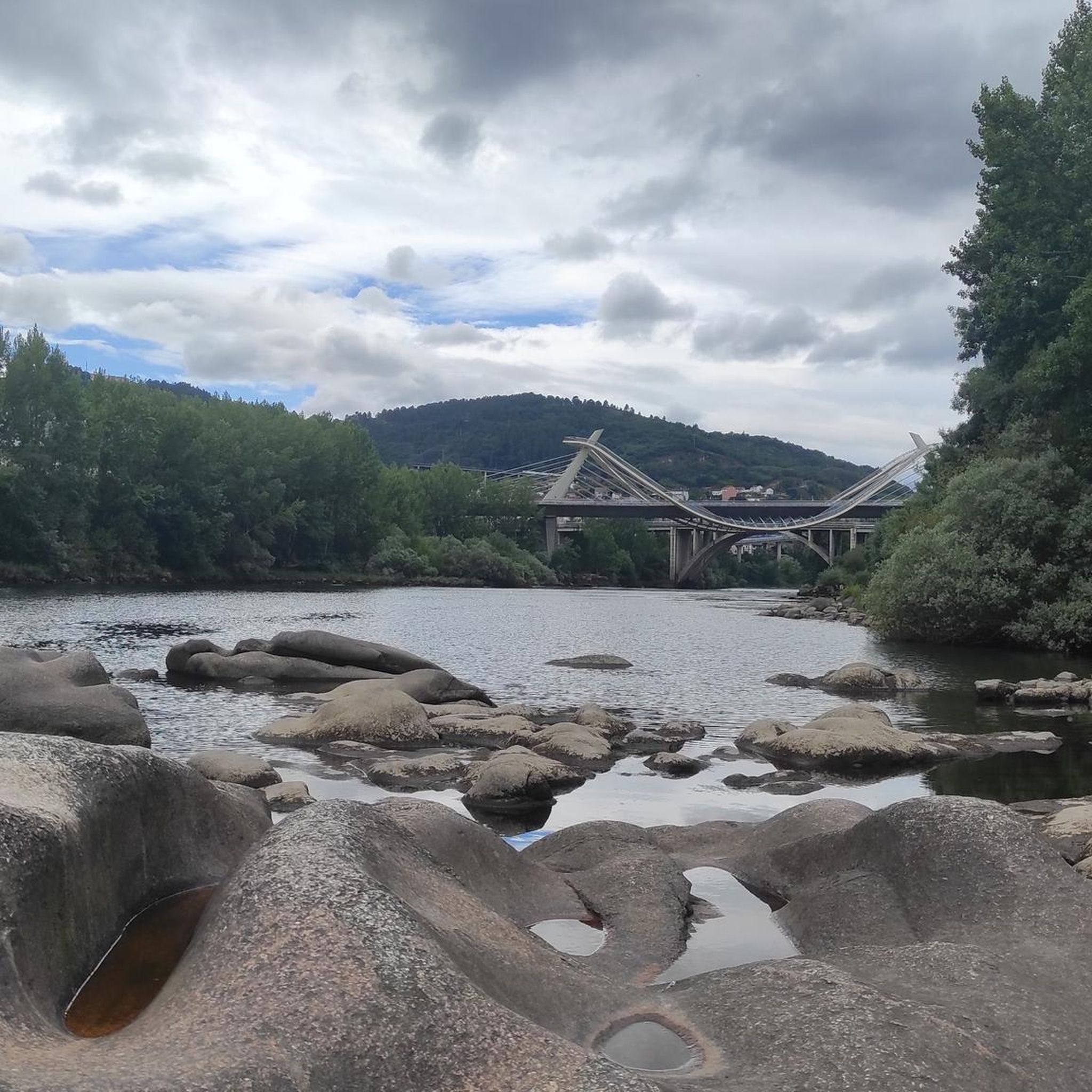
The Millennium Bridge, also known as the Gaviota Bridge due to its shape, is one of the six bridges over the Miño River in the city of Ourense, located between the medieval bridge and the N-525 bridge.
1
0

The monastery of Santo Estevo de Ribas de Sil is one of the most outstanding and spectacular complexes of the rich monumental heritage of Galicia. It was built between the 12th and 18th centuries. This monastery was important, because nine bishops retired to it and renounced their episcopal sees and chose the monastery to end their days throughout the 10th century and perhaps part of the 11th. The monastery kept his remains and as a souvenir it carried the nine miters on its shield. The church has a basilica plan, spacious and proportioned. It preserves the Romanesque apse with three apses, the central one being lower than the lateral ones, an unusual case in Galician Romanesque. The façade of the church is from the end of the 16th century or beginning of the 17th century. At the top there is a simple oculus that gives light to the interior and ends in a niche inside which is the image of Saint Stephen.
1
0

Very beautiful bridge from Roman times
2
1
Frequently Asked Questions
What historical sites can I explore around A Peroxa?
A Peroxa is rich in history. You can visit the ruins of the medieval Castillo de A Peroxa, which offers panoramic views of the Miño River. Another significant historical site is the Ponte Vella (Roman Bridge of Ourense), an ancient bridge spanning the Miño River. The Monastery of San Pedro de Rocas, partially excavated in rock, is one of Galicia's oldest monasteries, while the grand Monastery of Santo Estevo de Ribas de Sil showcases impressive architecture from the 12th to 18th centuries.
Are there any unique cultural attractions in A Peroxa?
Yes, A Peroxa offers unique cultural insights. The Museo do Lebre das Casarizas is dedicated to Manuel Fernández, known as "O Lebre," an inventor and artisan whose nearly 500 creations provide a fascinating glimpse into rural life and traditional trades of the 20th century. You can also find traditional washhouses (lavaderos) scattered throughout parishes like As Barbeitas, As Casarizas, and Corneda, reflecting local customs and historical water use.
What natural features and viewpoints should I visit near A Peroxa?
The region boasts stunning natural beauty. The Augacaída Waterfall is a spectacular natural monument with a 40-meter drop. For breathtaking vistas, head to the Pedra Longa Viewpoint, offering majestic views of the Sil River Canyon. The Mirador de A Peroxa also provides scenic views of the Rego do Rial valley and the castle ruins. Don't miss the Fervenza de Santigueiro, an enchanting spot with several small waterfalls.
What kind of outdoor activities can I do around A Peroxa?
A Peroxa is ideal for outdoor enthusiasts, especially hiking and cycling. You can explore various trails, such as the 'Augacaída Waterfall and Castro de Marce – circular from Marce' or the 'Smuggler's Route'. For cycling, options range from moderate to difficult, including routes like 'Luintra – tour around Monasterio San Pedro de Rocas'. Find more details on hiking routes at Hiking around A Peroxa and cycling routes at Cycling around A Peroxa.
Are there family-friendly attractions in the A Peroxa area?
Many attractions around A Peroxa can be enjoyed by families. The Ponte Vella (Roman Bridge of Ourense) is a historical site that's easy to visit. Exploring the ruins of Castillo de A Peroxa and enjoying the panoramic views can also be an engaging activity for children. The natural beauty of the Fervenza de Santigueiro and the Augacaída Waterfall offer scenic spots for family outings.
What is the Ribeira Sacra and how can I experience it from A Peroxa?
A Peroxa serves as a gateway to the stunning Ribeira Sacra, a region renowned for its deep river canyons, lush forests, and extensive vineyards. It's famous for its "heroic viticulture" on steep, terraced slopes overlooking the Miño and Sil rivers. You can experience its beauty by visiting viewpoints like Pedra Longa Viewpoint or by hiking along the Ruta de Senderismo del Río Miño (PR-G 179), which can be started from the fluvial beach of Os Peares.
What is the best time of year to visit A Peroxa?
The best time to visit A Peroxa largely depends on your preferred activities. Spring and autumn offer pleasant temperatures for hiking and exploring the natural landscapes, especially the Ribeira Sacra's vineyards. Summer is ideal for enjoying the rivers and outdoor activities, though it can be warmer. The annual pilgrimage to the Capela da Nosa Señora da Saúde in Mirallos takes place every September, offering a cultural experience.
Can I find easy hiking trails near A Peroxa?
Yes, there are easy hiking options available. For instance, the 'Augacaída Waterfall and Castro de Marce – circular from Marce' is an easy 4.9 km hike. You can find more details and other routes suitable for various difficulty levels on the Hiking around A Peroxa guide page.
What do visitors enjoy most about the attractions around A Peroxa?
Visitors particularly appreciate the blend of historical significance and natural beauty. The ancient structures like the Ponte Vella and the unique rock-hewn Monastery of San Pedro de Rocas are highly rated. The spectacular Augacaída Waterfall and the panoramic views from various viewpoints also receive high praise for their scenic appeal.
Are there any unique villages or architectural sites to see?
Absolutely. The distinctive village of Os Peares, located at the confluence of the Sil and Miño rivers, is worth a visit for its unique layout and an "Eiffel-style" iron train bridge. You can also explore traditional manor houses (pazos) like the 17th-century Pazo de Ansariz in Armental and the 18th-century Pazo de Turbisquedo in Souto, offering a glimpse into historical Galician architecture.
What religious buildings are notable in the area?
The region features several significant religious buildings. The Iglesia de Santiago de A Peroxa, built in the early 20th century, incorporated stones from the former A Peroxa Castle. The Monastery of Santo Estevo de Ribas de Sil is a grand complex with Romanesque origins. Additionally, the rural Iglesia de San Martiño de Vilarrubín and the Capela da Nosa Señora da Saúde in Mirallos, a major Marian pilgrimage site, are notable.
Most popular routes around A Peroxa
Most popular attractions around A Peroxa

Get inspired with the komoot mobile app


Explore more
Still not found the Highlight you’re looking for? See guides of the top attractions in other regions:
