The best walks and hikes around Gavarda
4.2
(75)
540
hikers
38
hikes
Hiking around Gavarda offers diverse terrain characterized by the Júcar River valley and surrounding hills. The landscape features a mix of riverine paths, agricultural areas, and elevated sections providing views of the region. Trails often traverse varied ground, including open fields and some forested patches, making for varied hike duration Gavarda trails.
Best hiking trails around Gavarda
- The most popular hiking route is High Cross – Pi d'Ambrosio loop from L'Ènova - Manuel, a 8.5 miles (13.6 km) trail…
Last updated: October 11, 2026
20
hikers
10.8km
02:51
100m
100m
Moderate hike. Good fitness required. Easily-accessible paths. Suitable for all skill levels.
4.7
(3)
13
hikers
13.6km
03:45
220m
220m
Moderate hike. Good fitness required. Easily-accessible paths. Suitable for all skill levels.

10
hikers
11.3km
03:30
300m
300m
Moderate hike. Good fitness required. Mostly accessible paths. Sure-footedness required.
4.0
(2)
14
hikers
6.72km
01:51
110m
110m
Easy hike. Great for any fitness level. Easily-accessible paths. Suitable for all skill levels.
4.5
(2)
7
hikers
8.43km
02:42
270m
280m
Moderate hike. Good fitness required. Mostly accessible paths. Sure-footedness required.
Get access to more routes and recommendations from other explorers.
Already have an account?
Our route recommendations are based on thousands of hikes, rides, and runs completed by other people on komoot.
Start today with a free account
Your next adventure awaits.

Tips from the Community

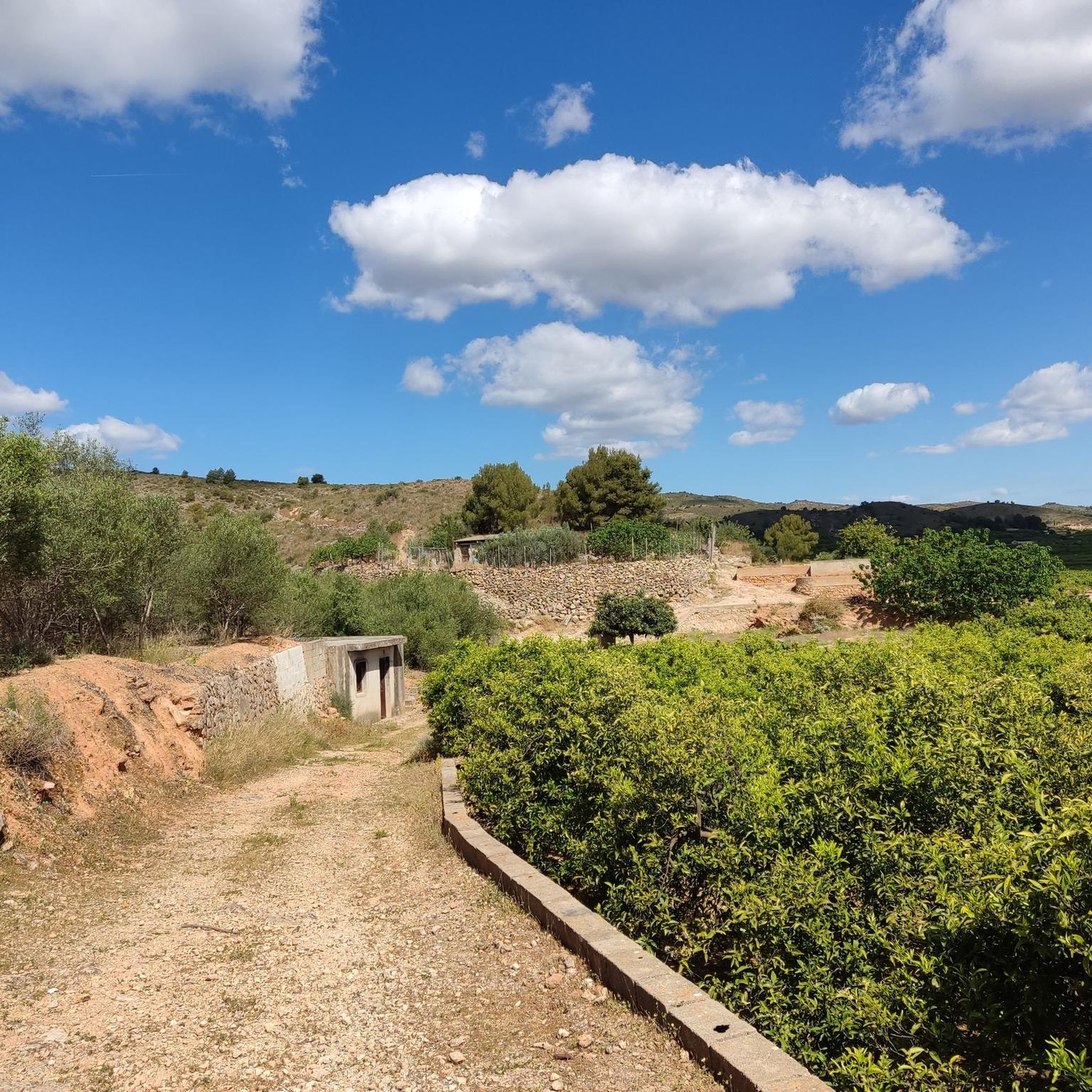
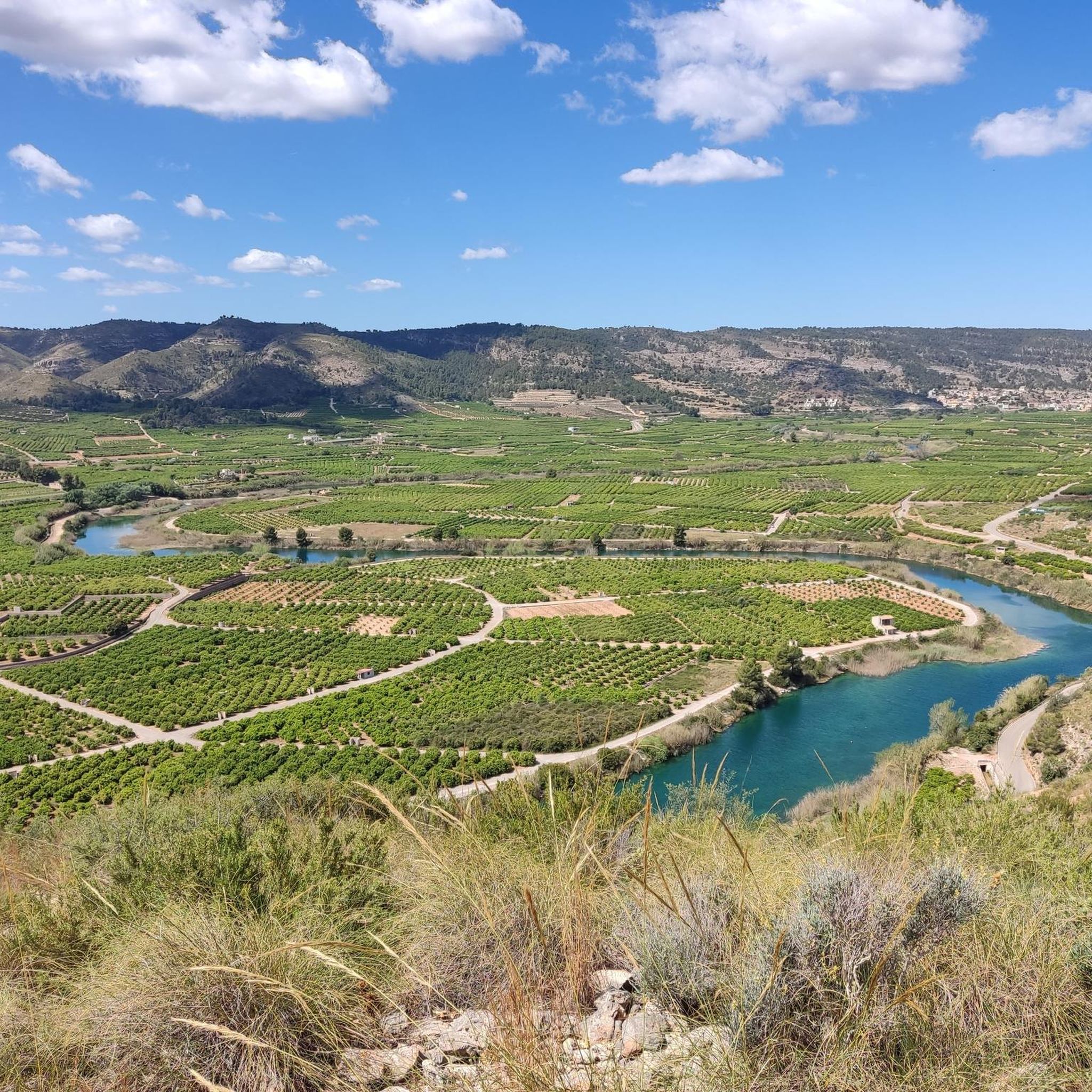
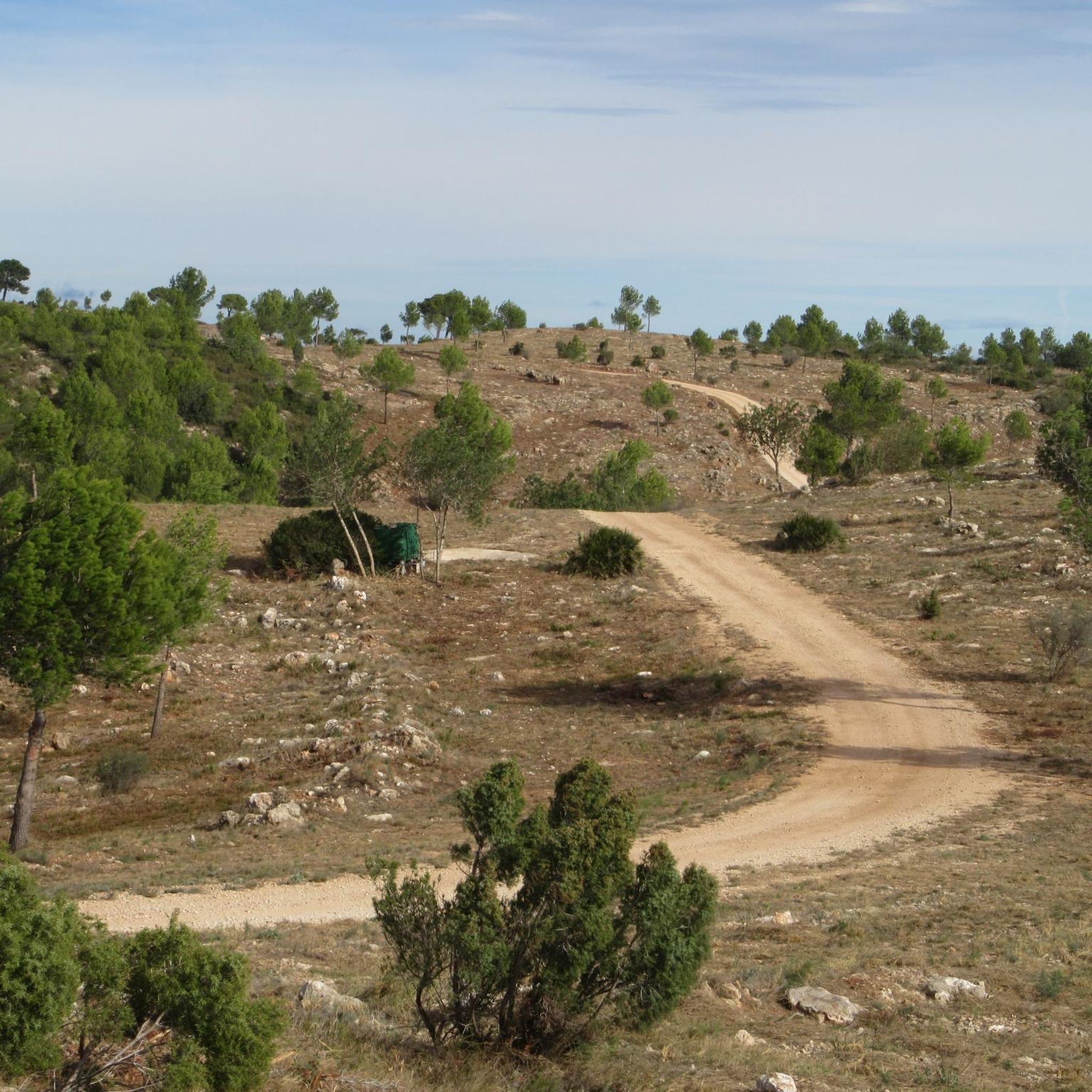
The temperature was just below 30 degrees and that was fine for this walk, which was most of the time in the sun. The first part of the walk was more challenging than the second part. In this case that was good because of the temperature. There were no other people taking this walk, so it was very quiet. There were some nice views to other places like Xativa.
2
0

The Quatre Camins quarry, also known as the Llosar dels Francs, is an archaeological site 500m away. of the Roman villa, known as Villa Cornelius, located in Partida dels Franks. These are quarries that, according to some scholars (such as the archaeologist Miquel Ramon Martí), could be considered the most important of the Roman period in the Iberian Peninsula. The commercialization of the marble extracted from these quarries was the main source of wealth for the Iunii family, of the Galeria Tribe, owners of the plantation and the Cornelius town. The transport of the stone was done through the carriladas, that is to say, grooves in the rocks that channeled the wheels of the carts, which can still be seen on the road that leads from Énova to Barxeta. The planter has preserved marks that show that the marble was extracted forming rectangular blocks. These large blocks were transported in oxcarts to the town, where the work of stonemasons or stonemasons continued, who would fragment them and shape them into specific pieces, according to the order that needed to be served. This marble was used to make tombstones, monuments of different sizes and even slabs to pave the Roman theater in Zaragoza or the plinths of the Romanesque door of the Cathedral of Valencia.
1
0

It is said that this house was a refuge for the "maquis". Inscriptions can be seen there since 1955.
0
0
It is advisable to take advantage of rail transport to travel to the starting point of the planned routes on foot or by bike. From L'Énova you can take interesting routes on foot through its territory and also by bike through the regions of Ribera and Costera.
2
0
Underground passage to cross the train tracks on foot or by bike.
2
0
Villa Cornelius is a Roman villa, located in the municipality of l'Énova, in the region of Ribera Alta, in an area known as "Els Alters". The discovery of the site was due to chance, since the remains of the villa were found when, in September 2003, work began prior to the construction of the AVE Madrid- Valencia. It is a rural villa, between 2,600 and 3,000 square meters, located very close to the Via Augusta (on a plain between the river Sucro (Xúquer) and its tributary the river Magre) and the old Saetabis (Xàtiva), in the Tarraconensis province, belonging to the patrician Publius Cornelius Iuniani (whose name had to give rise to the toponym of the later population, Iunianus). The villa was built at the end of the 1st century AD (specifically between the years 65 and 75) and ended its use in the second quarter of the 5th century AD. Throughout this period, in which the villa was dedicated to the exploitation and processing of flax, several reforms were carried out both in the house and in the production area. It had to be abandoned enough that part of the roof of the residential buildings fell and remained on the floors (which contained mosaics), sealing them and allowing their conservation to this day. At present, the villa is covered again, after having extracted valuable mosaics.
2
0
Also known as Llosar dels Francs, in this Roman marble quarry you can distinguish the rectangular blocks that were later loaded onto bullock carts to transport them.
2
0
El Pi d'Ambrosio is a natural site of great environmental value, much appreciated by all the residents of L'Énova. Place, where people usually go to spend the day and get in touch with nature. Currently, this area is minimally conditioned with approved paellers, as well as several drinking water sources.
2
0
Frequently Asked Questions
How many hiking trails are available around Gavarda?
Gavarda offers a diverse selection of over 25 hiking trails, catering to various skill levels. You'll find everything from leisurely riverside strolls to more challenging ascents in the surrounding hills.
Are there easy hiking options suitable for beginners or casual walkers in Gavarda?
Yes, Gavarda has several easy hiking options. There are 11 trails classified as easy, perfect for those looking for a relaxed walk. These often follow the Júcar River valley, offering pleasant, less strenuous terrain.
What do other hikers say about the trails in Gavarda?
The hiking trails around Gavarda are highly regarded by the komoot community, boasting an average rating of 4.4 out of 5 stars from over 40 reviews. Hikers frequently praise the varied terrain, scenic viewpoints, and the mix of riverine paths and agricultural landscapes.
Are there any challenging hikes for experienced hikers in Gavarda?
While most trails are moderate, there is at least one more challenging route available for experienced hikers seeking a greater ascent and more demanding terrain. These routes often explore the elevated sections of the region.
Are there any circular hiking routes around Gavarda?
Many of the trails around Gavarda are designed as circular routes, allowing you to start and end at the same point without retracing your steps. An example is the Río Júcar Beach Bar loop from Sumacàrcer, which offers a pleasant moderate walk.
Can I find any waterfalls or interesting natural features along the hiking trails?
Yes, the region around Gavarda is home to several beautiful natural features. You can explore highlights like the Vikings' Waterfall or the Gaspar Waterfall and Pool. The Candil Cave – Waypoint to Cova del Candil loop from Alt del Pollet also explores local geological features.
Are there any historical or cultural landmarks to see while hiking near Gavarda?
Absolutely. Beyond natural beauty, you can discover historical and cultural sites. Notable attractions include the Collegiate Basilica of Santa María (La Seu) in Xàtiva, or the Fountain of the 25 Spouts. These can be incorporated into your hiking plans.
What is the best time of year to go hiking in Gavarda?
The best time for hiking in Gavarda is typically during spring (March to May) and autumn (September to November). During these seasons, the weather is mild and pleasant, avoiding the intense heat of summer and the cooler, sometimes wetter, winter months. The landscape is also particularly vibrant in spring and autumn.
Are the hiking trails in Gavarda suitable for families with children?
Many of the easier trails along the Júcar River valley are suitable for families. These routes often feature relatively flat terrain and offer opportunities to enjoy nature without excessive difficulty. Consider routes with shorter distances and less elevation gain for younger hikers.
Is there parking available near the trailheads in Gavarda?
While specific parking information for every trailhead isn't always detailed, most trail starting points in and around Gavarda, especially those near villages or popular access points, typically offer roadside parking or designated small parking areas. It's advisable to check local maps or tour descriptions for specific recommendations.
Can I reach the hiking trails in Gavarda using public transport?
Access to trailheads in Gavarda by public transport can be limited, as is common in many rural Spanish areas. While some larger towns nearby might have bus or train connections, reaching specific starting points for hikes often requires a car. It's recommended to research local bus schedules if you plan to rely on public transport.
Are dogs allowed on the hiking trails in Gavarda?
Generally, dogs are welcome on most hiking trails in the Gavarda region, especially in natural, uncultivated areas. However, it's always best to keep your dog on a leash, particularly near agricultural land, livestock, or in areas with wildlife. Always carry water for your pet and clean up after them.
Most popular attractions around Gavarda

Get inspired with the komoot mobile app


Explore more
Browse the best Hikes in other regions.
