Attractions and Places To See around Hinojosa Del Campo - Top 12
Attractions and places to see around Hinojosa Del Campo offer a blend of historical sites and natural landscapes in the province of Soria, Spain. Situated at the foot of the Sierra del Madero and traversed by the Rituerto River, the area provides diverse scenery. Visitors can explore historical landmarks, traditional architecture, and natural features like ravines and forests. The region is known for its cultural insights and opportunities for outdoor exploration.
Best attractions and places to see around Hinojosa Del…
Last updated: July 7, 2026
Ólvega
Highlight • Settlement
Translated by Google •
Tip by

Matalebreras
Highlight • Settlement
It was established as a constitutional municipality with the name of Matalebrera, with 90 homes and 269 neighbors in 1842.
Translated by Google •
Tip by
Sign up now to discover places like this
Get recommendations on the best single tracks, peaks, & plenty of other exciting outdoor places.
Sign up for free
Church of Nuestra Señora de la Blanca, Montenegro de Ágreda
Highlight • Religious Site
Translated by Google •
Tip by

Almenar de Soria Castle
Highlight • Castle
Translated by Google •
Tip by

Sierra del Madero Viewpoint
Highlight • Viewpoint
Translated by Google •
Tip by

Sign up for free to discover even more attractions around Hinojosa Del Campo.
Sign up for free
Already have an account?
Start today with a free account
Your next adventure awaits.
Login or Signup

Tips from the Community

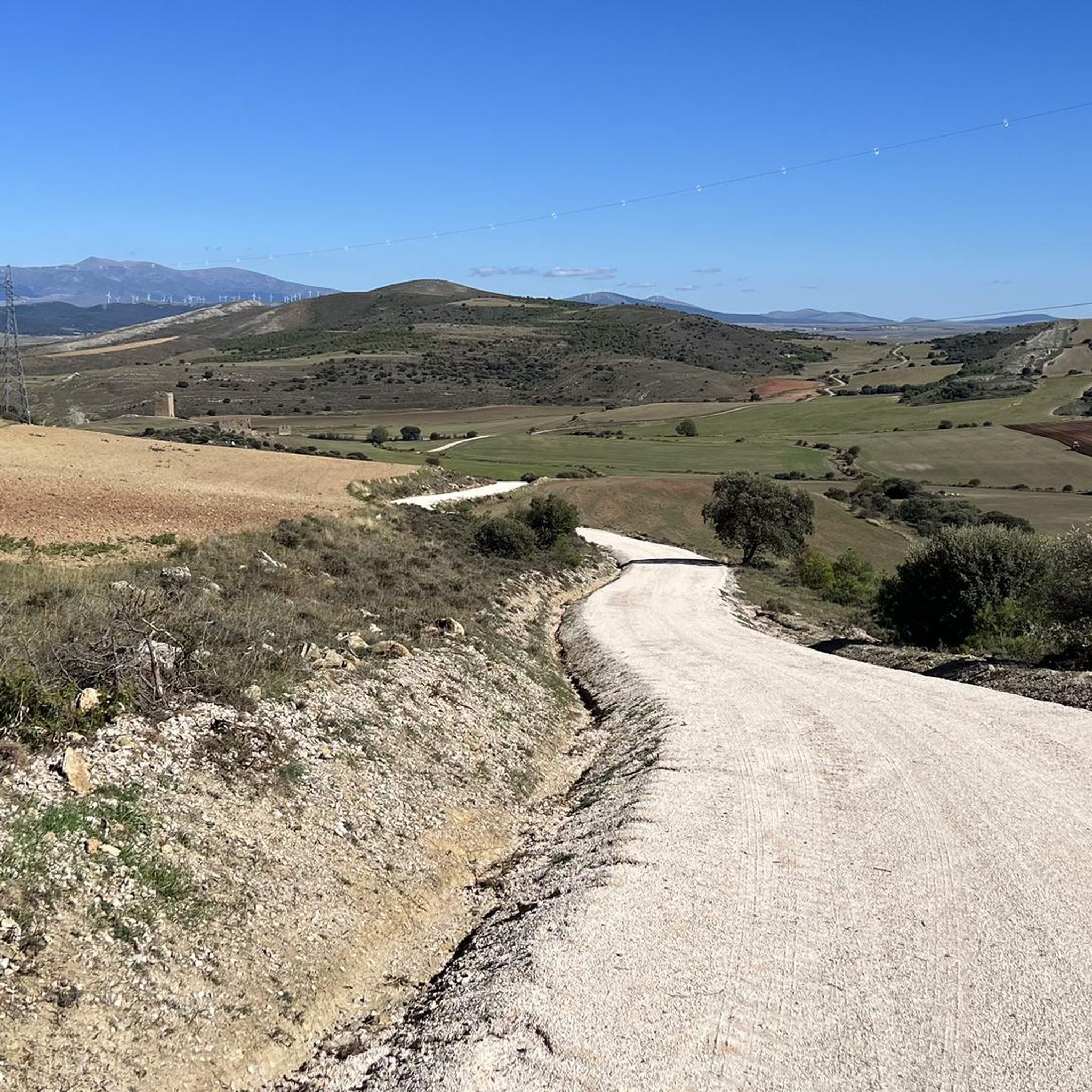
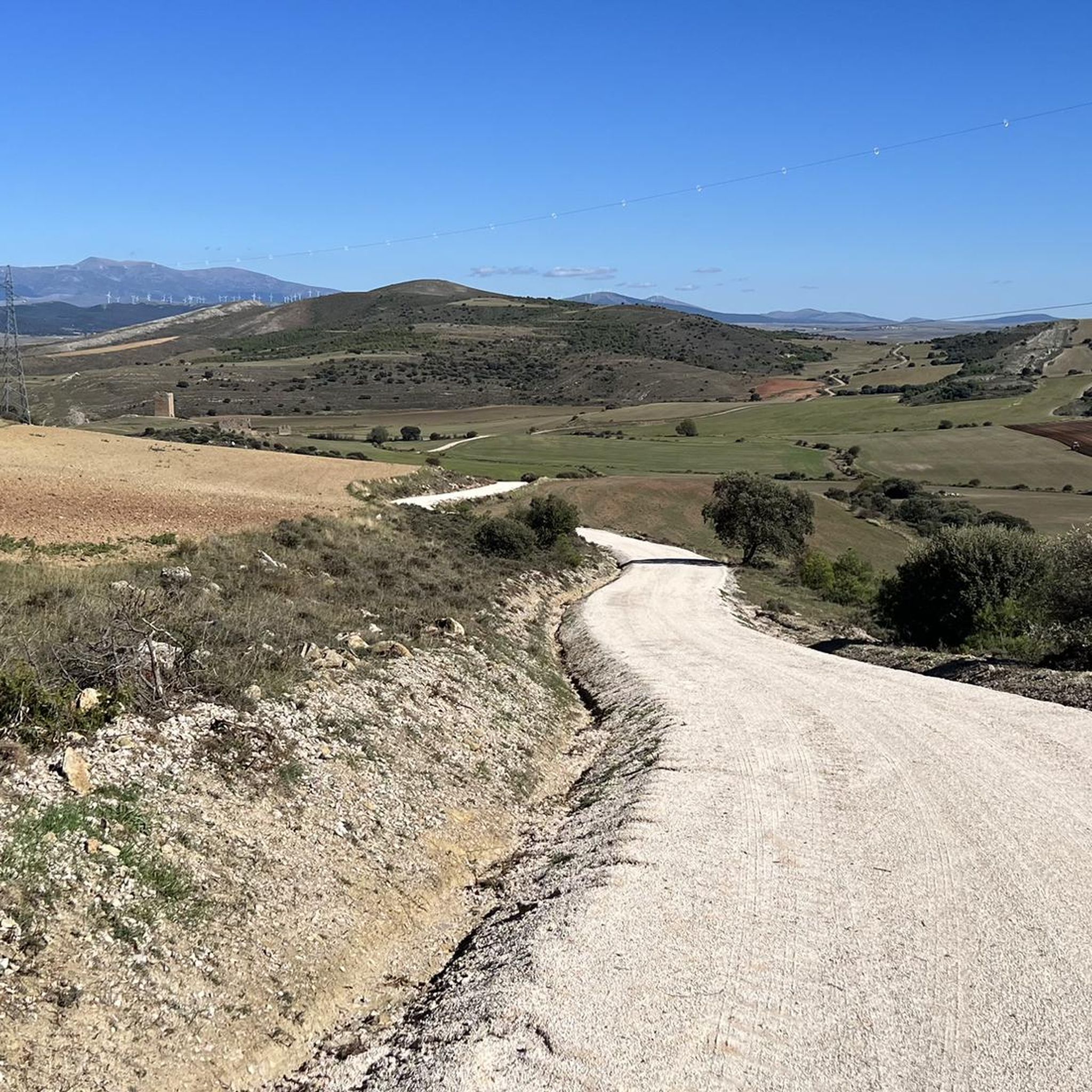
After the tough climb, we have beautiful views of both valleys
0
0

Montenegro de Ágreda is a town belonging to the municipality of Matalebreras, in the province of Soria, region of Moncayo, in the community of Castilla y León. It stands out for the church of Nuestra Señora de la Blanca, a proto-Gothic fortified church from the 13th century that took advantage of the structure of an old Berber tower in its construction.
0
0
Matalebreras is a municipality in the province of Soria, in the Moncayo region, in the community of Castilla y León. It was established as a constitutional municipality with the name of Matalebrera, with 90 homes and 269 neighbors in 1842. Of its heritage, the Gothic church of San Pedro Apóstol from the 18th century stands out, although it preserves a chapel and the nave from the 16th century. Another unique building is the Mozarabic tower, today in ruins, in addition to three emblazoned houses from the 17th-18th centuries, one of them belonging to the Marquis of Velamazán.
2
0
Ólvega is a municipality in Soria in the community of Castilla y León. Its origin dates back to the beginning of the 5th century, although even older archaeological remains have been found from two nearby Celtiberian forts. It is popularly known as "Niña del Moncayo", for being at the foot of this mountain, and also as "Second Numancia", for the popular revolt of 1474 to avoid rendering vassalage to the Count of Medinaceli.
1
0

In Montenegro de Ágreda, the ancient fortified church of Nuestra Señora de la Blanca remains standing, built at the end of the 12th century, attached to a Berber defensive tower, from the 10th century. Another jewel of the Romanesque style that spread throughout the medieval border lands .
1
0

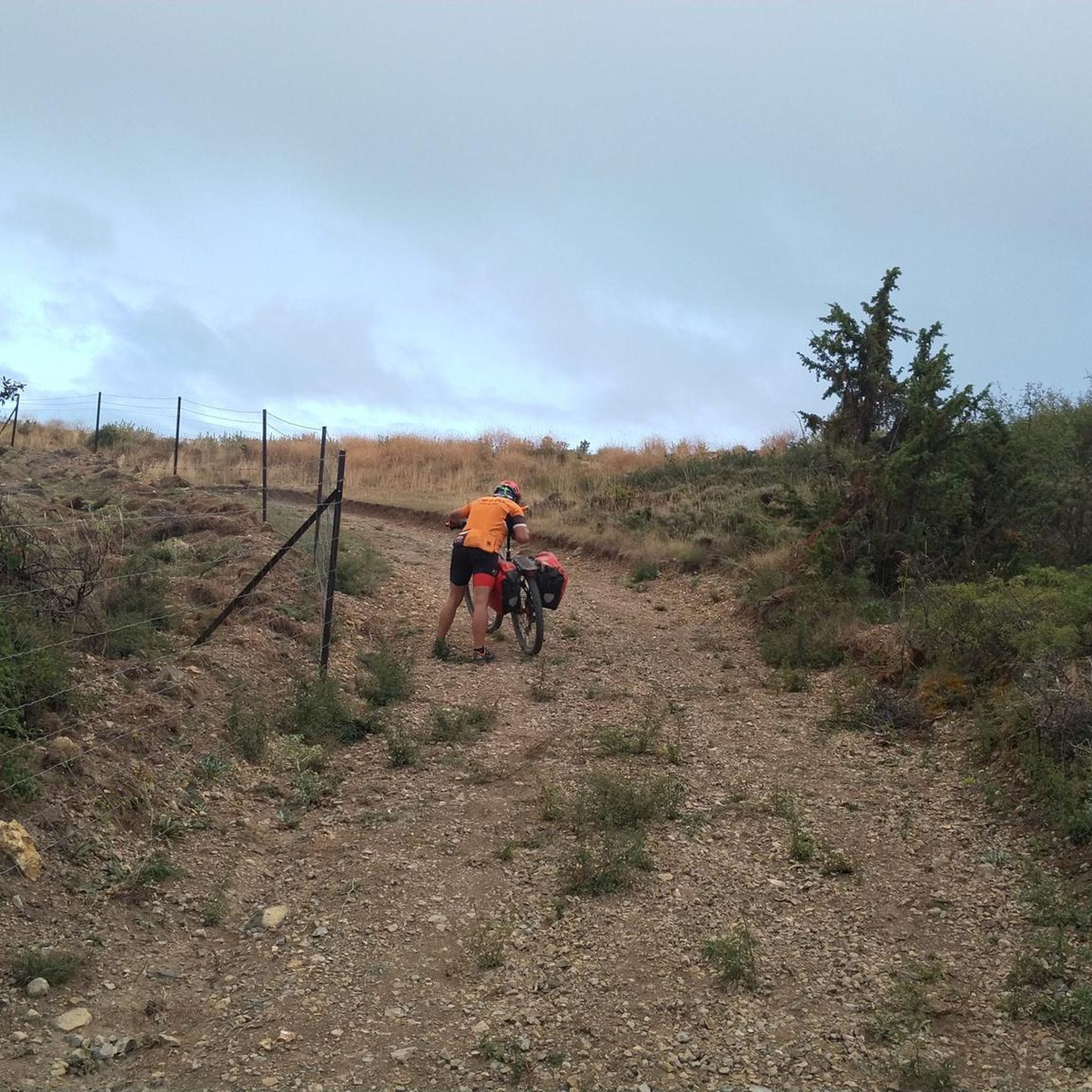
In Pozalmuro we find the bar closed, we have little to do and a storm is also threatening, we fill the kettles with water and begin the ascent of the Sierra del Madero, the mountain pass of the day to jump the Iberian System and cross the Duero basin to the great valley of the Ebro. The climb is a cycle path with quite a slope, it has some studs to avoid the destruction of runoff and maintain the quality of the surface but they require extra effort on each step. The hard slope ends at an extraordinary viewpoint with signs of the landscape, the views are magnificent. Moncayo (2,314 m) is an imposing mass, the roof of the Soria mountains and the highest peak of the Iberian System. We follow the milestones of the natural path down a descent with a couple of delicate curves for the gravel wheels on the loose stone and then a well-conditioned and fun path in a holm oak forest of great environmental quality. The sky turns into hell and we arrive at the town of Muro when the raindrops turn into hail balls, luckily the bar is open here. In Muro is the site of the Roman city of Augustóbriga and in the bar room they have posters highlighting the notoriety of the place. The Roman town was decisive in the Roman conquest and control of the towns that lived in the mountain slopes of Moncayo. The bad weather is persistent and we decided to finish the stage in Ágreda, an interesting town of three cultures on the slopes of Moncayo. At Hostal Doña Juana they are welcoming and kind to cyclists, even when they arrive soaked and their bikes are muddy. Before dinner there is time to see more towers, palaces, convents, stately homes and stroll through the Moorish quarter, passing through medieval gates with original battlements or in the shape of a horseshoe arch, such as the Puerta del Agua, from the 8th century, the oldest construction of the architectural heritage of Ágreda.
0
0
The Church of Nuestra Señora de la Blanca stands out, a proto-Gothic fortified church from the 13th century taking advantage of a tower of Berber origin. https://es.wikipedia.org/wiki/Montenegro_de_Ágreda
1
1
If you want to start your route here, the restaurant next to the gas station is a good place to leave your car.
1
0
Frequently Asked Questions
What historical and cultural sites can I explore around Hinojosa del Campo?
The region is rich in history. You can visit the fortified Church of Nuestra Señora de la Blanca in Montenegro de Ágreda, a proto-Gothic structure from the 13th century built upon a 10th-century Berber defensive tower. Also, explore the well-preserved Almenar de Soria Castle, which has been a setting for films. In Hinojosa del Campo itself, the Church of Nuestra Señora de la Asunción, with its Romanesque and Gothic elements and an ancient Islamic tower, is a primary artistic treasure. Don't miss the 17th-century blasoned stately homes and the Gothic stone cross in the village.
Are there any natural features or viewpoints to enjoy near Hinojosa del Campo?
Yes, Hinojosa del Campo is nestled at the foot of the Sierra del Madero, offering scenic views. The Sierra del Madero Viewpoint provides magnificent panoramas, including the imposing Moncayo mountain. The Cañadas de Hinojosa, located on the slopes of the Sierra del Madero, feature diverse vegetation like holm oaks and maples. The Rituerto River also flows through the municipality, adding to its natural charm.
What outdoor activities, like hiking or cycling, are available in the area?
The natural surroundings, especially within the Quejigares y encinares de Sierra del Madero, offer numerous trails for hiking enthusiasts. For cycling, you can find various routes, including those for touring bicycles, mountain bikes, and road cycling. Explore options like the 'Almenar de Soria, Ólvega, and Matalebreras Loop' for touring, or 'Cueva del Zapato – Laguna de Ciria loop from Noviercas' for MTB. You can find more details on these and other routes on the Cycling around Hinojosa Del Campo, MTB Trails around Hinojosa Del Campo, and Road Cycling Routes around Hinojosa Del Campo guide pages.
What is the best time of year to visit Hinojosa del Campo?
The best times to visit Hinojosa del Campo are during spring and autumn. The weather is mild during these seasons, and the landscapes are particularly vibrant, making it ideal for exploring historical sites and enjoying outdoor activities like hiking.
Are there any family-friendly attractions or activities in Hinojosa del Campo?
While specific family-focused attractions are not detailed, the settlements of Matalebreras and Ólvega are noted as family-friendly. Exploring the historic center of Hinojosa del Campo with its traditional adobe houses and the central plaza can be an engaging experience for families. The easier hiking trails in the surrounding natural areas also offer opportunities for family outings.
Where can I find food and accommodation near the attractions?
In the town of Matalebreras, there is a restaurant with ample parking. Ólvega also offers a hotel and numerous shops and supermarkets. Hinojosa del Campo itself provides local restaurants where you can savor traditional Soria dishes like homemade stews and roasted lamb.
What is the significance of Ólvega?
Ólvega is a significant settlement known as "Niña del Moncayo" due to its location at the foot of the Moncayo mountain. It's a crossroads of regions, situated between the Sierra del Moncayo, Sierra del Madero, and Sierra de Toranzo. Visitors can explore the Gothic-style Parish Church of Santa María la Mayor and archaeological remains from ancient Celtiberian forts.
Can I find any ancient Roman or medieval structures in the area?
Yes, the region has a rich ancient past. In Matalebreras, you can find a Roman Bridge and remnants of a Moorish Wall. The Church of Nuestra Señora de la Asunción in Hinojosa del Campo incorporates an older Islamic tower from the 10th century, and the Church of Nuestra Señora de la Blanca in Montenegro de Ágreda is built upon a Berber defensive tower from the same period.
What is the 'Ruta de los Torreones' and where can I experience it?
The 'Ruta de los Torreones' (Route of the Towers) is a historical trail highlighting medieval defensive towers in the Rituerto river valley. The Church of Nuestra Señora de la Asunción in Hinojosa del Campo is a key stop on this route. Other towers like La Pica and Masegoso are also part of this route, showcasing the region's historical significance as a frontier.
Are there any designated natural protected areas for hiking?
Yes, the 'Quejigares y encinares de Sierra del Madero' (Oak and Holm Oak Forests of Sierra del Madero) is a designated Site of Community Interest and part of the Natura 2000 network. This area is highly valued for its picturesque landscapes and provides excellent opportunities for hiking amidst diverse flora and fauna.
What is special about the village of Matalebreras?
Matalebreras is a municipality with a rich heritage. It features the Gothic church of San Pedro Apóstol, which preserves parts from the 16th century. You can also see a Mozarabic tower (now in ruins) and three emblazoned houses from the 17th-18th centuries, showcasing stately architecture. Additionally, it has a Roman Bridge and a Moorish Wall.

Get inspired with the komoot mobile app


Explore more
Still not found the Highlight you’re looking for? See guides of the top attractions in other regions:
