Attractions and Places To See around Santa Cristina De Valmadrigal - Top 12
Best attractions and places to see around Santa Cristina De Valmadrigal, a municipality in León, Castilla y León, offer a blend of historical, cultural, and natural points of interest. The area features traditional architecture, including historic dovecotes and cave-bodegas, alongside significant historical sites. It is also recognized for its natural features, such as lagoons and springs, which are important for birdwatching, particularly for the great bustard. The region's clear skies and minimal light pollution also make it suitable for stargazing.
…Last updated: July 12, 2026
El Burgo Ranero
Highlight • Settlement
Translated by Google •
Tip by

Reliegos Meteorite Impact Site
Highlight • Natural Monument
Translated by Google •
Tip by

Sign up now to discover places like this
Get recommendations on the best single tracks, peaks, & plenty of other exciting outdoor places.
Sign up for free
Bar Elvis
Highlight • Pub
Translated by Google •
Tip by

Camino de Santiago Milestone 327 km (Castile and León)
Highlight • Monument
Yellow arrows: These arrows will guide you throughout the entire route. They indicate the direction to follow, especially at crossroads. …
Translated by Google •
Tip by

Translated by Google •
Tip by

Sign up for free to discover even more attractions around Santa Cristina De Valmadrigal.
Sign up for free
Already have an account?
Start today with a free account
Your next adventure awaits.
Login or Signup
Popular around Santa Cristina De Valmadrigal

Tips from the Community

The Reliegos meteorite is a well-known meteorite fall in Spain, which occurred on December 28, 1947 near Reliegos, in the municipality of Santas Martas, province of León. It is an L5 chondrite, which means that it is an ordinary chondrite with a certain chemical composition and texture. The meteorite had a mass of 17.3 kg and consisted of a single stone. The meteorite is characterized by the presence of relatively indistinct chondrules in a finely ground and largely recrystallized matrix. The meteorite contains mainly olivine and orthopyroxene, as well as iron-nickel metal (mainly kamacite), troilite, plagioclase and accessory clinopyroxene. The Reliegos meteorite is one of the 80 confirmed witness accounts of meteorite falls classified as an L5 chondrite, and the only witness account of an L5 fall in Spain.
3
0
Bar Elvis in Reliegos, also known as Bar La Torre, is a popular spot for pilgrims following the Camino Francés. The bar is famous for its unique and eccentric atmosphere, created by the owner Eusignio Prieto, also known as Sinín. The bar is located on the Camino Francés, a major route to Santiago de Compostela. The interior is filled with graffiti, artwork, and souvenirs left by pilgrims. It is a lively and colorful environment. Sinín is known for his warm welcome and his passion for serving pilgrims. He plays rock 'n' roll and oldies music, and offers delicious tapas and bocadillos. Bar Elvis features in the film "The Way" (2010), directed by Emilio Estevez.
2
0

Burgo Ranero is characterised by its typical Castilian architecture and peaceful surroundings, making it an oasis of peace for those who walk the Camino. The name of the village is believed to come from a certain “Ranarius” or from the croaking of frogs in the local plains.
2
0
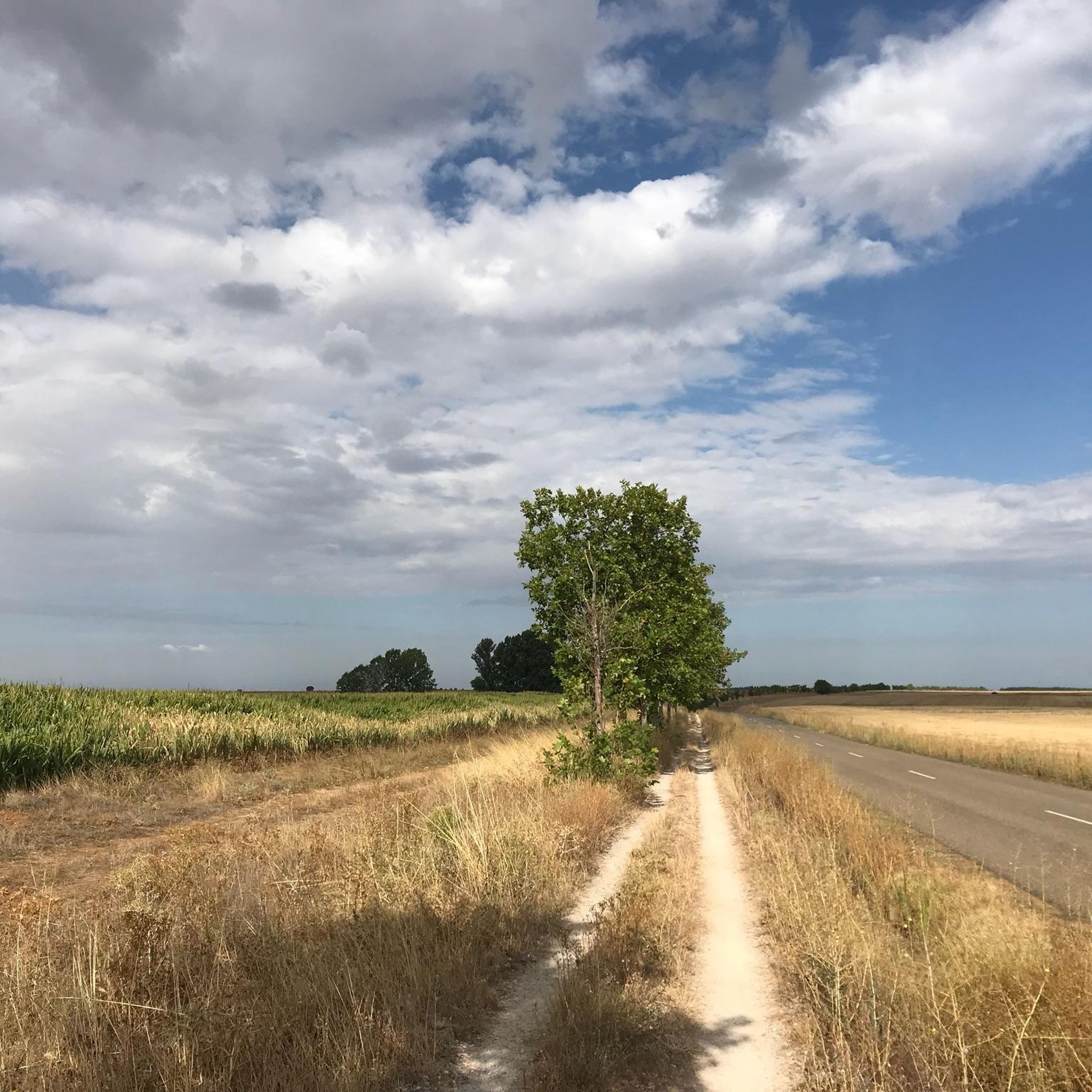
If you have the opportunity to explore this trail, you will enjoy the natural beauty and ecological richness of the area. Good hike! 🌿🚶♀️
3
0
Signage on the Camino de Santiago is essential for pilgrims. Yellow arrows: These arrows will guide you throughout the entire route. They indicate the direction to follow, especially at crossroads. The yellow color is due to the contribution of the parish priest Elías Valiña, a key figure in the resurgence of the Camino de Santiago in the 20th century. Cairns or milestones: These concrete blocks include an arrow, a yellow shell on a blue background and the distance in kilometers to Santiago de Compostela. You will find them every 500 meters in Galicia. Scallop shells: In addition to being drawn on the markers, scallop shells are distributed throughout the Camino. They are universal symbols and have been carried by pilgrims for centuries. The open part of the shell indicates the direction towards Santiago. Good way! 🚶♂️🌟
2
1

On December 28, 1947, at 8:30 a.m., a 17-kilogram meteorite struck. Beautiful monument on the side of the road
3
0

Albergue and a small café as you walk towards the centre, which has a lovely old church
2
0

This section between Burgo Ranero and Reliegos, 12km north of the train track, is the variant that goes on an old Roman road. Until May 2015, it was still perfectly clear that one was walking on an embankment five feet high above the surrounding plain, and one was walking on original dirt from the road. A year ago I visited the area closest to Burgo Ranero, I think that heavy machinery has widened the road, destroying it.
2
0
Frequently Asked Questions
What historical and cultural sites can I explore in Santa Cristina de Valmadrigal?
The region is rich in history. You can visit the Parish Church of Santa Cristina, known for its fortress-like tower and 18th-century Baroque altarpiece. The Ermita del Cristo also holds significant cultural value. In nearby Matallana de Valmadrigal, the church features an unusually tall bell tower and the oldest sundial in León, dating back to 1539. Additionally, you can find archaeological remains of the former village of 'Gallegos' and records of the Monastery of San Salvador.
Where can I experience the Camino de Santiago near Santa Cristina de Valmadrigal?
Several points of interest relate to the Camino de Santiago. You can explore the Roman Road Variant of the Camino Francés (El Burgo Ranero – Reliegos), which follows an ancient Roman path. The settlement of El Burgo Ranero is directly on the Camino Real or Francés route and offers amenities for pilgrims. You might also spot the Camino de Santiago Milestone 327 km (Castile and León).
Are there any unique natural attractions or phenomena to see?
Yes, Santa Cristina de Valmadrigal offers unique natural sights. The Reliegos Meteorite Impact Site marks where a 17-kilogram meteorite struck in 1947, featuring a monument on the roadside. The area's clear skies and minimal light pollution also make it an excellent location for stargazing, especially during summer nights.
Is Santa Cristina de Valmadrigal a good place for birdwatching?
Absolutely. The region is a renowned birdwatching hotspot, particularly for the great bustard (avutarda). Lagoons and springs attract diverse birdlife. The mating season for the great bustard, from mid-March to early April, offers a spectacular display of their courtship rituals. You can also observe species like the Montagu's harrier, especially around the Matallana Hermitage.
What kind of traditional architecture can I find in the area?
The village showcases charming traditional adobe and tapial constructions. You'll find numerous historic dovecote (palomares) structures. Additionally, there are traditional Cave-Bodegas, wine cellars excavated into the earth, some of which have been repurposed as picnic areas where you can sample local produce.
Are there opportunities for outdoor activities like cycling or hiking?
Yes, the area around Santa Cristina de Valmadrigal provides various outdoor activities. For cycling, you can explore routes such as the 'Tierra de Campos Loop' or the 'El Burgo Ranero – Reliegos Meteorite Impact Site loop'. You can find more details on these and other cycling routes in the Cycling around Santa Cristina De Valmadrigal guide. For road cycling, there are routes like 'Sahagún from León – circular via Melgar de Abajo and río Cea' available in the Road Cycling Routes around Santa Cristina De Valmadrigal guide.
What is the best time of year to visit Santa Cristina de Valmadrigal?
The best time to visit depends on your interests. For birdwatching, particularly to see the great bustard's courtship, mid-March to early April is ideal. Summer nights are excellent for stargazing due to clear skies. For hiking, early spring is recommended when flowers are in full bloom along routes like the Roman Road Variant of the Camino Francés.
Are there family-friendly attractions in Santa Cristina de Valmadrigal?
Yes, the region offers several family-friendly options. Exploring the traditional architecture, including the historic dovecotes and cave-bodegas, can be an engaging activity for all ages. The settlement of El Burgo Ranero, with its amenities and natural beauty, is also considered family-friendly. The unique Reliegos Meteorite Impact Site can also spark curiosity in younger visitors.
Can I find places to eat or drink in the area?
Yes, you can find local spots to eat and drink. In Reliegos, the famous Bar Elvis (also known as Bar La Torre) is a popular and eccentric spot for pilgrims, known for its unique atmosphere, music, and tapas. Additionally, some traditional Cave-Bodegas have been repurposed as merenderos (picnic areas) where you can enjoy local wine, cheese, and cured meats.
What is the significance of the Reliegos Meteorite Impact Site?
The Reliegos Meteorite Impact Site marks the location where a 17-kilogram meteorite struck on December 28, 1947. It is a significant natural monument and one of the 80 confirmed witness accounts of L5 chondrite meteorite falls globally, and the only one in Spain. A monument stands on the roadside to commemorate this rare event.
What is El Burgo Ranero, and what does it offer visitors?
El Burgo Ranero is a settlement situated directly on the Camino Real or Francés, part of the Jacobean route to Santiago. This town of about 700 inhabitants provides essential amenities for pilgrims, including shops and various accommodations. It's a good place to stop and rest, perhaps by the Manzana Lagoon, after a hike.
Are there any ancient traditions still preserved in Santa Cristina de Valmadrigal?
Yes, the town proudly preserves the ancestral 'Danza de los Palos' (stick dance). This cultural tradition has been passed down through generations and is still performed during local festivals, offering a unique glimpse into the region's heritage.
Are there any accessible attractions for visitors with mobility needs?
The Reliegos Meteorite Impact Site is noted as being wheelchair accessible, making it a suitable option for visitors with mobility needs to experience a unique natural monument.
Most popular routes around Santa Cristina De Valmadrigal

Get inspired with the komoot mobile app


Explore more
Still not found the Highlight you’re looking for? See guides of the top attractions in other regions:
