Attractions and Places To See around Fuenterrobles - Top 20
Best attractions and places to see around Fuenterrobles include a blend of natural landscapes, historical sites, and cultural points of interest. Located in the province of Valencia, this region offers opportunities for outdoor activities like hiking and mountain biking. Visitors can explore monumental trees, mountain ranges, and the Cabriel River, alongside historical structures and archaeological sites. The area provides insights into local history and rural life.
Best attractions and places to see around Fuenterrobles
- The most popular attractions is Contreras…
Last updated: May 9, 2026
Contreras Bridge - Cabriel River
Highlight • Bridge
Translated by Google •
Tip by

Peñas Blancas Path Trench
Highlight • Historical Site
Translated by Google •
Tip by
Sign up now to discover places like this
Get recommendations on the best single tracks, peaks, & plenty of other exciting outdoor places.
Sign up for free
Contreras Trench
Highlight (Segment) • Historical Site
Translated by Google •
Tip by

El Moluengo
Highlight • Summit
Translated by Google •
Tip by
Peña Azul Viewpoint
Highlight • Viewpoint
Translated by Google •
Tip by
Sign up for free to discover even more attractions around Fuenterrobles.
Sign up for free
Already have an account?
Start today with a free account
Your next adventure awaits.
Login or Signup
Other adventures around Fuenterrobles

Tips from the Community

It was built in 1972 at the confluence of the Cabriel and Guadazaón rivers. The dam height is 129 metres. Its purpose is, among other things, to supply water to the city of Valencia. The Contreras Bridge was built between 1845 and 1851 by the engineer Lucio del Valle. To descend the ravine, he had to build a zigzag road that formed the port of Contreras.
1
0

It is a mountain peak located in the vicinity of the Valencian municipality of Villargordo del Cabriel, in the enclave of the Hoces del Cabriel Natural Park, a privileged natural environment that serves as a border with the neighboring region of Castilla – La Mancha. This peak has an altitude of around 1040 m and from its summit it is possible to obtain privileged views of the Sierra del Rubial to which this rocky promontory belongs. The panoramic view offered from this point allows you to see all the towns in the Requena-Utiel region in which this Natural Park is included. Likewise, from the Moluengo peak it is possible to see the depression of the Cabriel River and the neighboring plains of Cuenca. It is possible to go up to the Moluengo peak and cross the privileged natural environment that surrounds it thanks to one of the routes that cross the Hoces del Cabriel Natural Park, known as the yellow route, which starts from the town of Villargordo del Cabriel and leads the traveler to the top of Moluengo. Along this itinerary, which has an extension of 16 km, it is possible to visit places such as the town of Moluengo, the Fonseca viewpoint, the Oliva fountain or the Vadocañas bridge, over the waters of the Cabriel river and which constitutes the point at which the route ends.
0
0
Until 2016, it held the record for the bridge with the longest concrete arch span in Spain and stands out for its slenderness and visual beauty. Now, the largest is the Alcántara reservoir viaduct, built in 2019 for the Madrid-Extremadura High Speed line.
0
0

Dam bridge. Spectacular views
2
0

Top of the peak "El Moluengo" at 1023 m above sea level, highest point of the Natural Park of Las Hoces del Cabriel. It allows to appreciate beautiful views to all the valley of the Cabriel, the province of Valencia and the one of Cuenca.
4
0
Trenches that date back to the beginning of the 19th century (1808-1814) and that were used by the Spanish troops for defense during the War of Independence.
1
1
Top of the mountain "El Moluengo" at 1023 meters above sea level with beautiful views of the entire Cabriel valley, the provinces of Valencia and Cuenca.
3
0
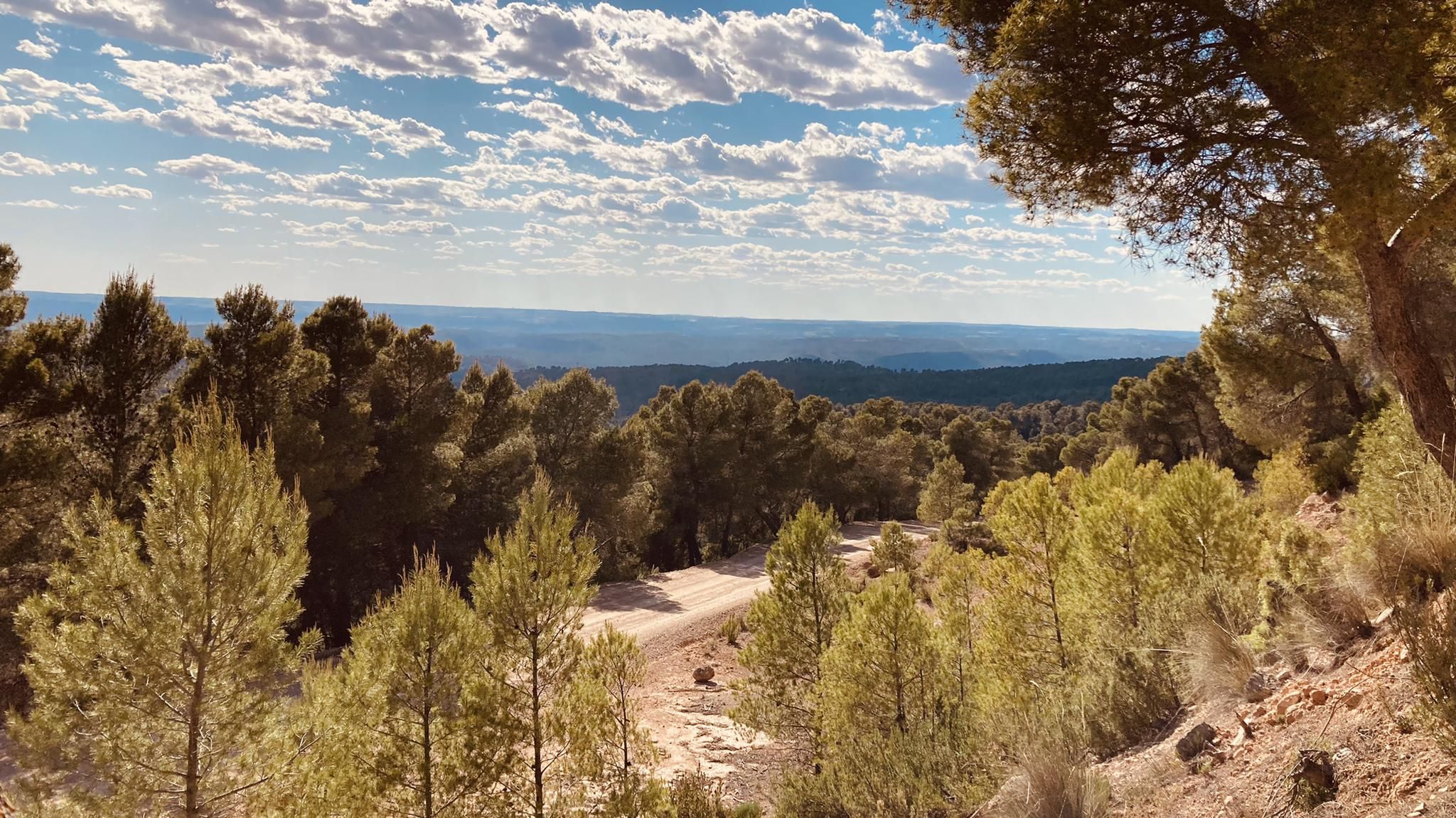
Viewpoint with very nice views of the valley and the Hoces del Cabriel Natural Park. It is located on the forest track in very good condition
1
1
Frequently Asked Questions
What historical sites can I explore around Fuenterrobles?
Fuenterrobles is rich in history. You can visit the Peñas Blancas Path Trench and the Contreras Trench, both dating from the War of Independence (1808-1814) and used by Spanish troops for defense. Another significant historical landmark is the Contreras Bridge - Cabriel River, a 19th-century structure known for its unique design. The region also features the Old Telegraph Tower, an Iberian Settlement of La Peladilla, and the Church of Santiago Apóstol.
Are there any natural viewpoints with scenic views in the area?
Yes, for breathtaking views, head to Peña Azul Viewpoint, which offers expansive vistas of the valley and the Hoces del Cabriel Natural Park. It's accessible via a well-maintained forest track. The Sierra de la Bicuerca also provides various scenic spots during its hiking and BTT routes.
What outdoor activities are available near Fuenterrobles?
The area around Fuenterrobles is perfect for outdoor enthusiasts. You can enjoy hiking and mountain biking through the Sierra de la Bicuerca, explore monumental trees, or discover the Cabriel River. For specific routes, check out the available hiking routes and cycling routes around Fuenterrobles.
Can I find family-friendly attractions or activities in Fuenterrobles?
Absolutely! Many of the natural attractions, like the monumental trees and the easier sections of the Sierra de la Bicuerca routes, are suitable for families. The Peña Azul Viewpoint is also considered family-friendly. Additionally, the Colección Museográfica Vida Rural offers an engaging glimpse into local history for all ages.
What kind of hiking trails can I find around Fuenterrobles?
Fuenterrobles offers a variety of hiking trails, from easy walks to more challenging routes. You can explore the 'Route of Trees' to see singular specimens, or venture into the Sierra de la Bicuerca for diverse BTT and hiking options. The hiking guide for Fuenterrobles lists trails such as the easy Cuchillos de Contreras Trail and the more difficult Senda Sierra del Rubial.
Are there any unique natural features to discover?
Beyond the stunning landscapes of the Hoces del Cabriel Natural Park, Fuenterrobles is known for its monumental trees, including lime trees, pines, and poplars, many of which are highlighted on a dedicated 'Route of Trees'. You can also explore the Cid Cave and sandy areas, and discover ancient springs along 'The Water Route'.
What is the best time to visit Fuenterrobles for outdoor activities?
The region's Mediterranean climate makes it suitable for outdoor activities for much of the year. Spring and autumn generally offer the most pleasant temperatures for hiking and cycling. However, the Sierra de la Bicuerca can be explored in various seasons, and some routes, like the Camino de Santiago section, are of lesser difficulty, making them enjoyable outside peak summer heat.
What cultural insights can I gain from visiting Fuenterrobles?
To delve into the local culture, visit the Colección Museográfica Vida Rural in the town center, which showcases nearly 1,000 pieces reflecting the daily life of past inhabitants. You can also see the beautifully restored Municipal Washing Place and the historic Concejo and Glorieta Fountains, which are central to the town's heritage.
Are there cycling routes available for different skill levels?
Yes, the area provides a range of cycling routes. For road cycling, you can find easy loops like the Villargordo del Cabriel loop from Fuenterrobles, or more moderate options such as the Utiel – Venta del Moro loop. Touring cyclists can explore routes like the moderate Venta del Moro – Venta del Moro loop or the more difficult Contreras Dam – Cabriel Valley Viewpoint loop. Check the cycling guide for more details.
What do visitors enjoy most about the attractions around Fuenterrobles?
Visitors particularly appreciate the blend of natural beauty and historical significance. The stunning views from places like Peña Azul Viewpoint and the historical depth of sites like the Peñas Blancas Path Trench are frequently highlighted. The unique architecture of the Contreras Bridge - Cabriel River and the opportunity to experience Spanish history amidst beautiful scenery are also popular aspects.
Are there any archaeological sites in the Fuenterrobles region?
Yes, the region offers insights into ancient history with the Iberian Settlement of La Peladilla, an archaeological site that provides a glimpse into the early inhabitants of the area.
Can I find information about local gastronomy or events?
While exploring Fuenterrobles, you can also indulge in the local gastronomy, including wines from the Utiel-Requena region, traditional cold meats, and local dishes. The town also hosts festivities such as Melon Day in August and the Pilgrimage of the Holy Cave in May, offering a taste of local culture and traditions.
Most popular routes around Fuenterrobles
Most popular attractions around Fuenterrobles

Get inspired with the komoot mobile app


Explore more
Still not found the Highlight you’re looking for? See guides of the top attractions in other regions:
