Attractions and Places To See around Puebla Del Príncipe - Top 12
Best attractions and places to see around Puebla Del Príncipe, a municipality in the Campo de Montiel region of Ciudad Real, Castilla-La Mancha, Spain, offers a blend of history, culture, and natural beauty. Situated on the elevated slopes of Sierra Morena, the area features impressive landscapes and a rich heritage from its past as a crossroads for various civilizations. Visitors can explore medieval history, architectural sites, and natural surroundings characterized by olive and cypress groves. The region provides opportunities for…
Last updated: June 29, 2026
Santa Cruz de los Cáñamos
Highlight • Settlement
Its roots date back to the Middle …
Translated by Google •
Tip by

Landscapes of Torre de Juan Abad
Highlight • Viewpoint
Translated by Google •
Tip by

Sign up now to discover places like this
Get recommendations on the best single tracks, peaks, & plenty of other exciting outdoor places.
Sign up for free
Church of Our Lady of the Elms
Highlight • Religious Site
Translated by Google •
Tip by
Terrinches
Highlight • Settlement
Translated by Google •
Tip by
Santiago Apóstol and Albaladejo Castle
Highlight • Castle
Translated by Google •
Tip by
Sign up for free to discover even more attractions around Puebla Del Príncipe.
Sign up for free
Already have an account?
Start today with a free account
Your next adventure awaits.
Login or Signup
Popular around Puebla Del Príncipe

Tips from the Community

The Parish Church of Our Lady of the Elms, in Torre de Juan Abad (Ciudad Real), is one of the most emblematic churches in Campo de Montiel, with great historical and artistic value. It was built on the site of a small existing chapel in 1243, a work of the Order of Santiago, whose cross-sword can still be seen in the pediments. Declared a Site of Cultural Interest (BIC) in 2005.
4
0
Santa Cruz de los Cáñamos is a small town in Campo de Montiel (Ciudad Real), ideal for those seeking history, nature, and tranquility. Its roots date back to the Middle Ages, with Roman and early Christian remains on the Torrejones hill (Monte Santo). The name comes from the historical cultivation of hemp, which was very important to the local economy. Parish Church of San Bartolomé: Built in the 15th century with materials from the old castle. Its unique nave, coffered vault, and altarpiece of the Most Holy Christ of Inspiration are notable.
4
0

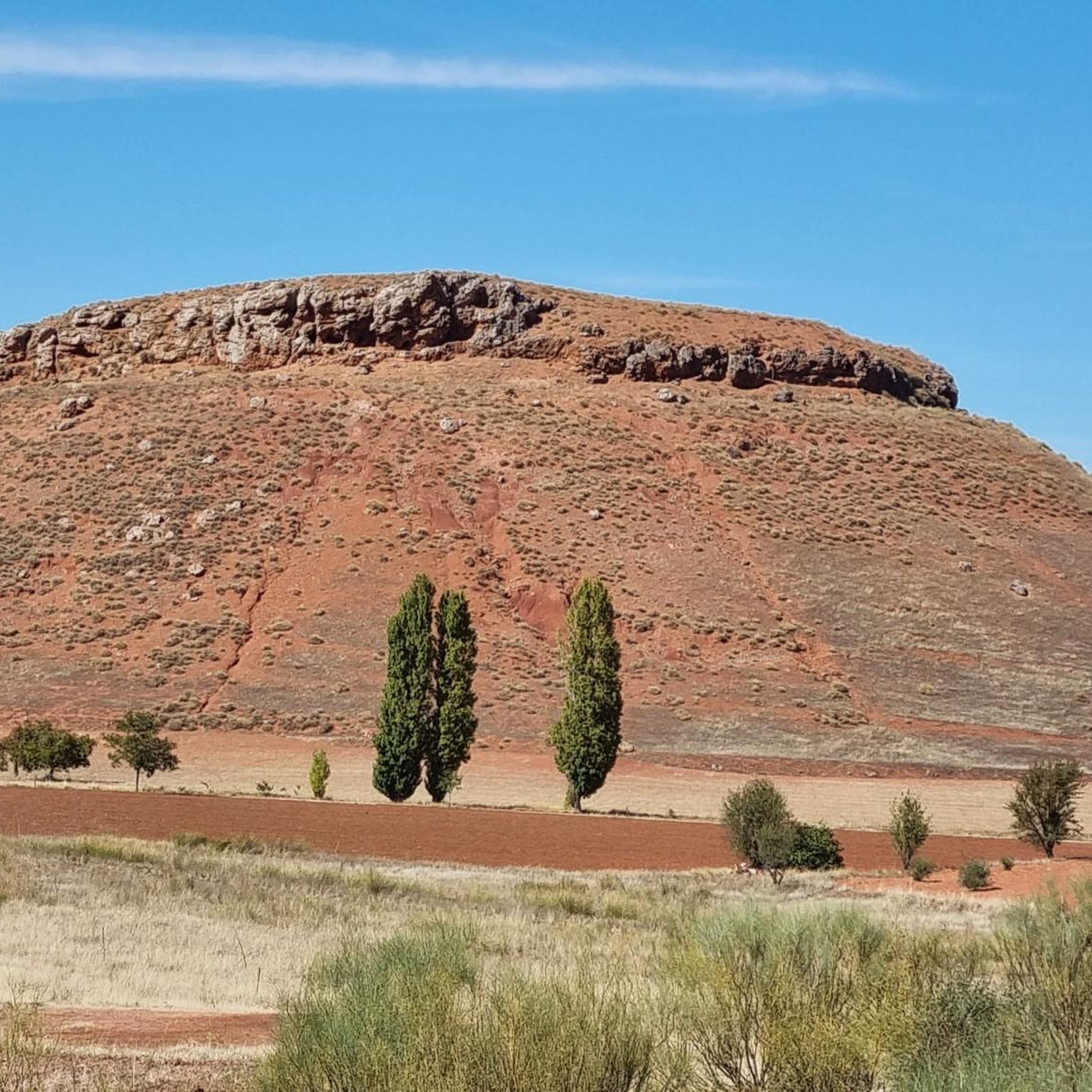
Beautiful landscapes at the arrival of the town of Torre de Juan Abad in the middle of cultivated fields and small rounded hills!
1
0
Small population center that is located in the south of the province and one of the main points is its tower, called Ben Yucef Castle and which by its name seems to be of Arab origin.
2
0
At one end of the town of Albaladejo is its castle which is together with the church of Santiago Apóstol. The walls are still there and can be visited!
2
0
Heading towards the Arroyo de la Vega, a tributary of the Río Gadalen, you can see this area before the first foothills of the Sierra Morena, in impressive landscapes!
1
0

Arriving at the town of Santa Cruz de los Cáñamos, we pedal through a landscape of olive groves and cypresses. The town located in the region of Campo de Montiel. Like many in the area, its origin dates back to medieval times. The village church was built from the materials of a castle that once stood there.
0
1
Torre de Juan Abad is a small rural agricultural town in the Campo de Montiel region. One of the most outstanding monuments is the church of Nuestra Señora de los Olmos, from the 16th century.
0
1
Frequently Asked Questions
What historical sites can I explore in and around Puebla del Príncipe?
Puebla del Príncipe and its surroundings are rich in history. You can visit the Torreón-Fortaleza, a 13th-century keep that now houses the municipal library. The Gothic-style Iglesia Parroquial de Nuestra Señora de la Asunción is another significant architectural feature. Nearby, the small town of Santa Cruz de los Cáñamos boasts roots dating back to the Middle Ages, with Roman and early Christian remains, and its Parish Church of San Bartolomé built from an old castle's materials.
Are there any ancient castles or fortresses to visit near Puebla del Príncipe?
Yes, the region features several historical fortifications. In Puebla del Príncipe itself, the Torreón-Fortaleza is a prominent 13th-century tower-fortress. Further afield, in Terrinches, you can find the Castillo Ben Yucef, which appears to have Arabic origins. Additionally, the Santiago Apóstol and Albaladejo Castle offers visible walls and is located at one end of the town of Albaladejo, alongside the Church of Santiago Apóstol.
What natural landscapes and viewpoints can I discover near Puebla del Príncipe?
Puebla del Príncipe is situated on the elevated slopes of Sierra Morena, offering impressive landscapes. A notable natural highlight is the Landscapes of Torre de Juan Abad, a viewpoint near the Arroyo de la Vega, an affluent of the Gadalen River, showcasing stunning natural scenery before the foothills of the Sierra Morena. The areas around Santa Cruz de los Cáñamos are also characterized by beautiful olive and cypress groves.
Are there hiking opportunities around Puebla del Príncipe?
Yes, there are several hiking opportunities in the area. You can explore trails like "The Olive Fields of Almedina" (moderate, 10 km), "From Castillo de Montizón to Torre de la Higuera" (difficult, 21 km), or easier options like the "Castillo de Albaladejo — circular" (easy, 3.8 km). For more details and routes, visit the Hiking around Puebla Del Príncipe guide.
What cycling routes are available near Puebla del Príncipe?
Cyclists can enjoy various routes, including the "Albaladejo and Montiel Castles Loop" (moderate, 73 km) or the "Campo de Montiel Castles Loop" (moderate, 70 km). For shorter, easier rides, consider the "Montiel – Montiel Castle loop from Albaladejo" (easy, 27 km). Find more options in the Road Cycling Routes around Puebla Del Príncipe guide.
Are there family-friendly attractions or activities in Puebla del Príncipe?
Many of the attractions in the region are suitable for families. The natural landscapes, such as the Landscapes of Torre de Juan Abad, offer pleasant outdoor experiences. The charming settlement of Santa Cruz de los Cáñamos provides a tranquil setting for exploring history and nature together. Easy walking trails, like the "Castillo de Albaladejo — circular," are also great for families.
When is the best time of year to visit Puebla del Príncipe for outdoor activities?
The region's climate, typical of Castilla-La Mancha, generally offers pleasant conditions for outdoor activities during spring and autumn. These seasons provide milder temperatures, ideal for hiking and cycling, and for exploring historical sites comfortably. Summers can be hot, while winters are generally mild but can be chilly.
What is unique about Santa Cruz de los Cáñamos?
Santa Cruz de los Cáñamos is a small town known for its rich history, dating back to the Middle Ages with Roman and early Christian remains. Its name reflects the historical cultivation of hemp, which was vital to the local economy. The Parish Church of San Bartolomé, built in the 15th century using materials from an old castle, is a notable architectural feature, set amidst picturesque olive and cypress groves.
What cultural points of interest are there in Puebla del Príncipe?
Beyond its historical landmarks, Puebla del Príncipe offers several cultural points of interest. The Plaza Mayor serves as a central gathering place, reflecting the town's community life. You can also find sites related to the famous writer Francisco de Quevedo, such as the Casa-Museo Francisco de Quevedo and the Celda de Quevedo. The town's tranquil, intertwined streets themselves contribute to its rural charm and historical feel.
Can I visit the Torreón-Fortaleza in Puebla del Príncipe?
Yes, the Torreón-Fortaleza, a significant 13th-century keep, is open for visits on weekdays. It has been adapted to house the municipal library, allowing visitors to explore this historical structure that the town grew around.
What is the Church of Our Lady of the Elms known for?
The Parish Church of Our Lady of the Elms in Torre de Juan Abad is one of the most emblematic churches in Campo de Montiel, recognized for its great historical and artistic value. Built on the site of an earlier chapel from 1243, it was a work of the Order of Santiago and was declared a Site of Cultural Interest (BIC) in 2005. Its 16th-century architecture is particularly noteworthy.
Most popular routes around Puebla Del Príncipe

Get inspired with the komoot mobile app


Explore more
Still not found the Highlight you’re looking for? See guides of the top attractions in other regions:
