Attractions and Places To See around Costur - Top 20
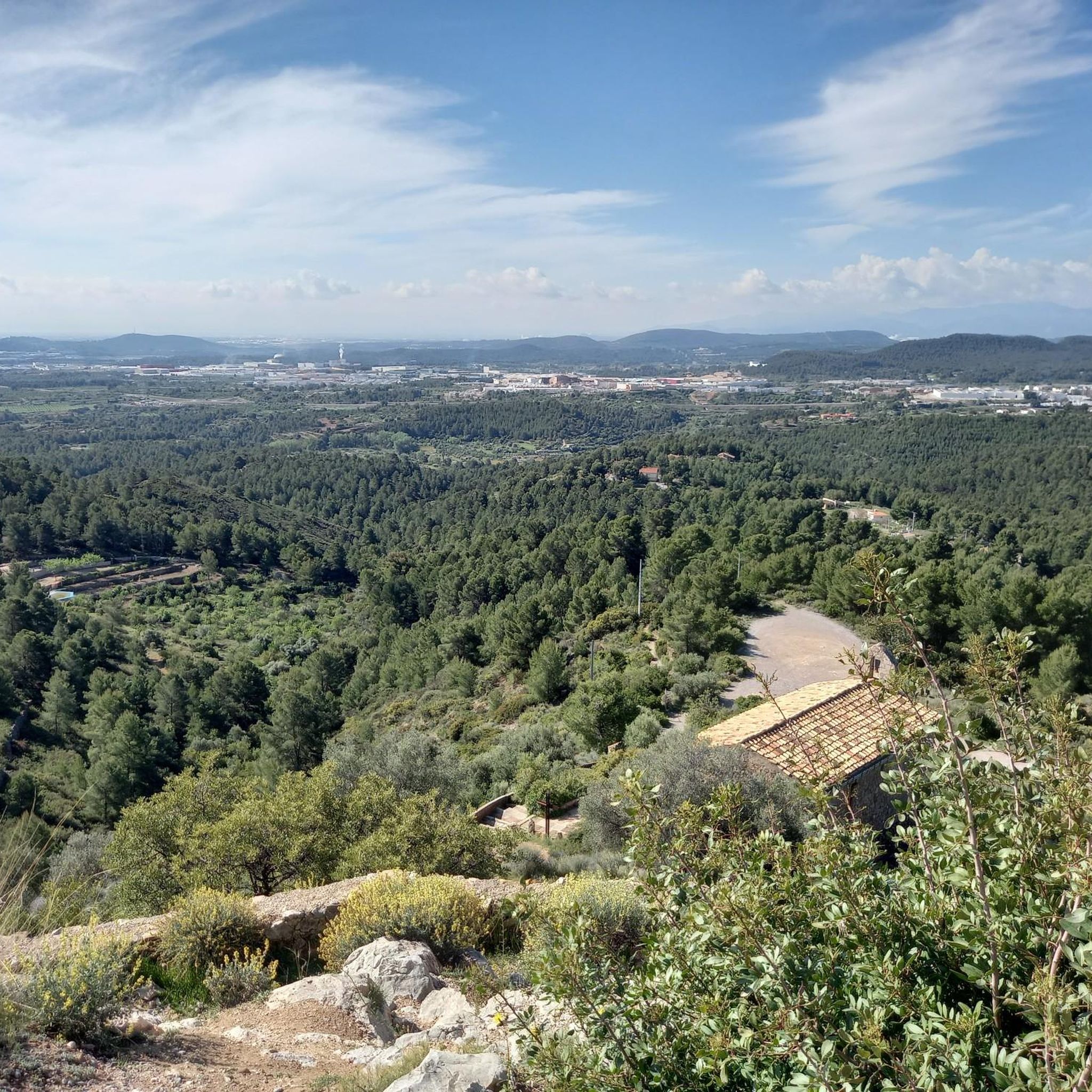
Best attractions and places to see around Costur include a blend of natural features and historical elements within the rugged landscape of Castellón, Valencia. This municipality, part of the Alcalatén comarca, offers opportunities to explore Mediterranean scrubland and ancient routes. Its charm lies in its geography and proximity to diverse points of interest in the wider province. The area provides a glimpse into traditional Spanish life and historical imprints.
Best attractions and places to see around Costur
- The most popular attractions is Vilafamés, a settlement known for its old quarter and Arab origins. Its historical complex was declared an Asset of Cultural Interest in 2005.
- Another must-see spot is María Cristina Reservoir, a lake located in Alcora. This gravity arch dam, built with concrete, has a maximum capacity of 19.59 hm³ and is used to recharge aquifers.
- Visitors also love Rocas de Mallassén, a natural monument featuring rock formations shaped by time and erosion. These rocks hold natural and archaeological value, with cave paintings found in one of their shelters.
- Costur is known for its historical settlements, natural monuments, and reservoirs. The region offers a variety of attractions to see and explore, from ancient rock formations to significant water infrastructure.
- The attractions around Costur are appreciated by the komoot community, with 30 upvotes and 12 photos shared by visitors.
Last updated: June 23, 2026
María Cristina Reservoir
Highlight • Lake
The works began in 1901 and ended in 1925 after several problems during its construction. It is located in the bed of the Rambla de la Viuda, on an area of 265 hectares and with a maximum capacity of 19.59 hm³. The dam is of the gravity arch type built with concrete, with a height of 59 meters and a crest length of 318 m. It has a free sheet spillway with a capacity of 597 m³/s. It is used to recharge the aquifers of the Plana Alta and Plana Baixa regions, it has a capacity of 18.4 hm³.
This dam has overflowed three times due to strong flooding due to cold drops. In 1920 (during construction), 1962 and 2000, the latter caused a hole with a large leak rate in the concrete structure of the dam, and set off all the alarms.
The dam belongs to the Júcar Hydrographic Confederation.
Translated by Google •
Tip by

Vilafamés
Highlight • Settlement
Vilafamés stands out for its old quarter. Strolling through its streets calmly, transports us to its Arab origins with narrow and zigzag streets, with corners that make you marvel, with its castle at the top and the small church at its feet.
With the Christian expansion, Vilafamés began to grow by building its impressive parish church and its 15th century palace. Here the streets are linear.
Its impressive “ROCA GROSSA”, a stone grindstone that is found as you go up the main street of Vilafamés, attracts attention.
What is most surprising, without a doubt, is that throughout the old neighborhood of Vilafamés, its rock stone predominates in all the buildings.
The historical complex of Vilafamés was declared an Asset of Cultural Interest in 2005.
Translated by Google •
Tip by

Sign up now to discover places like this
Get recommendations on the best single tracks, peaks, & plenty of other exciting outdoor places.
Sign up for free
Rocas de Mallassén
Highlight • Natural Monument
Translated by Google •
Tip by

Alcalatén Castle
Highlight • Castle
From the castle you can enjoy beautiful views of the town of l'Alcora and the river.
Translated by Google •
Tip by
Xodos / Chodos Pass (Atzeneta Side)
Highlight (Segment) • Mountain Pass
The port that goes up to Xodos/Chodos is one of the great colossi of the province of Castellón, with its more than 16 kilometers in length and almost 700 meters of accumulated ascent. We have waited a long time to visit it, but the ascent was worth it. Our journey begins in the town of Atzeneta del Maestrat. Very wide asphalt road in perfect condition, a paradise for bikers who trace the curves as if they were on a circuit. Shadows there is not one. It is the port of the 5 peaks, which gives an idea of what breaks we do have during its ascent. Between peaks 2 and 3 we have 5 very constant kilometers, where the slope rarely drops below 6%. Speaking of slopes, the maximum is around 10-11% and is reached at various points in the port. Arriving at the town of Xodos, the landscape opens up and we can contemplate one of the most beautiful pictures of the province, with the town perched on a cliff and the Gegant de Pedra el Penyagolosa to its left. To reach the highest point (1,103 meters above sea level) you have to cross the town and climb almost 1 kilometer more along a narrower and somewhat rougher road. The other side of the port runs along the aforementioned road and ends at the beginning of the Port of Vistabella, which is now called Coll del Vidre on the plates.
Translated by Google •
Tip by

Sign up for free to discover even more attractions around Costur.
Sign up for free
Already have an account?
Start today with a free account
Your next adventure awaits.
Login or Signup

Tips from the Community

Islamic origins between the 10th and 12th centuries. After the Christian conquest by James I in 1233, the king granted the castle and the title of baron to the knight Ximén d'Urrea. It was a key military fortress for controlling the Tinença d’Alcalatén, and underwent renovations in the 15th and 16th centuries under Christian rule. It was declared a Site of Cultural Interest on May 30, 2000 (code RI-51-0010535).
1
0
Here is detailed information about Alcalatén Castle (also called Castle of l’Alcalatén or Castle of San Salvador), located in L’Alcora (Castellón): It is located on the slope of Mount San Cristóbal (or San Salvador), about 3km north of L’Alcora, accessible by the CV-190 road towards Lucena del Cid, at an elevation of about 370m above sea level, overlooking the valley and the river of l’Alcora.
1
0

Old village, but not much going on.
0
0

Very good trial!!!
1
0
Just a few kilometers from Vilafamés, are the wonderful rock formations known as Rocas de Mallassén. These rocks, a product of time and erosion, not only stand out for their shape, but also for their natural and archaeological value. In one of the shelters of these rocks, cave paintings representing schematic human figures have been found. From the Mallassén Rocks, the views are spectacular, with the Peñagolosa to the northwest. An unforgettable experience in Valencian nature! 🌄🏞️
3
0

As you get closer to Vilafamés, you can see the town at the top, on a hill. Vilafamés stands out for its old quarter. Strolling through its streets calmly, transports us to its Arab origins with narrow and zigzag streets, with corners that make you marvel, with its castle at the top and the small church at its feet. With the Christian expansion, Vilafamés began to grow by building its impressive parish church and its 15th century palace. Here the streets are linear. Its impressive “ROCA GROSSA”, a stone grindstone that is found as you go up the main street of Vilafamés, attracts attention. What is most surprising, without a doubt, is that throughout the old neighborhood of Vilafamés, its rock stone predominates in all the buildings. The historical complex of Vilafamés was declared an Asset of Cultural Interest in 2005.
1
0

The María Cristina reservoir is located in the municipality of Alcora, in the province of Castellón, Spain. The works began in 1901 and ended in 1925 after several problems during its construction. It is located in the bed of the Rambla de la Viuda, on an area of 265 hectares and with a maximum capacity of 19.59 hm³. The dam is of the gravity arch type built with concrete, with a height of 59 meters and a crest length of 318 m. It has a free sheet spillway with a capacity of 597 m³/s. It is used to recharge the aquifers of the Plana Alta and Plana Baixa regions, it has a capacity of 18.4 hm³. This dam has overflowed three times due to strong flooding due to cold drops. In 1920 (during construction), 1962 and 2000, the latter caused a hole with a large leak rate in the concrete structure of the dam, and set off all the alarms. The dam belongs to the Júcar Hydrographic Confederation.
23
0

It is a medieval Almohad fortress whose origins date back to the 12th century. It is strategically built on a rock at 370 meters above sea level. and whose function was surveillance and communication since it is located on the banks of the Alcora river. From the castle you can enjoy beautiful views of the town of l'Alcora and the river.
3
0
Frequently Asked Questions
What natural features and viewpoints can I discover near Costur?
The region around Costur offers a rugged natural landscape with Mediterranean scrubland, pine trees, and emerging holm oaks. You can explore areas like El Forcall, Els Reclots, and L'Ombria de la Lloma. A notable natural monument is Rocas de Mallassén, featuring unique rock formations shaped by erosion, which also offers spectacular views, including Peñagolosa to the northwest.
Are there any significant historical sites or cultural landmarks in the Costur area?
Costur and its surroundings are rich in history. The municipality features the Iglesia Parroquial de San Pedro Mártir de Costur, a central religious and architectural landmark, complete with a ceramic mural. You can also explore the ancient Camí dels Bandejats, which includes remnants of a Roman road. Nearby, the settlement of Vilafamés is known for its old quarter with Arab origins and a historical complex declared an Asset of Cultural Interest.
What kind of outdoor activities can I do near Costur?
The diverse landscape around Costur is ideal for various outdoor activities. You can find numerous routes for hiking, gravel biking, and road cycling. For hiking, consider exploring trails like the 'l'Alcora Heritage Trail' or the 'River – Arenós Reservoir loop from l'Alcora'. Cyclists can enjoy routes such as 'La Barona – Vilafamés loop from la Foia' for road cycling or 'Font de la Parra – Coll de les Coronetes loop from Llucena' for gravel biking. You can find more details on these activities in the hiking guide, gravel biking guide, and road cycling guide for Costur.
Are there any family-friendly attractions or walks around Costur?
While specific 'family_friendly' categories are not listed for all highlights, the natural areas and historical settlements offer engaging experiences for families. Exploring the ancient streets of Vilafamés or discovering the unique rock formations at Rocas de Mallassén can be enjoyable for all ages. Many moderate hiking trails in the area, such as the 'l'Alcora Heritage Trail', are also suitable for families.
What is the best time of year to visit Costur for outdoor activities?
Given the Mediterranean climate, spring and autumn are generally the best times to visit Costur for outdoor activities. The weather is milder, making it comfortable for hiking and cycling. Summers can be hot, especially in the exposed scrubland areas, while winters are generally mild but can have cooler temperatures.
What are some unique geological formations or natural monuments in the area?
The Rocas de Mallassén are a prime example of unique geological formations near Costur. These wonderful rock formations, shaped by time and erosion, are not only visually striking but also hold archaeological value, with cave paintings found in one of their shelters. The rugged terrain of Costur itself, with its ravines and valleys like Volta del Barranc del Savinar, also presents interesting geological features.
Can I find any castles or ancient fortresses near Costur?
Yes, the region has historical fortresses. The Alcalatén Castle, also known as Castle of l’Alcalatén or San Salvador, is a medieval Almohad fortress dating back to the 12th century. Strategically built on a rock at 370 meters above sea level, it offers beautiful views of the town of l'Alcora and the river. Its function was surveillance and communication, controlling the Tinença d’Alcalatén.
What do visitors particularly enjoy about the attractions around Costur?
Visitors appreciate the blend of natural beauty and historical significance. The ancient streets and Arab origins of Vilafamés are often highlighted for their charm. The Rocas de Mallassén are praised for their unique shapes, natural beauty, and archaeological value, with many finding the views from there spectacular. The overall experience of exploring traditional Spanish life amidst a rugged landscape is also a draw.
Are there any significant water bodies or reservoirs to visit near Costur?
Yes, the María Cristina Reservoir, located in Alcora, is a significant water body nearby. This gravity arch dam, built with concrete, has a maximum capacity of 19.59 hm³ and is used to recharge aquifers. It's an impressive piece of engineering and a notable feature in the landscape.
What kind of terrain can I expect when hiking or cycling around Costur?
The terrain around Costur is generally broken and abrupt, characterized by rugged natural landscapes. You can expect Mediterranean scrubland, pine forests, and rocky formations. For cyclists, mountain passes like Xodos / Chodos Pass (Atzeneta Side) offer challenging climbs with significant accumulated ascent and stunning panoramic views, often with wide asphalt roads in good condition.
Are there any ancient roads or historical routes to explore?
Yes, the Camí dels Bandejats is an ancient road near Costur with remnants of a Roman road, indicating its historical significance as a transit route. Exploring this path offers a glimpse into the region's past connections and ancient infrastructure.
Most popular attractions around Costur

Get inspired with the komoot mobile app


Explore more
Still not found the Highlight you’re looking for? See guides of the top attractions in other regions:
