Attractions and Places To See around Autillo De Campos - Top 5
Best attractions and places to see around Autillo De Campos are located in the Campos-La Nava natural region of Palencia, Spain. This area is characterized by its Castilian plateau landscapes and the Valdeginate River. The region holds historical significance as the proclamation site of Fernando III the Saint and features traditional architecture. It is also integrated into a Special Protection Area for Birds, offering natural points of interest.
Best attractions and places to see around Autillo De Campos
- The most…
Last updated: June 29, 2026
Laguna de la Nava
Highlight • Lake
Translated by Google •
Tip by

Church of Santa María de Frechilla
Highlight • Religious Site
Explore the surroundings of the …
Translated by Google •
Tip by

Sign up now to discover places like this
Get recommendations on the best single tracks, peaks, & plenty of other exciting outdoor places.
Sign up for free
Palomar de Villarramiel
Highlight • Monument
Translated by Google •
Tip by

Old Flour Factory of Capillas
Highlight • Historical Site
Translated by Google •
Tip by
Dovecotes of Tierra de Campos
Highlight • Structure
Translated by Google •
Tip by
Start today with a free account
Your next adventure awaits.
Login or Signup
Popular around Autillo De Campos
Tips from the Community

Frechilla is a small and charming village in the province of Palencia, near Paredes de Nava. It is known for its tranquility and traditional architecture. Explore the surroundings of the village, which offer beautiful natural landscapes and opportunities to walk and enjoy nature.
3
0

Leaving Villarramiel by bicycle on the side of the road you come across the ruins of a round dovecote.
1
1

Town on the banks of the Valdeginate river where we find the beautiful Church of Santa María or where you can still see vestiges of a Roman villa with its wall.
2
0
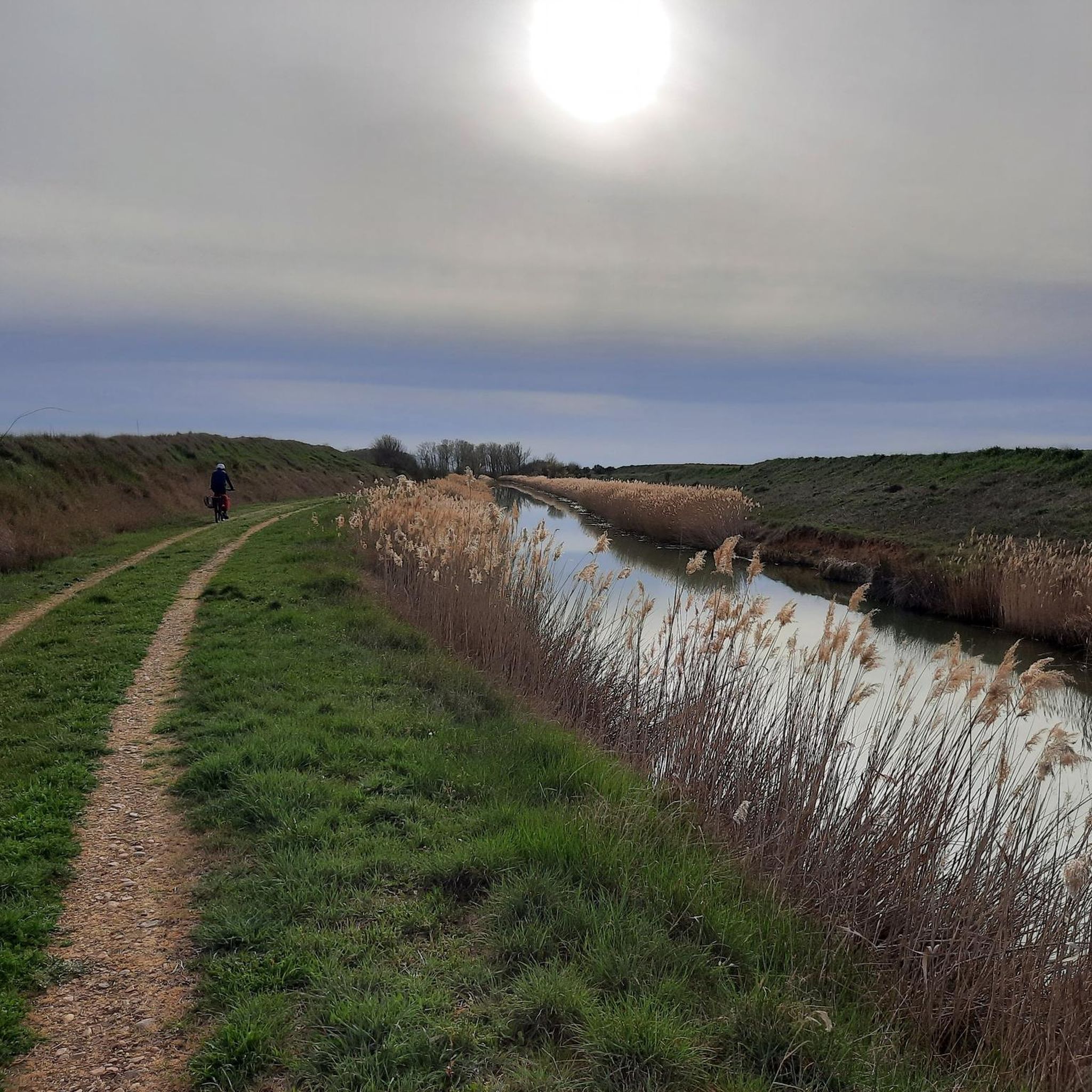
This special zone for the protection of birds located to the south-west of Palencia is part of a project to recover a wetland that covered 5000ha (currently it barely reaches 400ha). Drying of the wetland was done on purpose in the 1960s to open up new farmland.
3
0
Old flour factory built in 1844 and, until 1894, it belonged to various tenants or owners in charge of exploiting its use. In the 20th century it suffered a fire that meant its end as a flour factory to be used as a hydroelectric power station.
3
0
These buildings known as dovecotes are typical of Tierra de Campos. Part of its buildings are still made of adobe and mud, traditional materials in the region.
3
0
Frequently Asked Questions
What historical sites can I explore in Autillo de Campos?
Autillo de Campos is rich in history. You can visit the impressive Iglesia de Santa Eufemia, a 16th-century church with a neoclassical facade and Baroque altarpieces. Explore the 18th-century Palacio de los Condes de Fuensaldaña, or see the remnants of a building locally known as 'the palace,' believed to be part of Doña Berenguela's castle. Don't miss the Old Flour Factory of Capillas, a historical site built in 1844 that later became a hydroelectric power station.
Are there any natural attractions or areas for nature lovers?
Yes, the region offers several natural points of interest. The town is bordered by the Valdeginate River, and the surrounding Castilian plateau landscapes are ideal for tranquil walks. The entire municipal area is part of the La Nava-Campos Norte Special Protection Area for Birds, making it a significant spot for birdwatching. A key natural highlight is Laguna de la Nava, a lake that is part of a wetland recovery project and a special zone for bird protection.
What cultural experiences does Autillo de Campos offer?
For cultural insights, visit the Permanent Exhibition 'Tronos' in the Town Hall, which details the life of King Fernando III the Saint. The Ethnographic Museum of Autilla showcases the life of the field laborer and traditional agricultural tools. You can also observe traditional Tierra de Campos architecture, particularly houses made of red brick, and the characteristic round dovecotes like the Palomar de Villarramiel.
Are there family-friendly activities or attractions in the area?
Families can enjoy the natural beauty of the region, especially around Laguna de la Nava, which is categorized as family-friendly and offers opportunities for birdwatching and gentle walks. The Ethnographic Museum provides an educational experience about local history and traditional life that can be engaging for all ages.
Where can I see traditional architecture in Autillo de Campos?
Autillo de Campos is known for its traditional Tierra de Campos architecture. You can see examples throughout the town, particularly in houses made of red brick. The area also features unique traditional round dovecotes (palomares), some over a century old, which are characteristic of the region. The Dovecotes of Tierra de Campos highlight these unique structures.
What outdoor activities can I do near Autillo de Campos?
The surrounding Castilian plateau landscapes and the Valdeginate River area are excellent for outdoor activities. You can enjoy tranquil walks and hiking. Komoot offers several routes in the vicinity, such as the 'Laguna de la Nava Trail' and the 'Canal de Castilla por el Ramal de Campos — circular por los palomares de Tierra de Campos'. Find more details on these and other routes in the Hiking around Autillo De Campos guide.
Are there specific hiking trails near the attractions?
Yes, there are several hiking opportunities. For instance, you can explore the 'Laguna de la Nava Trail' which is a moderate 7.4 km route. Another option is the 'Canal de Castilla por el Ramal de Campos — circular por los palomares de Tierra de Campos,' an easy 5 km route. For more hiking options and details, refer to the Hiking around Autillo De Campos guide.
What is the significance of Autillo de Campos historically?
Autillo de Campos holds significant historical importance as the place where Fernando III the Saint was proclaimed King of Castile in 1217. This event is commemorated in the Permanent Exhibition 'Tronos' at the Town Hall, offering a journey through images and explanations of his life.
Can I observe wildlife, especially birds, in Autillo de Campos?
Absolutely. The entire municipal area of Autillo de Campos is integrated into the La Nava-Campos Norte Special Protection Area for Birds (Red Natura 2000). This makes it an excellent location for birdwatching, particularly around the Laguna de la Nava, which is a protected wetland habitat.
What is the Church of Santa María de Frechilla and where is it located?
The Church of Santa María de Frechilla is a beautiful religious building located in the small and charming village of Frechilla, near Paredes de Nava. This village is situated on the banks of the Valdeginate river and is known for its tranquility and traditional architecture, with vestiges of a Roman villa also visible nearby.
What is a 'palomar' and where can I see one?
A 'palomar' is a traditional dovecote, characteristic of the Tierra de Campos region. These unique structures, often round and made of adobe and mud, were historically used for raising pigeons. You can see the ruins of a round dovecote at Palomar de Villarramiel, and other examples are part of the Dovecotes of Tierra de Campos.
What is the best time to visit Autillo de Campos for outdoor activities?
The Castilian plateau landscapes are generally pleasant for outdoor activities during spring and autumn, when temperatures are milder. These seasons also offer good conditions for birdwatching in the La Nava-Campos Norte Special Protection Area. While the region is known for its wide, unobstructed skies, which will be ideal for the total solar eclipse in August 2026, summer can be quite warm for extensive hiking.
Most popular routes around Autillo De Campos

Get inspired with the komoot mobile app


Explore more
Still not found the Highlight you’re looking for? See guides of the top attractions in other regions:
