Attractions and Places To See around Murillo El Cuende - Top 18
Attractions and places to see around Murillo El Cuende, a municipality in Navarra, Spain, offer a blend of historical landmarks, cultural sites, and natural beauty. The region encompasses the constituent councils of Murillo El Cuende, Rada, and Traibuenas. It features a diverse landscape with rivers like the Cidacos and Aragón, alongside semi-desert natural parks. Visitors can explore historical structures and natural features within this area.
Best attractions and places to see around Murillo El Cuende
- The most popular attractions is…
Last updated: July 1, 2026
Peñaflor Castle (also known as Doña Blanca Castle)
Highlight • Castle
Translated by Google •
Tip by

Royal Palace of Olite
Highlight • Castle
Tip by

Sign up now to discover places like this
Get recommendations on the best single tracks, peaks, & plenty of other exciting outdoor places.
Sign up for free
Church of Santa María la Real
Highlight • Religious Site
Showing Translation
Tip by

Marcilla Castle
Highlight • Castle
This 15th-century Gothic fortress …
Translated by Google •
Tip by

Deer Pass
Highlight • Viewpoint
Translated by Google •
Tip by
Sign up for free to discover even more attractions around Murillo El Cuende.
Sign up for free
Already have an account?
Start today with a free account
Your next adventure awaits.
Login or Signup

Tips from the Community

Unfortunately, the Romanesque church cannot be visited.
2
0

It is located at Plaza de la Cava, 1, in the town center of Marcilla (Navarra), easily accessible and surrounded by bars and a children's playground. This 15th-century Gothic fortress was built of brick on a stone foundation by Mosén Pierres de Peralta, with material and financial support from Charles III the Noble. It served both as a defensive stronghold and as a palatial residence for the Marquesses of Falces, descendants of Peralta. In 1516, the Marchioness Ana de Velasco saved the castle from being demolished by order of Cardinal Cisneros.
5
0

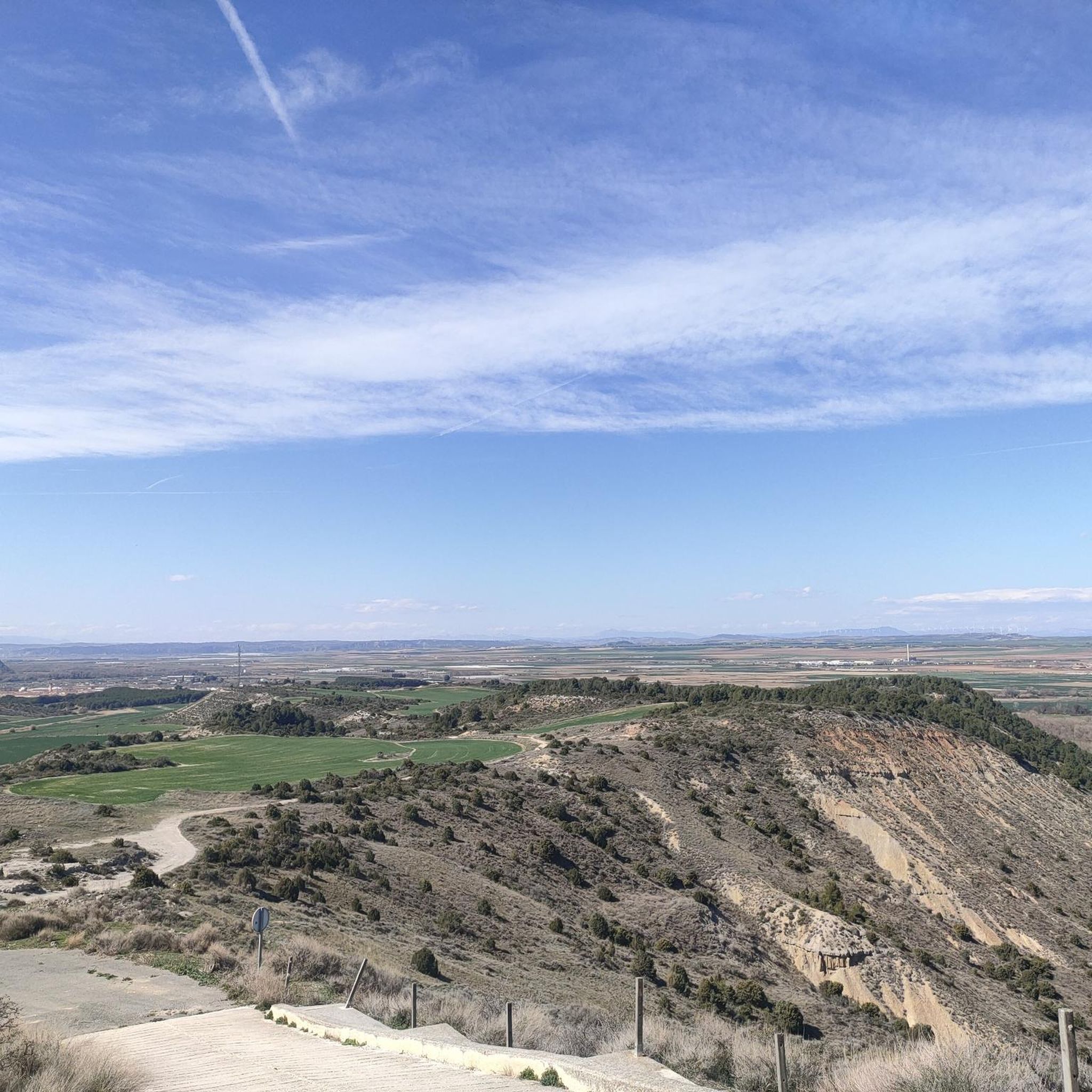
This is the viewpoint of the Eguaras Wildlife Refuge and the Peñaflor Castle
0
0

The west façade of the Church of Santa María de Olite was restored between 2015 and 2017. The project, funded by the Government of Navarre and the Gondra Barandiarán Foundation, was ambitious and complex. It focused on its spectacular painted portal, built alongside the façade during the first third of the 14th century. The successive layers of polychromy had been preserved thanks to a large portico, removed at the end of the 19th century. It was necessary to clean all the elements, determine the causes of alteration, stabilize the existing damage, and protect the result to ensure its proper preservation. The work garnered the dedication and interest of specialists in architecture, restoration, archaeology, history, art, and viticulture. Thus, this necessarily multidisciplinary book was born. The portal of Santa María de Olite, in its most striking uniqueness, unites Christian iconography, art, and viticulture on a single plane, in a journey "from vine to stone," which is still understandable and coherent today. Information taken from https://www.culturanavarra.es/es/la-portada-de-santa-maria-de-olite-de-la-vid-a-la-piedra
0
0

The ruins consist of a small central tower that served as a watchtower and accommodation for a small garrison and a walled area around it. Today only the ruins of the tower remain.
0
0
Originally a Roman fortress in a strategic location, the fortress is both a castle and a palace, although it was originally built as a court building to fulfil a military function. Since the 13th century, the Castle of Olite has been called the Palace of the King of Navarre.
2
0

The church is attached to the Royal Palace and was used by the Navarrese monarchs for major festivals and ceremonial events. The palace had its own chapel dedicated to Saint George and a private, gated gallery dedicated to Saint Mary. Kingdom courts, baptisms, weddings and royal funerals took place here.
1
0
The castle palace of Olite served as the residence of the kings of Navarre until the union of Navarre with Castile in the 16th century. The complex has been a listed monument since 1925.
1
0
Frequently Asked Questions
What historical sites can I explore around Murillo El Cuende?
The region is rich in history. You can visit the impressive Royal Palace of Olite, a Gothic castle-palace that served as a seat of the Kingdom of Navarre. Another significant historical site is Peñaflor Castle (also known as Doña Blanca Castle), a 13th-century fortress within the Bardenas Reales. Don't miss the historic walled enclosure of Despoblado de Rada, a medieval defensive stronghold featuring castle remains, the Church of San Nicolás, and a necropolis. The Iglesia de Santa Fé in Murillo El Cuende and the Ermita de Santa Cruz, a medieval church from around 1200, also offer glimpses into the past.
Are there any natural landmarks or viewpoints to visit?
Absolutely. The most prominent natural feature is the vast semi-desert natural park of Bardenas Reales de Navarra, offering striking scenery. You can get spectacular panoramic views of the Bardenas Reales and the Sierra de Ujué from the Despoblado de Rada. For a specific viewpoint, head to Deer Pass, which provides excellent vistas towards the Bardenas Reales natural park and the Eguaras Wildlife Refuge. The Embalse del Ferial, a reservoir within the Bardenas Reales, and the Laguna de Rada are also notable natural areas.
What outdoor activities are available near Murillo El Cuende?
The area is great for outdoor enthusiasts. You can find numerous routes for cycling, gravel biking, and running. For cycling, explore routes like the 'Castildetierra Hill – Castildetierra loop from Rada' or the 'Ferial Reservoir loop from El Ferial'. Gravel biking offers options such as the 'View of the Bardenas Reales loop from Rada'. If you prefer running, consider the 'Iglesia del Cristo (Ruinas) loop from Caparroso'. You can find more details and routes on the respective guide pages: Cycling around Murillo El Cuende, Gravel biking around Murillo El Cuende, and Running Trails around Murillo El Cuende.
Are there family-friendly attractions in the area?
Yes, several attractions are suitable for families. The Royal Palace of Olite is a fantastic option, offering an engaging historical experience for all ages. Marcilla Castle is also family-friendly, located in a town center with nearby bars and a children's playground. Exploring the unique semi-desert landscape of the Bardenas Reales can also be an exciting adventure for families.
What are some notable religious buildings to see?
Murillo El Cuende and its surrounding councils feature several significant religious structures. The Iglesia de Santa Fé in Murillo El Cuende, built between the 16th and 18th centuries, is a majestic example. The Ermita de Santa Cruz, a small medieval church dating to around 1200, is also worth a visit. In Traibuenas, you'll find the architectural jewel of Iglesia de San Juan Bautista from the early 16th century, and Rada has its parish church, Iglesia parroquial de Santa Cruz. Additionally, the Church of Santa María la Real, attached to the Royal Palace of Olite, is a beautiful Gothic church with a restored painted portal.
What do visitors enjoy most about the attractions around Murillo El Cuende?
Visitors particularly appreciate the blend of historical depth and natural beauty. The unique, almost otherworldly landscapes of the Bardenas Reales, especially as seen from viewpoints like Deer Pass, are frequently highlighted. The rich history embodied in sites like Peñaflor Castle and the Royal Palace of Olite, with their captivating stories and impressive architecture, also receive high praise. The komoot community has shared 5 photos and given 41 upvotes to the attractions, reflecting a strong positive experience.
Can I find hiking trails suitable for different skill levels?
Yes, the region around Murillo El Cuende offers various hiking trails that wind through forests and fields, catering to different levels. While specific trail difficulties are not detailed here, the general landscape provides options from easy strolls along the Ríos Cidacos and Aragón to more challenging routes in areas like the Sierra de Ujué, visible from Despoblado de Rada. For more detailed hiking information, it's recommended to check komoot's dedicated hiking guides for the area.
What is the best time of year to visit Murillo El Cuende for outdoor activities?
The best time to visit for outdoor activities like hiking, cycling, and exploring natural landmarks is generally during the spring (April to June) and autumn (September to October). During these seasons, the weather is typically mild and pleasant, making it ideal for enjoying the Bardenas Reales and other natural areas without the extreme heat of summer or the chill of winter. Spring also brings blooming landscapes, while autumn offers beautiful colors.
Are there any hidden gems or lesser-known spots worth discovering?
Beyond the main attractions, the Despoblado de Rada offers a unique experience as a historic walled enclosure with archaeological excavations and an interpretation center, providing a deeper dive into medieval urban planning. The Ermita de Santa Cruz, a small medieval church, is another charming, less-frequented spot. Exploring the diverse landscapes along the Ríos Cidacos and Aragón can also lead to peaceful, picturesque discoveries away from the more popular sites.
What kind of castles can I visit in the Murillo El Cuende area?
The region is notable for its castles. You can visit the iconic Royal Palace of Olite, a magnificent Gothic castle-palace. Another significant fortress is Peñaflor Castle (also known as Doña Blanca Castle), a 13th-century ruin within the Bardenas Reales with a romantic history. Further afield, Marcilla Castle, a 15th-century Gothic fortress, is also accessible and well-preserved.
Can I find accommodation or dining options in Murillo El Cuende or nearby towns?
While specific establishments are not detailed here, the municipality of Murillo El Cuende, along with its constituent councils of Rada and Traibuenas, are part of a populated region. You can expect to find local cafes, restaurants, and accommodation options in these towns and the larger nearby town of Olite, especially given its popular Royal Palace. It's advisable to check local listings for current availability and opening hours.
Most popular routes around Murillo El Cuende
Most popular attractions around Murillo El Cuende

Get inspired with the komoot mobile app


Explore more
Still not found the Highlight you’re looking for? See guides of the top attractions in other regions:
