Attractions and Places To See around Salvadiós - Top 10
Best attractions and places to see around Salvadiós is a small municipality in the province of Ávila, Castilla y León, Spain. This tranquil, rural area, founded in the medieval era, is characterized by its peaceful ambiance and traditional architecture. While Salvadiós itself is sparsely populated, the surrounding region offers historical sites and cultural heritage. Visitors can explore the quiet rural environment and the historical essence of a village established centuries ago.
Best attractions and places to see around Salvadiós
- The…
Last updated: July 1, 2026
Church of San Miguel of Peñaranda de Bracamonte
Highlight • Religious Site
Translated by Google •
Tip by

Castronuevo Castle-Palace
Highlight • Castle
Translated by Google •
Tip by

Sign up now to discover places like this
Get recommendations on the best single tracks, peaks, & plenty of other exciting outdoor places.
Sign up for free
Ruins of Castronuevo
Highlight • Historical Site
Translated by Google •
Tip by

Church of the Assumption
Highlight • Religious Site
Translated by Google •
Tip by
Parish Church of Fontiveros
Highlight • Religious Site
Translated by Google •
Tip by
Sign up for free to discover even more attractions around Salvadiós.
Sign up for free
Already have an account?
Start today with a free account
Your next adventure awaits.
Login or Signup


Tips from the Community

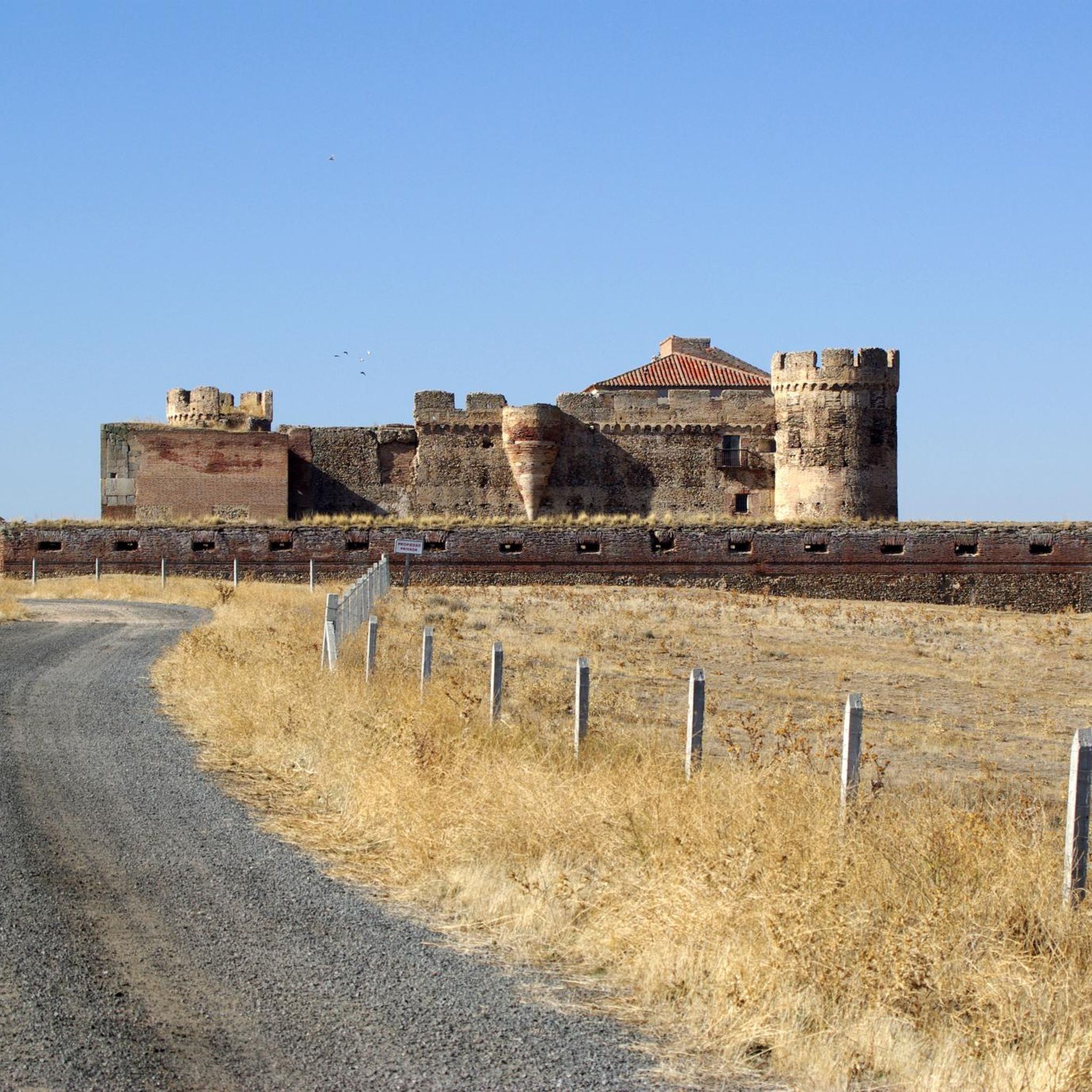
The Castle-Palace of Castronuevo, also known as Castle of Rivilla de Barajas, is an impressive fortification located in the municipality of Rivilla de Barajas, in the province of Ávila, within the autonomous community of Castilla y León. Although its current use is null, its history and structure reveal its former greatness. It was erected by Gil de Vivero before 1481, on the site of Castronuevo, and later remodeled by his son before selling it in 1489 to the Duke of Alba. The castle has three circular towers and two rectangular towers. Despite its age and danger of collapse, this castle remains a fascinating testament to medieval history and architecture. 🏰🌟
3
0
The Church of San Miguel in Peñaranda de Bracamonte is a beautiful classicist-style temple, built in quarry stone. Although its interior was severely damaged in 1971, its imposing exterior façade remains a testament to its history. After the fire of 1971, only the main altar chapel was saved, where the main altarpiece was located, a baroque masterpiece made by Sebastián Ducete and Esteban de Rueda. The chapel of San Antonio is also preserved, and in it you can see the Cristo de la Cama, an object of great local devotion. The stone baptismal font is original and was remodeled under the direction of Fernando Pulín, who received the National Restoration Award for his work. If you ever visit Peñaranda de Bracamonte, be sure to admire this architectural gem. 🌟🏰
2
0

The patronage of this place of worship “Santa Maria Asunción” or “Nuestra Señora de La Asunción” (in German-speaking countries it is called “Assumption of Mary”) refers to one of the many memorial or feast days in honor of the Blessed Mother Mary in the church year. It goes back to the festival of her physical assumption into heaven, which the (Catholic) Church celebrates annually on August 15th. In the Orthodox churches the festival is celebrated under the name “Assumption of the Virgin Mary”. In rural areas, depending on the region, it is part of the local custom that bundles of herbs are collected by the population on this day and blessed in the festival service.
2
0
This church was dedicated to the Archangel Michael "San MIGUEL". The name (coming from the Hebrew language) means "Who is like God?". He is often depicted - in paintings or as a statue - with a flaming sword, and occasionally a lance. Michael / Miguel is - along with Raphael, Gabriel and Uriel - one of the four archangels who (according to human understanding) occupy the highest rank in the heavenly hierarchy of angelic beings. Their common feast day in the saints' calendar is September 29th.
1
0

Church of Nuestra Señora de La Asunción is a Mudejar-style church, renovated in the 16th century. From the first construction phase (12th - 13th centuries), only part of the central apse remains. Its tower stands out, called "La Buena Moza", visible from several kilometers.
2
0

This Gothic-Mudejar style church is the largest in the region of Moraña, where it is located. It is declared an Artistic Historic Monument.
1
0

Surrounded by communication routes and in the middle of a large plain is this huge walled castle that still rules its walls and towers that can be seen from afar. It is worth passing by and enjoying the views of the castle.
1
0
In what is called Las Capellanas we find the remains of the church in Castronuevo, close to a small pond that is there and where from afar, you can see the castle of Castronuevo.
1
0
Frequently Asked Questions
What is Salvadiós known for?
Salvadiós is a small, tranquil municipality in the province of Ávila, Castilla y León, Spain, characterized by its peaceful rural setting and traditional architecture. Founded in the medieval era, its charm lies in its historical essence and quiet ambiance, offering a glimpse into a traditional Spanish village.
What historical sites can I visit near Salvadiós?
The region around Salvadiós offers several historical sites. You can explore the impressive Castronuevo Castle-Palace, also known as Castle of Rivilla de Barajas, which features three circular and two rectangular towers. Additionally, the Ruins of Castronuevo, including the remains of a church, are nearby.
Are there any notable religious buildings in the area?
Yes, there are several significant religious buildings. The Parish Church of Fontiveros is a prominent Gothic-Mudejar style church and the largest in the Moraña region, declared an Artistic Historic Monument. Another is the Church of San Miguel of Peñaranda de Bracamonte, a Renaissance-style parish church that has existed as a church-fortress since the mid-15th century. You can also find the Church of the Assumption, a Mudejar-style church with a distinctive tower known as "La Buena Moza".
What kind of outdoor activities are available near Salvadiós?
The area around Salvadiós is great for outdoor activities. You can find various hiking routes, including moderate loops around Peñaranda de Bracamonte and Fontiveros. For cyclists, there are numerous road cycling routes, ranging from easy to difficult, such as the 'Peñaranda Loop: Azud de Riolobos and Zorita de la Frontera'. There are also running trails available.
Are there hiking trails suitable for different skill levels?
Yes, the hiking trails near Salvadiós cater to various skill levels. You can find easy loops like the 'Hiking loop from Fontiveros' (6.6 km) or more moderate options such as the 'Peñaranda de Bracamonte and Cantaracillo Loop' (10.6 km) and the 'Castillo-Palacio de Castronuevo — circular por los Parajes de La Mora' (15 km). You can explore more options on the hiking guide page.
Are there family-friendly attractions or activities?
While Salvadiós itself is a small, quiet village, the surrounding region offers attractions that can be enjoyed by families. Historical sites like the Church of San Miguel of Peñaranda de Bracamonte are listed as family-friendly. The peaceful rural environment and easy walking routes in the area also provide opportunities for family outings.
What is the best time of year to visit Salvadiós and its surroundings?
The best time to visit Salvadiós and the Ávila province generally depends on your preferred activities. Spring (April-May) and autumn (September-October) offer pleasant temperatures for exploring historical sites and engaging in outdoor activities like hiking and cycling. Summers can be hot, while winters are cooler and quieter.
What do visitors enjoy the most about the attractions around Salvadiós?
Visitors appreciate the historical significance and architectural beauty of the region's landmarks. For instance, the Church of San Miguel in Peñaranda de Bracamonte is admired for its imposing exterior façade and rich history, despite past damages. The Castronuevo Castle-Palace is valued for its medieval architecture and the views it offers across the plain.
Are there any unique architectural styles to look out for?
Yes, the region showcases distinct architectural styles. The Parish Church of Fontiveros is a prime example of Gothic-Mudejar style, notable for its exposed masonry. The Church of San Miguel of Peñaranda de Bracamonte displays Renaissance architecture, while the Church of the Assumption also features Mudejar elements.
Is Salvadiós accessible by public transport?
As a small, sparsely populated municipality, direct public transport options to Salvadiós itself are limited. Visitors typically reach the area by car, which allows for greater flexibility to explore the surrounding villages and attractions in the Ávila province. Nearby larger towns may have bus connections, but local transport within Salvadiós is minimal.
Where can I find local amenities like cafes or accommodation near Salvadiós?
Due to its small size, Salvadiós has very limited local amenities. For cafes, restaurants, and accommodation, it is recommended to look in larger nearby towns such as Peñaranda de Bracamonte or Fontiveros, which offer more services for visitors exploring the region.
Are there any UNESCO World Heritage sites nearby?
While Salvadiós itself is not a UNESCO site, the provincial capital, Ávila, is a UNESCO World Heritage site. Located a short distance away, Ávila is famous for its impressive medieval walls, the Cathedral of San Salvador, and other historical monuments. You can learn more about Ávila's World Heritage status on the UNESCO website.

Get inspired with the komoot mobile app


Explore more
Still not found the Highlight you’re looking for? See guides of the top attractions in other regions:
