Attractions and Places To See around Añover De Tormes - Top 13
Best attractions and places to see around Añover De Tormes include a blend of natural beauty and historical landmarks in the province of Salamanca, Spain. The area features the Tormes River environment and expansive Iberian dehesas with ancient holm oaks. Visitors can explore sites with Roman origins and traditional architecture, offering insights into the region's heritage.
Best attractions and places to see around Añover De Tormes
- The most popular attractions is Tormes River – Ledesma Bridge, a bridge that…
Last updated: July 8, 2026
Tormes River – Ledesma Bridge
Highlight • Bridge
Old Ledesma Bridge
Translated by Google •
Tip by

Puente Mocho
Highlight • Bridge
Translated by Google •
Tip by
Sign up now to discover places like this
Get recommendations on the best single tracks, peaks, & plenty of other exciting outdoor places.
Sign up for free
La Fortaleza - Ledesma Castle
Highlight • Castle
Translated by Google •
Tip by
Zamayón Church
Highlight • Religious Site
Translated by Google •
Tip by

Church of Santa Maria la Mayor
Highlight • Religious Site
Translated by Google •
Tip by
Sign up for free to discover even more attractions around Añover De Tormes.
Sign up for free
Already have an account?
Start today with a free account
Your next adventure awaits.
Login or Signup
Popular around Añover De Tormes

Tips from the Community

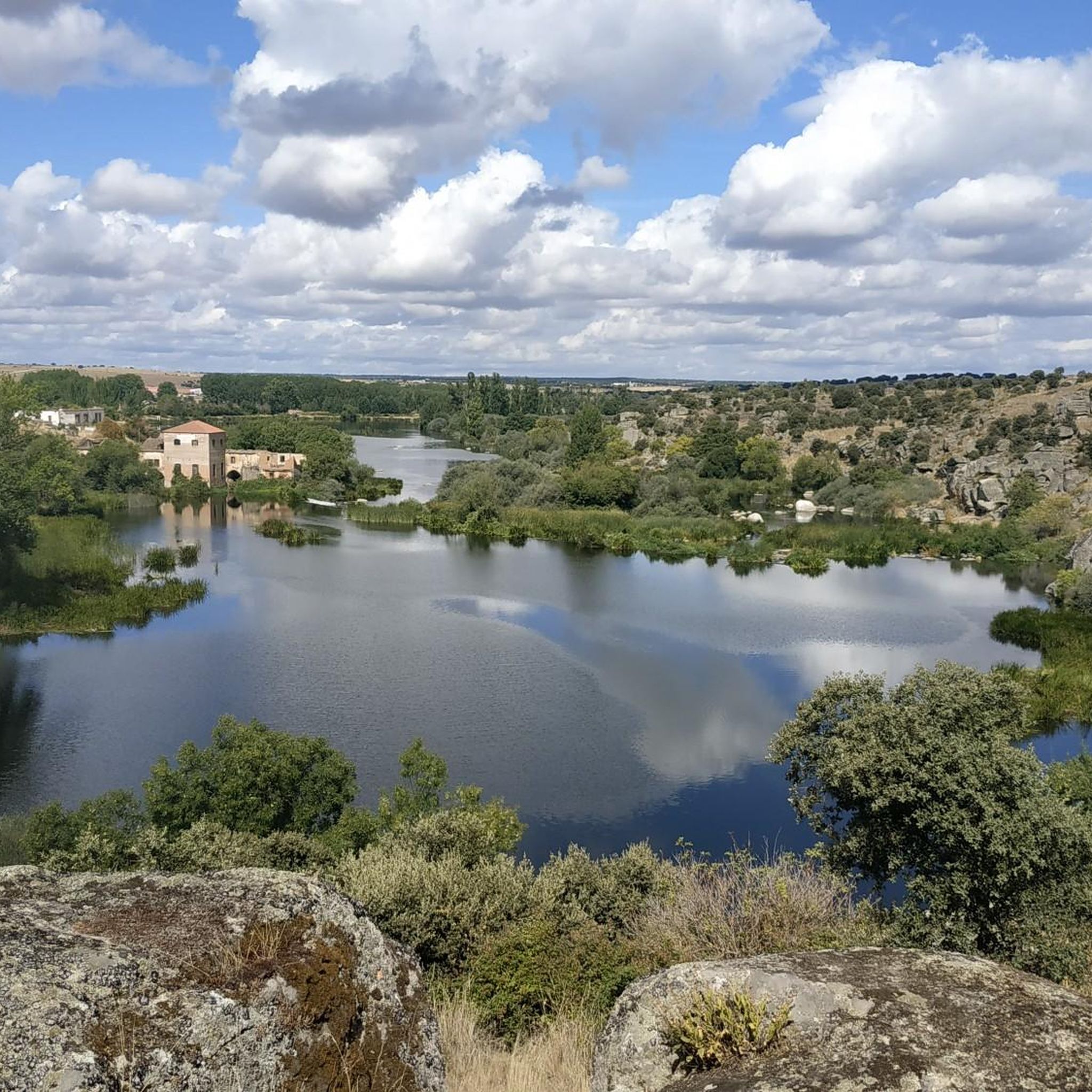
The Ledesma Bridge over the Tormes River, in the province of Salamanca, is a historic structure that forms part of the rich heritage of this medieval town. Old Ledesma Bridge Location: It crosses the Tormes River at the entrance to the town of Ledesma. Construction: Although it is believed to have existed in Roman times, the current bridge was built in the 15th century, during the reign of Beltrán de la Cueva. New Bridge Construction: Inaugurated on July 24, 1954, after decades of planning interrupted by the Spanish Civil War. Material: Cyclopean concrete.
9
0

Monumental church from the 15th/16th century with an interesting arch that we can cross in its tower.
2
0
Also called Puente Nuevo, inaugurated in 1954, built in full urban expansion. From this point we can see the Tormes River and the Old Bridge, which was built in the fifteenth century.
2
1
Castle from the 15th century, declared an Asset of Cultural Interest in 1949. It was recently renovated and belongs to the Ledesma City Council.
2
1
Good place to stop in Zamayón. Next to this beautiful 16th century church with a southern doorway, there is a bar. Perfect to recharge your batteries!
3
0

15th century masonry arch bridge over the Tormes river. Many believe that it replaced an even older bridge dating from Roman times. Spectacular views of the new and old bridges that span the river landscape.
1
1
Ledesma still preserves a large part of the granite stone wall that has historically surrounded the Villa in its entirety. Most of what remains today was built in the time of Fernando II de León, in the 12th century, although it was in the 15th century when several canvases with well-carved masonry were renovated.
9
0

Picturesque Church of the town that is surrounded by the Plaza Mayor of the town and is usually the center of social gatherings. A good place to take a break and have a drink at the bar around the corner and enjoy the tranquility of the town.
1
0
Frequently Asked Questions
What historical landmarks can I visit near Añover De Tormes?
The region boasts several historical landmarks. You can explore the Tormes River – Ledesma Bridge, a 15th-century structure with Roman origins. Another significant site is Puente Mocho, an ancient bridge considered to be of Roman origin and cataloged as an Asset of Cultural Interest. Additionally, the nearby town of Ledesma features La Fortaleza - Ledesma Castle, a 15th-century castle, and remnants of its 12th-century granite stone wall.
What natural features are prominent in Añover De Tormes?
Añover de Tormes is characterized by its full Iberian dehesa environment, featuring ancient holm oaks. The Tormes River flows nearby, offering picturesque banks for exploration. The area also includes the Peñón del Sierro, a geodetic vertex providing panoramic views, and Cahozacaballos, known for its ponds with white water lilies.
Are there hiking trails suitable for different skill levels around Añover De Tormes?
Yes, there are various hiking trails available. For an easy walk, consider the Puente Mocho and Calzada Romana Trail or the Alcornocal de Valdelosa Trail. More moderate options include the Old Baths Trail Loop and the Santa Lucía Trail – Almenara de Tormes loop.
Can I find cycling routes in the area?
Yes, the region offers both mountain biking and road cycling routes. For mountain biking, you can explore routes like the Castillo de Asmesnal and Alfaraz de Sayago Loop. Road cyclists can enjoy routes such as the Ledesma, Sayago, and Tormes Loop or the Torresmenudas Church – Tormes River – Ledesma Bridge loop.
What cultural points of interest are there in Añover De Tormes?
Añover de Tormes features traditional architecture with constructions made from local materials. The Iglesia de la Santa Cruz is a significant local monument with a beautiful bell tower. The hamlet of Palacinos, part of Añover de Tormes, offers an authentic village experience with traditional stone and wood housing.
Are there any religious buildings worth visiting?
Yes, the Zamayón Church, a 16th-century church, is a picturesque stop. In Ledesma, the monumental Church of Santa Maria la Mayor, dating from the 15th or 16th century, features an interesting arch within its tower.
Where can I find panoramic views of the surrounding area?
The Peñón del Sierro, a geodetic vertex reaching 839 meters, offers spectacular panoramic views. From this vantage point, you can see vast cereal fields, expansive Iberian dehesas, and even the towns of Ledesma and Santiz. On clear days, the towers of Salamanca's cathedrals and southern mountain ranges are visible.
What is the best time to visit Añover De Tormes for outdoor activities?
The region is appealing for rural tourism and hiking, suggesting pleasant weather for outdoor activities during spring and autumn. These seasons typically offer milder temperatures, ideal for exploring natural features and historical sites without extreme heat or cold.
Are there family-friendly attractions around Añover De Tormes?
Many of the natural and historical sites can be enjoyed by families. The Tormes River – Ledesma Bridge is listed as family-friendly, offering a historical site in a scenic setting. Exploring the traditional architecture of Añover de Tormes and Palacinos can also be an engaging activity for families.
What do visitors enjoy most about the attractions near Añover De Tormes?
Visitors appreciate the rich heritage and scenic beauty. For instance, the Ledesma Bridge is valued for its historical significance and its role in the medieval town's heritage. The Zamayón Church is noted as a charming stop, often surrounded by social gatherings and offering nearby amenities for a break.
Are there any Roman archaeological sites in the area?
Yes, Añover de Tormes has a history dating back to Roman times, with archaeological sites found within its municipal boundaries. The Puente Mocho is considered by specialists to be of Roman origin, with its site and foundations potentially dating back to that era, and it is cataloged with remains of a Roman road at its ends.
Most popular routes around Añover De Tormes

Get inspired with the komoot mobile app


Explore more
Still not found the Highlight you’re looking for? See guides of the top attractions in other regions:
