Top 10 Mountain Passes around Aribe
Best mountain passes around Aribe are located in the Navarre region of the Spanish Pyrenees. This area is characterized by its mountainous terrain, forming a natural border and offering routes through the range. The passes are historically significant, serving as ancient pathways for trade, migration, and pilgrimage, including sections of the Camino de Santiago. The landscape features diverse natural beauty, from lush forests to alpine meadows.
Best mountain passes around Aribe
- The most popular mountain passes is Ibañeta Pass,…
Last updated: October 13, 2026
Ibañeta Pass and the Roland Monument
Highlight • Mountain Pass
Translated by Google •
Tip by

Ibañeta Chapel
Highlight • Religious Site
Translated by Google •
Tip by

Sign up now to discover places like this
Get recommendations on the best single tracks, peaks, & plenty of other exciting outdoor places.
Ibañeta Pass
Highlight • Mountain Pass
Tip by

First climbs in the Camino Francés (Navarra)
Highlight (Segment) • Mountain Pass
Descending quickly and pleasantly down from the Ibañeta Pass towards Auritz-Burguete on the N-135 (beware of possible traffic), you have the illusion that …
Tip by
Col d'Arnosteguy
Highlight • Mountain Pass
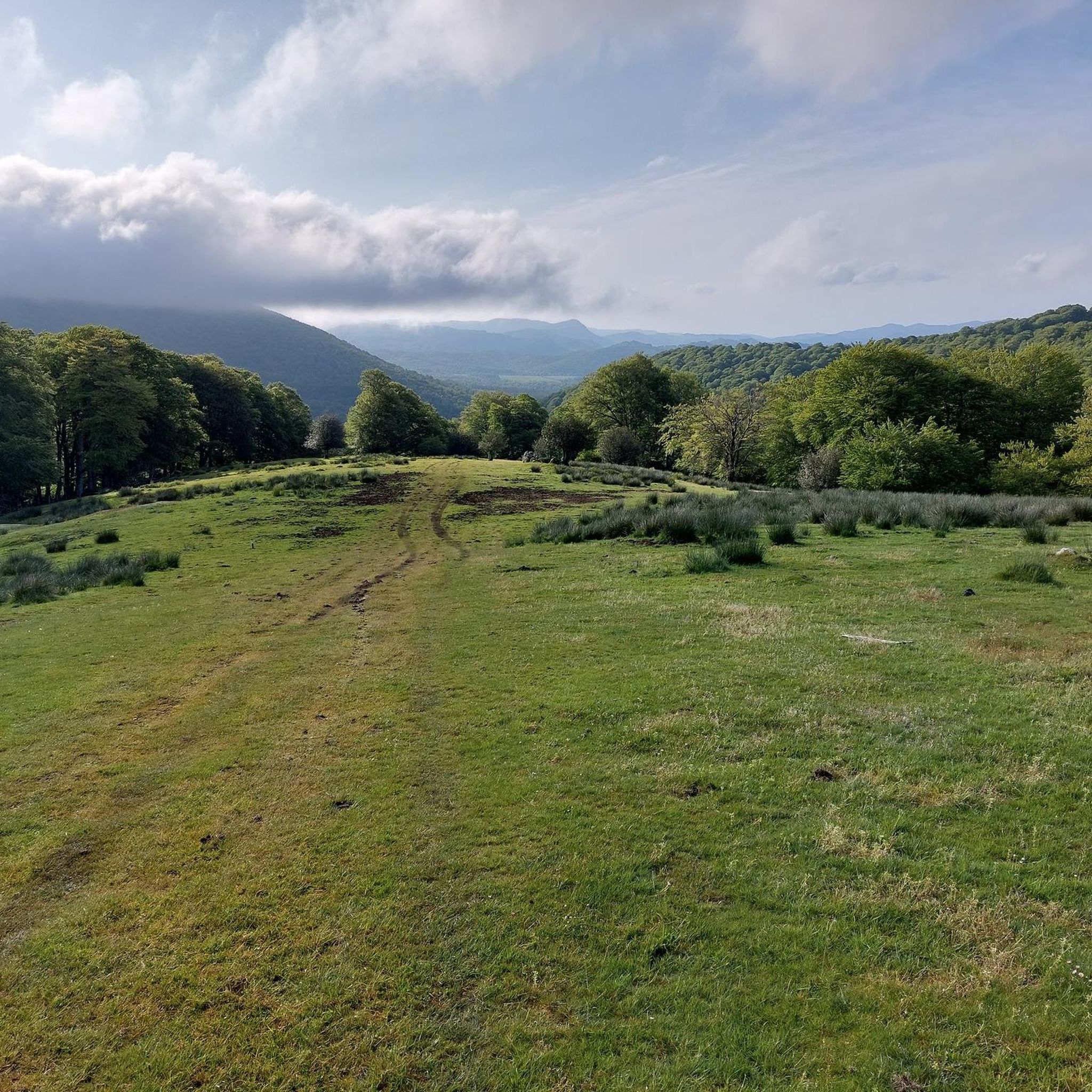
The landscape is wild and wonderful. You can breathe …
Translated by Google •
Tip by

Sign up for free to discover even more mountain passes around Aribe.
Already have an account?
Start today with a free account
Your next adventure awaits.

Tips from the Community

The Ibañeta Chapel is a moving and highly anticipated milestone for anyone walking the Camino de Santiago. After the grueling, steep ascent from the French side of the Pyrenees, crossing the border into Spain, and finally beginning your descent, this small chapel and the large stone cross beside it are a spectacular sight. The First Spanish Waypoint: It serves as the very first visible intermediate destination on the Spanish side of the mountains, signaling that the hardest part of the climb is officially behind you. Once you reach this point, you are almost done! Just a short walk further down the trail lies the day's final stage destination: the mighty and magnificent monastery complex of Roncesvalles.
1
0

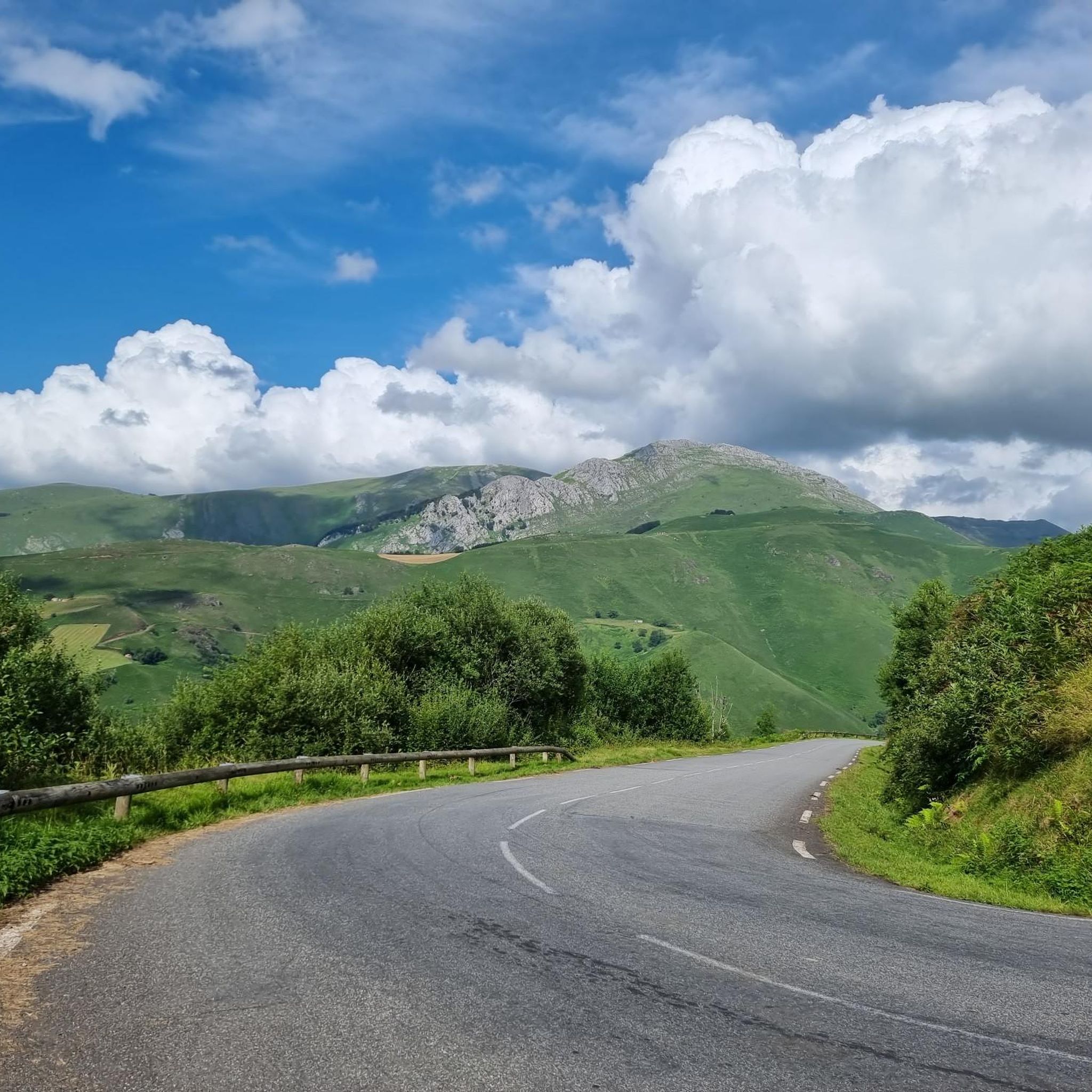
One of the most inhospitable and spectacular mountain passes in the eastern Pyrenees, with several slopes, all of them very difficult. The landscape is wild and wonderful. You can breathe absolute tranquility and you can dedicate yourself exclusively to enjoying the views, the horses, the sheep, the cows and the suffering on the bike. The summit is on the border with Spain, although there is no road that crosses the border, so the pass runs entirely in France. I have climbed it on 2 of its slopes. The first time I climbed it on the slope that crosses the Col d'Orgambide, on the D428 road, which starts from Estérençuby. The first 3 km are very easy, until you cross the detour to go up to Artaburu, where the road begins to have slopes of more than 10%. From there, to the summit, the climb is very hard, around 9%, on a very rough and bumpy road, with a lot of humidity and crossing a wonderful beech forest. Once you reach the top of the Col d'Orgambide, you turn right and continue climbing for another half kilometre with a gradient of 11%. There comes a small descent, to face the last 3 kms, the first 2 very hard with several 13% gradients. The last kilometre is very easy and has panoramic views that are simply wonderful. The second time I climbed it on the side that starts from Arneguy and Ondarolle. This side is harder than the previous one, with a central section that is hellish, being 6 kms at an average of 10%, and a very hard km at 12% and 18% gradients!!! The final part is more gentle. You cross the Croix de Thibault in the penultimate kilometre of the climb. The final kilometre is very gentle and with beautiful and exciting panoramic views.
1
0
It is a beautiful border pass between Spain and France, well known for being part of the most traditional route of the Camino de Santiago. Sportingly, the climb on both sides is easy, although on the French side it is much longer as it starts at a lower altitude. The Spanish side is just 6 km from Burguete, the last being the most difficult with an average gradient of 7%. On this side you pass the famous and well-known monastery of Roncesvalles. The French side is 18 km from Arnegui and an average gradient of 4%. The hardest part is 5 km from the summit, with one kilometre at 7%. The landscape on this side is of lush vegetation going up a very closed valley that hardly leaves room for views of the surrounding mountains. The road is very twisty. It is a port with very good asphalt and a lot of traffic in general... so, be careful!
1
0

After a long climb, you finally make it to the Ibeneta Pass and can enjoy the view as a reward. Up here, there is a small chapel and a memorial stone to the knight Roland, who is said to have fallen here.
2
0
A great climb up to the pass. Once you reach the top you get a great view. There is a small church at the top and also a monument. There has always been a hospital up here. However, only the foundations of it remain
3
0

Roland, who is commemorated here, died in 778 as part of the rear guard of Charlemagne's Frankish army. He himself was Margrave of Brittany and was the victim of a Basque revenge campaign against the Frankish conquerors who were retreating from a failed Saracen campaign. Those were complicated times, but things were not to become any less complicated in the Basque Country in the centuries that followed. An epic/song was later sung about Roland, which is part of world literature. The monument itself is simple and rough, exposed up here in the wind of the weather, and can therefore have an immediate effect, without pomp and splendor. Great! https://de.wikipedia.org/wiki/Schlacht_von_Roncesvalles
3
0

nice area with drinking water
0
0

The pass is an important crossing of the Pyrenees, and a monastery with a hostel was set up in Roncesvalles for pilgrims on pilgrimage to St. James. The monks of the monastery also manned the chapel on the pass and rang the bells in the fog to show pilgrims the way.
5
0
Frequently Asked Questions
What are the most popular mountain passes around Aribe?
The region around Aribe, located in the Navarre Pyrenees, features several highly regarded mountain passes. Among the most popular are Ibañeta Pass, known for its historical significance as part of the Camino de Santiago, and Ibañeta Pass and the Roland Monument, which commemorates the Battle of Roncesvalles. Another challenging and scenic option is Col d'Arnosteguy, offering demanding climbs and wild landscapes.
What historical significance do the mountain passes in this region hold?
Many passes in the Navarre Pyrenees are steeped in history. Ibañeta Pass and the Roland Monument, for instance, marks the traditional site of the Battle of Roncesvalles in 778 CE, an event immortalized in 'The Song of Roland'. This pass, along with Collado de Bentartea, also forms part of the historic Camino de Santiago pilgrimage route, with legends of Charlemagne and Napoleon passing through.
What natural features can I expect to see at these mountain passes?
The mountain passes around Aribe offer diverse natural beauty. You'll encounter lush forests, alpine meadows, and panoramic views. Passes like Puerto de Belagua are excellent for birdwatching, with opportunities to spot species such as Black Woodpecker, Lammergeier, and Golden Eagle. The upper slopes of Port de Larrau transition above the tree-line, providing impressive vistas, while Col d'Arnosteguy is known for its wild, untamed landscapes.
Are there challenging routes for cyclists in the Aribe mountain passes area?
Yes, the region is well-known for its challenging cycling routes. Port de Larrau, for example, features a demanding climb from the French side with sections exceeding 10% gradient and has been a regular feature in the Tour de France. Col d'Arnosteguy also offers very difficult climbs, with some sections reaching 18% gradients. Alto de Ibardin is another pass with steep gradients that appeal to experienced cyclists.
What is the best time of year to visit the mountain passes around Aribe?
Many of the mountain passes in the Navarre Pyrenees are typically open from May to November. This period generally offers the most favorable weather conditions for cycling, hiking, and scenic drives, allowing visitors to fully enjoy the natural beauty and outdoor activities without the challenges of winter snow and ice.
What outdoor activities can I do near these mountain passes?
Beyond exploring the passes themselves, the area around Aribe offers a variety of outdoor activities. You can find excellent options for gravel biking, with routes like the 'Forest Path Near Roncesvalles'. There are also numerous running trails, including the 'Zamariain Viewpoint Trail', and challenging MTB trails such as the 'Irabia Reservoir loop from Orbaizeta'.
Are there hiking trails near the mountain passes around Aribe?
Absolutely. The region is ideal for hiking. Many passes, including Ibañeta Pass, are part of the Camino de Santiago, offering both challenging and scenic walking paths. You can find dedicated running trails that are also suitable for hiking, such as the 'Txangoa - Roncesvalles Trail' or the 'Burguete – Basajaunberro Forest loop'.
What do visitors enjoy most about the mountain passes around Aribe?
Visitors frequently praise the breathtaking panoramic views, the sense of tranquility and isolation found in places like Port de Larrau, and the rich historical and cultural significance, especially along the Camino de Santiago routes. The challenging climbs for cyclists and the diverse natural landscapes, from lush forests to rugged alpine terrain, are also highly appreciated.
Can I find viewpoints with spectacular scenery at these passes?
Yes, many passes offer exceptional viewpoints. The 'Mirador de Larra-Belagua' at Puerto de Belagua provides spectacular panoramic views into the Belagua glacial valley. Ibañeta Pass and the Roland Monument also offers breathtaking views. The upper slopes of Port de Larrau and the final kilometers of Col d'Arnosteguy are noted for their wonderful and exciting panoramic vistas.
Are there any passes suitable for beginners or less strenuous activities?
While many passes offer challenging climbs, the region also provides options for varying activity levels. The ascent to Ibañeta Pass from Burguete, Spain, is less steep than other routes, making it more accessible. The general area around Aribe offers a variety of mountain passes to explore, suitable for different activity levels, including less demanding sections of the Camino de Santiago.
What are the 'First climbs in the Camino Francés (Navarra)'?
This highlight refers to the initial ascents encountered on the Camino Francés within the Navarre region, specifically mentioning Alto de Erro and Alto de Mezkiritz. While not as long or steep as some other Pyrenean climbs, these sections can still be challenging, especially for pilgrims carrying luggage or those who have already tackled the more significant Ibañeta Pass. They offer a taste of the mountainous terrain on the pilgrimage route.
Most popular attractions around Aribe

Get inspired with the komoot mobile app


Explore more
See even more epic mountain passes by checking out these guides around Aribe:
