The 7 Most Amazing Peaks around Balenyà
Best mountain peaks around Balenyà are found in the Osona region of Catalonia, an area characterized by its diverse natural landscape. The municipality is home to Roc de la Guàrdia, also known as Roc Gros, an emblematic mountain offering panoramic views. The region features a blend of natural beauty, historical sites, and varied terrain suitable for exploration. These mountain peaks provide opportunities to experience the local geography and cultural heritage.
Best mountain peaks around Balenyà
- The most popular mountain peaks…
Last updated: October 10, 2026
Turó de Tagamanent and the Church of Santa Maria de Tagamanent
Highlight • Summit
Translated by Google •
Tip by

La Trona (Bertí Cliffs)
Highlight • Climb
Translated by Google •
Tip by

Sign up now to discover places like this
Get recommendations on the best single tracks, peaks, & plenty of other exciting outdoor places.
Ermita de Sant Sebastià
Highlight • Religious Site
Translated by Google •
Tip by

Cross and Viewpoint of Turó de la Cuspinera
Highlight • Viewpoint
Translated by Google •
Tip by
Collet de Sant Pere and Ruins of Sant Pere del Coll de la Crossa
Highlight • Mountain Pass
Tip by

Sign up for free to discover even more peaks around Balenyà.
Already have an account?
Start today with a free account
Your next adventure awaits.
Tips from the Community

Beautiful views
0
0

Cross located nearby, and on the Turó de la Cuspinera, and is visible from a good part of the municipality due to its altitude and dimensions. The cross is located on a rectangular stone support with a height of 50cm, with various heights. The base of the cross is built with terraces or steps made with local stone and cement and with a marble covering on the last two steps. The metal structure has a rectangular section with unequal edges and a metal support linked with a wire. On the rock at the base you can see a plaque with the legend "EL FIGARÓ LA CREU I LA SENYERA SEMPRE UNITS AMB LA CUSPINERA AVP 11 DE SETEMBRE DE 1995". The cross is oriented southwest-northeast. On the southeast side of the base, on the other side of the Turó de La Cuspinera, about 200m accessing along the path, there is a waving senyera.
0
0
Turó de la Cuspinera in El Figaró, has an altitude of 620 meters, and at its feet you can see the town of El Figaró.
0
0

Mountain of 1056 m at the western end of Pla de la Calma included in the list of 100 peaks of the F.E.E.C. https://www.feec.cat/activitats/100-cims/cim/tagamanent/ At its peak was the Castle of Tagamanent, already mentioned in 945. The castle was under the rule of the counts of Barcelona. Currently there is the church of Santa Maria, a 12th century Romanesque building with many subsequent modifications. Although more than likely an Iberian settlement, the first signs of construction belong to the castle and the church and date from the 10th century, at the beginning of the process of feudalization of Catalan society. The continued use as a control center first, and as a municipal and religious center later, places the hill as the social center of the municipality. The evolution of the medieval common leads to the construction of the Town Hall already in the present day, as well as a hostel and small housing at the end of the 19th century. Rectory, cemetery, small church, laundry and water tanks are other relevant elements. It is also necessary to highlight the existence of a permanent Orientation circuit: https://www.tagamanent.cat/wp-content/uploads/2018/03/defcircuit.pdf
2
0
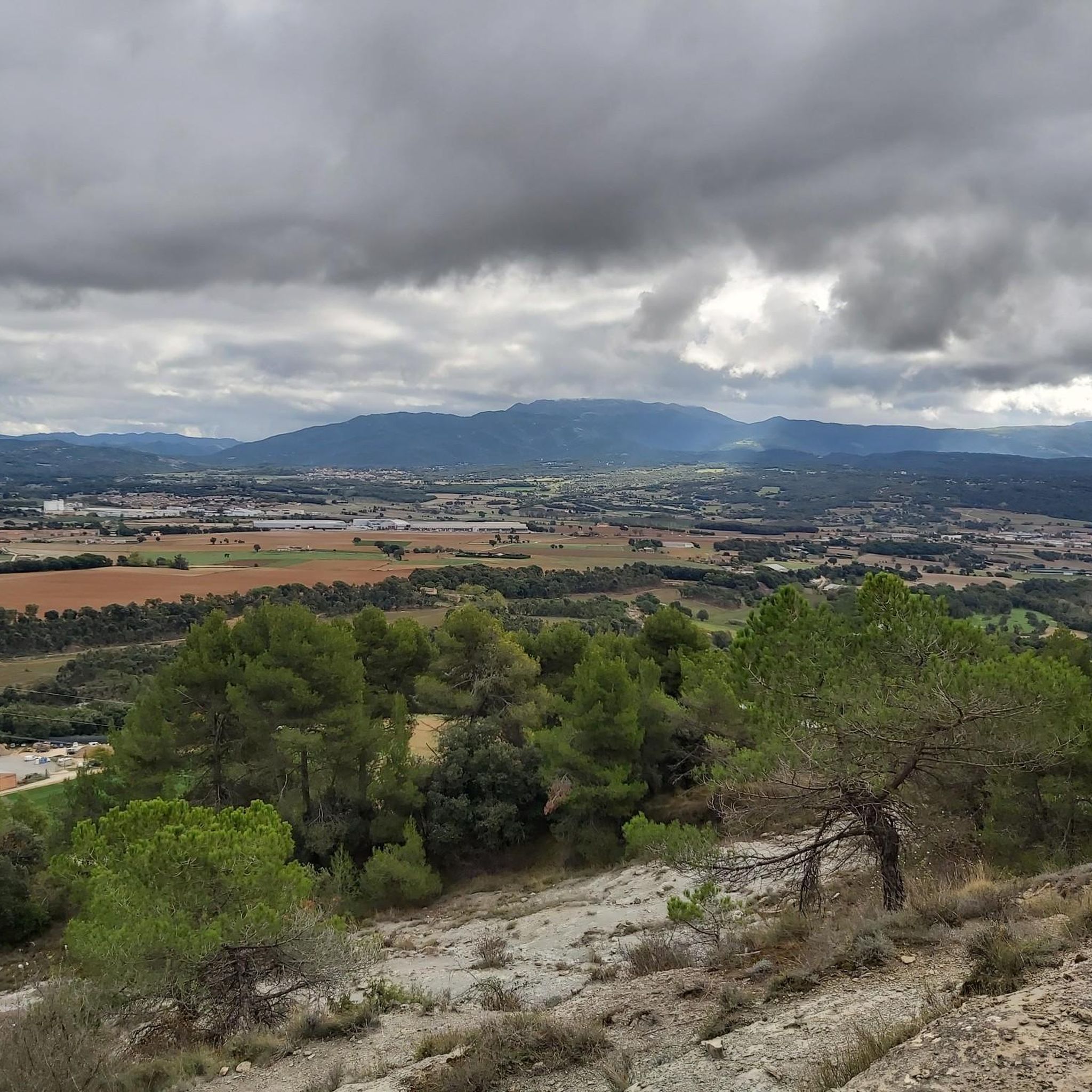
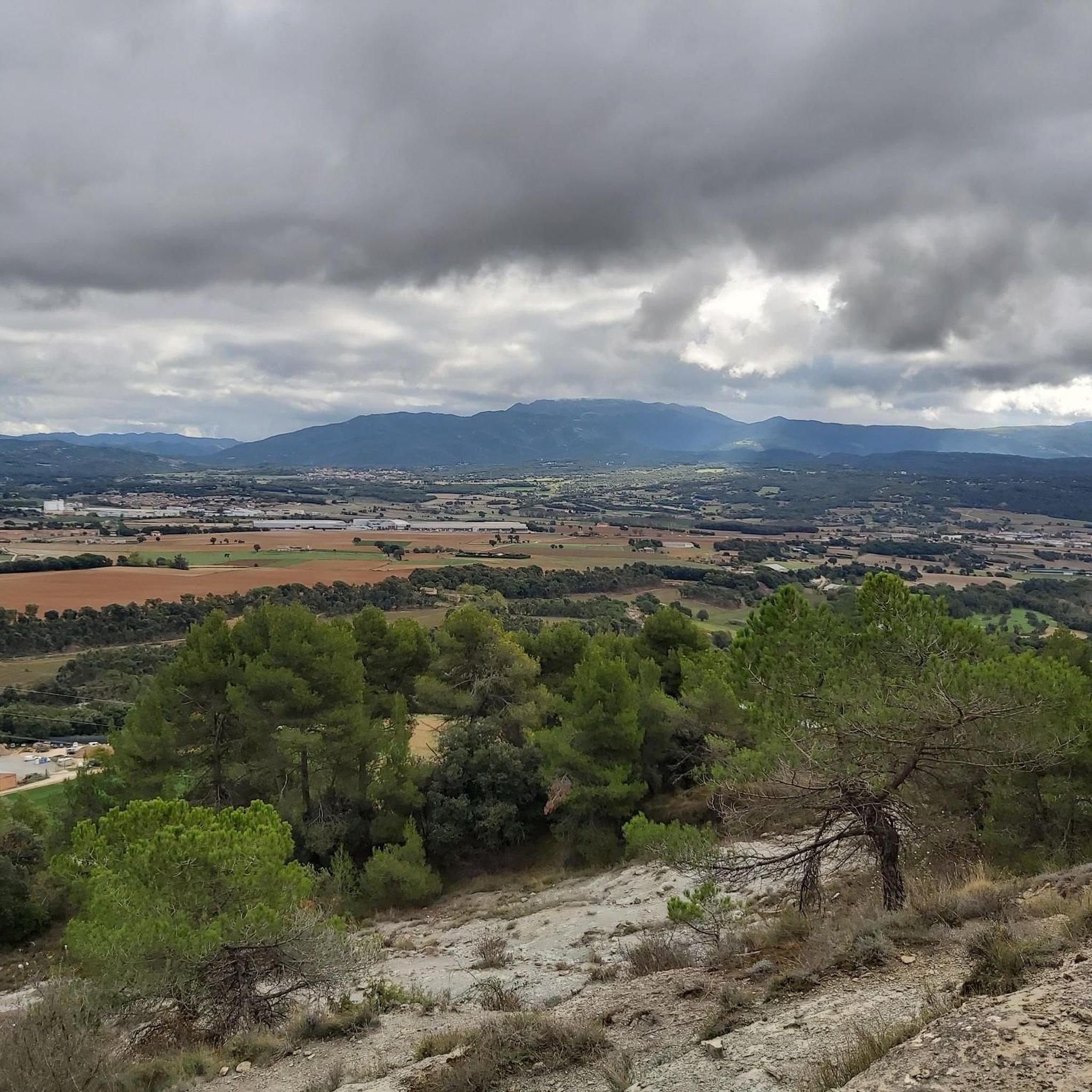
La Trona is a large rocky outcrop that juts out from the sunny straight walls of the Cingles de Bertí, dominating the Sot del Bac valley, despite belonging to Sant Martí de Centelles. This fact has caused that in its obaga part there is a small area with a very specific microclimate. In addition, it is a good example of an off-road climbing school. The rock isn't exactly Yosemite granite or Verdon limestone, but it's pretty good quality compared to the vast majority of Osona's walls. It dominates the hidden natural link between the Vallès and Osona, looking towards the Vallès despite belonging to Osona, in the middle of the cliff that follows the gorge formed by the river of the same name. The name probably comes from its curious shape, since it could well be the high chair of some giant. From its summit you can see the southern part of the Congost valley, closed by the Puiggraciós and the town of La Garriga; to the east you can enjoy the entire western sector of the Monseny massif, dominated by the Turó del Tagamanent with the Pla de la Calma and the Carenes d'en Bosc in the background; and towards the north, if the elements cooperate, you can see the Pyrenees. To the west is the entire eastern sector of the Cingles de Bertí up to its buttress of Puiggraciós.
2
0

La Trona is a rock of 805.9 meters of altitude with a prominence of 12 m. It is a very popular climbing point due to its verticality.
2
0
Cross located on the Cuspinera hill. On the rock at the base there is a plaque with the legend "THE FIGARÓ LA CRUZ Y LA SEÑORA ALWAYS UNITED WITH THE CUSPINERA AVP SEPTEMBER 11, 1995". There is also a flag of Catalonia.
2
0

Any good time, the route can be classified as easy, and if you like history, you will be able to soak up what happened in 1715 and the repercussions to this day.
0
0
Frequently Asked Questions
What are some of the most popular mountain peaks and viewpoints around Balenyà?
Visitors to Balenyà often enjoy the panoramic views from Turó de Tagamanent and the Church of Santa Maria de Tagamanent, which stands at 1,055 meters. Another favorite is La Trona (Bertí Cliffs), a distinctive rock formation offering views of the Congost valley and Montseny massif. The El Roc Gros Viewpoint also provides breathtaking scenery across the Vic Plain and towards the Pyrenees.
What kind of natural features can I expect to see on the mountain peaks near Balenyà?
The mountain peaks around Balenyà offer a diverse natural landscape. You'll encounter typical oak and pine forests, dramatic rock formations like La Trona (Bertí Cliffs), and expansive panoramic viewpoints. Roc de la Guàrdia, for instance, is known for its geological composition of sandstone, marl, and conglomerate, and is rich in fossils.
Are there any historical or cultural sites on the mountain peaks around Balenyà?
Yes, several peaks feature historical and cultural significance. Turó de Tagamanent is home to a 12th-century Romanesque church and the remains of a castle. Ermita de Sant Sebastià is a beautiful hermitage on a hill with historical ties. Additionally, the area around Roc de la Guàrdia has ancient remains of a Roman road and is part of local traditions, such as carrying a Nativity scene to its summit annually.
Are there hiking trails suitable for families around Balenyà's mountain peaks?
Yes, there are family-friendly options. The hike to Ermita de Sant Sebastià is considered easy and suitable for families. While some sections of the trails to Roc de la Guàrdia can be challenging, many routes are suitable for children accustomed to walking, though the final ascent to the summit requires more effort.
What are the options for challenging mountain routes near Balenyà?
For those seeking a challenge, the ascent to La Trona (Bertí Cliffs) is a popular climbing point known for its verticality. The trails leading to Roc de la Guàrdia can also vary from moderate to challenging, especially the final section to the summit. You can find challenging running routes like the 'Roc Gros Viewpoint – Roc Gros Viewpoint loop' or 'El Roc Gros Viewpoint – Granja Shelter 3 loop' starting from Balenyà - Els Hostalets, detailed in the Running Trails around Balenyà guide.
Can I find circular hiking routes around the mountain peaks in Balenyà?
Yes, there are numerous circular trails available. Many loops to Roc de la Guàrdia originate from Balenyà - Els Hostalets, offering varied lengths and difficulties. For specific running loops, you can explore options like the 'Roc Gros Viewpoint – Roc Gros Viewpoint loop' or 'El Roc Gros Viewpoint loop from Balenyà' in the Running Trails around Balenyà guide.
What other outdoor activities can I do near the mountain peaks of Balenyà?
Beyond hiking, the area around Balenyà's mountain peaks is excellent for various outdoor sports. You can find numerous road cycling routes, including challenging loops like 'Collsesplanes Pass – Revell Pass loop' from Balenyà - Tona - Seva, detailed in the Road Cycling Routes around Balenyà guide. Mountain biking is also popular, with routes such as 'Trail Along the Gurri River – Views of Matagalls from GR-2 loop' available in the MTB Trails around Balenyà guide.
What is the best time to hike the mountain peaks around Balenyà?
The region generally offers good hiking conditions for much of the year. While specific seasonal recommendations aren't provided, the Montseny Natural Park, a nearby area, is beautiful in autumn with its changing foliage. Always check local weather conditions before heading out, especially during winter, as higher elevations might experience colder temperatures or snow.
Are there any hidden gem peaks or lesser-known viewpoints worth exploring near Balenyà?
While Roc de la Guàrdia is well-known, its two distinct viewpoints offer different perspectives, with the more expansive one revealing the Vic Plain, cliffs of Tavertet, Pre-Pyrenees, and even the distant Canigó and Puigmal on clear days. The Serra de Fontderola, which includes Roc Gros, also features Puig Castellar (1017m) and Puigsagordi (984m), offering additional exploration opportunities beyond the most frequented spots.
What do visitors enjoy most about the mountain peaks around Balenyà?
Visitors consistently praise the spectacular panoramic views from the summits and viewpoints, such as those from Turó de Tagamanent and Ermita de Sant Sebastià. The blend of natural beauty with rich historical significance, like the ancient Roman road near Roc de la Guàrdia, also adds to the appeal. The diverse hiking opportunities, from family-friendly paths to challenging climbs, are also highly appreciated.
Is Roc de la Guàrdia (Roc Gros) accessible, and what are its main features?
Roc de la Guàrdia, also known as Roc Gros, is considered the emblematic mountain of Els Hostalets de Balenyà. It stands at around 891 meters and is accessible via scenic hikes through oak and pine forests. Its main features include two viewpoints offering extensive panoramas, a wind rose at the summit to identify surrounding mountains, and historical elements like ancient Roman road remains. The mountain is also geologically interesting, composed of sandstone, marl, and conglomerate, with fossils and prehistoric remains.
Most popular routes around Balenyà
Most popular attractions around Balenyà

Get inspired with the komoot mobile app


Explore more
See even more amazing summits around Balenyà with these guides:
