Attractions and Places To See around Revilla Del Campo - Top 20
Best attractions and places to see around Revilla Del Campo include a blend of historical landmarks, natural beauty, and cultural points of interest. This municipality in Burgos, Castile and León, Spain, is situated amidst the plain of the Ausines River and at the confluence of the Páramos and Sierra regions. The area offers a rich experience for visitors exploring its local sites and nearby significant attractions.
Best attractions and places to see around Revilla Del Campo
- The most popular attractions…
Last updated: July 6, 2026
Burgos Cathedral
Highlight • Religious Site
Translated by Google •
Tip by

Statue of the Seated Pilgrim
Highlight • Monument
Translated by Google •
Tip by

Sign up now to discover places like this
Get recommendations on the best single tracks, peaks, & plenty of other exciting outdoor places.
Sign up for free
Hornillos del Camino
Highlight • Settlement
Translated by Google •
Tip by

Hermitage of Our Lady of the Monastery
Highlight • Religious Site
Translated by Google •
Tip by

Palace of the Captaincy General of Burgos
Highlight • Monument
Translated by Google •
Tip by

Sign up for free to discover even more attractions around Revilla Del Campo.
Sign up for free
Already have an account?
Start today with a free account
Your next adventure awaits.
Login or Signup
Tips from the Community

The chapel is very beautiful, the sisters unfortunately partly intrusive. You are touched without asking. A Catholic nun should actually know that only a priest has the authority to bless by laying on hands (except one's own parents) and even if she doesn't know that, there's still the normal human decency of asking strangers if they want to be touched.
0
0

An unusual but beautiful depiction of a pilgrim.
2
0

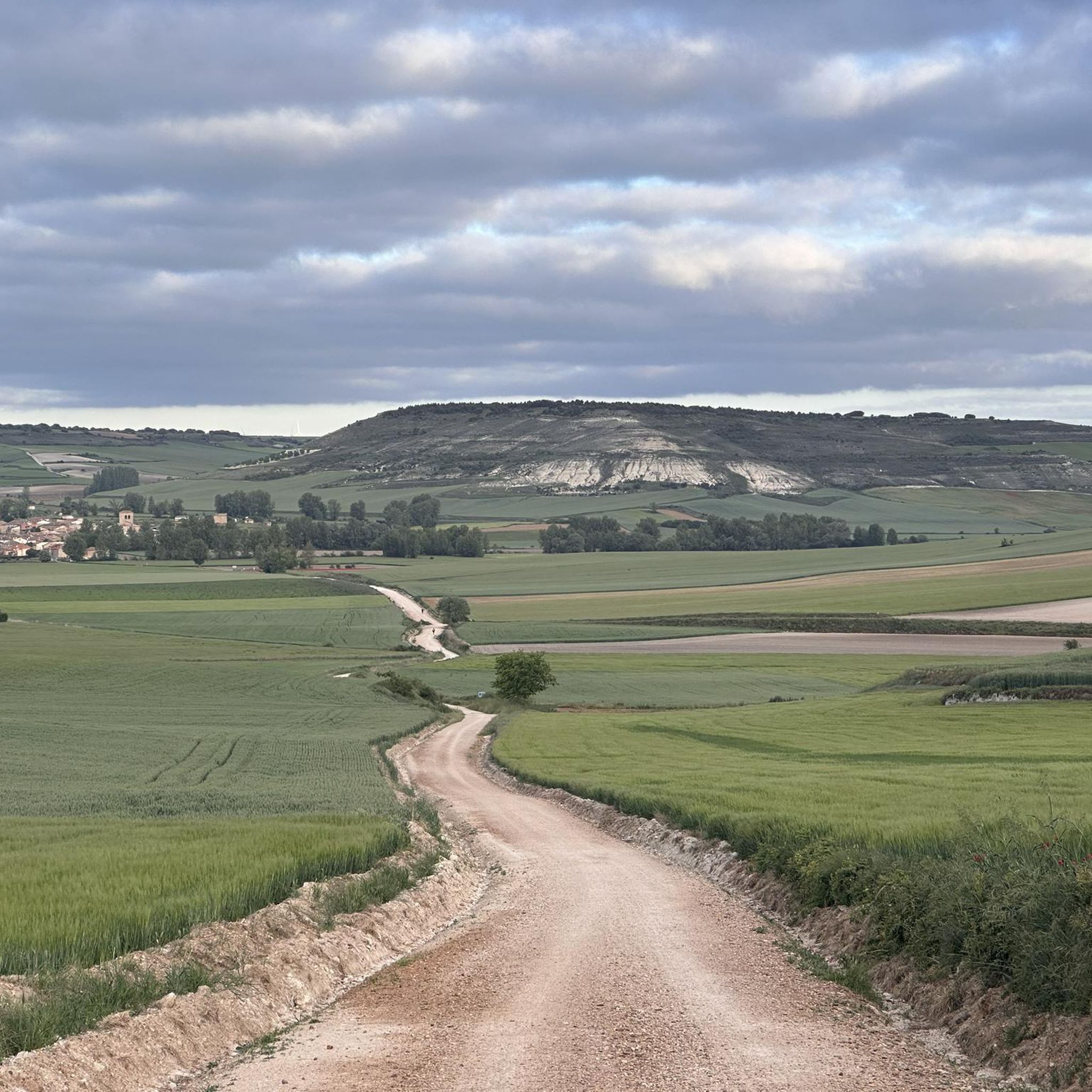
Hornillos del Camino, in the province of Burgos, is an emblematic town on the French Way of St. James, with an urban structure that reflects its Jacobean vocation: a single street, Calle Real, runs through the town from east to west.
1
0
The Statue of the Seated Pilgrim in Burgos is a bronze sculpture depicting a pilgrim resting, seated on a bench with his walking stick. It is located in the Plaza del Rey San Fernando, just behind Burgos Cathedral, making it a popular photographic spot for visitors on the Camino de Santiago.
3
1
Charles III is depicted standing, armored, holding a staff of command in his right hand, in a military stance. It stands on a pedestal of Hontoria stone, bearing an inscription expressing gratitude for the king's favors. At one time, it was surrounded by decorative chains and later by a fence, removed in 1853.
2
0
It is located in Plaza de Alonso Martínez, in the center of Burgos, and is part of the French Way of St. James. It was built between 1903 and 1907 on the site of the former House of the Four Towers. It was designed by architect Saturnino Martínez Ruiz. In 1927, it became the property of the Ministry of Defense through an exchange with the former cavalry barracks (now the Museum of Human Evolution).
2
0

With one of the most beautiful Gothic churches on the Way of St. James, it's definitely worth a visit.
8
0
The Church of San Nicolás de Bari in Burgos is a gem of Castilian Gothic architecture, located right on the Camino de Santiago, next to the Cathedral. It was built in 1408 on the site of an earlier Romanesque church.
32
0
Frequently Asked Questions
What historical and cultural sites can I explore within Revilla del Campo itself?
Within Revilla del Campo, you can visit the Church of La Natividad de Nuestra Señora, which features a blend of Gothic, Renaissance, and Baroque styles. The village also boasts a beautiful Medieval Bridge over the Ausines River, the historic Hermitage of San Juan Bautista from the 12th century, and the central Plaza Mayor with its traditional architecture and a unique bowling alley. Don't miss the main street with its typical stone houses adorned with flowers.
Are there significant historical religious sites in the wider region near Revilla del Campo?
Yes, the region is rich in religious history. You can visit the Burgos Cathedral, a UNESCO World Heritage site known for its Gothic architecture and intricate details. Also nearby is the Hermitage of Our Lady of the Monastery, located along the Camino de Santiago, and the Monasterio de San Pedro de Cardeña, a Cistercian monastery with Romanesque and Gothic elements that once hosted El Cid.
What natural attractions can I discover around Revilla del Campo?
Revilla del Campo is nestled within the picturesque plain of the Ausines River. You can also explore the tranquil local 'lagunas' (lagoons) in the mountains, described as oases. Additionally, on the border with Quintanalara, there's 'El Moro' Canyon, where fossils can be found within a cave, offering a glimpse into the area's geological past.
Are there any family-friendly attractions or activities in the area?
Absolutely. The area around the Medieval Bridge over the Ausines River in Revilla del Campo features parks equipped with benches, barbecue facilities, and playgrounds, making it an ideal spot for families. For active recreation, a sports court is available for tennis and basketball. Many of the historical sites, such as Burgos Cathedral and Hermitage of Our Lady of the Monastery, are also considered family-friendly.
What kind of hiking opportunities are available near Revilla del Campo?
There are several hiking opportunities around Revilla del Campo, catering to different preferences. You can find moderate trails like the 'San Clemente Trail' or the 'Hontoria Quarries and Cubillo del Campo Loop'. For longer excursions, consider the 'From Rabé de la Calzada along the Camino de Santiago' circular route. You can find more details and routes on the Hiking around Revilla Del Campo guide.
Can I find any archaeological or ancient historical sites nearby?
Yes, the nearby Atapuerca archaeological site is of immense global importance for understanding human evolution. Its proximity suggests a historical connection, as Paleolithic pieces have also been found within Revilla del Campo itself, indicating a long history of human presence in the area.
What do visitors enjoy most about the attractions around Revilla del Campo?
Visitors particularly appreciate the blend of historical grandeur and natural beauty. The Burgos Cathedral is highly praised for its spectacular architecture and intricate details, with many enjoying the play of light through its stained glass. The traditional charm of villages like Rabé de la Calzada, with its medieval architecture and cobblestone streets, also leaves a lasting impression. The region's connection to the Camino de Santiago, exemplified by sites like the Statue of the Seated Pilgrim, is also a significant draw.
Are there cycling routes available for mountain biking or road cycling?
Yes, the area offers diverse cycling options. For mountain biking, you can explore routes like 'Buniel, Hornillos del Camino y Castrojeriz' or various loops around Burgos Cathedral. Road cyclists can enjoy routes such as the 'Olmillos de Sasamón Castle Loop' or the 'Arlanzón River Crossing'. More detailed routes can be found in the MTB Trails around Revilla Del Campo and Road Cycling Routes around Revilla Del Campo guides.
What are some examples of traditional architecture in the area?
Revilla del Campo itself is known for its main street, which features typical stone houses often adorned with flowers, showcasing local architectural heritage. Nearby, the small town of Rabé de la Calzada also offers a glimpse into historical Castilian life with its medieval architecture and cobblestone streets. The Romanesque Bridge of Los Ausines is another example of enduring traditional construction.
Is there a good spot to experience the Camino de Santiago near Revilla del Campo?
Absolutely. The region is deeply connected to the Camino de Santiago. You can encounter the Statue of the Seated Pilgrim on the Camino Francés as pilgrims depart Burgos. The village of Hornillos del Camino is also a prime example of a pilgrimage village, with its single street, Calle Real, forming an authentic pilgrimage path. The Hermitage of Our Lady of the Monastery is also located along the Camino.
Are there any viewpoints or scenic spots to enjoy the landscape?
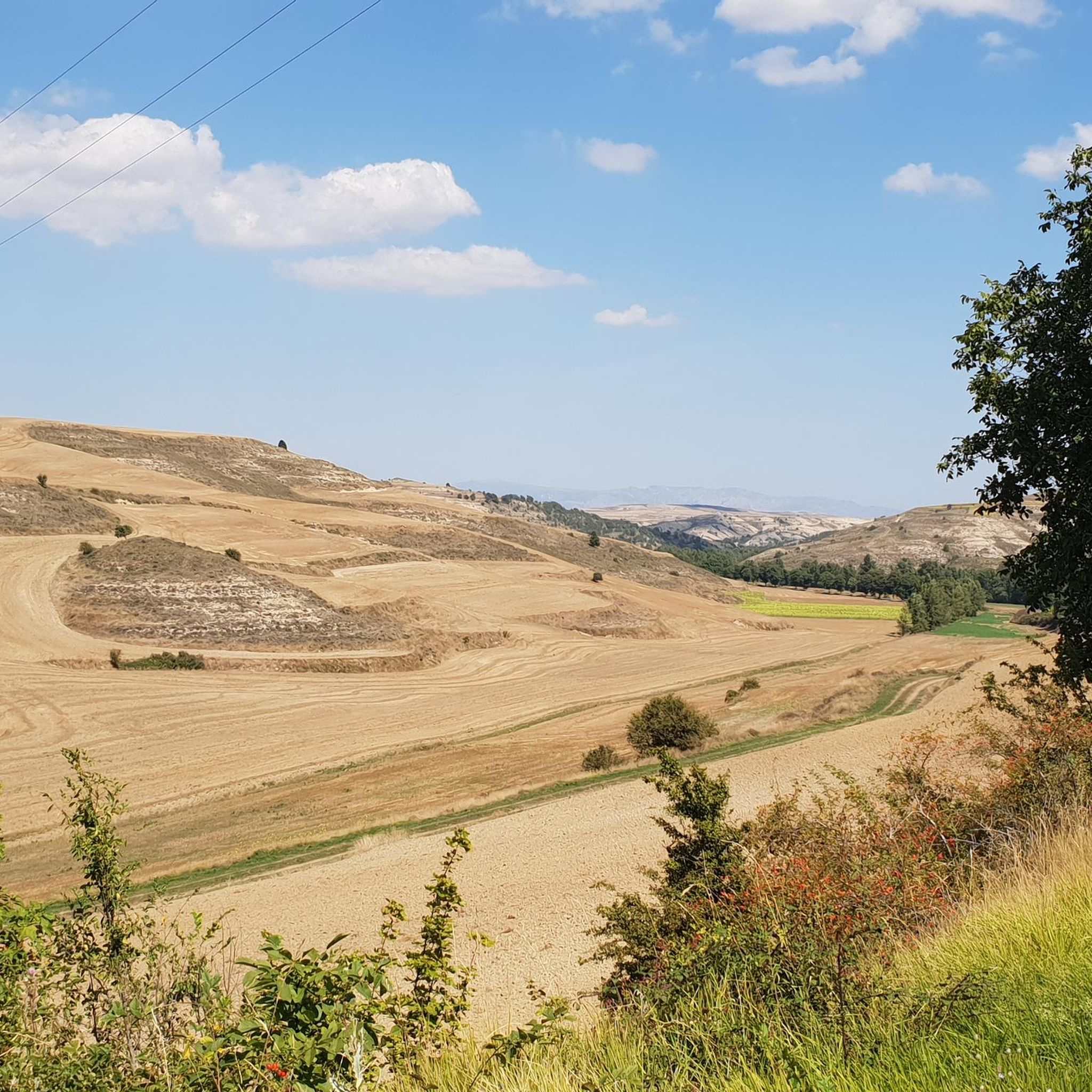
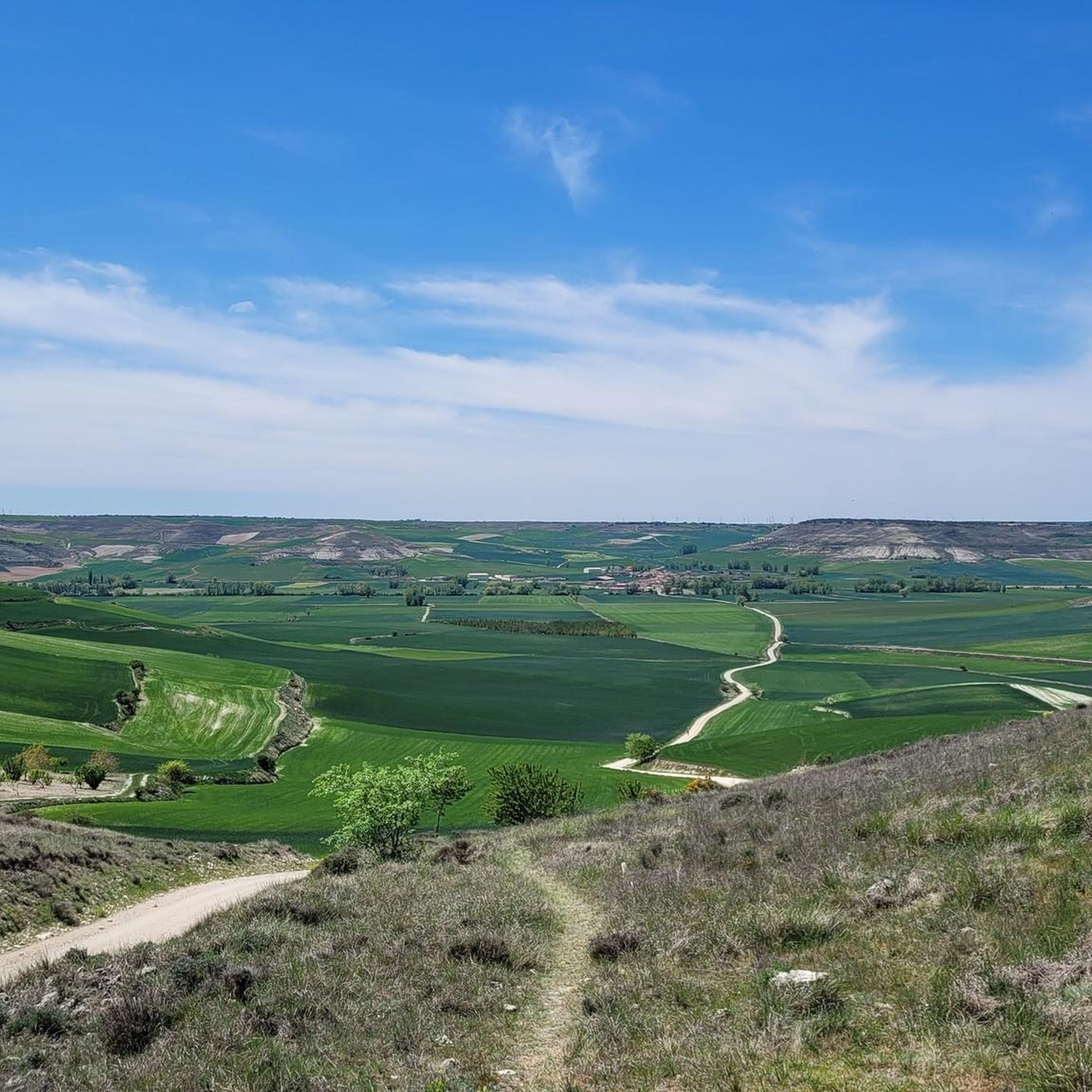
While not explicitly listed as a viewpoint, the village of Hornillos del Camino offers an ideal spot to camp and enjoy views over the town and the surrounding mountains. The general setting of Revilla del Campo, nestled amidst the plain of the Ausines River and at the confluence of the Páramos and Sierra regions, provides picturesque landscapes throughout the area.
Most popular routes around Revilla Del Campo
Most popular attractions around Revilla Del Campo

Get inspired with the komoot mobile app


Explore more
Still not found the Highlight you’re looking for? See guides of the top attractions in other regions:
