Attractions and Places To See around Valdehorna - Top 20
Attractions and places to see around Valdehorna offer a blend of historical landmarks and natural beauty within the province of Zaragoza, Spain. This region provides insights into traditional Spanish life, particularly as part of the wider Campo de Daroca. The area is characterized by its Mudejar heritage, traditional architecture, and proximity to significant natural features like the Gallocanta region. Visitors can explore cultural sites and scenic landscapes.
Best attractions and places to see around Valdehorna
- The most popular attractions is…
Last updated: July 2, 2026
Daroca
Highlight • Settlement
Translated by Google •
Tip by

Aguallueve de Anento
Highlight • Waterfall
The Aguallueve is a spring that continuously falls in the …
Translated by Google •
Tip by

Sign up now to discover places like this
Get recommendations on the best single tracks, peaks, & plenty of other exciting outdoor places.
Sign up for free
Puerta Baja de Daroca
Highlight • Monument
Translated by Google •
Tip by

Santander–Mediterranean Nature Trail – Villanueva del Jiloca
Highlight • Cycleway
Translated by Google •
Tip by

Walls and Main Castle of Daroca
Highlight • Castle
Translated by Google •
Tip by
Sign up for free to discover even more attractions around Valdehorna.
Sign up for free
Already have an account?
Start today with a free account
Your next adventure awaits.
Login or Signup

Tips from the Community

Watched over by the remains of its ancient castle, Daroca emerges, one of the most beautiful cities in Aragon. Without a doubt, one of the charms of the town is to walk along its walls, with their imposing towers, until you reach the castle, from which you can enjoy a beautiful panoramic view.
0
0
In addition to its natural value, the itinerary allows you to discover the historical richness of Daroca, one of the most emblematic medieval towns in Aragon, known for its walls, churches, and monumental legacy.
0
0

The Lower Gate is the most emblematic entrance to Daroca and one of the most impressive defensive monuments in Aragon. Its two robust towers flank a large arch that, in addition to serving as a passageway, also facilitated the drainage of water during periods of heavy rain. Built between the 13th and 16th centuries, it reflects the military and architectural evolution of the city, with Gothic and Renaissance elements such as the gallery of arches and the imperial coat of arms of Charles V. Today, restored, it houses the Center for Daroca Studies and is a must-see for those exploring the city's walls and historic streets.
2
0

The Aguallueve de Anento is a beautiful spring located in the picturesque town of Anento, in the province of Zaragoza. The Aguallueve is a spring that continuously falls in the form of drops of water, creating a spectacular relief with walls of stone and moss, and small caves hidden inside. It is a limestone formation where several springs have created an impressive karst relief.
5
0
The Aguallueve de Anento is a beautiful spring located in the picturesque town of Anento, in the province of Zaragoza. The Aguallueve is a spring that continuously falls in the form of drops of water, creating a spectacular relief with walls of stone and moss, and small caves hidden inside. It is a limestone formation where several springs have created an impressive karst relief.
7
0

This Castle corresponds to the Major Castle of Daroca, of Muslim origin and built in the 11th Century.
0
0

repair station and drinking water fountain
0
0

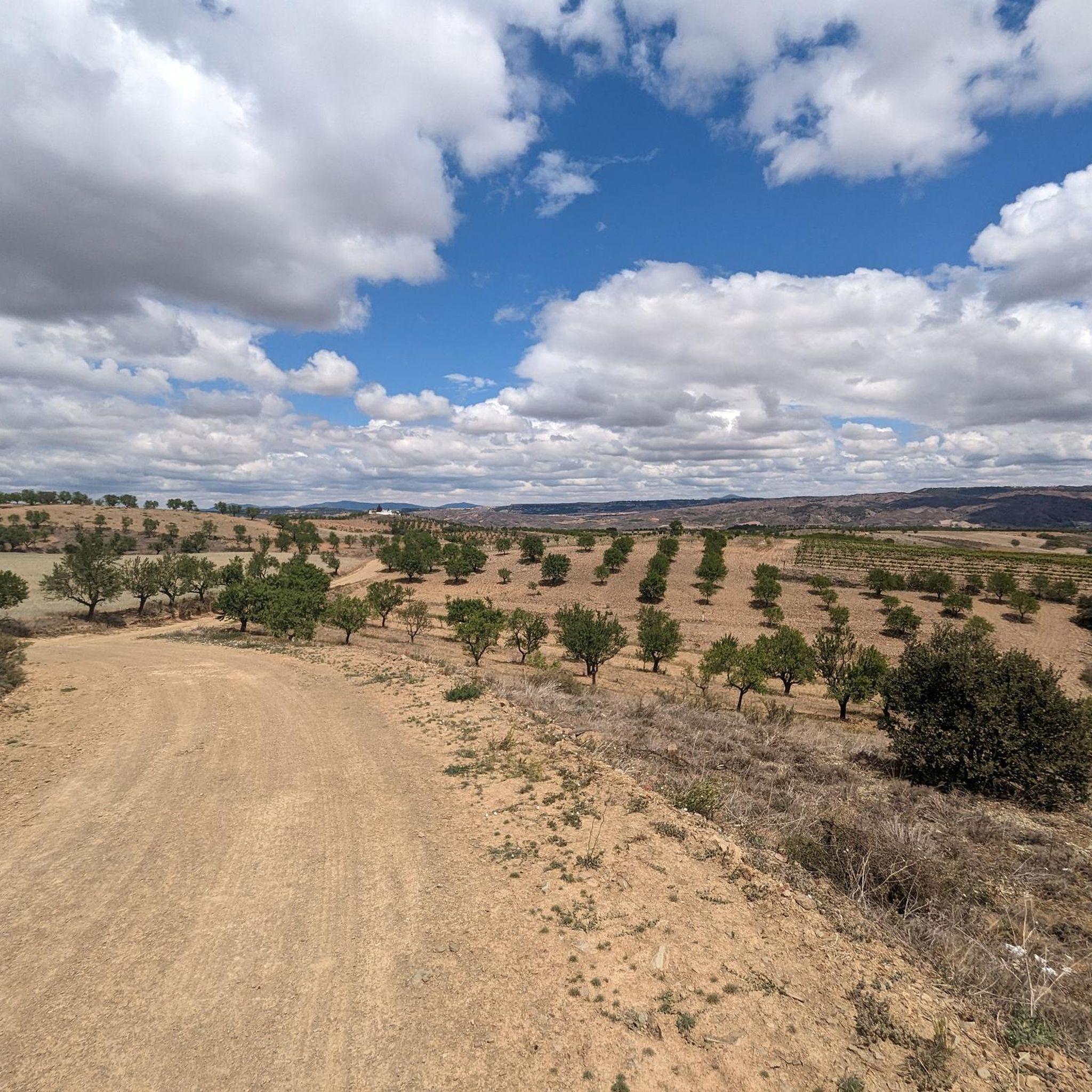
It is still under construction and only partially accessible (gravel road).
0
0
Frequently Asked Questions
What historical landmarks can I explore in Valdehorna itself?
In Valdehorna, you can visit the impressive Baroque Church of San Juan Bautista, which features a Mudejar tower dating back to the 14th or 15th century. The village also preserves traditional architecture, including a restored communal oven, a laundry room, and a fountain. Additionally, there's the Hermitage of Santo Cristo and the traditional stone monument, Peirón de San Juan Bautista, on the old road to Daroca.
What cultural sites are notable in the broader Valdehorna region?
The nearby historic town of Daroca is a must-visit, renowned for its impressive city gates, ancient walls, and rich Islamic and Mudejar heritage. The Puerta Baja (Lower Gate) is particularly striking. Other points of interest in Daroca include the Basilica de Santa Maria, a Medieval Castle, and the Fuente de los Veinte Caños (Fountain of Twenty Spouts).
What is the historical significance of Valdehorna and its surrounding region?
Valdehorna and the wider Campo de Daroca region offer a glimpse into traditional Spanish life, marked by a rich Mudejar heritage. The area's historical significance is evident in its ancient architecture, such as the Mudejar tower of the Church of San Juan Bautista, and the well-preserved medieval structures of nearby Daroca, which was a border city between regions and kingdoms.
Are there any significant natural attractions near Valdehorna?
Yes, the region boasts several natural highlights. The Aguallueve de Anento is a beautiful spring and limestone formation where water continuously falls, creating a spectacular relief with moss-covered walls and small caves. Although not directly in Valdehorna, the Laguna de Gallocanta is a significant natural attraction known for its scenic beauty and importance as a bird sanctuary, with a nearby Bird Museum.
Are there hiking opportunities around Valdehorna?
Absolutely! The area offers various hiking trails. For example, you can explore routes like 'Aguallueve de Anento y Arguilay de Baguena' or 'Pinaspar de Orcajo - Ermita de San Nicolas - Mojon Blanco'. You can find more details and routes on the Hiking around Valdehorna guide.
Can I go cycling or mountain biking near Valdehorna?
Yes, the region is great for cycling and mountain biking. The Santander–Mediterranean Greenway offers a dedicated path for cyclists and walkers. There are also routes like 'Hike of the high water of Anento and Bagena through the Santander-Mediterranean Greenway' for cycling, and various MTB trails such as 'Puerta Baja de Daroca – Daroca loop from Daroca'. Explore more options on the Cycling around Valdehorna and MTB Trails around Valdehorna guides.
Are there family-friendly attractions around Valdehorna?
Many attractions in the region are suitable for families. The historic town of Daroca with its walls and alleys, and the impressive Puerta Baja, are considered family-friendly. The natural beauty of Aguallueve de Anento, with its unique spring and caves, also offers an engaging experience for all ages.
What is the best time of year to visit Valdehorna and its attractions?
The region is particularly beautiful in spring when almond and cherry trees bloom, offering scenic views. The 'Anillo de Gallocanta' area, which Valdehorna is part of, is known for this natural spectacle. Visiting during milder seasons like spring or autumn would generally be ideal for exploring both historical sites and natural features comfortably.
What kind of traditional architecture can be seen in Valdehorna?
Valdehorna preserves elements of traditional architecture that reflect its historical character. Beyond the Mudejar tower of the Church of San Juan Bautista, you can find a restored communal oven, a traditional laundry room, and a fountain on the outskirts of the village, showcasing the daily life and craftsmanship of the past.
Are there any long-distance routes or trails that pass through the Valdehorna area?
Yes, Valdehorna is part of the 'Anillo de Gallocanta', which is also connected to the historic Camino del Cid route. Additionally, the Santander–Mediterranean Greenway, a former railway line converted into a long-distance path for cyclists and walkers, has sections near the region, offering extensive exploration opportunities.
What do visitors enjoy most about the attractions around Valdehorna?
Visitors particularly appreciate the blend of historical depth and natural beauty. The impressive city gates and ancient walls of Daroca, with its rich Islamic and Mudejar heritage, are highly praised. The unique natural phenomenon of Aguallueve de Anento, with its continuously falling water and karst relief, also captivates many.
Most popular routes around Valdehorna
Most popular attractions around Valdehorna

Get inspired with the komoot mobile app


Explore more
Still not found the Highlight you’re looking for? See guides of the top attractions in other regions:
