The best MTB trails around Pineda De Mar
4.5
(35)
364
riders
19
rides
Mountain biking around Pineda De Mar offers diverse terrain, situated between the Mediterranean coastline and the Sierra de Montnegre. The region features an extensive network of trails, including those within the Montnegre i el Corredor Natural Park. Riders can find routes ranging from coastal paths to challenging climbs with significant elevation changes in the surrounding mountains. The area also includes natural features like the Tordera River and historical landmarks such as the Roman aqueduct.
Best mountain bike trails around Pineda…
Last updated: October 11, 2026
4.7
(6)
52
riders
43.5km
02:50
390m
390m
Moderate mountain bike ride. Good fitness required. Suitable for all skill levels.
4.8
(5)
49
riders
48.1km
04:21
1,170m
1,170m
Hard mountain bike ride. Very good fitness required. Suitable for all skill levels.

4.6
(10)
44
riders
Moderate mountain bike ride. Good fitness required. Suitable for all skill levels.
4.5
(2)
39
riders
19.2km
01:29
360m
360m
Moderate mountain bike ride. Good fitness required. Suitable for all skill levels.
5.0
(1)
39
riders
35.1km
02:17
80m
80m
Moderate mountain bike ride. Good fitness required. Suitable for all skill levels.
Get access to more routes and recommendations from other explorers.
Already have an account?
Our route recommendations are based on thousands of hikes, rides, and runs completed by other people on komoot.
Start today with a free account
Your next adventure awaits.
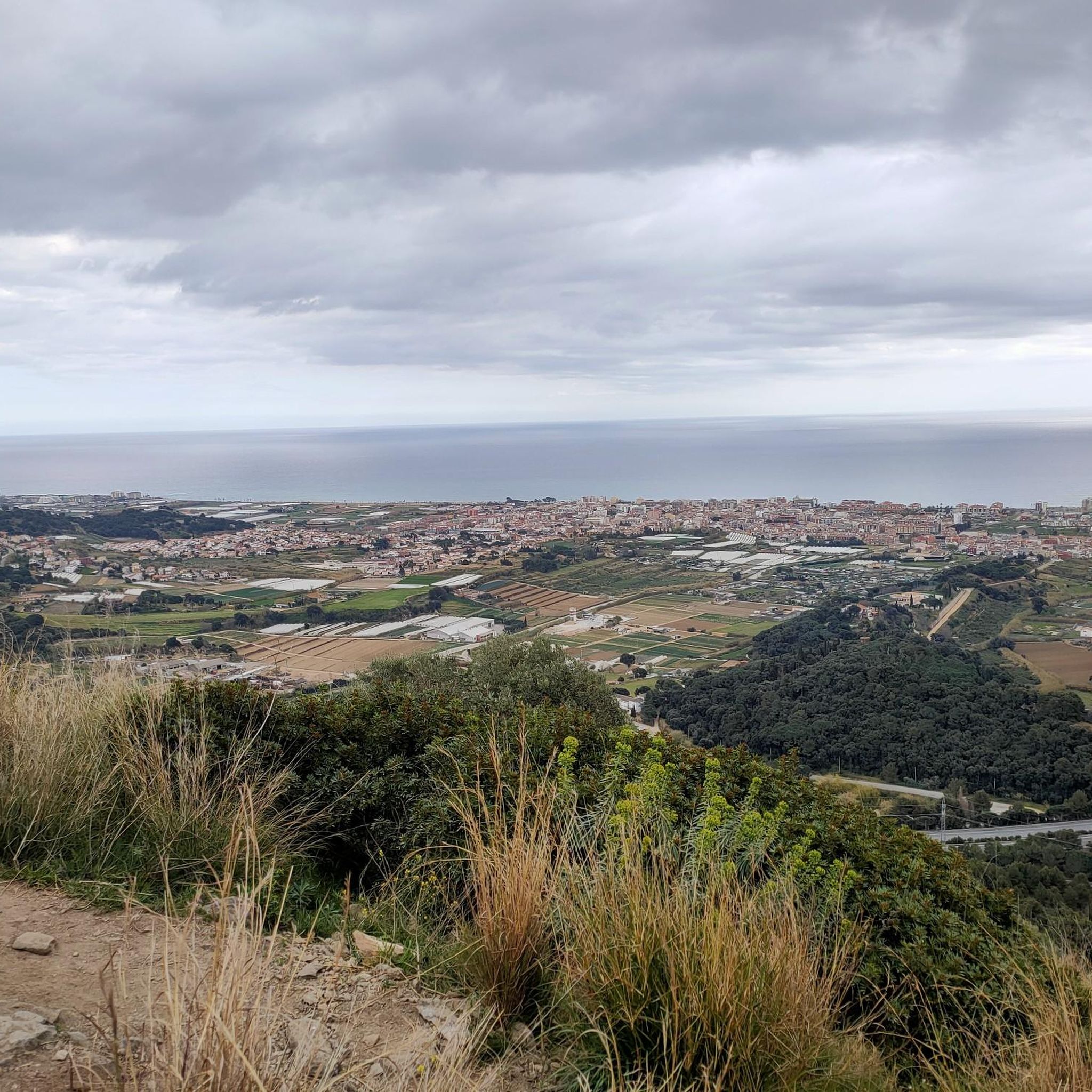
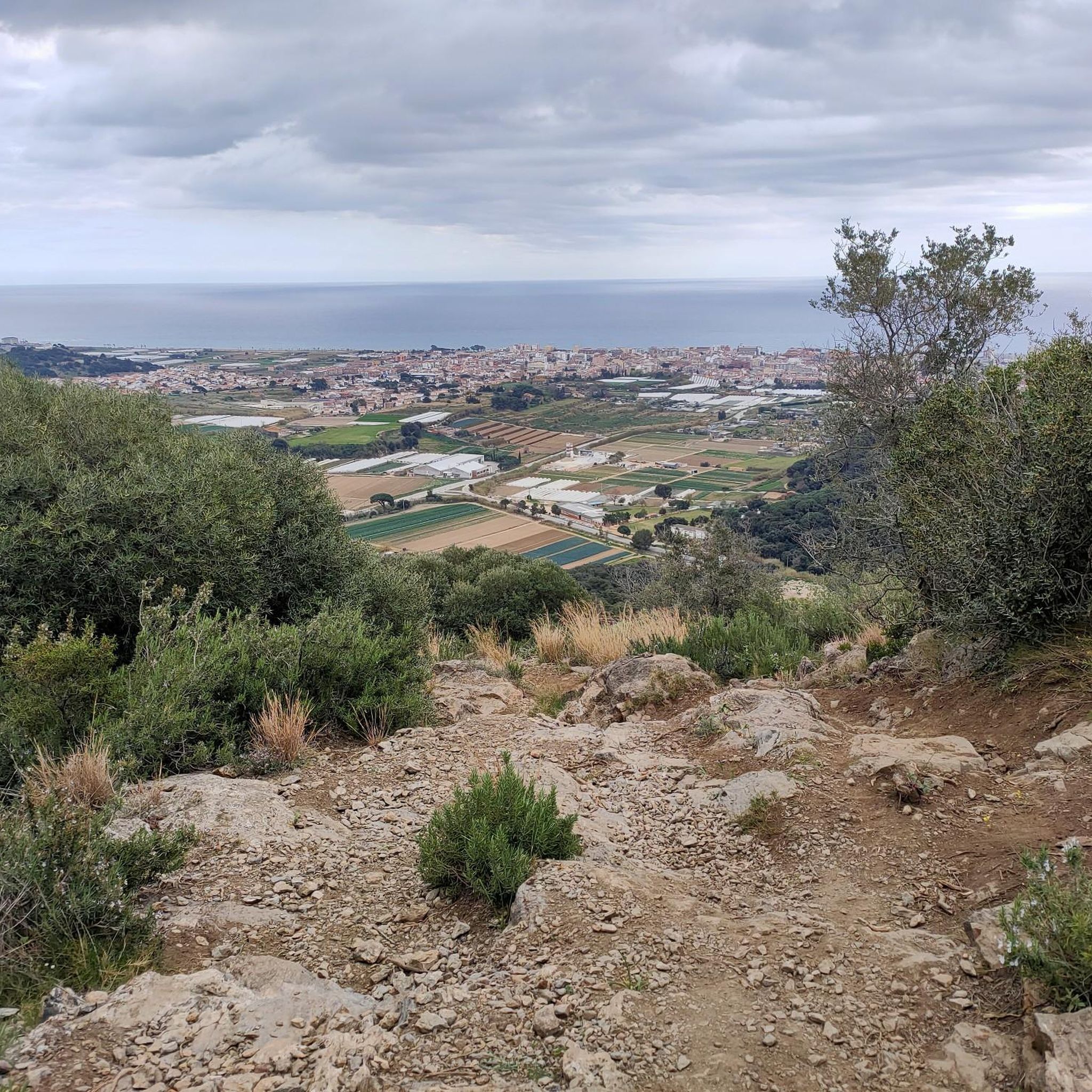
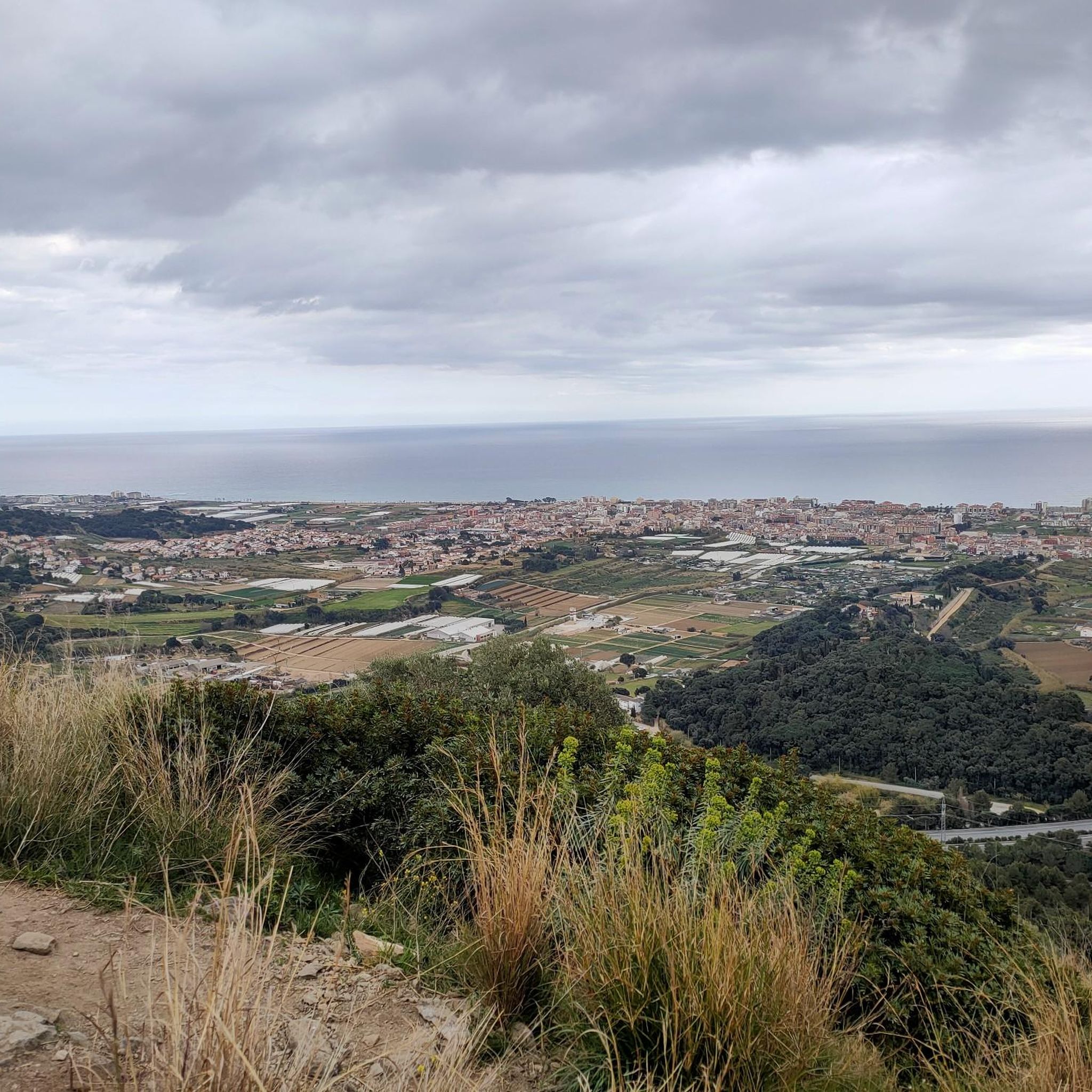
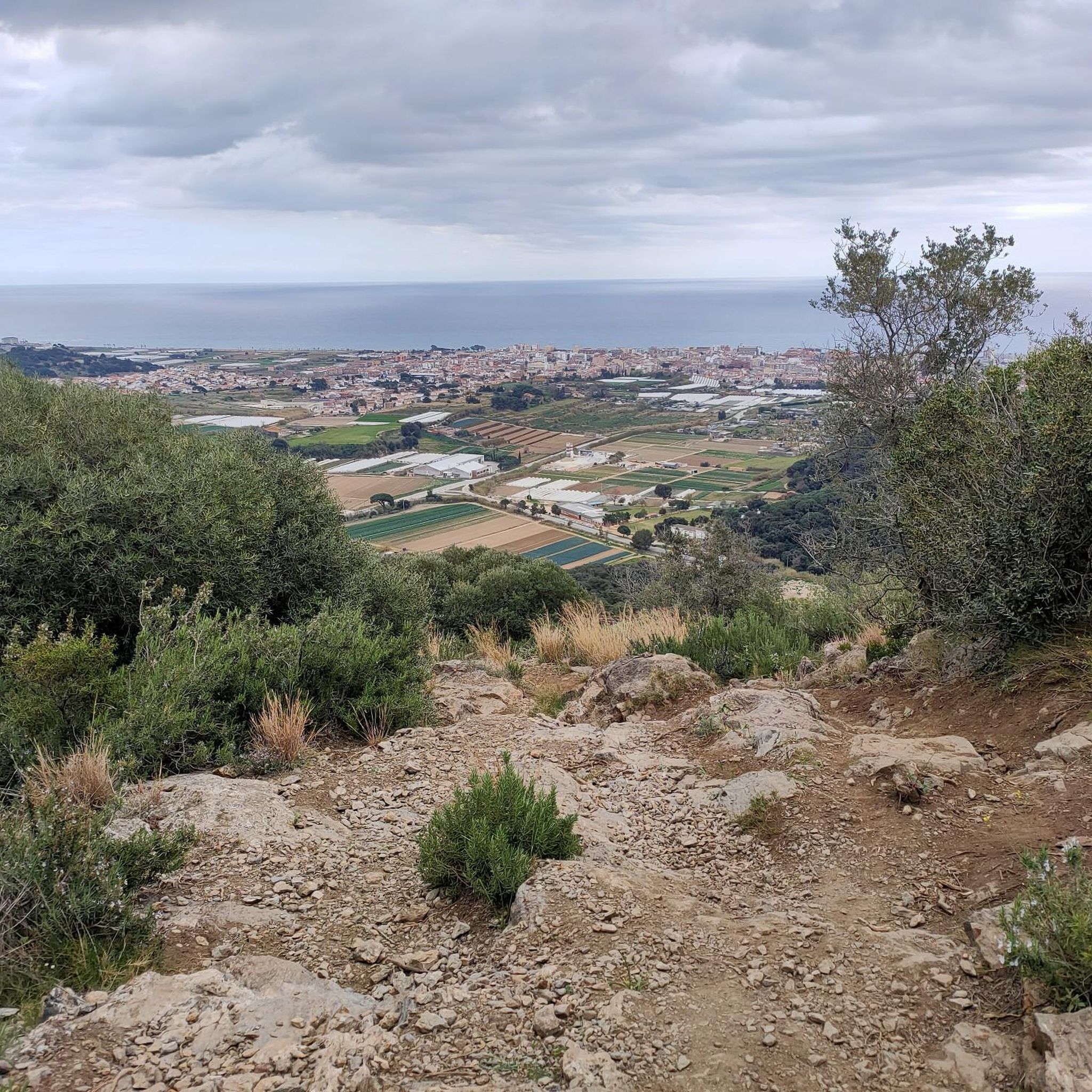

Tips from the Community

It looks as if we were some centuries back in time!
0
0

Tradition has it that when fishermen were far out at sea, they would look for a tiny white dot on the mountain amidst the green of the forest. It was this hermitage. It served as a reference point for them to orient themselves and know where the coast was. A kind of lighthouse, but on the mountain. And there's a second, even more curious story. Centuries ago, a severe smallpox epidemic affected the farmhouses of Hortsavinyà. Legend has it that a stranger appeared with an image of the Virgin and assured that those who came to pray to her would be healed. People associated the healings with that image, and eventually, the small oratory was built here. There's even a curious play on its name: Erola and verola—smallpox in Catalan—ended up being linked in popular tradition, although the origin of 'erola' seems to actually refer to the small plain where it is located. So that little white house lost among the trees was, depending on who looked at it, a sanctuary for some and an orientation point for those sailing down below in the Mediterranean.
0
0
Two thousand years old and still standing. The Romans built this aqueduct between the 2nd and 3rd centuries to carry water for about 3.5 km to a Roman villa located in Can Roig. The route had barely 40 meters of elevation change: fine engineering without GPS, laser, or any of that. It once had numerous arches to cross torrents; today only some sections survive. And a brutal detail: in medieval documents from 1090, it was already called Archus Antiquos, "the ancient arches". In other words, almost a thousand years ago people were already passing by here thinking: this has been here forever.
1
0
Here the highway took a spring… and the locals resurrected it. The old iron mine that gave its name to the Font del Ferro disappeared with the C-32 highway construction in the 90s. Years later, people from the area got to work and recovered this spot. And underneath there's still another surprise: an arch of a Roman-era aqueduct. Two thousand years carrying water through here, the highway arrives and almost ruins everything. Luckily, this story ended much better than it began.
1
0
It looks like a stone hole lost in the forest, but inside here it reached 800 °C for 10 to 12 days straight. Limestone, tons of firewood, and people feeding the fire day and night to produce the lime with which houses were built and whitewashed. Today there is only silence and forest. Years ago, this was a small hell running 24 hours a day.
0
0

Església de Sant Llop d'Hortsavinyà El document més antic on s'esmenta Hortsavinyà és del 1101, i el primer de l'església, del 1301, si bé la primitiva esglesiola podria ser del segle IX o X. La major part de l'edifici actual és del segle XVIII. Sant Llop n'és el patró (1 de setembre), i per això se celebra la festa major en aquestes dates, coincidint amb el primer diumenge del mes. I si sant Llop és el patró de l'església, santa Eulàlia ho és del poble, i pels volts del 10 de desembre se celebra la festa major petita d'Hortsavinyà. Tradicionalment, sant Llop fou l'encarregat, en la fe cristiana, de guarir el mal de coll i l'afonia, i se'l relacionava amb alguns comportaments dels llops. Tot això ens porta a cercar els seus orígens en un personatge precristià, el pare Llop, un home que convivia amb un ramat de llops a les muntanyes. Una vegada a l'any baixava a les masies a cobrar un tribut, que calia pagar si es volia evitar l'atac dels llops al bestiar i a les persones. També era creença general, segons podem llegir als bestiaris medievals catalans, que si un home veia un llop abans que el llop a ell, la bèstia restava muda per sempre més, però si era el llop qui el veia primer, qui perdia la veu era l'home. Això darrer es produïa per l'ensurt que patia la persona en trobar-se el llop. D'aquí ve la relació de sant Llop amb l'afonia. Font: XPN
1
0
Capella de Sant Isidre La capella de Sant Isidre es va veure afectada per la construcció de l’autopista del Maresme. Aquest fet va comportar que s’hagués de derruir per construir-la novament uns metres més enllà d’on s’alçava l’antiga. Ara es troba just a la plaça de Llillota. La seva estructura és moderna, però conserva l’encant d’estar situada en un paratge natural de gran bellesa, idoni per passejar i descansar. I, de fet, és aquí on any rere any se celebra el dinar de germanor per la festa de Sant Isidre, que tot i que és 15 de maig, el dinar es fa el diumenge següent. Font: Ajuntament de Santa Susanna
1
0
Sant Miquel de Vallmanya L'església està documentada des de l'any 1021. L'actual edifici és, però, molt posterior, del segle XVI, modificat de nou el 1826, segons es pot llegir a la porta. La façana té el coronament ondulat típicament barroc. El campanar, quadrat, té el tram superior de maó vist i està cobert amb una cúpula. adossada a l'església hi ha la casa del sagristà. Font: Pobles de Catalunya
0
0
Frequently Asked Questions
How many mountain bike trails are available in Pineda de Mar?
There are over 20 mountain bike trails around Pineda de Mar, offering a variety of experiences. These include 3 easy routes, 12 moderate routes, and 6 difficult routes, catering to different skill levels.
What types of terrain can I expect on mountain bike trails in Pineda de Mar?
Mountain biking in Pineda de Mar offers diverse terrain, from Mediterranean coastline paths to challenging climbs within the Montnegre i el Corredor Natural Park. You'll find routes with significant elevation changes in the mountains, as well as flatter paths along agricultural roads and the beach.
Are there any easy mountain bike trails suitable for beginners or families?
Yes, Pineda de Mar has several easy mountain bike trails. A good option for a less strenuous ride is the Pineda de Mar seafront – Calella Beach Promenade loop from Pineda de Mar, which is about 16 km long with minimal elevation gain, perfect for a relaxed coastal ride.
Where can I find challenging mountain bike routes with significant elevation?
For experienced riders seeking a challenge, the region offers routes with substantial climbs. The Hortsavinya Lime Kiln – Can Benet Pass loop from Pineda de Mar is a difficult 48.5 km path that ascends through the Montnegre i el Corredor Natural Park, featuring over 1100 meters of elevation gain.
What natural features or landmarks can I see along the mountain bike trails?
Many trails traverse the Montnegre i el Corredor Natural Park, offering lush pine woods and diverse flora. You can also encounter the Tordera River, and historical landmarks such as the ancient Roman aqueduct. For example, the Roman aqueduct – Pineda de Mar seafront loop from Pineda de Mar takes you past this historic structure.
Are there any circular mountain bike routes available?
Yes, many mountain bike routes in Pineda de Mar are designed as loops. Examples include the moderate Pass of Mòra's threshing floor – Pineda de Mar seafront loop from Pineda de Mar, which combines inland and coastal scenery, and the challenging Hortsavinya Lime Kiln – Can Benet Pass loop from Pineda de Mar.
What do other mountain bikers enjoy most about Pineda de Mar?
The mountain bike trails in Pineda de Mar are highly rated by the komoot community, with an average score of 4.6 stars from over 40 reviews. Riders often praise the diverse landscapes, from coastal paths to mountain ascents, and the well-maintained network of trails within the Montnegre i el Corredor Natural Park.
Can I find mountain bike routes that follow the Tordera River?
Yes, the Tordera River provides a tranquil natural feature for cycling. The Pineda de Mar seafront – Tordera River loop from Pineda de Mar is a moderate 49.6 km route that allows you to explore the river and its delta.
What are some interesting points of interest or attractions near the mountain bike trails?
Beyond the trails, you can explore several attractions. These include the historic Jalpí Castle, the serene Brinxa Reservoir, and the Mouth of the Tordera, which is a significant natural feature. There are also other castles like Palafolls Castle and Montpalau Castle in the vicinity.
What is the best time of year for mountain biking in Pineda de Mar?
The mild temperatures during spring and autumn make these seasons ideal for enjoying outdoor activities, including mountain biking, in Pineda de Mar. The weather is generally pleasant for exploring both coastal and mountainous routes.
Are there any coastal mountain bike routes?
Absolutely. Pineda de Mar is situated on the Mediterranean coastline, offering routes that run along the sea. The Pineda de Mar seafront – Calella Beach Promenade loop from Pineda de Mar is an easy option that provides pleasant coastal views.
Most popular routes around Pineda De Mar
Most popular attractions around Pineda De Mar

Get inspired with the komoot mobile app


Explore more
Browse the best MTB trails in other regions.
