Top 8 Castles around Saragosse
Best castles around Saragosse showcase a rich history, reflecting diverse pasts from Islamic rule to Christian kingdoms. The region's strategic location along the Ebro banks led to the construction of numerous fortifications. These structures offer insights into medieval architecture and regional history. Visitors can explore a variety of castle types, from well-preserved palaces to ancient ruins.
Best castles around Saragosse
- The most popular castles is Aljafería Palace, a castle that is the only surviving testimony to a large building…
Last updated: October 16, 2026
Aljafería Palace
Highlight • Castle
Translated by Google •
Tip by

Roman Walls and Torreón de la Zuda, Zaragoza
Highlight • Historical Site
Translated by Google •
Tip by

Sign up now to discover places like this
Get recommendations on the best single tracks, peaks, & plenty of other exciting outdoor places.
View of Castillo de Miranda
Highlight • Viewpoint
Translated by Google •
Tip by
Santa Fe Monastery
Highlight • Religious Site
Translated by Google •
Tip by

Alfajarín Castle
Highlight • Castle
Translated by Google •
Tip by
Sign up for free to discover even more castles around Saragosse.
Already have an account?
Start today with a free account
Your next adventure awaits.
Other adventures around Saragosse


Tips from the Community

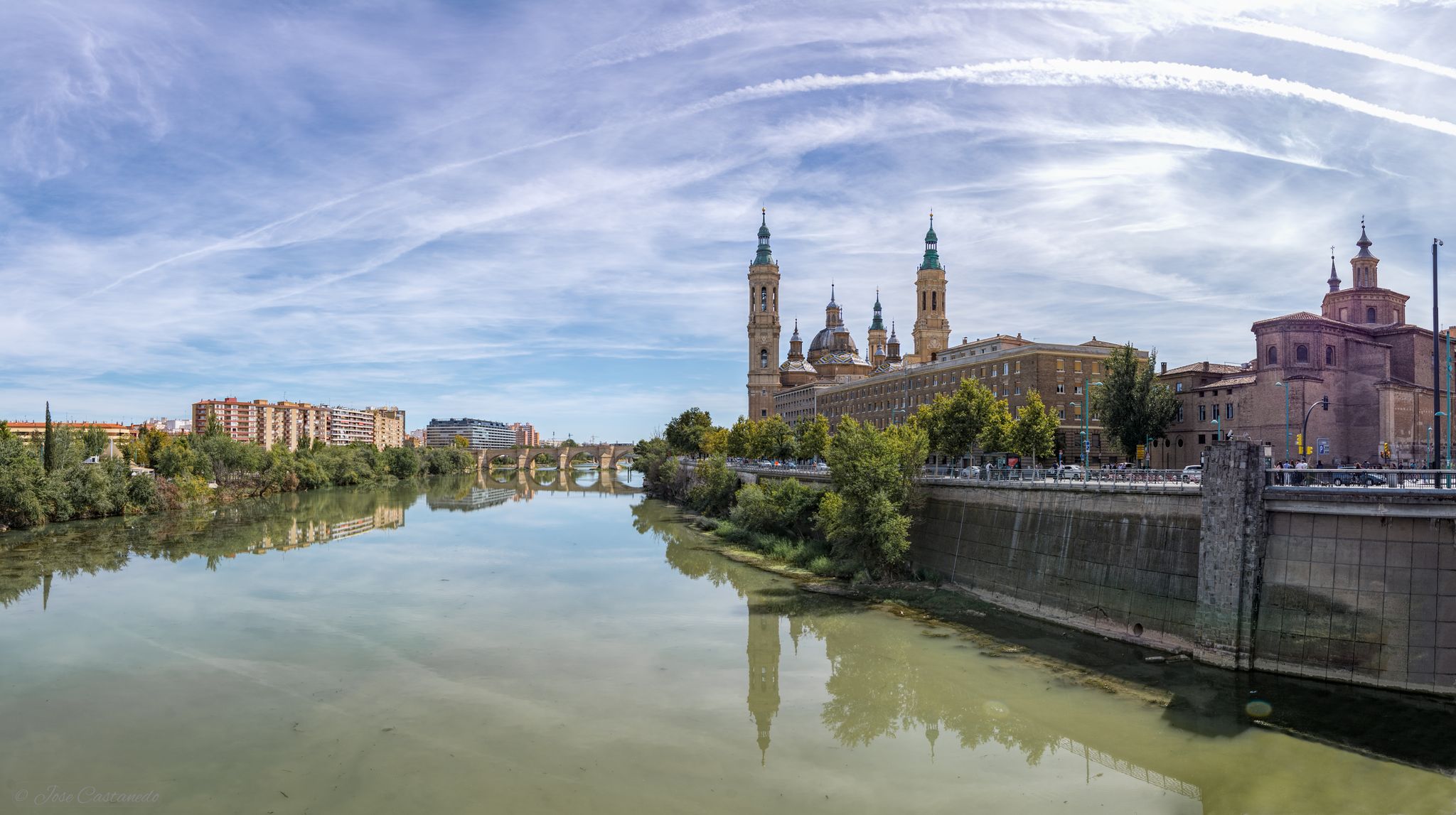
The Aljafería Palace in Zaragoza is an 11th-century fortified Islamic palace built during the Taifa period. Known originally as the "Palace of Joy", this UNESCO World Heritage Site features exquisite archways, intricate plasterwork, and the historic Troubadour’s Tower. Today, it serves as the official seat of the regional parliament, the Cortes of Aragon.
0
0

From Viveros Rhey there is a direct road, recently paved
0
0

There are few preserved walls, they seem low but they were so deep, they are free to visit. However, it is advisable to book the Roman visit to Zaragoza, it is cheap at 5.5 euros and for 3 euros more a visit to the Roman museums is included, very interesting.
5
0

In the afternoon it opens at 4.30pm
1
0

It is worth enjoying it inside as well, not just outside.
2
1
Park around the Aljafería Palace.
2
0
Sometimes it seems like you are in Rome, everywhere you go you can see ruins from that time.
3
0
As the name suggests, "views of Miranda Castle". And it could not be better said, because just when you reach the path of the last small access climb you come across a fence that is "not at all misleading" that it is a military zone and that you should not even think of crossing it. The strange thing is that on the entrance sign the castle appears within the official path, and on the komoot the military zone appears quite a bit further back.
1
0
Frequently Asked Questions
What historical periods do the castles around Saragosse represent?
The castles around Saragosse showcase a rich history, reflecting diverse pasts from Islamic rule to Christian kingdoms. You'll find magnificent examples of Hispano-Islamic architecture, such as the Aljafería Palace, alongside Mudéjar and Gothic styles. Many fortifications, like Alfajarín Castle, date back to the 10th-12th centuries, serving as strategic defensive structures during the Reconquista.
Are there family-friendly castles to visit near Saragosse?
Yes, several castles and historical sites are considered family-friendly. The Aljafería Palace is a great option, offering a fascinating journey through history with its unique architecture. The surrounding Aljafería Park also provides a pleasant space for families.
Which castles offer the best views of the surrounding landscape?
For commanding views, consider visiting the ruins of Castillo de Cadrete, which is strategically positioned on a hill offering excellent vistas of the Huerva valley. The View of Castillo de Miranda also provides a historical perspective of a 12th-century castle from a distance, significant in the reconquest of Zaragoza.
What outdoor activities can I do near the castles around Saragosse?
The region around Saragosse offers various outdoor activities. You can find gravel biking routes like the 'Solar Labyrinth loop' or 'Mirador de las Planas – Planas de María de Huerva loop' which can take you through the landscapes near some of these historical sites. For more details on routes, explore the Gravel biking around Saragosse guide.
Where can I see examples of Moorish or Mudéjar architecture?
The most prominent example is the Aljafería Palace in Zaragoza, a UNESCO World Heritage site. It's a magnificent fortified Islamic palace showcasing a blend of Islamic, Mudéjar, and Gothic styles. Its intricate Mudéjar arches, the Santa Isabel courtyard, and the Golden Hall are particularly noteworthy. You can learn more about this architectural style on Wikipedia.
Are there any lesser-known castles worth exploring in the Zaragoza province?
Beyond the main attractions, the Zaragoza province holds several intriguing castles. Castillo de Cadrete, an Islamic fortification from the 10th century, is considered the best-preserved in the Bajo Huerva river area. Another unique option is Castillo de Añón de Moncayo, a 13th-century fortress that has been fully rehabilitated and even offers lodging, allowing for an immersive experience within Moncayo Natural Park.
What is the significance of Alfajarín Castle?
Alfajarín Castle, built by Muslims in the 11th century, was crucial for monitoring the Ebro banks and protecting Zaragoza from the east. Its unique irregular pentagonal structure, defended by natural cliffs and a defensive moat, highlights its strategic importance. It offers views over Alfajarín and the Ebro plain.
Can I visit the Roman Walls and Torreón de la Zuda in Zaragoza?
Yes, you can visit the Roman Walls and Torreón de la Zuda. These are remains of the city's Roman walls, with the Torreón de la Zuda serving as a fortress during the Muslim era and later as a royal palace for Aragonese kings. While the preserved walls are free to visit, booking a Roman visit to Zaragoza is recommended to explore the history and included Roman museums.
What is the best time of year to visit the castles around Saragosse?
The best time to visit the castles around Saragosse is generally during the spring (April-June) and autumn (September-October) months. The weather is typically mild and pleasant for exploring historical sites and enjoying any nearby outdoor activities. Summers can be very hot, and winters can be chilly, though indoor attractions like the Aljafería Palace are accessible year-round.
Are there any castles that offer a glimpse into the life of Aragonese Christian monarchs?
The Aljafería Palace served as a royal residence for Aragonese Christian monarchs after the reconquest of Zaragoza in 1118. It also houses the Palace of Pedro IV and the Palace of the Catholic Monarchs, each leaving their architectural mark and providing insight into their historical presence within the palace's walls.
What is the significance of Sos del Rey Católico Castle?
Sos del Rey Católico Castle, located in Cinco Villas, was an important defensive site on the frontier with Navarra. It is notable as the origin of the medieval village where Fernando the Catholic was born. Visitors can still explore its original Tribute Tower from the 12th century, offering a tangible connection to this significant historical figure.
Is there a castle that has been fully restored and offers unique experiences?
Yes, the Castillo de Añón de Moncayo, a 13th-century fortress founded by the Knights Hospitaller of Saint John, has been fully rehabilitated. It offers a unique experience, including the possibility of lodging within the castle itself, allowing visitors to immerse themselves in its history within the beautiful Moncayo Natural Park.
Most popular attractions around Saragosse

Get inspired with the komoot mobile app


Explore more
Looking for the best castles somewhere else? Discover other guides around Saragosse:
