The best road cycling routes around Corbera
4.7
(212)
9,717
riders
159
rides
Road cycling around Corbera de Llobregat offers diverse landscapes, characterized by a network of trails that traverse natural features and varying elevation gains. The region provides a rich environment for outdoor activities, with over 18 square kilometers of undeveloped land. Cyclists can expect routes that navigate through rural areas, offering both challenging ascents and more moderate paths. This area, part of Catalonia, features a mix of paved and unpaved surfaces, catering to different cycling preferences.
Best road cycling routes around…
Last updated: June 28, 2026
5.0
(4)
382
riders
102km
04:15
560m
560m
Moderate road ride. Good fitness required. Mostly well-paved surfaces and easy to ride.
5.0
(3)
231
riders
Moderate road ride. Good fitness required. Mostly well-paved surfaces and easy to ride.

Sign up for free
179
riders
114km
05:07
990m
990m
Hard road ride. Very good fitness required. Some segments of this route may be unpaved and difficult to ride.
5.0
(3)
151
riders
37.3km
01:35
190m
180m
Easy road ride. Great for any fitness level. Mostly well-paved surfaces and easy to ride.
5.0
(3)
131
riders
42.3km
02:11
710m
710m
Moderate road ride. Good fitness required. Mostly well-paved surfaces and easy to ride.
Get access to more routes and recommendations from other explorers.
Sign up for free
Already have an account?
Our route recommendations are based on thousands of hikes, rides, and runs completed by other people on komoot.
Start today with a free account
Your next adventure awaits.
Login or Signup
Tips from the Community

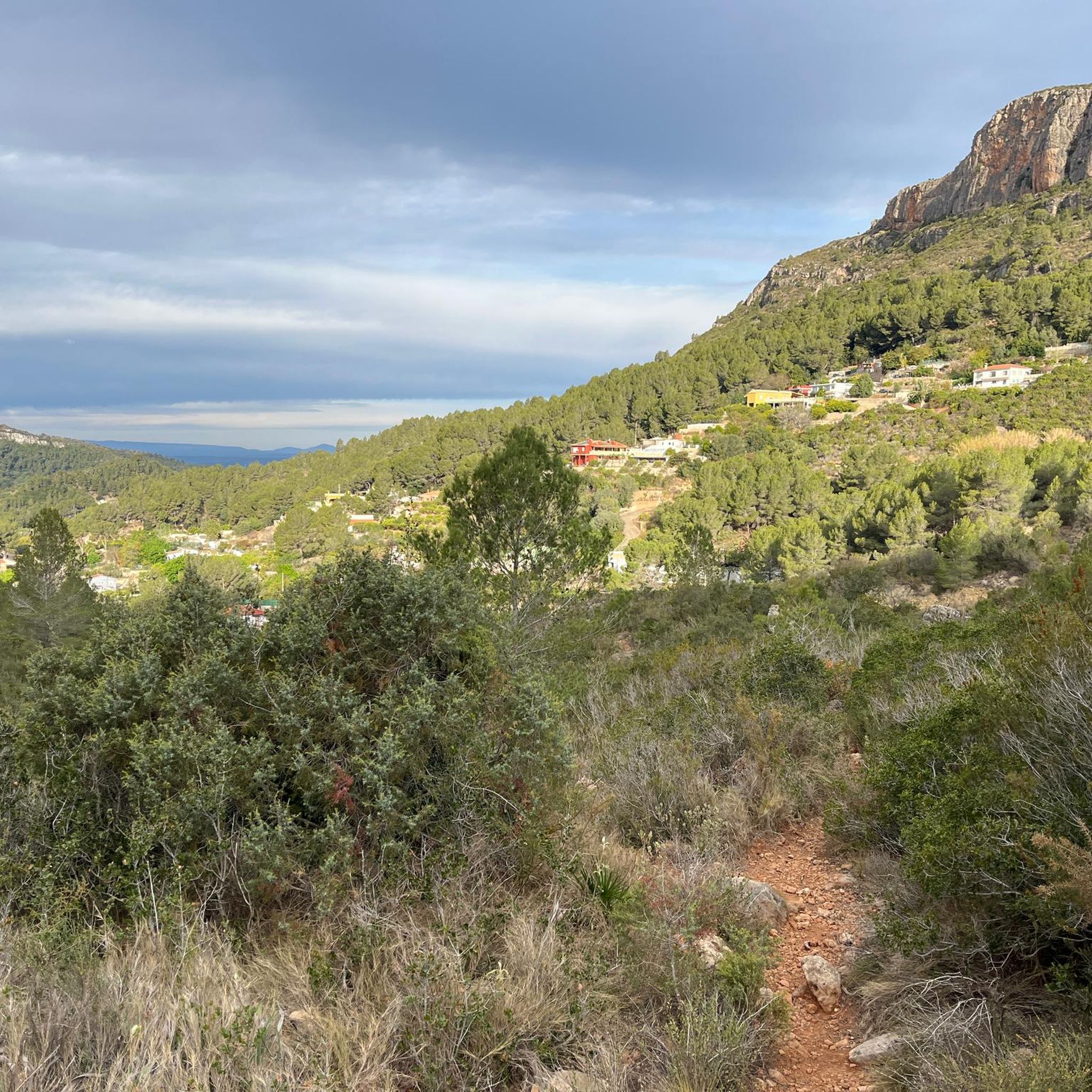
El convent d'Aigües Vives, també anomenat Reial Monestir de Santa Maria d'Aigües Vives, és un antic monestir amb orígens que es remunten al segle XIII. L'edifici actual es va construir durant els segles XVI i XVII, amb els corresponents estils, renaixentista i barroc, si bé l'ala nord es va acabar en el segle XVIII. El monestir va pertànyer a l'orde dels agustins, orde que custodiava la imatge de la Mare de Déu d'Aigües Vives, patrona de la ciutat de La Barraca d'Aigües Vives. A mitjan segle XIX, a conseqüència de la desamortització de Mendizábal, els monjos hagueren d'abandonar el cenobi. Aquest va passar a mans dels barons de Casanova, que el destinaren com a habitatge rural. L'any 1977 el monestir fou adquirit i reformat per a destinar-lo a hotel residència per Antonio Vidal Bellver (fotògraf i empresari de Carcaixent). Actualment és propietat d'un empresari hoteler de Gandia. El 2024, la Generalitat Valenciana va instar els nous propietaris a fer obres per a mantenir aquesta obra major que ha patit un deteriorament progressiu com a conseqüència de robatoris, vandalisme i abandonament.
1
0

The port of Barx is a Valencian classic. Its horseshoe bends run over the panorama of the surrounding mountains and the Mediterranean coast.
2
0

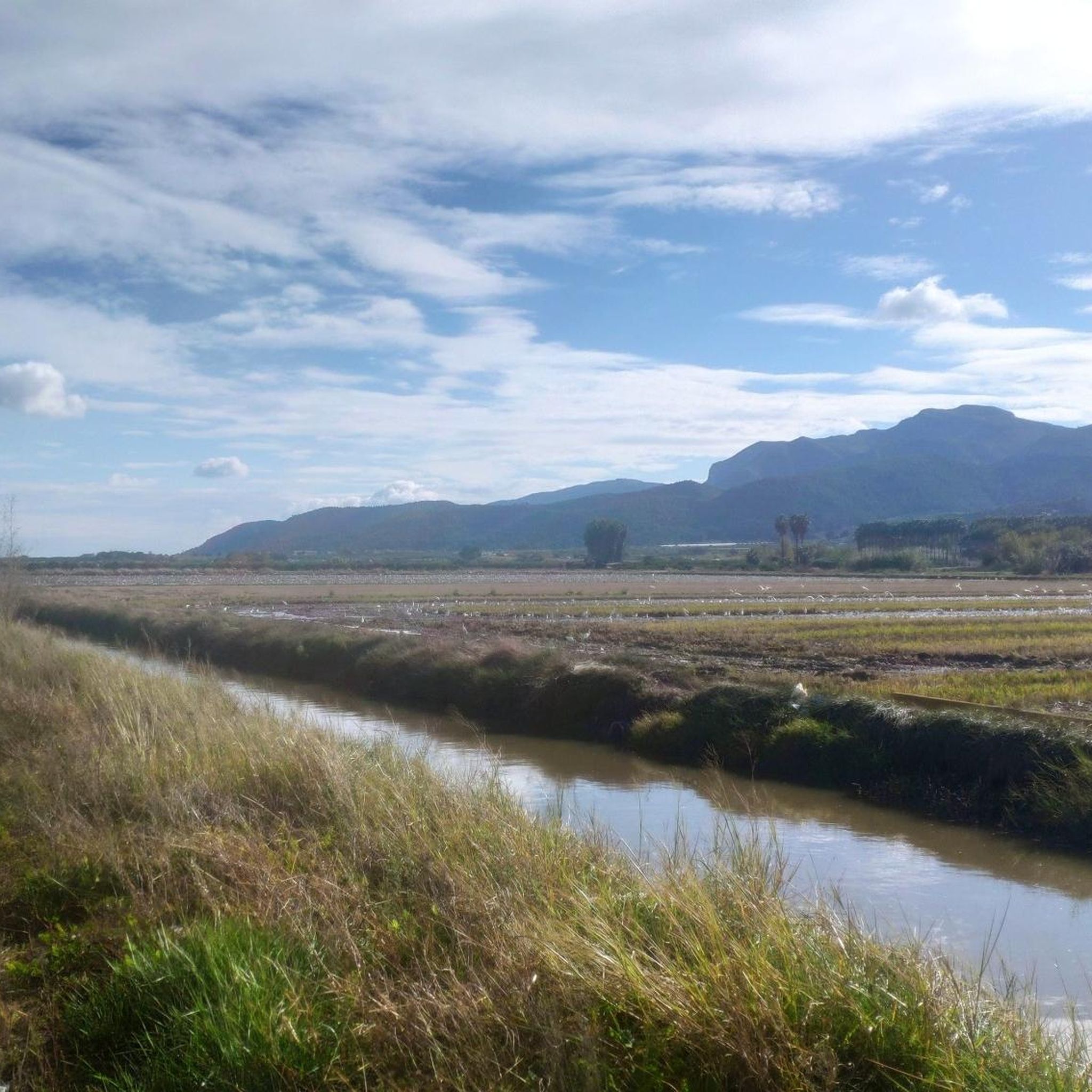
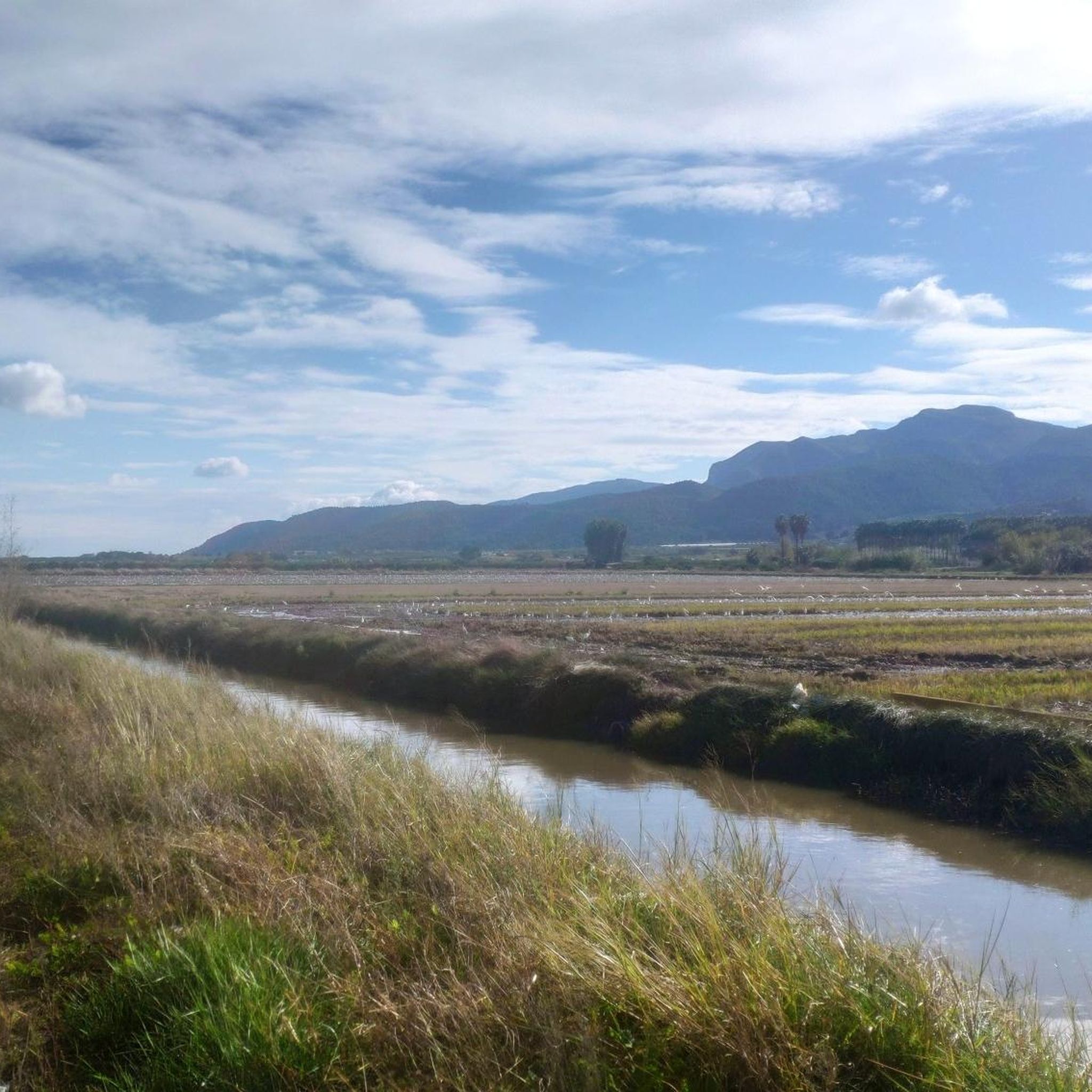
Mareny Barraquetes (in Valencian and officially, Mareny de Barraquetes) is a minor local entity of the Valencian Community, Spain, belonging to the province of Valencia. Formerly a district of the municipality of Sueca, since 1999 it has been an entity of territorial scope below the municipality (EATIM) belonging to said municipal term. Mareny de Barraquetes is located in the heart of the Albufera natural park and next to the sea. The nearest towns are Sueca 7 km (kilometers) away, 28 km from Valencia and 9 km from Cullera. Its toponym mareny means ‘marshland’, that is, an area very close to the sea and easily flooded. For its part, the term barraquetes indicates the type of habitat that was frequent throughout the area, huts built with reeds and mud, materials from the marshes and the dune cordon. The historical origin of the first human settlements in this area dates back to the period of Roman domination, when the Phocaean colonies were established near Sicania, with El Mareny de Barraquetes being one of them. It survived through the centuries, as an alquería, thus reaching the first historical antecedents, which are found in the first census of inhabitants that was made in Sueca in 1795, by governmental order for the preparation of the conscription, as Spain was at war against Revolutionary France of the Directory (1793-1795). Likewise, until the 1845 census, we do not have a specific list of residents from El Mareny, with nine huts. Its inhabitants are mainly engaged in agriculture. In the last century, the population nucleus based its economy mainly on fishing. There were three fishing settlements where families lived who were dedicated to freshwater fishing (in the canals coming from the Júcar). Until recently, there was a fishing settlement where this work continued, but with modern facilities.
0
0

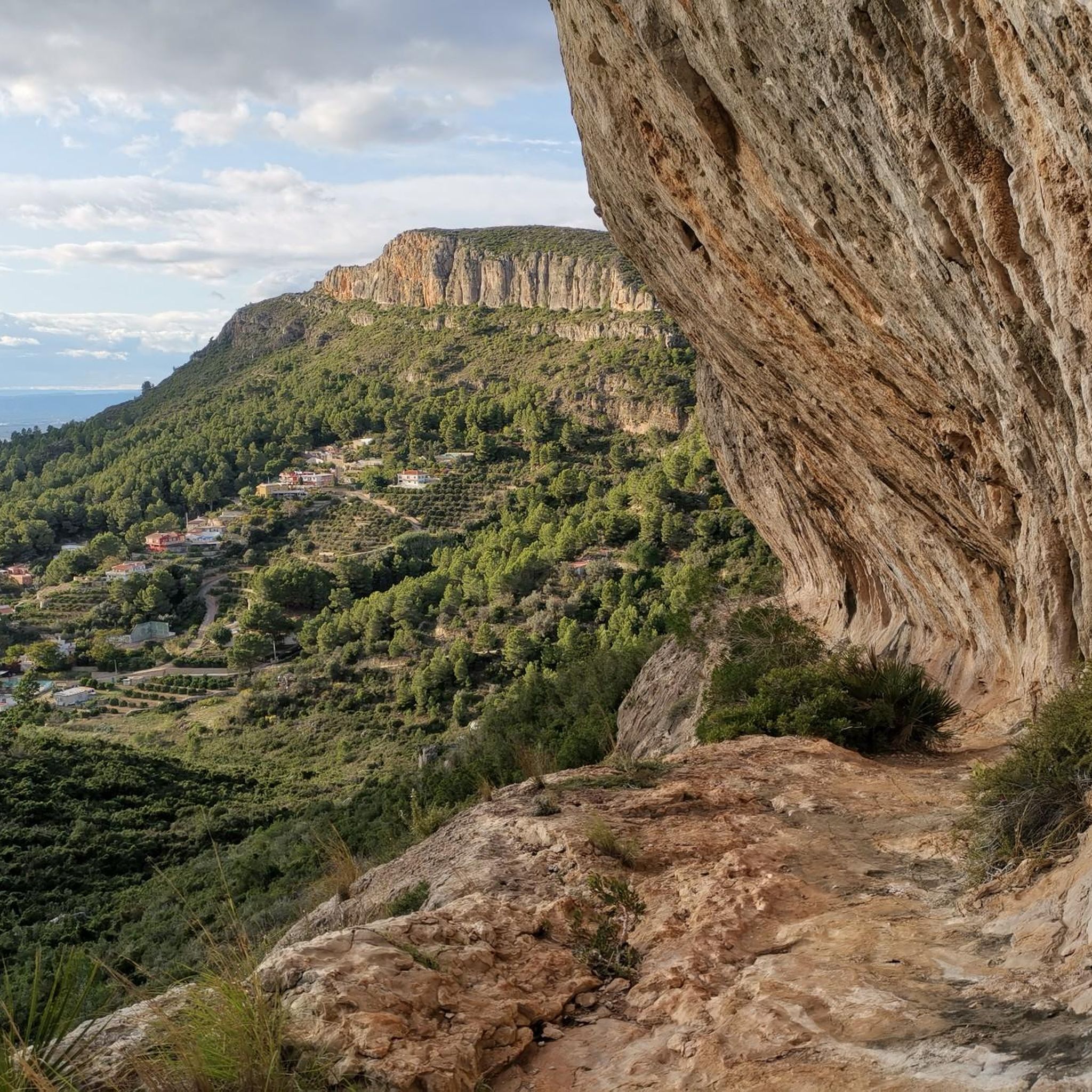
The wonderful setting surrounds a fairytale monastery.
1
0

Overview along the coast to Denia
1
0
The Royal Monastery of Santa Maria de Valldigna was founded by James II the Just on March 15, 1298, who gave the Alfàndec valley to Abbot Bononat of Vila-seca to found a monastery of the Cistercian order, a branch of the Santes Creus monastery. It was the first monastery of such importance built in the ancient Kingdom of Valencia, after the Christian conquest. Days after the royal donation, James II, brother Bononat and his entourage met at the place of Ràfol (a Christian village in the valley founded after the conquest of James I) to take possession of the territory, plus one mile inland, the castles of Marinyén, Alcalà and the tower of Mondúber.
1
0

"This is the exact point where the bike wants to fly... but the view forces you to brake. Serra de les Agulles in the background and Santa Maria de la Valldigna below. A rewarding descent!" Then, refocus as the road twists and turns just beyond with a double bend that demands your attention and puts your brakes to the test.
1
0
The "Col de Rates de la Safor" The Barx Pass, from Simat, is a gem for any cycling enthusiast. A climb that perfectly combines effort with the beauty of the surroundings. Each curve offers a new perspective of the Valldigna Valley, while the monastery remains behind as a silent witness to the ascent. Frequently used by local cyclists, it's an ideal stretch to enjoy at a leisurely pace, feeling each pedal stroke amidst nature and heritage. With several well-defined hairpin bends and a steady but manageable gradient, it's perfect for enjoying the effort without suffering too much. Pass details: 6.3 km | 301 m elevation gain | average gradient of 4.8% | ramps of up to 9.8%.
1
0
Frequently Asked Questions
How many road cycling routes are available around Corbera?
The komoot community has mapped over 160 road cycling routes around Corbera, catering to various skill levels. You'll find a wide selection, from shorter, easier rides to more challenging, longer tours.
What kind of terrain and elevation can I expect on road cycling routes in Corbera?
Corbera and its surroundings offer diverse landscapes with varying elevation gains. You can find routes with minimal inclines, particularly in areas like the Parc Natural de L'Albufera, as well as challenging ascents. For instance, routes like the 'Creu-Matorell-Montserrat-Piera-Creu' mentioned in regional research can feature over 1,300 meters of elevation gain, while others like Ateneo Sueco del Socorro – Palmar Road loop from Sueca have less than 40 meters of ascent.
Are there any easy road cycling routes suitable for beginners or families in Corbera?
Yes, Corbera offers routes with minimal inclines, particularly in the broader region. While specific family-friendly paved paths are not detailed, the area has 45 routes classified as easy. For a relaxed experience, consider exploring areas like the Parc Natural de L'Albufera, known for its smooth asphalt and flat terrain, ideal for less strenuous rides.
What are some of the more challenging road cycling routes around Corbera?
For experienced cyclists seeking a challenge, the region offers routes with significant elevation. Beyond the local options, the iconic Rocacorba climb near Girona, though further afield, is renowned for its demanding 10-kilometer ascent with average gradients of 7-8.4% and sections reaching 13-14%. Within the Corbera area, you can find 18 routes classified as difficult, providing ample challenge.
What natural features or landmarks can I see along road cycling routes in Corbera?
Road cycling around Corbera allows you to explore a rich natural environment. You can encounter several beautiful lakes, such as Lake Park and Ullal de Baldoví. The area also features natural monuments like L'Ouet and Creu del Cardenal, offering scenic viewpoints and interesting geological formations.
Are there any scenic viewpoints along the road cycling routes?
Absolutely. Many routes in the Corbera region offer rewarding views. For instance, the Cullera Lighthouse – La Visteta Viewpoint loop from Sueca includes a significant climb towards a viewpoint, providing coastal vistas. The broader Valldigna Valley is also known for its spectacular views, particularly from spots overlooking the Monastery of Santa Maria de la Valldigna.
What do other road cyclists enjoy most about cycling in Corbera?
The road cycling routes around Corbera are highly rated by the komoot community, with an average score of 4.7 stars from over 220 reviews. Cyclists often praise the diverse landscapes, the mix of challenging ascents and moderate paths, and the opportunity to explore both rural areas and natural features. Over 8,700 road cyclists have used komoot to discover the varied terrain here.
Are there any circular road cycling routes available?
Yes, many of the road cycling routes around Corbera are designed as loops, allowing you to start and finish at the same point. Examples include the popular Cullera Lighthouse – Barraca Roundabout loop from Sueca and the Ateneo Sueco del Socorro loop from Sueca, both offering convenient circular journeys.
What is the best time of year for road cycling in Corbera?
The region generally offers favorable conditions for road cycling for much of the year. Spring and autumn typically provide pleasant temperatures and less extreme weather, making them ideal. Summers can be hot, especially at midday, while winters are generally mild but can have cooler temperatures and occasional rain. It's always advisable to check local weather forecasts before heading out.
Are there options for longer road cycling tours from Corbera?
Yes, for those looking for longer rides, the region offers extensive routes. For example, the 'Creu-Matorell-Montserrat-Piera-Creu' route, mentioned in regional research, spans over 90 km with significant elevation. Within the komoot routes, the Xàtiva Cathedral – Ateneo Sueco del Socorro loop from Sueca is nearly 95 km long, providing a substantial day out on the bike.
Can I find GPX files for road cycling routes in Corbera?
Yes, komoot provides GPX files for all its routes, including those around Corbera. Once you've selected a route, you can easily download the GPX file to navigate using your preferred device. This allows for precise navigation and helps you stay on track throughout your ride.
What are the road conditions like for cycling in Corbera?
The area around Corbera features a mix of paved and unpaved surfaces, catering to different cycling preferences. While many road cycling routes utilize smooth asphalt, some sections, particularly on more challenging climbs or less frequented paths, might have rougher surfaces. It's good to be prepared for varied road quality, especially if venturing onto less maintained roads.
Most popular attractions around Corbera

Get inspired with the komoot mobile app


Explore more
Browse the best Road cycling routes in other regions.
