Top 3 Lakes around Viandar De La Vera
Best lakes around Viandar De La Vera are predominantly natural swimming pools and gorges, locally known as "charcos" and "gargantas," rather than conventional large lakes. This region, located in the province of Cáceres, Extremadura, is characterized by its river-formed natural bathing spots, offering clear waters within picturesque settings. These natural features are often found amidst scenic landscapes, providing opportunities for outdoor activities. The area's geography includes river gorges, waterfalls, and pools, particularly in the Sierra de Gredos and Sierra de…
Last updated: June 29, 2026
Charco del Trabuquete
Highlight • Waterfall
Translated by Google •
Tip by

Laguna de la Nava
Highlight • Lake
Translated by Google •
Tip by
Sign up now to discover places like this
Get recommendations on the best single tracks, peaks, & plenty of other exciting outdoor places.
Sign up for free
Laguna de los Caballeros
Highlight • Lake
Translated by Google •
Tip by

Cirque of Laguna del Barco
Highlight • Lake
Translated by Google •
Tip by

Circo de la Nava
Highlight • Gorge
Translated by Google •
Tip by
Sign up for free to discover even more lakes around Viandar De La Vera.
Sign up for free
Already have an account?
Start today with a free account
Your next adventure awaits.
Login or Signup

Tips from the Community

the water is super cold even in summer!!!
0
0

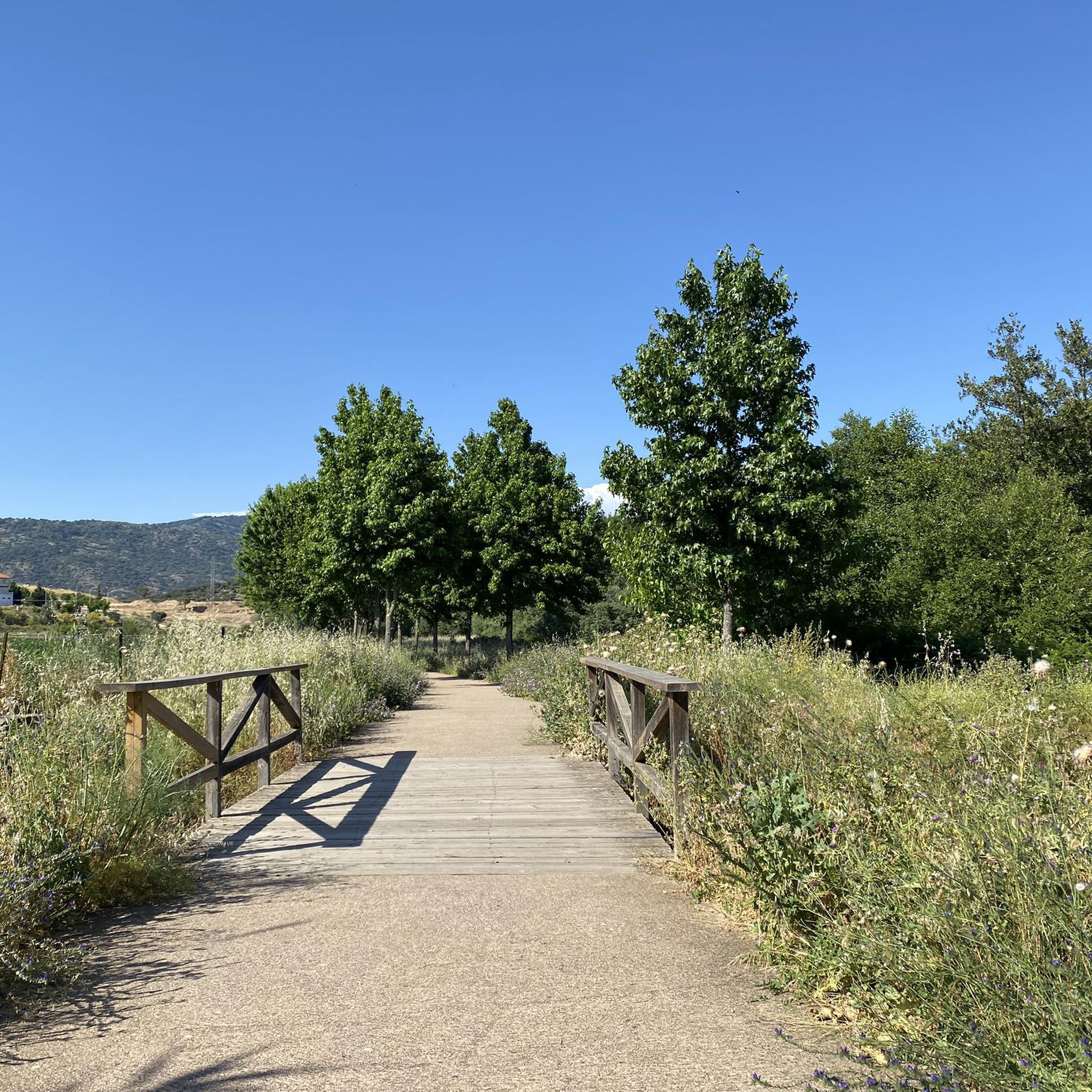
Located in the charming and quiet town of Guijo de Santa Bárbara, Charco del Trabuquete is a simple, although somewhat demanding, route that runs through the Jaranda Gorge. A route dotted with cliffs and cliffs through which streams and river gorges with crystal-clear waters flow. It is undoubtedly a natural environment of great beauty nestled between the Sierra de Gredos and the Sierra de Tormantos.
0
0

This lagoon is curious with respect to the rest since normally, glacial cirques tend to take a direction perpendicular to the ridge of the mountain, that is to say they descend in a north or south direction. This one, however, does it in an east direction, with the Covacha del Losar as the highest part!
0
1

Following the well-known Route of the Trabuquete you will find this wonderful pool with a natural waterfall on the river Garganta de Jaranda. Undoubtedly the highlight of the route, not only for its turquoise waters but also for the beautiful landscape that surrounds it.
1
1

The descent to the Barco lagoon follows a rough and delicate terrain through the Cuadrada lagoon to the shore of the great mountain lake where the Galín Gómez gorge begins. On the wall of the lagoon there is a mountain refuge and the short-distance path PR-AV 36 begins, which descends to the right of the glacial basin. The layout of the path improves immediately, especially when it reaches the terrain of the mountain pastures. At the Chozo de Anselmo de Las Escaleruelas you have to leave the short-distance trail, which follows the main lane to the left, and continue straight down towards the valley basin along a hillside complicated by vegetation. The path first passes over two ditches and a couple of bridges and then crosses the main stream of the valley, descending from the high peaks along the right bank of the gorge. The layout is imprecise at first and sometimes they get lost in the grassy fields.
0
0
The hidden Laguna de la Nava is hard to come by. The trail goes up a cobbled path and finally the artificial wall appears, built to increase the capacity of the original bucket excavated by the old glaciers that modeled the Corral del Diablo, the energetic and dark amphitheater that surrounds the rounded lagoon. The PR-AV 39 trail ends at the water's edge. The trail route continues along the path that goes up the eastern slope of the glacial cirque, the best place to continue running up the mountain. The path passes through some ruins and climbs towards the valley of the Ronchito stream.
0
0

The Laguna de los Caballeros is a lagoon of glacial origin located in the upper part of the gorge of the same name, in the western sector of the Sierra de Gredos, in the municipality of Navalonguilla, (Ávila, Castilla y León, Spain). The lagoon is located at an altitude of about 2,000 meters above sea level in an extensive glacial valley (one of the three located on the north face of La Covacha).1 La Covacha, with a height of 2,399 meters above sea level, constitutes the highest point in the western sector. of the Sierra de Gredos.2n. 1 Unlike the rest of the lagoons in the region, the Caballeros lagoon has not been artificially dammed.
1
0
The Laguna de la Nava, also known as the Nava del Barco lagoon, is a lagoon of glacial origin located in the upper part of the gorge of the same name, in the western sector of the Sierra de Gredos; It is located in the municipality of Nava del Barco, in the province of Ávila (Castilla y León, Spain). The lagoon is located at an altitude of about 1,950 meters above sea level at the bottom of a glacial cirque known as the Corral del Diablo.1 Presiding over this glacial cirque is the Alto del Corral del Diablo, with 2,366 meters above sea level.
1
0
Frequently Asked Questions
What kind of 'lakes' can I expect to find around Viandar De La Vera?
The region around Viandar De La Vera is primarily known for its stunning natural swimming pools and gorges, often called 'charcos' or 'gargantas,' rather than large, conventional lakes. These are formed by rivers and offer refreshing, picturesque spots for swimming. You will also find some high-altitude glacial lakes in the Sierra de Gredos.
What are some of the most beautiful natural swimming spots in the region?
Among the most beautiful natural swimming spots are Charco del Trabuquete, known for its turquoise waters and natural waterfall on the Garganta de Jaranda river. The Los Molinos natural pool, formed by the Gorge of the River Moro, is also a significant attraction within Viandar de la Vera. Other popular gorges with multiple bathing areas include Garganta de Cuartos and Garganta de Alardos.
Are there any high-altitude or glacial lakes to explore near Viandar De La Vera?
Yes, in the Sierra de Gredos, you can explore several high-altitude glacial lakes. Notable examples include Laguna de los Caballeros, located in a beautiful glacial cirque at 2,000 meters, and Laguna de la Nava, situated at over 1,900 meters above sea level. The Cirque of Laguna del Barco also features a great mountain lake.
What unique natural features characterize the gorges around Viandar De La Vera?
The gorges in the La Vera region are characterized by impressive granite canyons, numerous waterfalls, and crystal-clear natural pools. Some, like Garganta de Cuartos, also feature historical elements such as a Roman bridge, adding to their unique charm and scenic beauty.
What do visitors enjoy most about the natural pools and gorges in Viandar De La Vera?
Visitors highly value the pristine waters, scenic beauty, and the opportunity for wild swimming and outdoor activities. Spots like Charco del Trabuquete are particularly appreciated for their beautiful landscapes and the fact that a short walk helps keep them less crowded than other areas.
Are there hiking trails that lead to these natural pools or lakes?
Absolutely. Many natural pools and lakes are accessible via hiking trails. For instance, the well-known Ruta del Trabuquete leads to Charco del Trabuquete. The PR-AV 40 short-distance trail runs parallel to the riverbed, leading to Laguna de los Caballeros. The path to Laguna de la Nava ascends the Nava Gorge, offering an alpine landscape.
What are some popular outdoor activities near the lakes and gorges?
The region offers a variety of outdoor activities. Besides swimming in the natural pools, hiking is very popular, with trails leading to many of the water features. You can find numerous hiking routes around Viandar De La Vera. There are also options for running trails and road cycling routes in the wider area.
Are there options for more challenging hikes to reach some of the lakes?
Yes, some of the glacial lakes in the Sierra de Gredos require more demanding hikes. For example, reaching Laguna de los Caballeros and Laguna de la Nava involves ascents through alpine landscapes. The descent to the Cirque of Laguna del Barco also follows rough and delicate terrain, making these suitable for experienced hikers.
Are there family-friendly natural pools or areas suitable for children?
Many of the natural pools, especially those with easier access and amenities, can be family-friendly. Garganta de Cuartos, for example, is known for its many crystalline natural pools and offers amenities like campsites, beach bars, and restaurants nearby, making it a good option for families.
Are there any natural pools that are less crowded?
Yes, some natural pools require a bit of a walk, which helps keep them less crowded. Charco del Trabuquete is a good example; its location, requiring a walk of about 3 km, means it's often less busy than more easily accessible spots, allowing for a more tranquil experience.
Can I find amenities like restaurants or campsites near these natural water features?
While many natural pools are in pristine, undeveloped areas, some popular gorges do offer amenities. Garganta de Cuartos, for instance, is known for having campsites, beach bars, and restaurants nearby, providing convenience for visitors.
What is the best way to experience the natural beauty of the gorges?
The best way to experience the gorges is by combining hiking with swimming. Many trails follow the riverbeds, allowing you to discover multiple pools and waterfalls. The Circo de la Nava, for example, offers a trail that goes up a cobbled path to a hidden lagoon, providing an immersive experience of the energetic amphitheater that surrounds it.
Most popular attractions around Viandar De La Vera

Get inspired with the komoot mobile app


Explore more
Still not found your perfect lake around Viandar De La Vera? Check out the guides of these regions to see even more beautiful places.
