The best walks and hikes around Navès
4.6
(251)
2,626
hikers
19
hikes
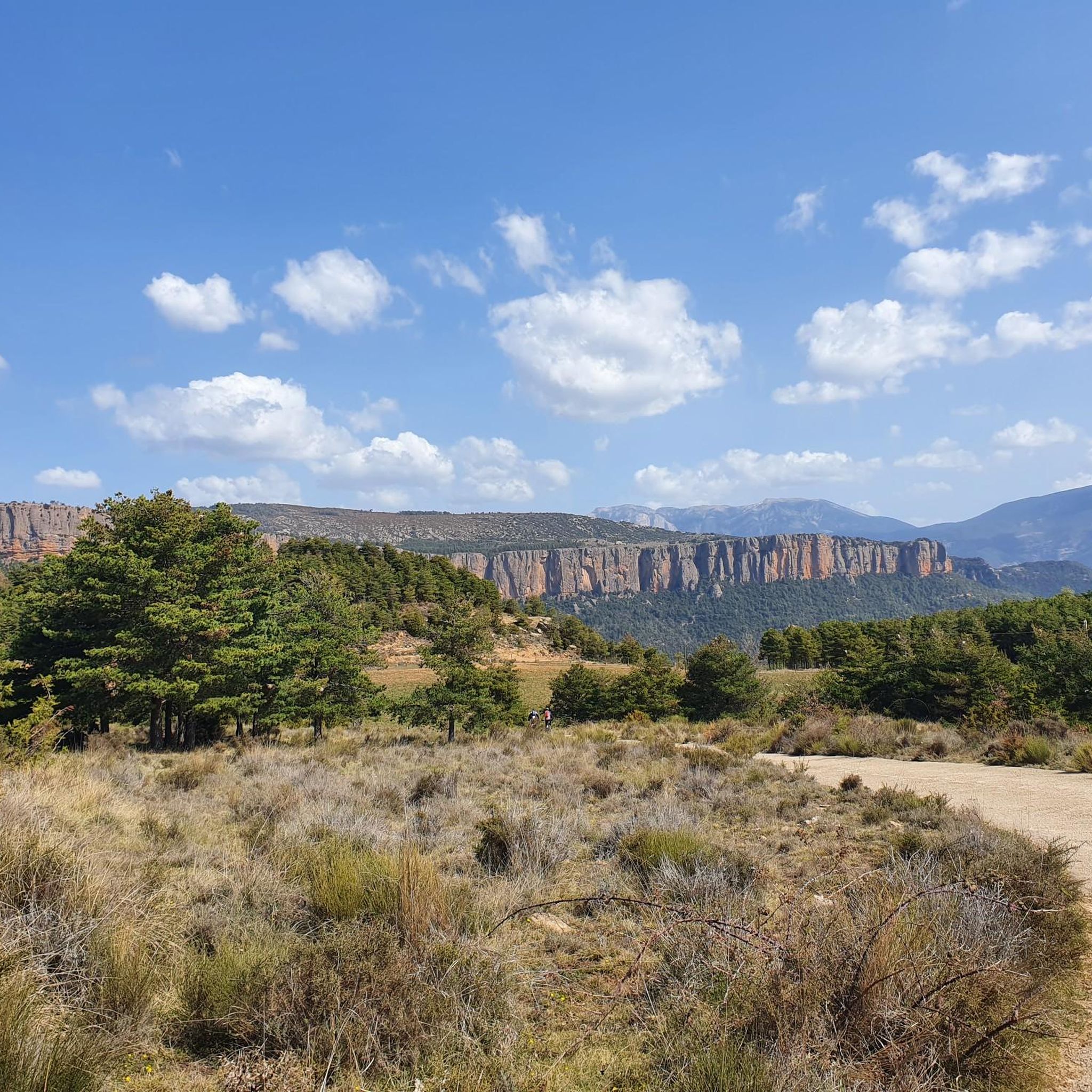
Hiking around Navès, located in the Solsonès region of Lleida, Spain, offers access to diverse landscapes. The area is characterized by its proximity to the Pyrenean mountains and the Llobregat River, providing varied terrain for outdoor activities. Trails often lead through natural areas, including parts of the Cadí-Moixeró Natural Park, featuring a mix of woodlands, valleys, and elevated viewpoints. The region's topography supports a range of hiking experiences, from gentle paths to more challenging ascents.
Best hiking trails around Navès
…Last updated: June 23, 2026
4.6
(7)
63
hikers
12.7km
04:11
580m
580m
Moderate hike. Good fitness required. Mostly accessible paths. Sure-footedness required.
4.7
(6)
38
hikers
Moderate hike. Good fitness required. Easily-accessible paths. Suitable for all skill levels.

Sign up for free
4.8
(5)
62
hikers
4.20km
01:45
270m
270m
Moderate hike. Great for any fitness level. Mostly accessible paths. Sure-footedness required.
70
hikers
9.00km
02:55
290m
290m
Moderate hike. Good fitness required. Mostly accessible paths. Sure-footedness required.
57
hikers
6.31km
01:51
150m
150m
Easy hike. Great for any fitness level. Easily-accessible paths. Suitable for all skill levels.
Get access to more routes and recommendations from other explorers.
Sign up for free
Already have an account?
Our route recommendations are based on thousands of hikes, rides, and runs completed by other people on komoot.
Start today with a free account
Your next adventure awaits.
Login or Signup

Other adventures around Navès

Tips from the Community


At the highest point of Mola de Lord we find the classic key of the I.C.G.C. and a railing that protects against the temptation to reach the car park by the fastest route, because it is right at the foot of the cliff. On March 1, 2014, a cross was placed at the head of the Mola mound, as a sign of a place consecrated to the Lord and to devotion to his Saint. Mother, the Virgin Mary. The blessing was done in the company of a good group of friends from the Sanctuary.
0
0
On November 19, 2017, the Chapel of St. Jaume, destroyed by time decades ago. The two accesses to climb the mountain are, the path of St. Peter and that of St. James, both crowned, upon reaching the top, with the Chapels dedicated to these Saints. The ruined Chapel of St. Jaume has been able to recover it due to the generosity of the Puig de la Bella Casa Family.
1
0
The Verger viewpoint was appropriated by the Ja Arribarem-Club Excursionista Group on its 25th anniversary (2017) and dedicated it to Josep Cases, one of its members who died of illness a few months ago. It is a good vantage point with a panorama that covers from Cap de Verd to the Serres de Busa - Bastets and at its feet the swamp of Llosa de Cavall.
0
0
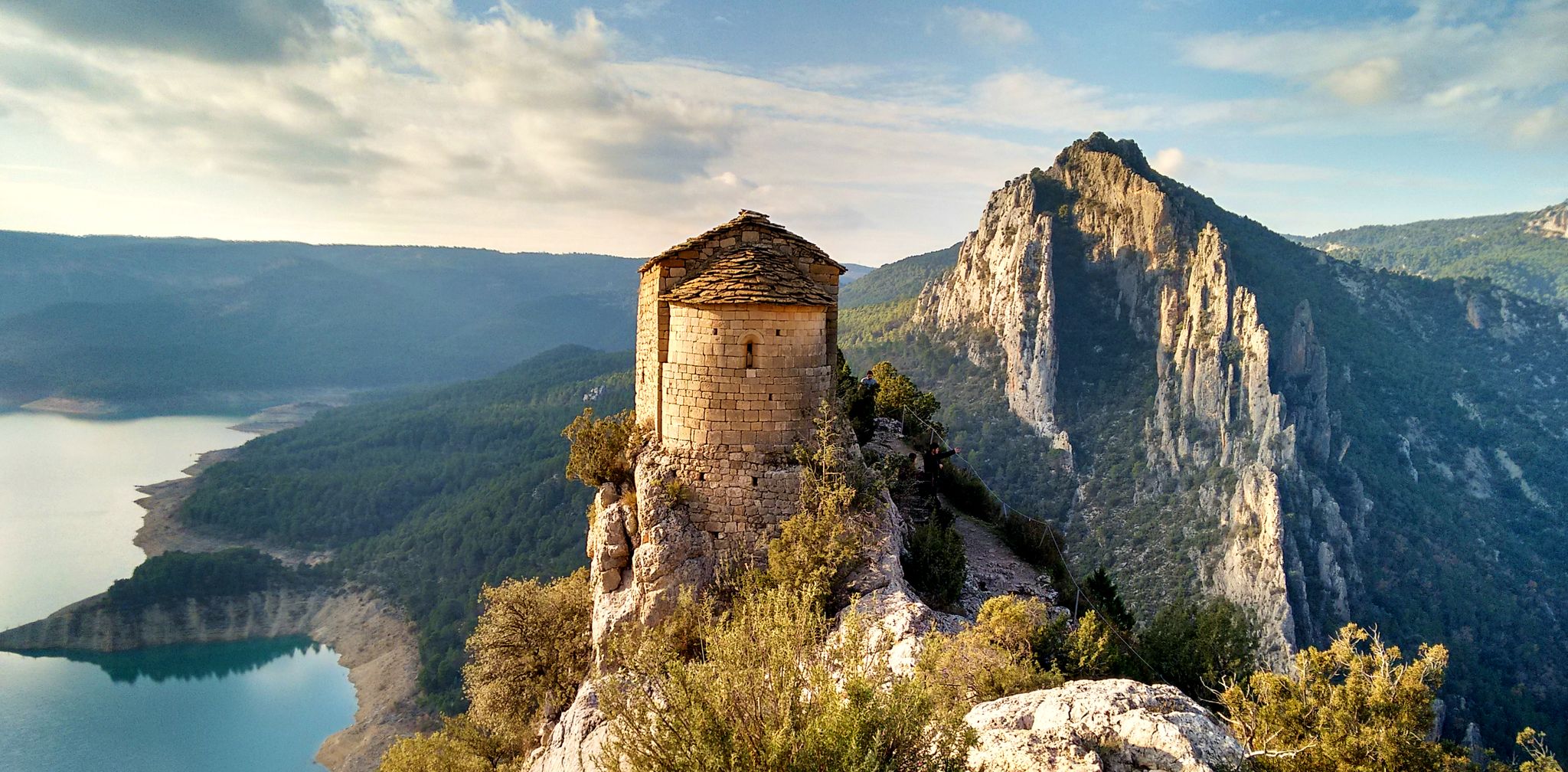
Documented since the end of the 10th century as an ancient hermitage center, in the 11th century it became dependent on the monastery of Sant Llorenç de Morunys. A church was built there in the fifteenth century, and between 1582 and 1634 a community of Dominican friars was established there. The increase in his patrimonial assets led to the construction of a new temple between 1774 and 1785, which came to serve, in 1812, as a depot for French prisoners and was devastated in 1836 during the Carline War; a cannon from that time is preserved there, located at the entrance to the sanctuary. The current building was built on the initiative of the industrialist Esteve Monegal between 1867 and 1870, and was inaugurated on August 19 of this year. In 1896 a great fire, perhaps caused by lightning, completely destroyed the high altar and the paintings representing the legend. The image of the Virgin Mary was rescued and the temple was repaired. In 1901, a new high altar was inaugurated, this time financed by José Monegal. In 1929, the two Masriera canvases were installed there, replacing the previous two, burned in the 1896 fire. After the family that lived in the Sanctuary left at the end of the sixties of the 20th century, in 1971 Father Jordana, coming from the Monastery of Poblet, who had been Prior-President of Poblet and of the Spanish Cistercian Order, arrived in La Mola to reside there and lead a retired life. In 1975, a new reconstruction of the Sanctuary began and in the following years, electric light and running water were added. In 2008, the Hostatgeria del Santuari was inaugurated there, a "eucharistic, biblical place, a place to transmit the peace of God
1
0

Magnificent views of the Valle de Ora and the Llosa del Cavall marsh from the Sierra de Busa
0
0

The jail or prison of Busa is located in El Capolatell, a plain surrounded by cliffs located in the municipality of Navès, in the Sierra de Busa. Being separated from the plane by a deep crack, it remains like a natural island, surrounded by cliffs. It was used as a prison during the French War of Independence. A place with a lot of history.
0
0
Sanctuary of the population of San Lorenzo de Morunys. Very well maintained and with magnificent views.
1
0
Frequently Asked Questions
How many hiking trails are available around Navès?
There are over 20 hiking trails in the Navès area, catering to various skill levels. You'll find a mix of easy, moderate, and difficult routes to explore the diverse landscapes.
What are the difficulty levels of hiking trails in Navès?
Navès offers a range of hiking difficulties. You can find 4 easy trails perfect for beginners or casual strolls, 11 moderate trails for those seeking a bit more challenge, and 5 difficult routes for experienced hikers looking for a demanding adventure.
Are there any family-friendly hiking options in Navès?
Yes, Navès has trails suitable for families. For an easier option, consider The Capolatell (Busa Prison) – Capolat Viewpoint loop from Pla de Busa, which is an easy 6.6 km route. The region's diverse terrain means you can find paths that are less strenuous and enjoyable for all ages.
Can I find circular hiking routes in Navès?
Absolutely. Many trails in Navès are designed as loops, allowing you to start and end at the same point. A popular moderate loop is The Capolatell (Busa Prison) – Capolat Viewpoint loop from les Cases de Posada, offering panoramic views and historical points of interest.
What kind of natural features can I expect to see while hiking in Navès?
Navès is characterized by its stunning natural beauty, nestled near the Pyrenean mountains and the Llobregat River. You'll encounter diverse landscapes, including woodlands, valleys, and elevated viewpoints. The area is also close to the Cadí-Moixeró Natural Park, known for its rich biodiversity and breathtaking vistas.
Are there any historical landmarks or points of interest along the trails?
Yes, Navès is rich in historical heritage. You can explore sites like The Capolatell (Busa Prison), an intriguing natural monument. Additionally, routes like the Chapel of Saint James – Sanctuary of Lord loop from Solord will lead you past historical churches and other cultural landmarks.
What do other hikers enjoy the most about hiking in Navès?
The komoot community highly rates the hiking experience in Navès, with an average score of 4.7 stars from over 200 reviews. Hikers often praise the varied terrain, the stunning Pyrenean mountain backdrop, and the well-maintained paths that lead through natural areas and past historical sites.
What is the best time of year to go hiking in Navès?
The region's climate makes it suitable for hiking for much of the year. Spring and autumn generally offer pleasant temperatures and vibrant scenery, while summer provides warmer conditions. In winter, the proximity to the Pyrenees means some areas might be suitable for winter sports, but lower elevation trails can still be accessible.
Are there any viewpoints with panoramic vistas in Navès?
Yes, many trails in Navès offer spectacular panoramic views. For example, The Capolatell (Busa Prison) – Capolat Viewpoint loop from les Cases de Posada is specifically known for its expansive views from Capolat Viewpoint. You can also find the Serrat or the Figuerassa Viewpoint, which provides excellent photo opportunities.
What is the longest hiking trail available in Navès?
One of the longer routes is Les Cases de Posada to Busa via Grau de l'Areny Trail, which spans 12.7 kilometers (7.9 miles). This moderate trail typically takes around 4 hours and 10 minutes to complete, offering varied terrain and scenic views.
Are there opportunities to see wildlife while hiking in Navès?
The Navès area, particularly its proximity to the Cadí-Moixeró Natural Park, is known for its rich biodiversity. While specific sightings can vary, hikers often have the chance to observe local flora and fauna, especially in the quieter, more natural sections of the trails.
Most popular attractions around Navès

Get inspired with the komoot mobile app


Explore more
Browse the best Hikes in other regions.
