Attractions and Places To See around Polaciones - Top 20
Best attractions and places to see around Polaciones include a diverse landscape of rugged mountains, lush forests, and significant cultural sites. As one of the highest municipalities in Cantabria, its terrain features peaks exceeding 2,000 meters and forms part of the Saja National Reserve. The region provides opportunities to explore natural features, historical landmarks, and traditional villages.
Best attractions and places to see around Polaciones
- The most popular attractions is Piedrasluengas Viewpoint, a viewpoint located over 1,300 meters above…
Last updated: October 10, 2026
Tres Mares Peak
Highlight • Summit
Translated by Google •
Tip by

Piedrasluengas Viewpoint
Highlight • Viewpoint
Translated by Google •
Tip by

Sign up now to discover places like this
Get recommendations on the best single tracks, peaks, & plenty of other exciting outdoor places.
Peña Labra
Highlight • Summit
Translated by Google •
Tip by
Palombera Pass
Highlight • Mountain Pass
Translated by Google •
Tip by

Pisuerga River Source (Cueva del Cobre)
Highlight • Cave
Translated by Google •
Tip by

Sign up for free to discover even more attractions around Polaciones.
Already have an account?
Start today with a free account
Your next adventure awaits.
Other adventures around Polaciones

Tips from the Community

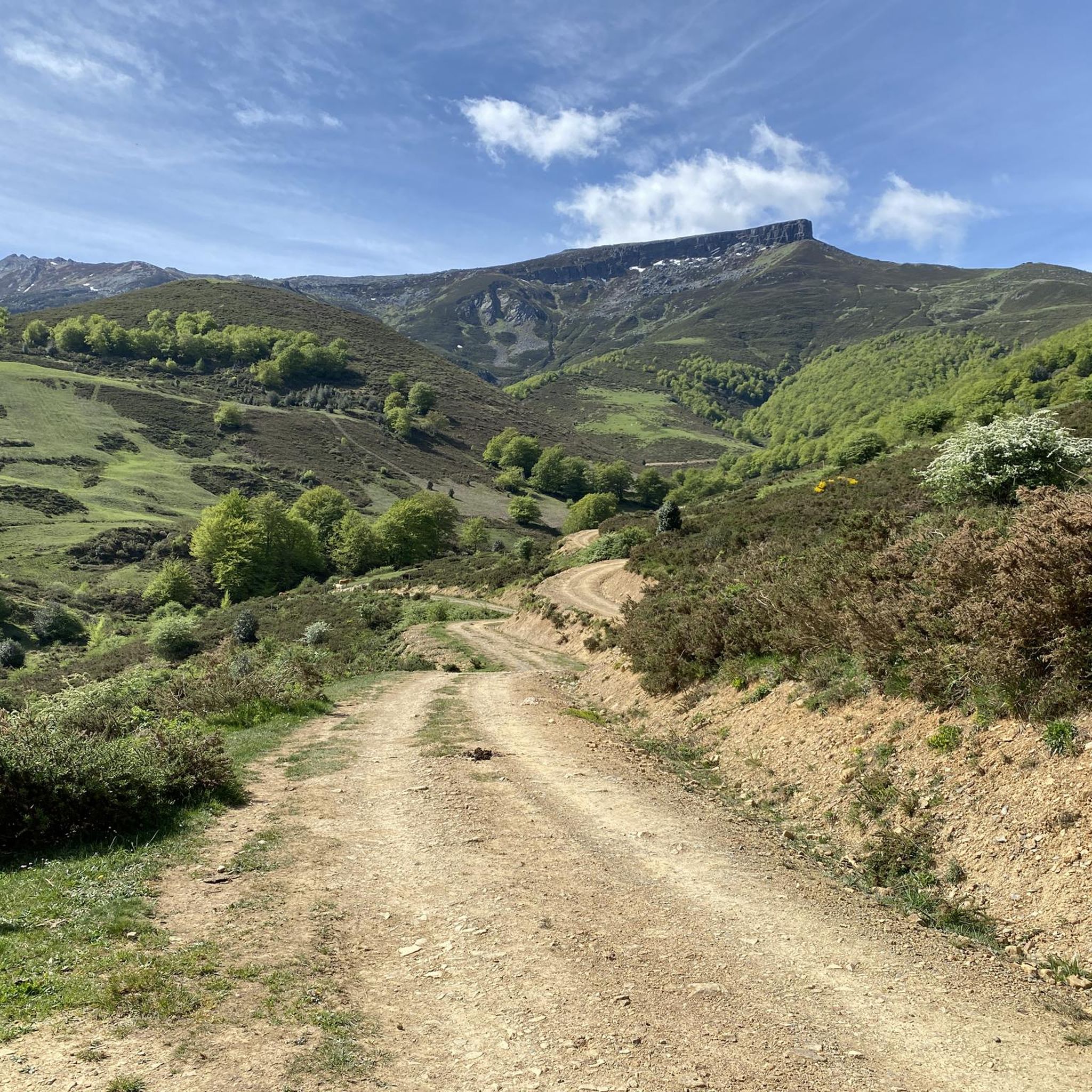
The Pico Tres Mares offers a great view of the surrounding peaks and valleys. The three valleys, each separated by mountain ridges, drain via their respective river systems into the Mediterranean Sea (Rio Hijar / Ebro), the Cantabrian Sea (Rio Nansa), and the Atlantic Ocean (Rio Pisuerga), from which the summit gets its name. From up here, you can also clearly see the beginning of the path to Peña Labra, which essentially runs along or near the ridge to the west - and with reasonably good visibility, the Picos de Europa are clearly visible to the northwest, standing out distinctly from the surrounding mountains of the Cordillera Cantabrica, even if some are not that much lower. There is a viewing platform at the summit - not pretty, but it allows even visitors without mountain experience to look around safely.
0
0

Spectacular viewpoint, great reward after the long and pleasant climb!
0
0

Spectacular views of the eastern massif of Picos de Europa
0
0

The Pisuerga River rises in the province of Palencia, in the region of Castile and León, Spain. Its source is in the Covarrés glacial basin, between the Valdecebollas peak and the Sierra de Híjar, in a place known as Sel de la Fuente.
3
0

Beautiful road from Puetenansa up to there for road bikes, less traffic
1
0

Viewpoint located in the homonymous hill at more than 1300 meters. From there you can see the Picos de Europa, Peña Labra, the Tres Mares peak, the Cuchillón peak and much more.
2
0
The Pisuerga River is born in the Cueva del Cobre, a rocky cavity 8.5km long through which you can walk inside without any problem.
2
0

The Piedrasluengas viewpoint is a perfect place to reach by bike. Located in the heart of the Cantabrian Mountains, in the Fuentes Carrionas and Fuente Cobre-Montaña de Palencia Natural Park, it rises to over 1,300 meters above sea level. The views will leave you speechless. You'll see the Picos de Europa, Peña Labra, Tres Mares, Cuchillón, the Liébana Valley, and the Valdeprado Valley.
2
0
Frequently Asked Questions
What natural features can I explore in Polaciones?
Polaciones is rich in natural beauty. You can visit the impressive Piedrasluengas Viewpoint for breathtaking panoramas of the Picos de Europa and surrounding valleys. Other notable natural sites include the summit of Tres Mares Peak, the vast Saja National Reserve, and the Embalse de la Cohilla, an impressive reservoir with views of the Bejo gorge. The region also features beautiful beech and oak forests like those in Uznayo and Cueto Cucón.
Are there any significant historical or cultural sites to visit in Polaciones?
Yes, Polaciones offers several cultural and historical points of interest. You can explore the ancient Menhires de Sejos, a megalithic complex dating back to the Bronze Age. The village of Puente Pumar is home to stately homes like the Casa de la Coronela, which houses the Ecomuseo Saja-Nansa, an open-air museum showcasing local heritage. Additionally, traditional villages such as Tresabuela and Cotillos preserve unique local identity and folklore, and the region has several historic churches like the Iglesia de San Ignacio de Loyola in Tresabuela.
What kind of outdoor activities, like hiking, are available near Polaciones?
Polaciones is an excellent destination for outdoor enthusiasts. You can find numerous hiking trails, including routes to Peña Labra and Tres Mares Peak. For detailed hiking options, including routes like 'Peña Labra and Pico Tres Mares from the collado de Fuente del Chivo' or 'Tres Mares Peak – Tres Mares loop', you can explore the Hiking around Polaciones guide. The area also offers opportunities for cycling and road cycling, with routes like 'Piedrasluengas and Collado de Hoz Loop' available in the Cycling around Polaciones guide.
Where can I find the best panoramic views in the Polaciones region?
For stunning panoramic views, head to the Piedrasluengas Viewpoint, located over 1,300 meters above sea level, offering vistas of the Picos de Europa and various valleys. The summits of Tres Mares Peak (2,149 meters) and Peña Labra (2,029 meters) also provide expansive views of the Cantabrian interior and surrounding natural parks. The Palombera Pass is another beautiful spot with spectacular landscapes.
Are there attractions suitable for families with children in Polaciones?
Yes, several attractions in Polaciones are suitable for families. The Piedrasluengas Viewpoint is considered family-friendly and offers accessible, impressive scenery. Exploring the traditional villages like Puente Pumar and visiting the Ecomuseo Saja-Nansa can also be an engaging experience for families, offering insights into local culture and history in an accessible format.
What is the best time of year to visit Polaciones for outdoor activities and wildlife viewing?
The best time to visit Polaciones for outdoor activities like hiking and wildlife viewing is generally during the spring, summer, and early autumn months (May to October). During these periods, the weather is milder and more stable, making trails more accessible. Spring and early summer offer lush landscapes and opportunities to spot diverse flora and fauna in the Saja National Reserve, while autumn brings vibrant fall colors to the forests.
Can I find any unique natural hidden gems in Polaciones?
Beyond the well-known peaks and viewpoints, Polaciones holds some unique natural spots. The Fuente del Chivo, a magical spring near Polaciones at nearly 2,000 meters, is known for its crystal-clear, cold water, perfect for refreshing after a walk. While slightly outside Polaciones, the Pisuerga River Source (Cueva del Cobre) in the Covarrés glacial basin is another notable natural site in the broader region.
What kind of local cuisine or gastronomy should I try in Polaciones?
When visiting Polaciones, you should definitely try the local specialties that reflect the region's rich culinary traditions. Don't miss out on 'cocido montañés,' a hearty Cantabrian stew, and 'patatas con torreznos' (potatoes with bacon). For a truly unique local flavor, seek out the 'tortu purriego,' a distinctive dish from the area.
Are there any specific cultural traditions or folklore unique to Polaciones?
Polaciones is known for its strong Cantabrian folklore, which is deeply preserved in the region. A significant aspect of this culture is the 'rabel,' a traditional musical instrument with horsehair strings. You might encounter local music and traditions that highlight the unique identity of the twelve deeply rural and livestock-farming villages within Polaciones.
What do visitors enjoy most about the attractions around Polaciones?
Visitors particularly enjoy the stunning natural landscapes and the sense of tranquility in Polaciones. The panoramic views from spots like the Piedrasluengas Viewpoint and the challenge and reward of reaching summits like Tres Mares Peak are highly appreciated. The region's blend of natural beauty, historical sites, and preserved traditional villages offers a genuine immersion into a unique Cantabrian experience.
Are there any notable churches or religious sites in Polaciones?
Polaciones is home to several historic churches, each with its own architectural interest. These include the Iglesia de San Ignacio de Loyola in Tresabuela, reconstructed in the early 18th century, and the 17th-century Iglesia de San Mamés. The Iglesia de Santa Eulalia features a Gothic pointed arch entrance, and the Iglesia de Nuestra Señora de la Sierra contains an interesting 17th-century altarpiece. The Iglesia de San Sebastián in Lombraña also preserves Romanesque remains.
Most popular attractions around Polaciones

Get inspired with the komoot mobile app


Explore more
Still not found the Highlight you’re looking for? See guides of the top attractions in other regions:
