The best cycling routes around Azuaga
4.0
(4)
124
riders
35
rides
Touring cycling routes around Azuaga traverse the varied terrain of the Sierra Morena foothills, located in the southeast of the Province of Badajoz. The region features a landscape composed of dehesa, Mediterranean savannas with scattered trees, and dense forested areas. Routes often explore scenic natural features such as the Río Zújar, providing diverse backdrops for cycling.
Best touring cycling routes around Azuaga
- The most popular touring cycling route is Azuaga - Granja de Torrehermosa Loop Trail, a 25.0 miles…
Last updated: October 10, 2026
40.2km
03:00
270m
270m
Cycle a moderate 25-mile loop from Azuaga, exploring the scenic Río Zújar with its water lilies and the charming town of Granja de Torreherm
15
riders
45.8km
03:00
590m
590m
Hard bike ride. Very good fitness required. Mostly paved surfaces. Suitable for all skill levels.

7
riders
38.0km
03:07
260m
260m
Moderate bike ride. Good fitness required. Mostly paved surfaces. Suitable for all skill levels.
5
riders
46.0km
04:04
510m
510m
Hard bike ride. Very good fitness required. Mostly paved surfaces. Suitable for all skill levels.
5
riders
51.9km
04:27
280m
280m
Moderate bike ride. Good fitness required. Mostly paved surfaces. Suitable for all skill levels.
Get access to more routes and recommendations from other explorers.
Already have an account?
Our route recommendations are based on thousands of hikes, rides, and runs completed by other people on komoot.
Start today with a free account
Your next adventure awaits.

Other adventures around Azuaga

Tips from the Community

In the legal part this is one of the most beautiful panoramic views, with benches.
14
0

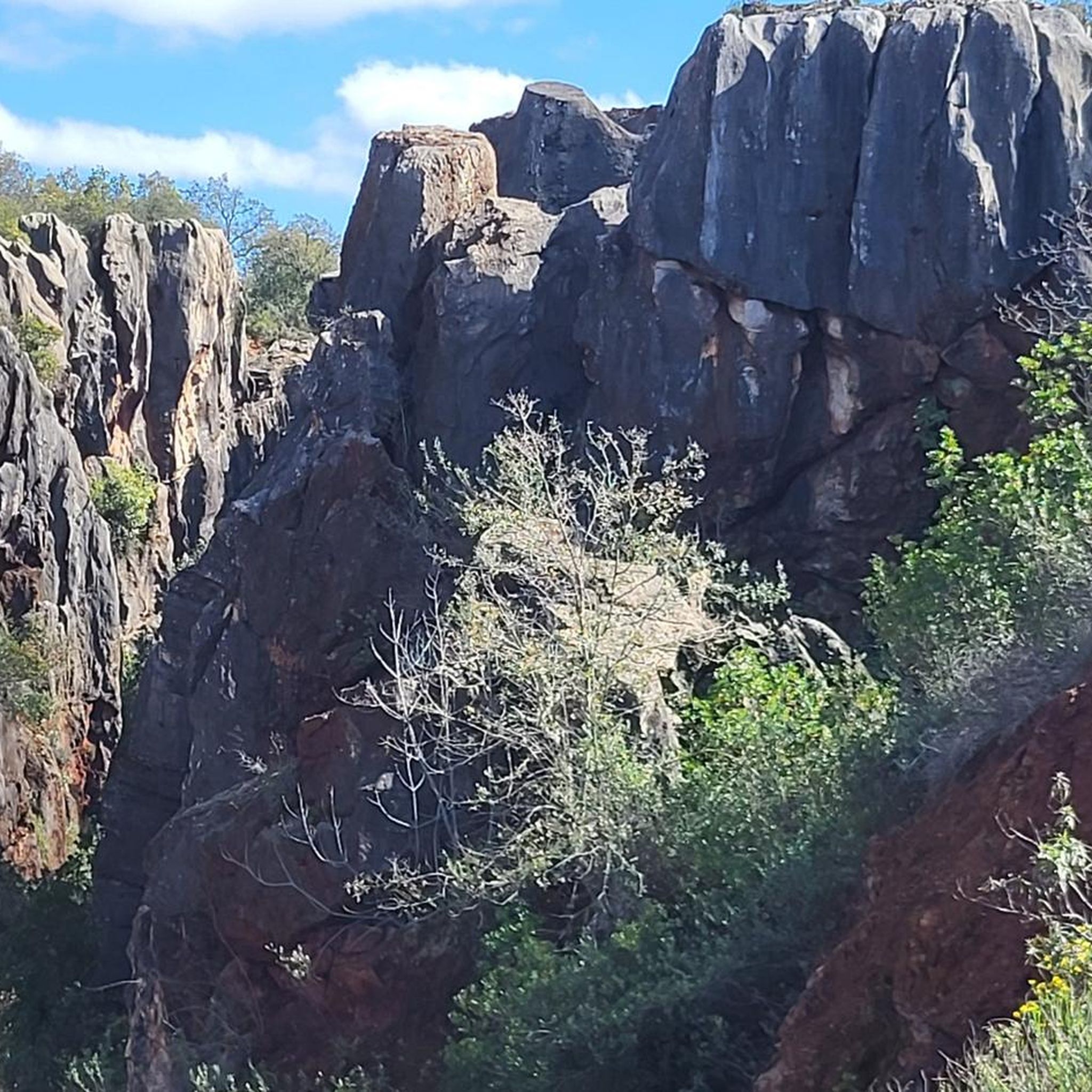
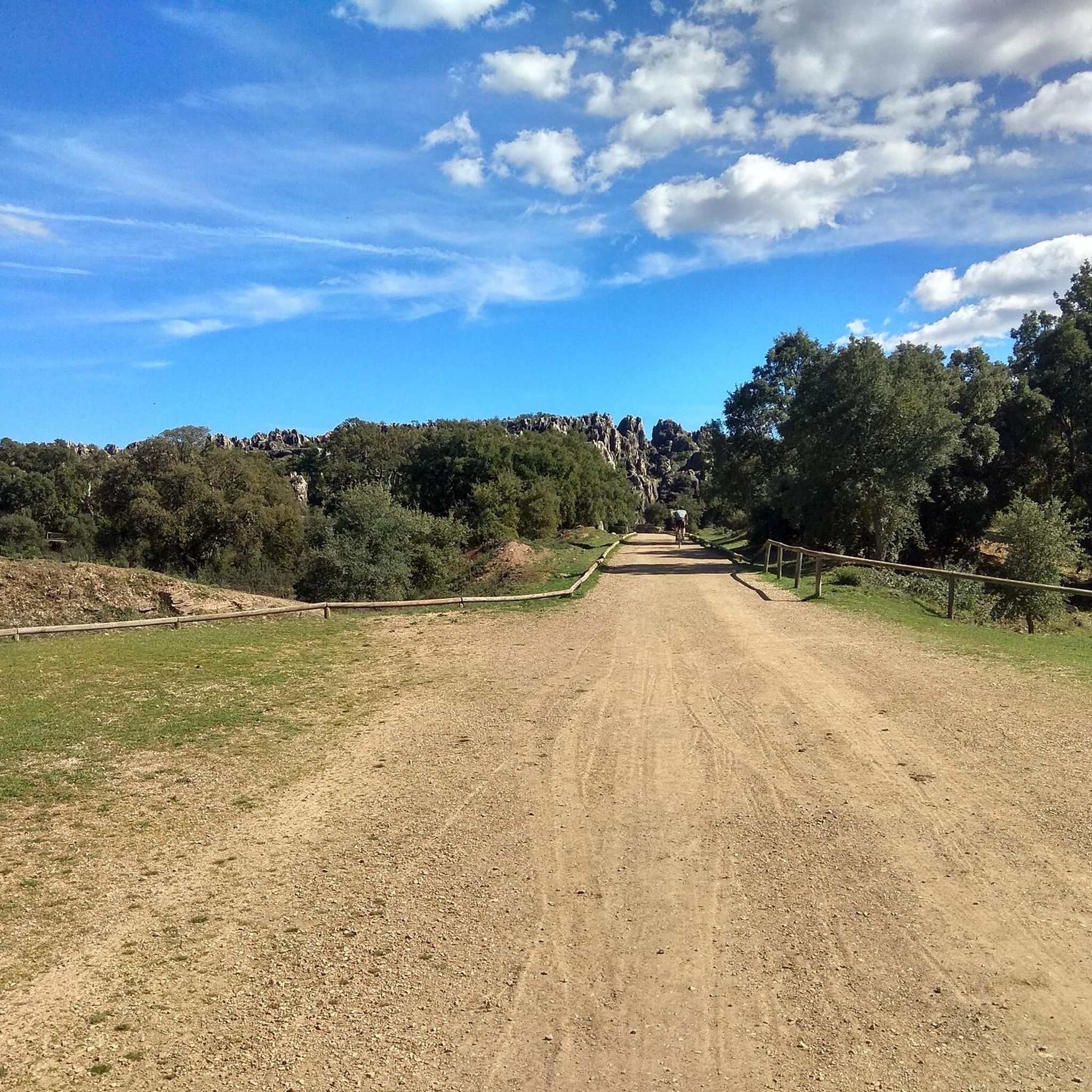
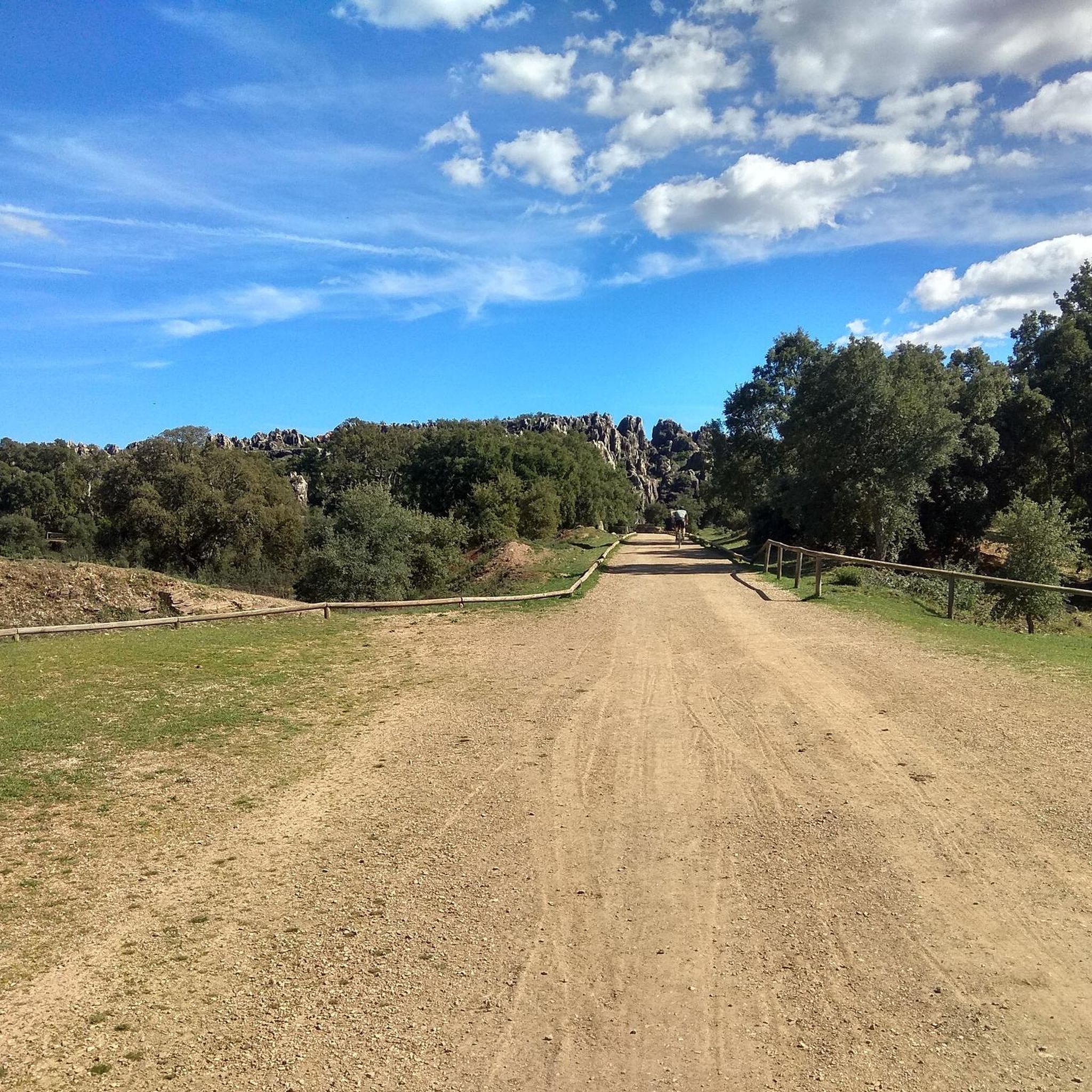
The Cerro del Hierro Natural Monument is located between the municipalities of Constantina and San Nicolás del Puerto, within the Sierra Norte de Sevilla Natural Park and very close to the Cascada del Huesna Natural Monument. It is home to a spectacular landscape where the interaction between nature and humans takes place, resulting in a paleokarst of great beauty and scientific and educational interest. The cave is also home to unique plant and animal species, nestled within a well-preserved cork oak forest dotted with other interesting trees such as the gall oak and the Pyrenean oak. Vegetation grows among the limestone rocks, as well as in the shady alleys and fountains. Various fern species can be found here, such as the common maidenhair fern, the white maidenhair fern, the small maidenhair fern, the golden fern, the hart's tongue fern, and the male fern, some of which are listed in the Red Book of Threatened Species in Andalusia. This ecosystem is ideal for the development of rock-dwelling species, i.e., plants adapted to life among rocks. There are numerous aromatic plants—thyme, lavender, and bitter chamomile—as well as shrubs—arbutus, bupleiro, mastic, and durillo—and climbing plants. In terms of fauna, the eagle owl and the black stork are critically endangered. Various birds, such as the blue rock thrush and the rock sparrow, can be observed year-round in the alleys and church towers. However, in spring, others join them, such as the wheatear, the red-rumped martin, and the bee-eater. In winter, the alpine accentor can be seen. The presence of iron in the rocks of this hill gave rise to mining, which this enclave maintained from Roman times until the last century. This work has given rise to a landscape of unique shapes and colors, dominated by towers, corridors, poljes and sinkholes, cavities, chasms, travertines, and karst. This unique beauty is due to the limestone cliffs, partially eroded by rain and snow, creating this spectacular karst that today attracts climbing enthusiasts. Some infrastructure elements still recall the mining past, such as the old railway line that connected the mine with the Los Prados-Cazalla station. Its development as the Sierra Norte Green Route allows you to explore it on foot or by bike. The route begins in the old mining village, where the workers lived, and at the Casa de los Ingleses, the residence of the mine's engineers and managers, who arrived from Scotland at the end of the 19th century. To discover the peculiarities of this natural monument, there is nothing better than a hike in autumn and spring along the Cerro del Hierro hiking trail, a route that explores the galleries and tunnels carved into the rock.
0
0
This idyllic town, located in the heart of the Sierra Morena Natural Park, offers the tranquility of the mountains, the pleasure of adventure tourism and the pleasure of its artificial beach. This is a natural pool created by the waters of the Galindón River as it flows through the city.
16
0

Baroque church of the eighteenth century. Opposite is a cozy square, where you can enjoy the terrace of a small bar.
2
0
16th century church worth visiting for its architecture and thousands of details. You have to be lucky to find the door open, but admiring it from the outside is also worth it, since it is the second largest church in the province, only surpassed by the Cathedral of Badajoz.
2
0
The Azuaga Castle, built on a hill that dominates the town, has Arab origins. Today not much remains of its walls, but the climb to the plateau is worth it to admire the views of the town from the heights.
0
0

Path that is located near the Zújar River and that offers precise landscapes of what are the Dehesas of Extremadura. The passage through the Zújar river is very beautiful in times when there is rain and everything is green!
0
0
Nice town to the east of the province of Badajoz, with still the Extremaduran character of its house and alleys. The casino, the town hall and also the impressive church made of maons, the Iglesia de la Purísima Concepción, stand out.
0
0
Frequently Asked Questions
What types of touring cycling routes are available around Azuaga?
Azuaga, nestled in the Sierra Morena foothills, offers a diverse range of touring cycling routes. You'll find paths traversing dehesa (Mediterranean savannas) and dense forested areas, with options ranging from moderate loops to more challenging routes featuring significant elevation changes. There are 17 touring cycling routes in total, with 11 moderate and 6 difficult options.
Are there any circular touring cycling routes in Azuaga?
Yes, many of the touring cycling routes around Azuaga are designed as loops, allowing you to start and finish in the same location. For example, the Bike loop from Azuaga is a moderate 31.4-mile (50.6 km) path that offers a comprehensive exploration of the region's varied landscapes. Another option is the Bike loop from Azuaga, an 18.8-mile (30.2 km) trail perfect for a shorter ride through local dehesa.
What is the best time of year for touring cycling in Azuaga?
While specific seasonal data isn't provided, Azuaga's location in southern Spain suggests that spring and autumn would offer the most pleasant cycling conditions, with milder temperatures. Summers can be very hot, and winters might bring cooler, wetter weather, though cycling is generally possible year-round.
Are there any family-friendly touring cycling routes in Azuaga?
While the guide primarily lists moderate and difficult routes, the region's dehesa and forested areas offer scenic backdrops that can be enjoyed by families. For a shorter, less strenuous option, consider the 18.8-mile (30.2 km) Bike loop from Azuaga, which leads through local natural beauty and has moderate elevation gain.
What kind of natural features or landmarks can I expect to see along the touring cycling routes?
Cycling routes often explore scenic natural features like the Río Zújar, known for its water lilies, and offer panoramic views from spots like 'El Punto Mira'. You can also pass through charming towns. For instance, the Azuaga - Granja de Torrehermosa Loop Trail connects to Granja de Torrehermosa, allowing you to explore local culture and architecture, such as historical churches like the Church of Our Lady of Consolation.
Are there any longer or more challenging touring cycling routes for experienced cyclists?
Absolutely. For experienced touring cyclists seeking a challenge, Azuaga offers several difficult routes. The Miramontes Castle – Vía Verde Mina La Jayona loop from Azuaga is a demanding 42.9-mile (69.1 km) route with significant elevation gain, perfect for those looking for a longer, more strenuous ride through the Sierra Morena foothills.
What do other touring cyclists say about the routes in Azuaga?
The touring cycling routes in Azuaga are highly regarded by the komoot community, holding an average rating of 5.0 stars from over 3 reviews. More than 100 touring cyclists have already used komoot to explore the region's varied terrain, often praising the diverse landscapes and engaging routes.
Are there any routes that incorporate historical sites or cultural points of interest?
Yes, some routes offer opportunities to explore local history and culture. The Miramontes Castle – Vía Verde Mina La Jayona loop from Azuaga, for example, takes you past Miramontes Castle. Additionally, routes connecting to nearby towns like Granja de Torrehermosa allow you to visit local churches such as the Church of Cristo del Humilladero or the Church of Our Lady of Grace.
What are the options for parking when accessing touring cycling routes in Azuaga?
While specific parking locations for each trailhead are not detailed, Azuaga is a town with various access points to the surrounding natural areas. Cyclists typically find parking within or on the outskirts of Azuaga, especially near the start points of popular loop trails, allowing for convenient access to the routes.
Can I find cafes or pubs along the touring cycling routes in Azuaga?
Many touring cycling routes around Azuaga connect with or pass through local towns and villages, such as Granja de Torrehermosa. These towns typically offer local amenities like cafes, pubs, and restaurants where cyclists can refuel and rest. It's always a good idea to check the specific route details for towns along your chosen path.
Are there any routes that follow a 'Vía Verde' (greenway)?
Yes, the region features routes that incorporate sections of the Vía Verde Mina La Jayona. For instance, the Vía Verde Mina La Jayona – Vía Verde Mina La Jayona loop from Azuaga is a moderate 37-mile (59.5 km) route that utilizes this greenway, offering a distinct cycling experience often characterized by smoother, flatter terrain on former railway lines.
Most popular attractions around Azuaga

Get inspired with the komoot mobile app


Explore more
Browse the best Cycling routes in other regions.
