Attractions and Places To See around Villanueva De Las Cruces - Top 6
Best attractions and places to see around Villanueva De Las Cruces, a municipality in Huelva Province, offer insights into local history and natural landscapes. The region features historical sites, including remnants from the Roman era, and significant religious buildings. Its natural setting in El Andévalo provides varied terrain, from farming land to pine forests. The area presents a range of attractions for exploration.
Best attractions and places to see around Villanueva De Las Cruces
- The most popular attractions is Calabazar…
Last updated: July 7, 2026
Calabazar Reservoir
Highlight • Lake
Translated by Google •
Tip by

Church of Santa María de Gracia, El Cerro de Andévalo
Highlight • Religious Site
Translated by Google •
Tip by

Sign up now to discover places like this
Get recommendations on the best single tracks, peaks, & plenty of other exciting outdoor places.
Sign up for free
Church of San Sebastián, Cabezas Rubias
Highlight • Religious Site
Translated by Google •
Tip by
Tharsis Open-Pit Mine
Highlight • Structure
Translated by Google •
Tip by
Start today with a free account
Your next adventure awaits.
Login or Signup
Popular around Villanueva De Las Cruces
Tips from the Community

Charming area among pine forests, totally recommended if you like nature and tranquility. Very visited by tourists.
1
0
Cabezas Rubias is located in the heart of the western Andévalo region. There are different opinions about the origin of the place name Cabezas Rubias. While some researchers identify it with the Roman villa of Ad Rubras, located on the communication route between Mérida and the mouth of the Guadiana, other experts believe that it derives from a Spanish term that would refer to "reddish elevations", produced by oxidation from the iron found in its mountains, while a third group believes that the denomination derives from the first building that was erected in the town, Venta Rubia.
0
0
The name of the town is due to the fact that it is located on the slope of a hill and the main monument of the population is the Church of Santa María de Gracia. The Pilgrimage of San Benito Abad, declared National Tourist Interest of Andalusia, is a sample of the cultural richness of this place, which also houses the Hermitage of San Benito Abad (where the image of the saint and patron saint of El Cerro de Andévalo is located) , a place much visited by tourists.
1
0
This village has been a mining area for many centuries, in whose mines, above all, massive pyrite was extracted for the manufacture of sulfuric acid.
1
0

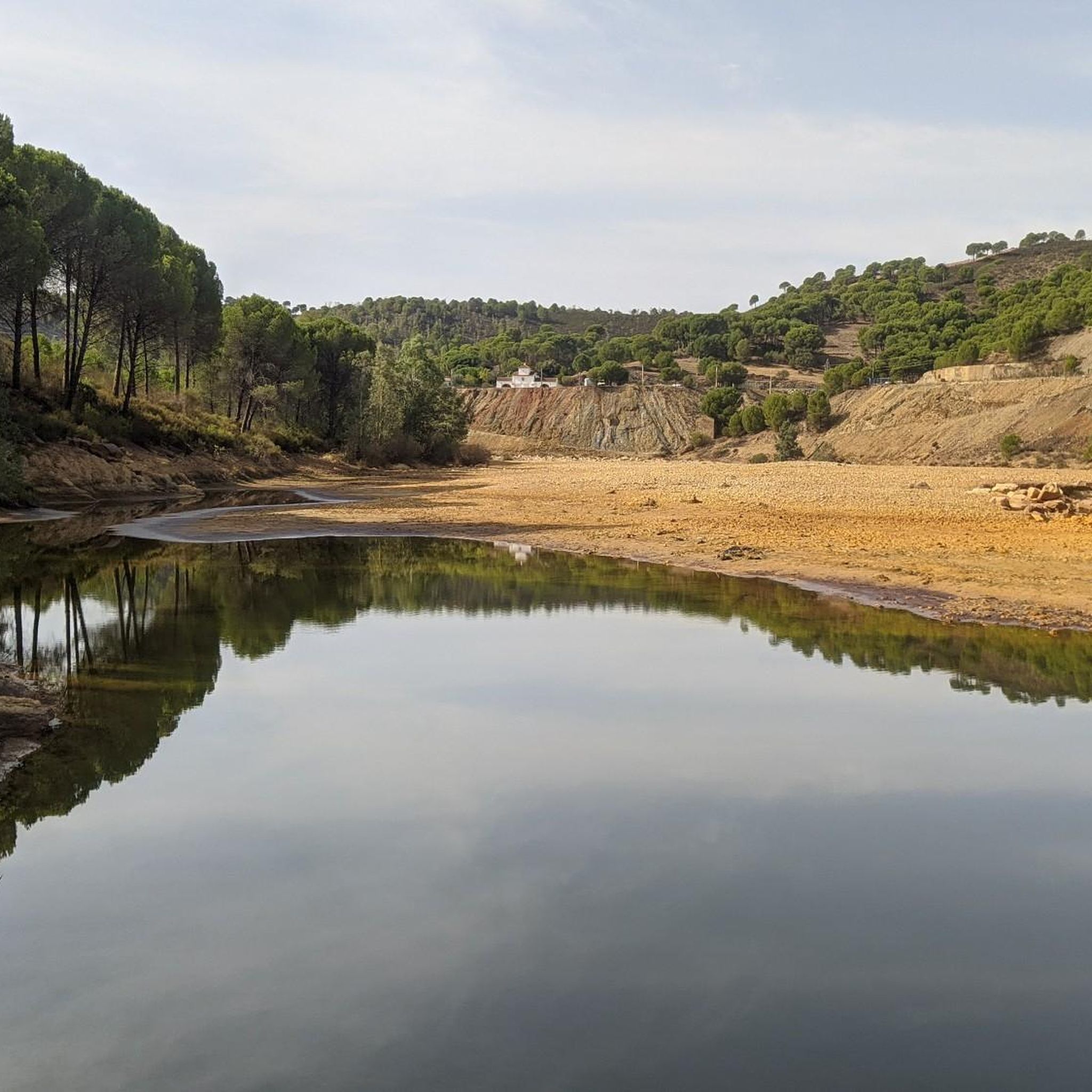
This reservoir is located about 4 km from Sotiel Coronada in the municipality of Calañas. It has a capacity of 2 hm3 and is surrounded by a picturesque area of pine forests of obvious tourist interest. In fact, it is a place very visited by tourists, despite the fact that it is not authorized for bathing and camping is prohibited.
10
0

Nice place and very quiet. The Embalse del Calabazar is not well known or crowded, however it offers an ideal escape to connect with nature. It can be reached by the road and then turn around the path that runs along the northern part of it and end with a circular route.
2
0
Frequently Asked Questions
What natural attractions can I explore around Villanueva De Las Cruces?
You can visit the Calabazar Reservoir, a tranquil lake surrounded by picturesque pine forests, ideal for connecting with nature. The area also features the Fountains of Huerta del Chorrito and Finca de Buenavista, known for their purported curative powers. Additionally, the landscape around the village is characterized by farming land, olive groves, and pastures, offering scenic views.
Are there any historical or cultural sites to visit in the area?
Yes, Villanueva de las Cruces is rich in history. You can explore the Church of Santa María de Gracia, El Cerro de Andévalo, a significant religious building. Within the village, the Iglesia Parroquial Santa María de la Cruz, built in 1788, houses beautiful religious images. The Tharsis Open-Pit Mine offers a glimpse into centuries of mining history, where massive pyrite was extracted. Other notable sites include the Cruz de los Caídos memorial and the Ermita de San Sebastián, which offers magnificent views.
What are some unique architectural or engineering landmarks near Villanueva De Las Cruces?
The region boasts impressive civil engineering examples, such as the Cascabelero bridge, which is the longest railway bridge in Huelva province. Another significant and beautiful structure is the bridge over the Río Oraque, located off the A-475 towards Calañas. These bridges reflect the area's historical construction and operation.
What kind of outdoor activities can I do around Villanueva De Las Cruces?
The natural surroundings are perfect for outdoor enthusiasts. You can enjoy road cycling on routes like 'Tharsis, Gibraleón – return via Trigueros' or 'Tharsis, Puebla de Guzmán, Cabezas Rubias – circular route'. For more options, explore the various road cycling routes around Villanueva De Las Cruces.
Are there any family-friendly attractions?
The Calabazar Reservoir is considered a family-friendly natural attraction, offering a quiet escape into nature amidst pine forests. While bathing is not authorized, it's a pleasant spot for a family outing to enjoy the scenery.
Where can I find the best viewpoints in the area?
For magnificent views of the town and its surrounding landscape, visit the Ermita de San Sebastián, perched on a hill adjacent to Villanueva de las Cruces. The Calabazar Reservoir also offers picturesque vistas of its pine-forested surroundings.
What is the local gastronomy like in Villanueva De Las Cruces?
The local gastronomy is notable for the wild cep, or 'gurumelo,' often prepared in stews or grilled. Traditional sweet treats include rosas, piñonate, roscos, borrachos, and ajuelas. You might also find pan de custodio, a popular bread traditionally made in a wood oven.
What is the significance of the Church of San Sebastián in Cabezas Rubias?
The Church of San Sebastián, Cabezas Rubias is a historical religious building located in the heart of the western Andévalo region. Its origins are debated, with theories linking it to a Roman villa or the reddish elevations in the mountains caused by iron oxidation.
What historical theories exist about the origin of Villanueva de las Cruces?
One theory suggests an earlier Roman settlement in Cumbre de Charnecal, about 1,500 meters from the current town, where Roman-era remains have been found. The town's name, 'Villanueva de las Cruces,' is thought to come from 'Villa Nova' and 'Cruces,' possibly referencing crossroads where an inn was built, or even from the unique crosses illiterate villagers used to sign documents in the 16th and 17th centuries.
What do visitors appreciate most about the attractions around Villanueva De Las Cruces?
Visitors particularly enjoy the tranquility and natural beauty of sites like the Calabazar Reservoir, describing it as an ideal escape to connect with nature. The historical and cultural richness of places like the Church of Santa María de Gracia and the unique industrial heritage of the Tharsis Open-Pit Mine are also highly valued.
Are there any specific religious monuments within Villanueva de las Cruces itself?
Yes, within the village, you can find the Iglesia Parroquial Santa María de la Cruz, built in 1788, which houses several beautiful images. Additionally, the Trinity Chapel and the Chapel of the Virgen del Mayor Dolor are mentioned as other significant religious monuments.
Most popular routes around Villanueva De Las Cruces

Get inspired with the komoot mobile app


Explore more
Still not found the Highlight you’re looking for? See guides of the top attractions in other regions:
