Attractions and Places To See around Alcalá De Gurrea - Top 13
Attractions and places to see around Alcalá De Gurrea include a blend of historical, cultural, and natural features in the province of Huesca, Spain. Situated by the Sotón River and near the La Sotonera reservoir, the area offers both architectural points of interest and scenic landscapes. Visitors can explore religious landmarks, unique geological formations, and man-made structures. The municipality serves as a starting point for various outdoor activities, showcasing diverse terrain.
Best attractions and places to see around Alcalá De…
Last updated: June 29, 2026
Aguarales de Valdemilaz
Highlight • Natural Monument
Translated by Google •
Tip by

Ardisa Dam
Highlight • Structure
Translated by Google •
Tip by

Sign up now to discover places like this
Get recommendations on the best single tracks, peaks, & plenty of other exciting outdoor places.
Sign up for free
La Sotonera Reservoir
Highlight • Lake
Translated by Google •
Tip by

Sotonera Reservoir
Highlight • Lake
Translated by Google •
Tip by

Almudévar
Highlight • Settlement
The origins of Almudévar date back to pre-Roman times, when Basques lived there. …
Translated by Google •
Tip by

Sign up for free to discover even more attractions around Alcalá De Gurrea.
Sign up for free
Already have an account?
Start today with a free account
Your next adventure awaits.
Login or Signup

Other adventures around Alcalá De Gurrea

Tips from the Community

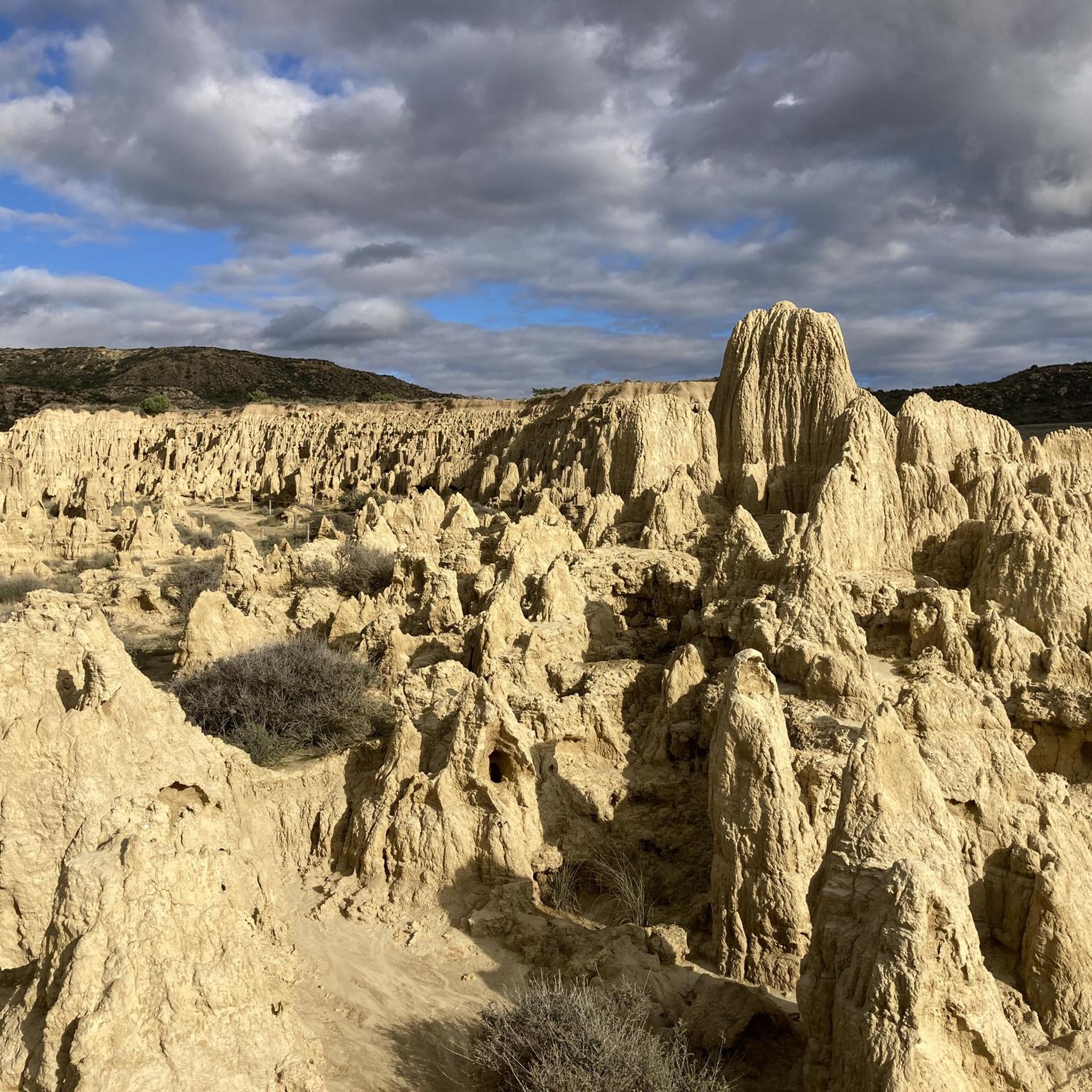
It is a natural geological formation formed by the erosion of water on different types of strata and calcifications.
0
0

The Aguarales de Valdemilaz, also known as Aguarales de Valpalmas, are a stunning geological landscape located near the town of Valpalmas, in the Cinco Villas region, province of Zaragoza. This site is famous for its unique rock formations, created by water and wind erosion over millions of years. These formations, known as fairy chimneys, are similar to those seen in the Göreme Valley in Cappadocia, Türkiye.
8
0

Almudévar is a town in Huesca in the Hoya de Huesca region, in the community of Aragón. The origins of Almudévar date back to pre-Roman times, when Basques lived there. Since Romanization it acquired great importance, being located in the heart of Vía Lata, the Roman road that linked Zaragoza with Lérida. After the Muslim domination it acquired the current toponym, which means "round", referring to the outline of the castle, a Muslim fortress known as Castle of the Crown. Among its heritage, the parish church of the Assumption stands out, whose construction began in 1757, as the old church, located within the castle grounds, threatened ruin.
0
0

Located on the Gállego River, the Ardisa reservoir is shared by the municipalities of Ardisa and Biscarrués. However, both most of the layout of the dam and all the buildings reviewed are located in the municipality of Biscarrués, which is why they have been included in the catalog of this municipality. The reservoir has an area of 2100 km2, with a total capacity of 5 Hm3 and a useful capacity of 3 Hm3. The dam is made of cyclopean concrete. It presents the type of gravity dam, with a height of 31.14 m and a crest length of 450 m. It has a curved layout and a front arranged in a stepped slope. On the right bank there is a large trapezoidal tank delimited by concrete walls (called a "surface spillway" in the reservoir project) which, through a four-span spillway, connects to a long drainage channel arranged in slope that flows into the river Gállego. The set also consists of several buildings, all of them located on the left bank of the river: the gate house, through which the discharge to the canal that leads water to the Sotonera reservoir is regulated, the dam guard's house , a warehouse and a water tank.
1
0

O Aguarales de Valpalmas represent the modeling power of water on rocks. A place that will arouse our curiosity and that of the little ones due to the spectacular nature of its forms. We will find points to observe these geological formations and signs with more information apart from being able to walk among them.
2
0
The Aguarales de Valpalmas represent the modeling power of water on rocks. A place that will arouse our curiosity and that of the little ones due to the spectacular nature of its forms. We will find points to observe these geological formations and signs with more information apart from being able to walk among them.
0
0
The Aguarales de Valpalmas represent the modeling power of water on rocks. A place that will arouse our curiosity and that of the little ones due to the spectacular nature of its forms. We will find points to observe these geological formations and signs with more information apart from being able to walk among them.
2
0

The Sotonera reservoir belongs to the Ebro basin in the municipality of Alcalá de Gurrea. In the same way as the municipality of La Sotonera, it takes its name from the Sotón river, which is the most important, together with the Astón river, the Alboré basin and a derivation of the Gàllego river that contributes approximately 86% of its volume Its reservoir is the source of the Canal dels Monegros. Because of its fauna it has become an area of interest, and the birds in particular are listed as being of international importance.
1
0
Frequently Asked Questions
What natural attractions can I explore near Alcalá de Gurrea?
The region offers several natural highlights. You can visit the unique geological formations of Aguarales de Valdemilaz, also known as fairy chimneys, which showcase the erosive power of water. The La Sotonera Reservoir is a significant body of water perfect for aquatic sports and enjoying beautiful sunsets. Additionally, the Fuente Manantial (Spring Fountain) is a tranquil spot surrounded by lush vegetation near the Sotón River.
Are there historical or religious sites to visit in Alcalá de Gurrea?
Yes, Alcalá de Gurrea is rich in history. The Parish Church of San Jorge, with its notable 16th-century Mudejar tower, stands at the town's highest point. The Hermitage of Nuestra Señora de los Agudos, dating back to the 12th-13th centuries, offers panoramic views and is a National Historic-Artistic Monument. You can also find the early 20th-century Parish Church of San José Obrero in Colonia de Tormos, known for its modernist design, and observe heraldic shields on noble houses throughout the town.
What outdoor activities are available around Alcalá de Gurrea?
The area around Alcalá de Gurrea is excellent for outdoor enthusiasts. You can find various routes for hiking, cycling, and mountain biking. For hiking, there are routes like the 'Aguarales de Valpalmas Loop' which is moderate. Cycling options include the 'Sotonera Reservoir Loop' (easy) or more challenging routes like 'Almudévar – Alcalá de Gurrea loop'. Mountain bikers can explore trails such as 'Aguarales de Valdemilaz — circular desde Piedratajada por Valpalmas'. You can find more details on these activities in the hiking guide, cycling guide, and MTB trails guide for the area.
Are there family-friendly attractions in Alcalá de Gurrea?
Absolutely! The Aguarales de Valdemilaz are a fantastic spot for families, as the unique geological formations spark curiosity in both adults and children. The La Sotonera Reservoir also offers recreational opportunities suitable for families, including aquatic sports and picnicking at Merendero de La Sotonera Park.
When is the best time of year to visit Alcalá de Gurrea for outdoor activities?
For outdoor activities like hiking and cycling, spring (April-May) and autumn (September-October) generally offer pleasant temperatures and comfortable conditions. Summers can be hot, especially for strenuous activities, while winters are cooler. Checking local weather forecasts closer to your visit is always recommended.
What is special about the <a href="https://www.komoot.com/highlight/558941" target="_blank" rel="noopener">Aguarales de Valdemilaz</a>?
The Aguarales de Valdemilaz are a natural monument featuring spectacular 'fairy chimney' rock formations. These unique shapes are the result of millions of years of water and wind erosion, creating a landscape that is often compared to Cappadocia in Türkiye. It's a fascinating place to explore and observe the power of nature.
What can I do at <a href="https://www.komoot.com/highlight/3562656" target="_blank" rel="noopener">La Sotonera Reservoir</a>?
La Sotonera Reservoir is a hub for aquatic sports and relaxation. You can enjoy various water activities, take in the scenic views, and witness beautiful sunsets over its crystal-clear waters. The area around the reservoir, including the Club Náutico de La Sotonera and Merendero de La Sotonera Park, provides recreational facilities.
Are there any interesting viewpoints in the area?
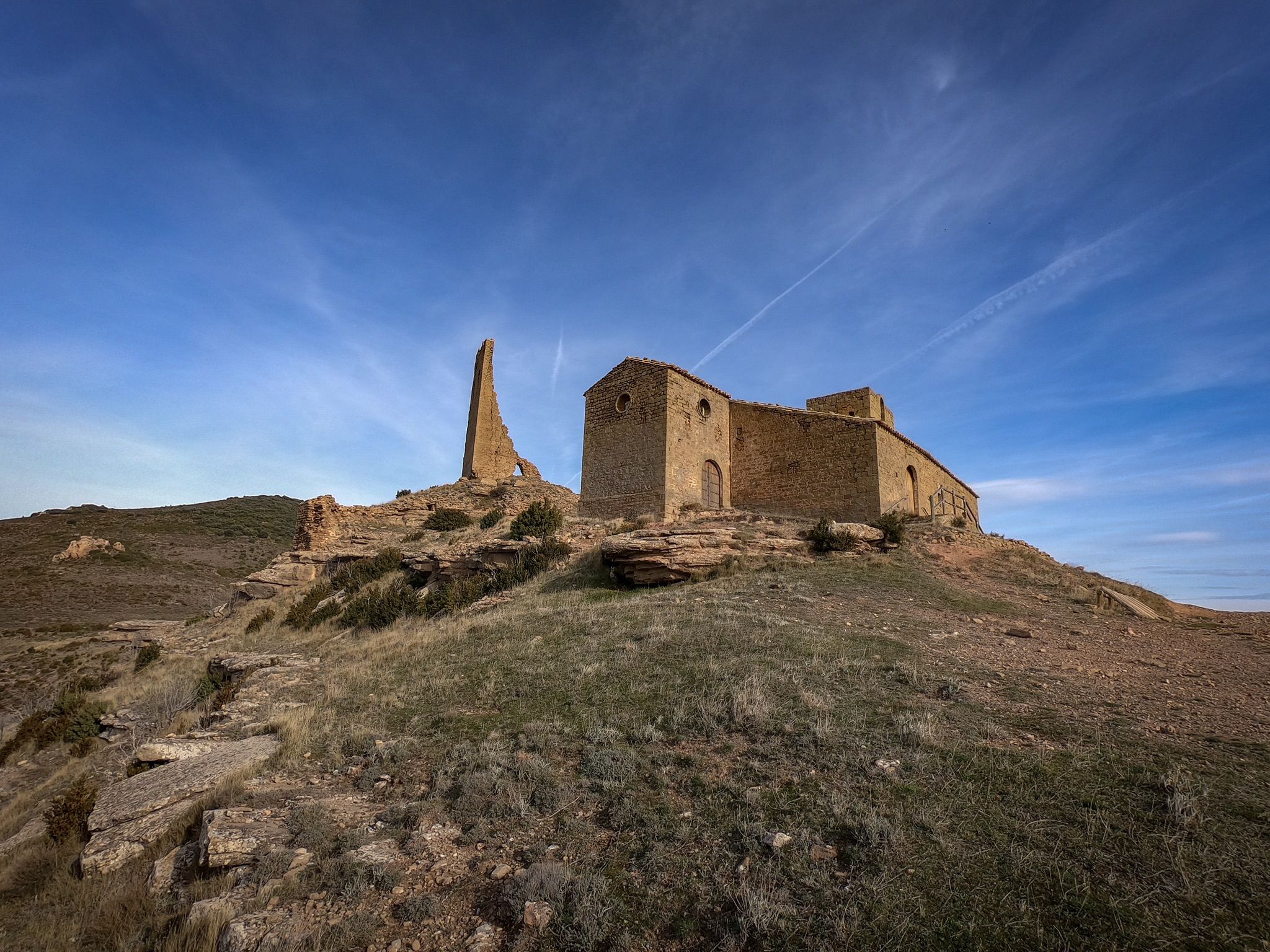
Yes, several spots offer great views. The Hermitage of Nuestra Señora de los Agudos provides panoramic vistas of the La Sotonera reservoir, the Sierra de Guara, and the Mallos de Riglos. The Parish Church of San Jorge, located at the highest point of Alcalá de Gurrea, offers views of La Violada and La Sotonera plains. Additionally, The Atalaya (watchtower in La Sotonera), an ancient Islamic watchtower, offers a privileged perspective over the Sotonera reservoir and surrounding pre-Pyrenean mountain ranges.
What is the significance of <a href="https://www.komoot.com/highlight/5284575" target="_blank" rel="noopener">The Atalaya (watchtower in La Sotonera)</a>?
The Atalaya is an ancient watchtower, likely of Islamic origin from the 9th-10th centuries. Its strategic location on a hill above the Sotonera reservoir allowed for visual communication with other historical sites like the Tower of San Mitiel or Bolea castle. Today, its ruins offer a glimpse into the region's past and serve as an excellent viewpoint.
Can I see examples of unique local heritage or architecture?
Beyond the religious buildings, you can observe unique cultural elements. The Mudejar tower of the Parish Church of San Jorge is a distinctive 16th-century Aragonese Mudejar addition. The town also features various heraldic shields on the facades of stately homes. Furthermore, some unique cave dwellings, particularly those built during the construction of the reservoir, represent a distinctive cultural heritage, with some still in use today.
What is the <a href="https://www.komoot.com/highlight/5857443" target="_blank" rel="noopener">Ardisa Dam</a> and what can I see there?
The Ardisa Dam is a significant man-made structure located on the Gállego River. It's a gravity dam with a height of 31.14 meters and a crest length of 450 meters, featuring a curved layout and a stepped slope. While primarily an engineering marvel, it's an interesting site to observe the scale of water management infrastructure in the region.
What do visitors particularly enjoy about the attractions near Alcalá de Gurrea?
Visitors often highlight the unique geological formations of the Aguarales de Valdemilaz, noting how they spark curiosity and are spectacular. The recreational opportunities and beautiful sunsets at La Sotonera Reservoir are also highly appreciated. The historical significance and panoramic views from sites like the Hermitage of Nuestra Señora de los Agudos and The Atalaya are also popular among those exploring the area.

Get inspired with the komoot mobile app


Explore more
Still not found the Highlight you’re looking for? See guides of the top attractions in other regions:
