Attractions and Places To See around Saint-Jean-D'Angély - Top 18
Best attractions and places to see around Saint-Jean-D'Angély include historical landmarks and natural features within the Nouvelle-Aquitaine region. The town is known for its Royal Abbey, a UNESCO World Heritage Site, and its position on the Way of Saint James. The area features the River Boutonne, offering opportunities for walks and water activities, alongside a landscape characterized by forests, vineyards, and streams. This blend provides a variety of cultural and outdoor experiences for visitors.
Best attractions and places to see around Saint-Jean-D'Angély
- The most popular attractions is Saint-Savinien-sur-Charente, a picturesque village nestled in a meander of the Charente river. It is remarkable for its houses built on the water, troglodyte dwellings, and its river port.
- Another must-see spot is Saint-Savinien Church and Statues of the Apostles, a religious building with a magnificent panorama from its forecourt. The church is a Romanesque style building from the 12th and 13th centuries, adorned with modern statues of the 12 apostles.
- Visitors also love Saint Peter's Church, a 12th-century Romanesque church built on a hill. From the church, there are views of the surrounding landscape.
- Saint-Jean-D'Angély is known for its historical sites, religious buildings, and charming villages. The region offers a variety of attractions to see and explore, from ancient abbeys to natural riverbanks.
- The attractions around Saint-Jean-D'Angély are appreciated by the komoot community, with 15 highlights and 19 photos shared by users.
Last updated: October 10, 2026
Saint-Savinien Church and Statues of the Apostles
Highlight • Religious Site
Translated by Google •
Tip by

Tonnay-Boutonne
Highlight • Other
Translated by Google •
Tip by

Sign up now to discover places like this
Get recommendations on the best single tracks, peaks, & plenty of other exciting outdoor places.
Church of Our Lady of the Assumption
Highlight • Religious Site
The village church Notre-Dame de l'Assomption is a Romanesque church building in the small village Fenioux in the western French department of Charente-Maritime in the ancient cultural landscape of Saintonge; the Patrozinien Saint-Savinien and Saint Pierre are also handed down in the literature. Fenioux is architecturally famous for the two portals of the Romanesque church and about 150 meters west standing dead lantern.
The Lantern of Fenioux is a dead lantern, one of the most extraordinary medieval buildings in southwestern France.
de.wikipedia.org/wiki/Notre-Dame_de_l%E2%80%99Assomption_(Fenioux)
Translated by Google •
Tip by

Port of Port-d'Envaux
Highlight • Structure
1. Origins
The Charente is a very ancient waterway. As early as the Gallo-Roman period, the river was used to transport salt from the coast inland.
The name Port-d’Envaux refers to its location: the village is situated downstream from Taillebourg and in the middle of several "vaux" or valleys. The former parish was named Saint-Saturnin-de-Séchaud.
2. From the 16th to the 18th century: development of trade
From the 16th century onwards, navigation on the Charente became of considerable importance.
Port-d’Envaux was notably involved in the trade of:
* Crazannes stone;
* pottery from La Chapelle-des-Pots;
* firewood and cooperage wood;
* salt;
* and later, wine.
In the 17th century, "gabares" (barges) became the main transport vessels on the river.
Successive improvements to navigation on the Charente, particularly the work undertaken under Colbert, further boosted this activity. The development of the military port of Rochefort, in particular, led to significant needs for wood and stone.
3. The 19th century: the golden age of Port-d’Envaux
It was in the 19th century that Port-d’Envaux experienced its true golden age.
The port became an important center for barging and shipbuilding. It housed, among other things:
* boat construction yards;
* marine carpenters;
* sailors and captains;
* sailing ships;
* rope makers;
* merchants.
The boats transported, in particular, wine, cognac, stone, wood, and salt between the interior of Saintonge, Saintes, and the estuary of the Charente.
This prosperity largely explains the presence of the large bourgeois houses and residences that can still be observed along the river.
On the eve of the Revolution, Port-d’Envaux even had a navigation school, a sign of the importance of its maritime activity.
4. Gabares, sloops, and schooners
The port was particularly associated with "gabares", but also with sloops and schooners.
These boats made it possible to transport goods between the ports of the Charente. The "gabares" could, in particular, load stone from the neighboring quarries of Crazannes, Plassay, and Port-d’Envaux.
The municipality also preserves historical documentation specifically dedicated to the "gabares" and sloops with topsails built and equipped in Port-d’Envaux.
5. The commune and its evolution
The parish of Saint-Saturnin-de-Séchaud became a commune during the Revolution.
Port-d’Envaux only truly became a communal capital in 1852, when the commune had about 1,536 inhabitants.
It was also in the 19th century that the center of the village gradually moved closer to the river: the port became the true economic heart of the town. The current urban plan, with its small streets descending towards the Charente, retains traces of this evolution.
6. The decline of the port
The situation changed radically at the end of the 19th century with the arrival of the railway.
Rail transport, and then road transport in the 20th century, strongly competed with the boats on the Charente.
In 1926, the Charente was declassified as a navigable waterway; in 1957, it was permanently removed from the list of navigable waterways. This was practically the end of the port's historic commercial vocation.
7. From commercial port to pleasure port
After the disappearance of merchant traffic, Port-d’Envaux gradually turned towards pleasure boating and river tourism.
Today, the port accommodates pleasure boats and is a leisure area on the banks of the Charente. However, the village strongly preserves the memory of its maritime past through its quays, its old merchant houses, its streets, and its towpath.
An interesting feature
The history of Port-d’Envaux is therefore closely linked to that of Crazannes stone. The stone extracted from the neighboring quarries was transported by river, which explains the existence of a real economic chain associating quarries → port → "gabares" → Charente → estuary of Rochefort.
It is also this past that helps us understand why the village today has Les Lapidiales, located in old quarries, and why the commune places so much emphasis on "stone and water".
Showing Translation
Tip by
Saint Peter's Church
Highlight • Other
Translated by Google •
Tip by
Saint-Pierre Church of Aulnay
Highlight • Religious Site
Together with Paul, Peter is also known as the "princes of the apostles", their common feast day in the saints' calendar is on June 29th.
Translated by Google •
Tip by

Ruins of the Former Abbey of Saint-Jean-Baptiste
Highlight • Historical Site
Translated by Google •
Tip by

Château de Taillebourg
Highlight • Castle
The castle which had endured all the sieges during the Hundred Years' War and the Wars of Religion was taken and destroyed during the Fronde in 1652. During the Revolution, it was sold in lots as national property. Having suffered from lack of maintenance, the building was the victim of a fire in 1822 and was largely destroyed. All that remains now are the ruins with the ramparts and a tower standing like an emaciated being. It now houses a park which is a haven of peace.
To access it from the banks of the Charente, you have to take a small detour through the town.
Translated by Google •
Tip by

Dampierre-sur-Boutonne Castle and Gardens
Highlight • Castle
Translated by Google •
Tip by

Fenioux
Highlight • Other
Translated by Google •
Tip by
Sign up for free to discover even more attractions around Saint-Jean-D'Angély.
Already have an account?
Start today with a free account
Your next adventure awaits.
Popular around Saint-Jean-D'Angély
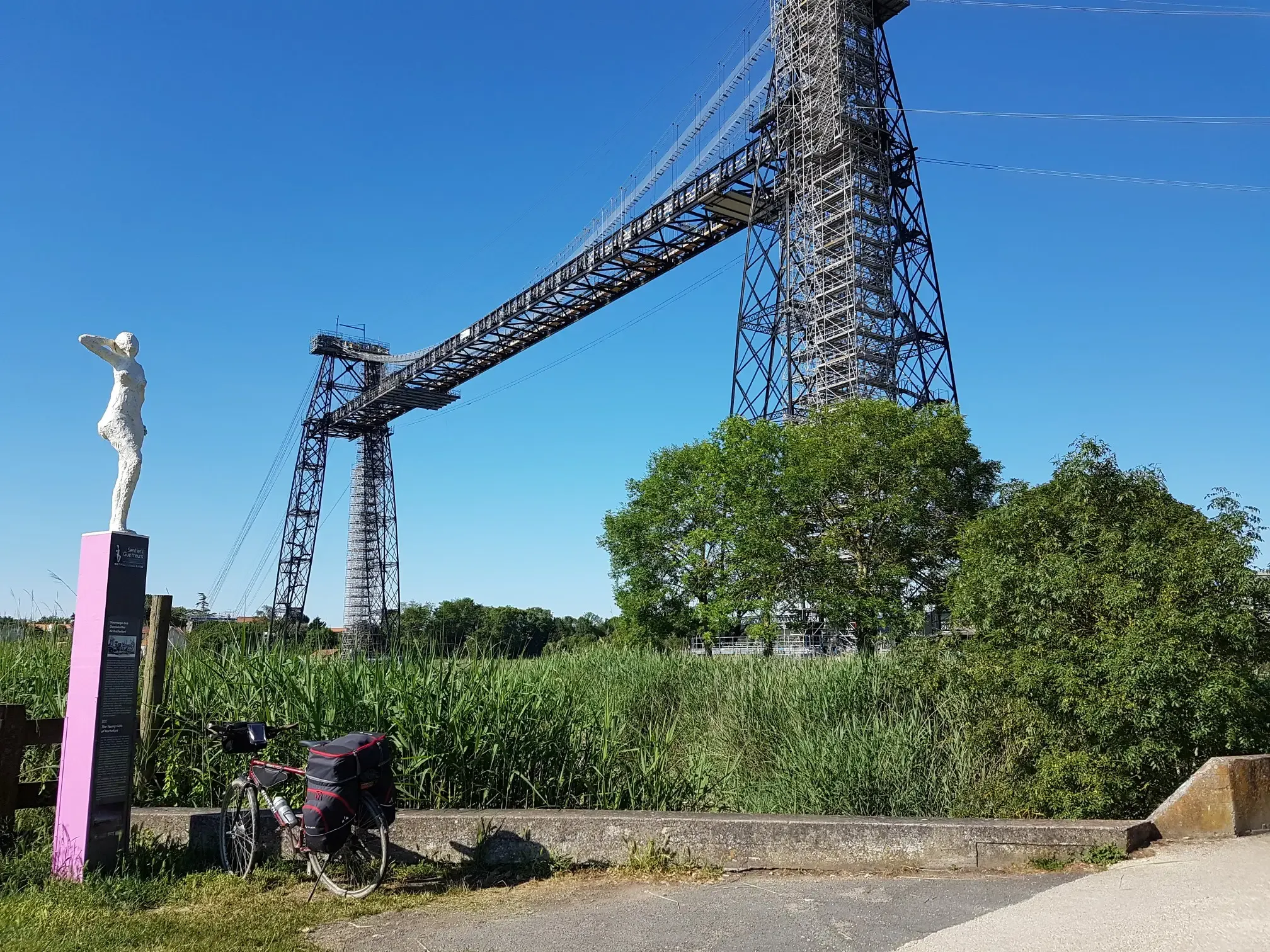
From the marshes to the Charente – a ride in the south of Aunis
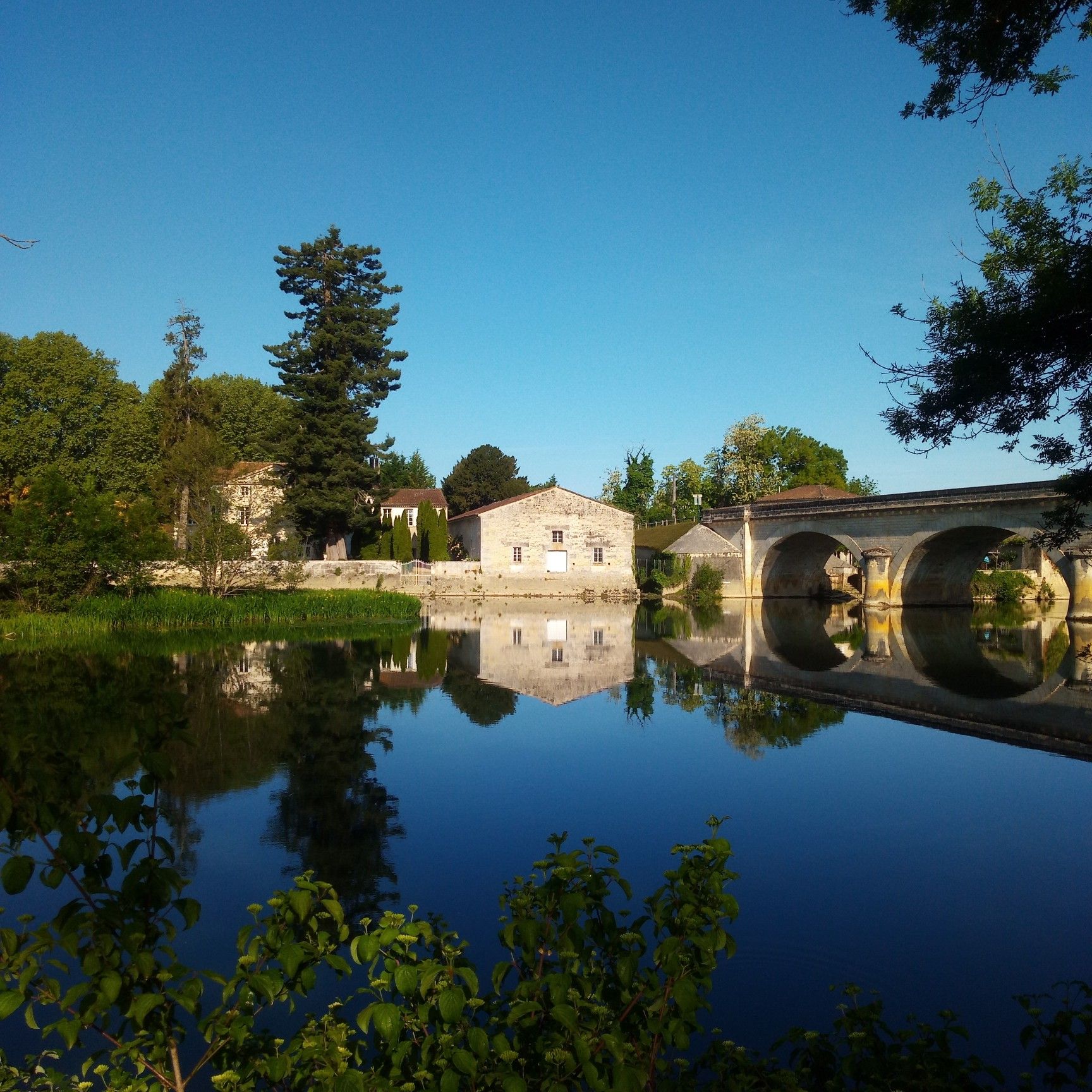
The Flow Vélo – a route that transports you
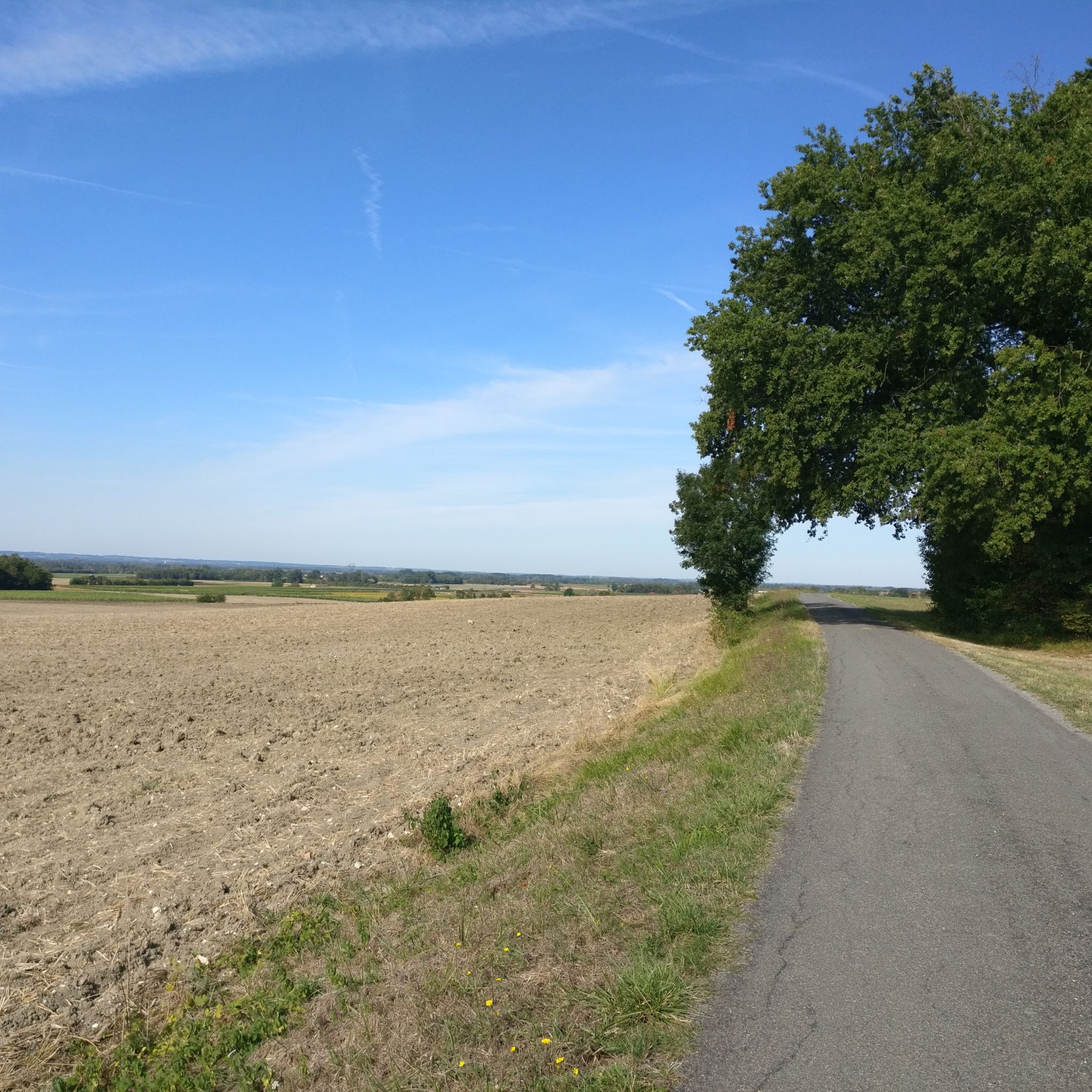
Road Cycling Routes around Saint-Jean-D'Angély
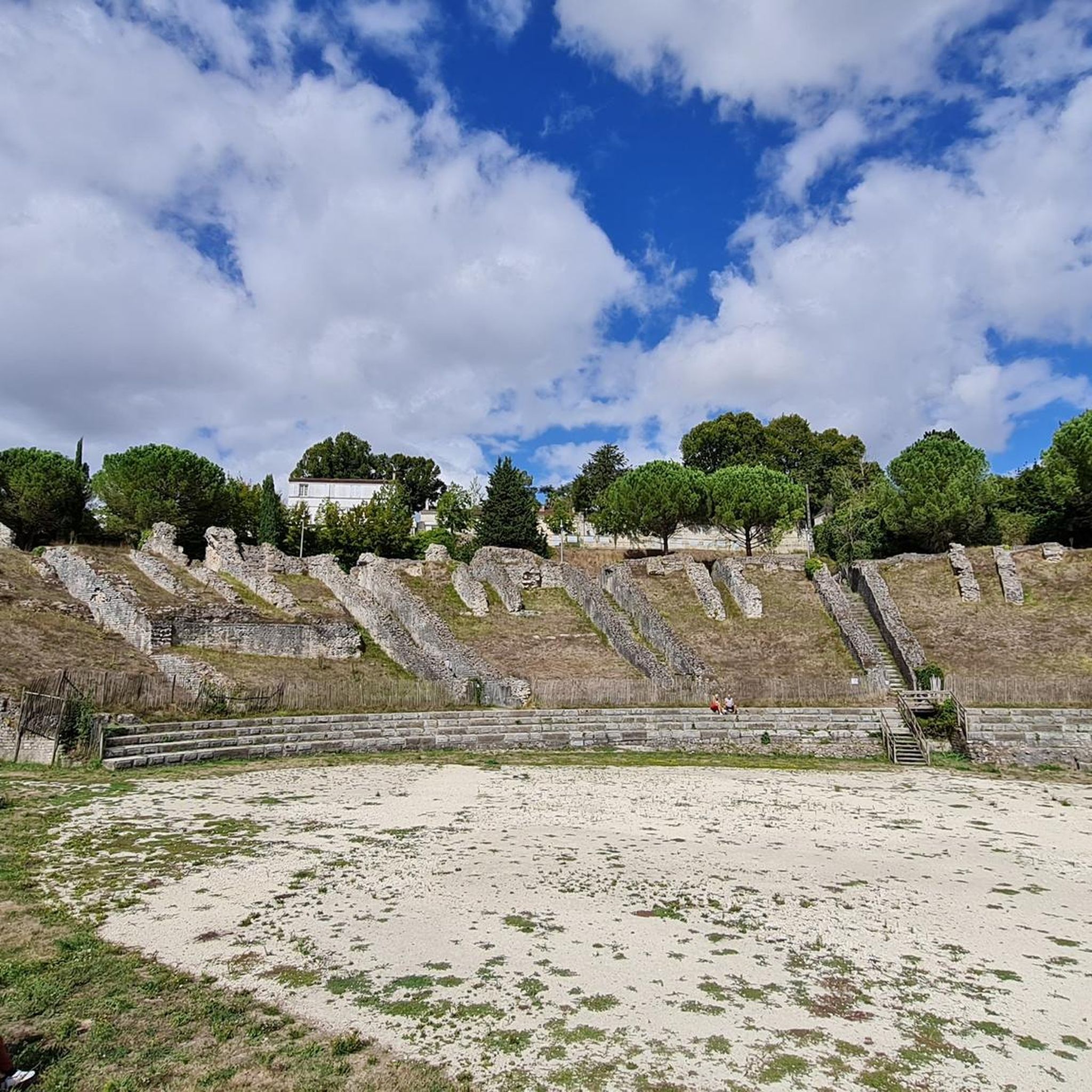
Cycling around Saint-Jean-D'Angély
MTB Trails around Saint-Jean-D'Angély
Hiking around Saint-Jean-D'Angély
Running Trails around Saint-Jean-D'Angély

Gravel biking around Saint-Jean-D'Angély
Other adventures around Saint-Jean-D'Angély


Tips from the Community

Port-d’Envaux, located on the left bank of the Charente, about 12 km downstream from Saintes, owes a large part of its history to its position on the river. The village was originally a fishing village, but it gradually became an important river port for trade. 1. Origins The Charente is a very ancient waterway. As early as the Gallo-Roman period, the river was used to transport salt from the coast inland. The name Port-d’Envaux refers to its location: the village is situated downstream from Taillebourg and in the middle of several "vaux" or valleys. The former parish was named Saint-Saturnin-de-Séchaud. 2. From the 16th to the 18th century: development of trade From the 16th century onwards, navigation on the Charente became of considerable importance. Port-d’Envaux was notably involved in the trade of: * Crazannes stone; * pottery from La Chapelle-des-Pots; * firewood and cooperage wood; * salt; * and later, wine. In the 17th century, "gabares" (barges) became the main transport vessels on the river. Successive improvements to navigation on the Charente, particularly the work undertaken under Colbert, further boosted this activity. The development of the military port of Rochefort, in particular, led to significant needs for wood and stone. 3. The 19th century: the golden age of Port-d’Envaux It was in the 19th century that Port-d’Envaux experienced its true golden age. The port became an important center for barging and shipbuilding. It housed, among other things: * boat construction yards; * marine carpenters; * sailors and captains; * sailing ships; * rope makers; * merchants. The boats transported, in particular, wine, cognac, stone, wood, and salt between the interior of Saintonge, Saintes, and the estuary of the Charente. This prosperity largely explains the presence of the large bourgeois houses and residences that can still be observed along the river. On the eve of the Revolution, Port-d’Envaux even had a navigation school, a sign of the importance of its maritime activity. 4. Gabares, sloops, and schooners The port was particularly associated with "gabares", but also with sloops and schooners. These boats made it possible to transport goods between the ports of the Charente. The "gabares" could, in particular, load stone from the neighboring quarries of Crazannes, Plassay, and Port-d’Envaux. The municipality also preserves historical documentation specifically dedicated to the "gabares" and sloops with topsails built and equipped in Port-d’Envaux. 5. The commune and its evolution The parish of Saint-Saturnin-de-Séchaud became a commune during the Revolution. Port-d’Envaux only truly became a communal capital in 1852, when the commune had about 1,536 inhabitants. It was also in the 19th century that the center of the village gradually moved closer to the river: the port became the true economic heart of the town. The current urban plan, with its small streets descending towards the Charente, retains traces of this evolution. 6. The decline of the port The situation changed radically at the end of the 19th century with the arrival of the railway. Rail transport, and then road transport in the 20th century, strongly competed with the boats on the Charente. In 1926, the Charente was declassified as a navigable waterway; in 1957, it was permanently removed from the list of navigable waterways. This was practically the end of the port's historic commercial vocation. 7. From commercial port to pleasure port After the disappearance of merchant traffic, Port-d’Envaux gradually turned towards pleasure boating and river tourism. Today, the port accommodates pleasure boats and is a leisure area on the banks of the Charente. However, the village strongly preserves the memory of its maritime past through its quays, its old merchant houses, its streets, and its towpath. An interesting feature The history of Port-d’Envaux is therefore closely linked to that of Crazannes stone. The stone extracted from the neighboring quarries was transported by river, which explains the existence of a real economic chain associating quarries → port → "gabares" → Charente → estuary of Rochefort. It is also this past that helps us understand why the village today has Les Lapidiales, located in old quarries, and why the commune places so much emphasis on "stone and water".
0
0

The monumental ruins of the church of St-Pierre de Puyrolland, isolated on a promontory overlooking the Trézence valley, add to the appeal of this beautiful natural site. The high-quality sculpture of the Romanesque portal stands alongside the Gothic elements of the choir, and the charm is captivating. The legend attributes the paternity of this mound to Roland, nephew of Charlemagne. The site is said to have hosted a maison-Dieu (a monastery-hospital intended to accommodate pilgrims and the poor), occupied by the monks of St-Romuald, where a Romanesque church was built. Remains of the first 12th-century construction still exist, notably the lower part of the west facade and two small narrow bays on the north and south walls. After the Hundred Years' War, the building was partially rebuilt: the flat chevet, a bay with Gothic tracery, and the buttresses bear witness to this work. The Wars of Religion led to further destruction and partial reconstruction, as the first two bays of the nave were then closed off to form a modest building that still serves as a parish church today. Work carried out in the 18th and 19th centuries included, among other things, the addition of the tall campanile on the facade, pierced with two round-arched bays. The ruined part of the church was consolidated and restored in the 90s.
0
0

One of the masterpieces of Saintonge Romanesque art, the portal and its sculptures deserve a few minutes of attention (at least)!
0
0

The former monastery has existed since the 14th century, parts of it since the 17th century. The building is very worn and no longer completely intact, but still worth seeing!
0
0

Small town with a special charm along the Charente.
0
0

Located on a rocky spur overlooking the Charente, Taillebourg has one of the oldest castles in the province of Saintonge. It was also one of the most important in the region in the Middle Ages. This stronghold will allow the city to assert its power and prosper thanks to its port and control of trade throughout the Middle Ages. According to a chronicler, the Château de Taillebourg hosted the wedding night of Louis, future king of France under the name Louis VII, with Duchess Eleanor of Aquitaine. Louis IX (future Saint Louis) made the castle his fortress to launch the attack against the King of England, Henry III. This victorious battle of July 21, 1242 became famous and was represented several centuries later by Delacroix, whose painting can be seen in the Battles gallery at the Palace of Versailles. The castle which had endured all the sieges during the Hundred Years' War and the Wars of Religion was taken and destroyed during the Fronde in 1652. During the Revolution, it was sold in lots as national property. Having suffered from lack of maintenance, the building was the victim of a fire in 1822 and was largely destroyed. All that remains now are the ruins with the ramparts and a tower standing like an emaciated being. It now houses a park which is a haven of peace. To access it from the banks of the Charente, you have to take a small detour through the town.
0
0
In the Middle Ages, Tonnay-Boutonne was a fortified town of which today only one vestige remains: the Porte Saint-Pierre, named after the parish. Two other gates also existed, and the small city also had a port, a lock and a mill. At the heart of the ramparts stood a keep 20m high and 13m side with walls 3m thick. But it was razed in 1839 by the last owner who sold the stones to pay his debts, and the rubble was spread all around raising the level of the streets by 1.50 to 2m and filling the cellars of the village.
0
0
The Saint-Savinien church is a Romanesque style building built between the 12th and 13th centuries. The current sanctuary succeeds an ancient priory, cited in a charter of 1039, of which no vestige remains. The adjoining square is pleasantly decorated with statutes representing the apostles.
0
0
Frequently Asked Questions
What historical landmarks can I explore in Saint-Jean-D'Angély?
Saint-Jean-D'Angély is rich in history. You can visit the Royal Abbey of Saint-Jean-d'Angély, a UNESCO World Heritage Site, known for its classical architecture and panoramic views from its unfinished towers. The 15th-century Clock Tower (Tour de l'Horloge) also offers historical insights and city views. A stroll through the old town reveals charming private mansions like the Hôtel de Menou, showcasing the town's past prosperity. You can also see the Ruins of the Former Abbey of Saint-Jean-Baptiste.
Are there any notable religious sites in the area?
Yes, the region features several significant religious buildings. Beyond the Royal Abbey, you can visit the Saint-Savinien Church and Statues of the Apostles, a Romanesque church from the 12th and 13th centuries, adorned with modern sculptures. Other examples include the Saint Peter's Church, a 12th-century Romanesque church offering beautiful landscape views, and the Saint-Pierre Church of Aulnay.
Where can I enjoy nature and outdoor activities near Saint-Jean-D'Angély?
The River Boutonne, considered Saint-Jean-D'Angély's "green lung," is perfect for relaxing walks, hiking, biking, and even water activities like canoeing. The nearby Val de Boutonne Lake is ideal for walking, fishing, and various water sports. The Arboretum de Saint-Jean-d'Angély offers a tranquil green space within the city. For more structured outdoor adventures, you can explore numerous hiking and cycling trails through the lush landscapes, vineyards, and forests. For specific routes, check out the hiking guide around Saint-Jean-D'Angély.
Are there family-friendly attractions around Saint-Jean-D'Angély?
Families can enjoy several attractions. The Château de Dampierre-sur-Boutonne not only offers historical interest but also features a Baudet du Poitou Donkey Farm, which is often a hit with children. The picturesque village of Saint-Savinien-sur-Charente, with its houses on the water and troglodyte dwellings, provides an engaging setting for exploration. The Val de Boutonne Lake also offers opportunities for family-friendly walks and water sports.
What cultural experiences does Saint-Jean-D'Angély offer?
Saint-Jean-D'Angély boasts a vibrant cultural scene. The Musée des Cordeliers showcases local history and unique collections related to André Citroën's expeditions. L'Eden is a concert hall with an authentic Art Deco ambiance hosting various events. The Royal Abbey itself houses a European cultural center, a media library, and a music school. Don't miss the local producer's market under its intricate timber roof, offering regional delicacies and artisan goods.
Can I find places to eat or relax near the attractions?
Yes, you can find charming spots to eat and relax. For instance, La P'tite Table de Bel Ébat is a cafe that offers a pleasant stop. The town center and surrounding villages also feature various cafes and restaurants where you can enjoy local cuisine and take a break.
Are there any unique villages or towns to visit nearby?
Absolutely. The village of Saint-Savinien-sur-Charente is particularly noteworthy, labeled as a “Small town of character” and “Village of stones and water,” with its houses built directly on the Charente river and ancient troglodyte dwellings. Another charming village is Fenioux, known for its 12th-century Notre-Dame-de-l'Assomption church, a fine example of Saintonge Romanesque style.
What kind of views can I expect from the attractions?
Many attractions offer stunning views. Climbing the unfinished towers of the Royal Abbey provides a panoramic vista of Saint-Jean-D'Angély and its surroundings. The Clock Tower also offers breathtaking views of the city. From the forecourt of the Saint-Savinien Church, you can enjoy a magnificent panorama. Similarly, the Saint Peter's Church, built on a hill, offers beautiful views of the surrounding landscape.
Are there hiking routes for different difficulty levels?
Yes, the area around Saint-Jean-D'Angély offers a variety of hiking routes. You can find easy walks, such as the "Campsite Val de Boutonne🏕️ – Bridge over the Boutonne🌉 loop from Saint-Jean-d'Angély" (7.2 km), or moderate trails like the "Fenioux loop from Mazeray" (15.4 km). For more options, including easy hikes, consult the easy hikes guide around Saint-Jean-D'Angély.
What are some popular activities for mountain biking near Saint-Jean-D'Angély?
Mountain biking enthusiasts will find several routes. Options include the "Abbaye de Fontdouce – Vineyard Trail loop from Saint-Bris-des-Bois" (29 km) or the longer "Bois de Siecq Bresdon loop from Beauvais-sur-Matha" (38.8 km). These trails take you through diverse landscapes of forests and vineyards. More routes can be found in the MTB Trails guide around Saint-Jean-D'Angély.
What is special about the architecture in the region?
The architecture in the Saint-Jean-D'Angély area is a blend of historical styles. The Royal Abbey showcases classical elegance from the 17th and 18th centuries. You'll also find Romanesque churches from the 12th and 13th centuries, such as the Saint-Savinien Church. The old town features charming half-timbered houses from medieval and Renaissance periods, alongside grand private mansions with ornate facades, reflecting the region's rich architectural heritage.
Most popular routes around Saint-Jean-D'Angély

Get inspired with the komoot mobile app


Didn’t find what you were looking for?
Are you keen on exploring more awesome places nearby? Browse our guides:
Explore more
Still not found the Highlight you’re looking for? See guides of the top attractions in other regions:
