Top 11 Castles around Pithiviers
Castles around Pithiviers offer a journey through various historical periods in the Loiret region of France. The area features a mix of medieval fortifications and Renaissance residences, set amidst the surrounding countryside and on the edge of the Orléans forest. While the ancient Château de Pithiviers is no longer standing, the town itself and its surroundings provide access to several notable historical sites. This region is characterized by its historical architecture and natural landscapes.
Best castles around Pithiviers
- The most…
Last updated: October 16, 2026
Chamerolles Castle
Highlight • Castle
It is surrounded by …
Translated by Google •
Tip by

Augerville Castle
Highlight • Castle
Translated by Google •
Tip by

Sign up now to discover places like this
Get recommendations on the best single tracks, peaks, & plenty of other exciting outdoor places.
Manoir de La Taille (Château de Bondaroy)
Highlight • Castle
Translated by Google •
Tip by
Yèvre-le-Châtel
Highlight • Castle
Translated by Google •
Tip by

Château de Courcelles-le-Roi
Highlight • Castle
Translated by Google •
Tip by

Bouville Castle
Highlight • Castle
Translated by Google •
Tip by

Pithiviers
Highlight • Settlement
Translated by Google •
Tip by
Garden of the Théâtre des Minuits
Highlight • Historical Site
Translated by Google •
Tip by
Château du Hallier
Highlight • Castle
Translated by Google •
Tip by
Ruins of the Château des Deux Tours and Théâtre des Minuits Garden
Highlight • Historical Site
Translated by Google •
Tip by
Sign up for free to discover even more castles around Pithiviers.
Already have an account?



Tips from the Community

A huge magnifying glass on a plane tree
0
0

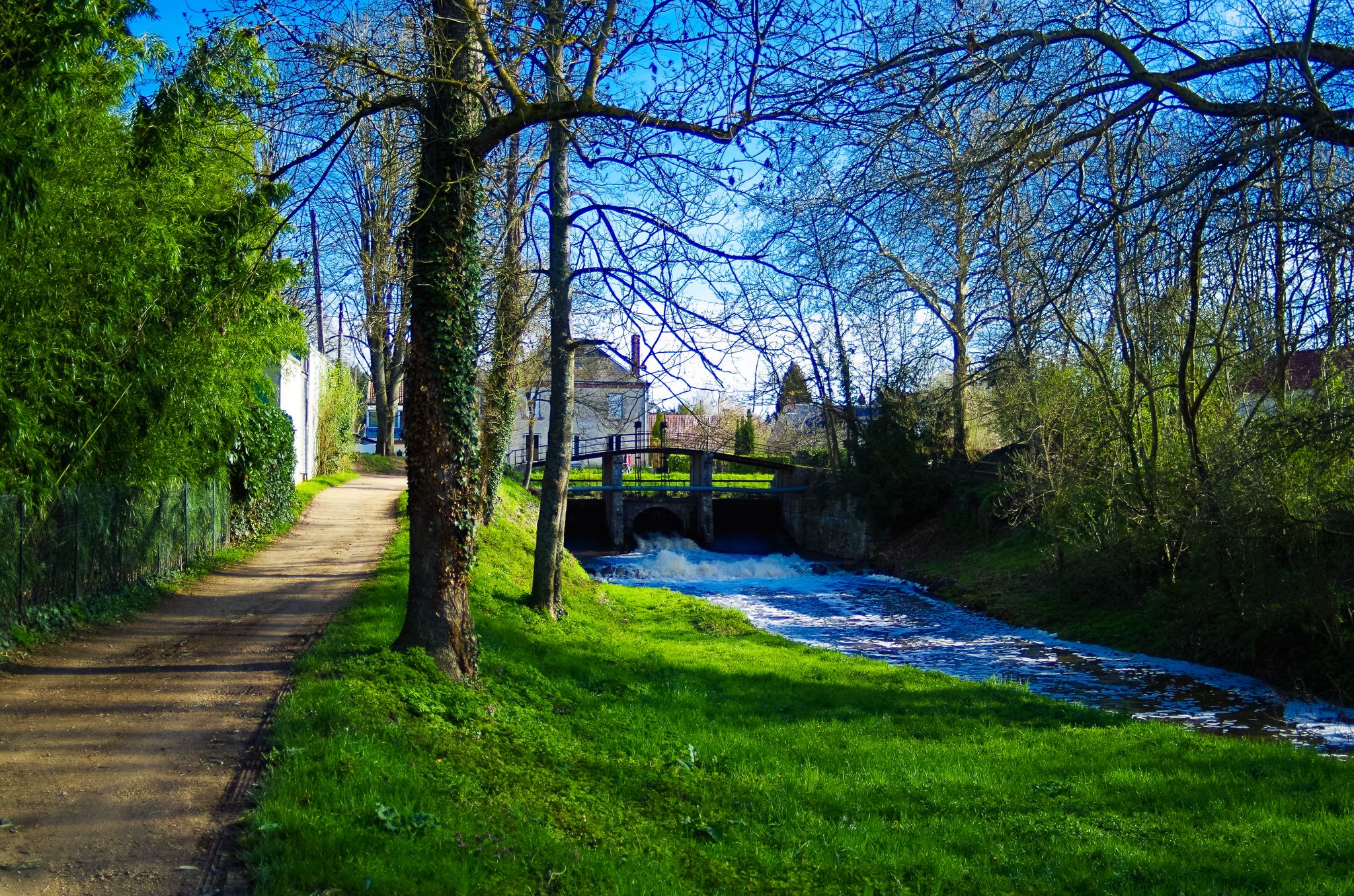
Through this alley, over the stone wall, you can enjoy a pleasant view of the ruins of the Château des Deux Tours and the garden of the Théâtre des minuits. The ruins correspond to the last vestiges of one of the two medieval castles built here by the powerful abbey of La Ferrières en Gâtinais. Work is undertaken every summer to restore and enhance the site. This historic site has been invested by the Théâtre des Minuits, to make it a place of cultural life, creation and representation. The land extending behind the ruins has been developed into a free garden, far from the conventions of the French garden. It houses in particular a rose garden comprising more than 200 rose bushes.
0
0

Nestled on the edge of the Orléans forest, the Château de Chamerolles is a magnificent Renaissance castle which retains its medieval heritage. It was built between 1500 and 1530 on the site of an old medieval fortress by Lancelot du Lac, chamberlain of King Louis XII and Governor of Orléans. He wanted to make the old medieval building into a real pleasure castle responding to the architectural fashion of the time. With its polychrome brick decor and its open gallery, the Château de Chamerolles is inspired by the Louis XII wing of the royal Château de Blois. It retains its moat and its layout of corner towers from the medieval period. During the wars of religion, Lancelot's grandson, Lancelot II, transformed the castle of Chamerolles into a center of Protestantism. From this period remains the chapel whose painted tables of laws are the oldest in France. Chamerolles remained in the du Lac family until the end of the 17th century. In 1672, the castle belonged to Jacques Saumery, brother-in-law of Colbert. A century later, the castle passed into the hands of the Lambert family and in 1924, into those of Gaston Jessé-Curély. Occupied, ransacked, stripped during the Second World War, the Château de Chamerolles was put up for sale in 1970. In 1976, the city of Paris found itself in charge of Chamerolles. Abandoned, the Château de Chamerolles fell into ruins. In 1987, it became the property of the Loiret Departmental Council which then undertook an ambitious restoration program. The five years of work allow us to discover a transitional architecture, between the medieval heritage and the innovations of the Renaissance. Today, the Château de Chamerolles is dedicated to the history of perfumery and offers a historical and heritage showcase to the Cosmetic Valley, located in the Centre-Val de Loire region. Chamerolles offers a visual and olfactory journey, in pieces reconstructed from the 16th century to the 18th century, allowing you to discover the history of toiletry and perfume. The castle is surrounded by a large park and a charming Renaissance garden, created by Lancelot II du Lac, after a trip to Italy. A garden where it is beautiful to stroll in the summer.
0
0

Very beautiful village which is definitely worth the detour. You can notably discover its castle, built in the 13th century under Philippe Auguste. Don't hesitate to dismount and take a walk in the pedestrian part of the village.
0
0
These remains, all in all impressive with their red brick and stone curtain walls as well as their ten towers, transport you back to 1544, the date when Hallier Castle was built by Charles de l'Hospital. It is seen as a very good example of transition between the fortified castle and the pleasure residence. Henri IV found Henriette d'Entragues there, his mistress to whom he had made a promise of marriage without ever keeping it. Always linked to the loves of kings, Nibelle, where this castle is located, would take its name from Charles IX, who offered Le Hallier to his mistress saying "Here is your nest, Belle..."
1
0
The Château de Courcelles-le-Roi is discreet behind its high walls and hedges, and yet it has left its mark on the history of France, welcoming within its walls some of the most illustrious kings. A former fortified castle whose construction dates back to the 11th century, it was destroyed and rebuilt three times, including twice during the Hundred Years' War. Located on the lands of the Orléans forest where the kings came to hunt, Saint-Louis and Charles VIII stayed there. Anne of Brittany, Queen of France and wife of Charles VIII, gave birth there to a baby, François, who unfortunately only lived a few hours. Guided tours are organized there.
0
0

The Manoir de la Taille, also known as the Château de Bondaroy, is a fortified manor house which dates from the 14th century and was the birthplace of two Renaissance poets, Jean and Jacques de La Taille. You can admire the impressive facade, towers and gatehouse, as well as the surrounding countryside. You can also explore the neighboring town of Pithiviers, which has a rich heritage and a famous pastry, the pithivier.
2
0
Château d'Augerville is a historic castle located in the commune of Augerville-la-Rivière, in Loiret, France. It dates back to the 12th century, when it was a hamlet and fort for the d'Augerville family. It changed hands several times during the Middle Ages and the Renaissance, and hosted important figures such as Catherine de Medici and King Charles IX. In the 17th century, it was sold to the taxes and renovated into a country house by Jean Perrault de Montevrault. It remained a private residence until the 21st century, when it was transformed into a 5-star hotel with a golf course, spa and chocolate factory. It is a historic monument, a national heritage site of France.
2
0
Frequently Asked Questions
What types of castles can I explore around Pithiviers?
The Pithiviers region offers a diverse range of castles, from medieval fortifications to elegant Renaissance residences. You can find fortified manor houses like Manoir de La Taille (Château de Bondaroy), and grand Renaissance castles such as Chamerolles Castle. The area also features historic sites like the 13th-century castle in the village of Yèvre-le-Châtel.
Are there any castles near Pithiviers that are particularly family-friendly?
Yes, several castles in the region are suitable for families. Chamerolles Castle, with its large park and Renaissance garden, offers pleasant spaces for children to explore. Augerville Castle, now a hotel with amenities like a chocolate factory, can also be an engaging visit for families. The village of Yèvre-le-Châtel, with its pedestrian areas and historic castle, is also a great option for a family outing.
Which castles offer a glimpse into medieval history?
For a strong sense of medieval history, visit the village of Yèvre-le-Châtel, which boasts a 13th-century castle built under Philippe Auguste. Manoir de La Taille (Château de Bondaroy) is another excellent example, a fortified manor house dating back to the 14th century. Additionally, Château de Courcelles-le-Roi has origins in an 11th-century fortified castle and a rich history of hosting French kings.
Are there castles known for their gardens or natural surroundings?
Absolutely. Chamerolles Castle is renowned for its large park and charming Renaissance garden, which includes a rose garden with over 200 rose bushes. Bouville Castle, though private, features a magnificent park crossed by the river Egg, offering beautiful natural scenery.
What outdoor activities can I do near the castles around Pithiviers?
The region around Pithiviers offers various outdoor activities. You can find mountain biking trails, such as the 'Château de Yèvre-le-Châtel – Moulin de la Porte Marsh loop', or running trails like the 'Great Loop of the Forêt d'Orléans'. For more options, explore the MTB Trails around Pithiviers or Running Trails around Pithiviers guides.
Which castles have unique architectural features?
The castles around Pithiviers showcase distinct architectural styles. Chamerolles Castle is notable for its polychrome brick decor and open gallery, inspired by the Château de Blois. The historic Château de L'Ardoise in Pithiviers, built in 1561, features an astonishing roof shaped like an inverted ship's hull. Manoir de La Taille (Château de Bondaroy) impresses with its facade, towers, and gatehouse.
Can I visit the former Château de Pithiviers?
The ancient fortified Château de Pithiviers no longer stands, as it has been destroyed over time. However, the town of Pithiviers itself has other historical sites, including the notable Château de L'Ardoise, which replaced an earlier bourgeois house.
Are there any castles near Pithiviers that offer guided tours?
Yes, Château de Courcelles-le-Roi organizes guided tours for visitors. Additionally, the Château de Denainvilliers, a classified historical monument, offers guided tours that also explain the functioning of its historic 'Polish Mill'.
What is the best season to visit the castles in the Loiret region?
While castles can be visited year-round, spring and autumn often offer pleasant weather for exploring the grounds and gardens. Spring brings blooming flowers to places like Chamerolles Castle's rose garden, while autumn provides beautiful foliage. Check individual castle websites for specific opening hours, especially during off-peak seasons like December.
Are there any castles near Pithiviers that have been converted into hotels or offer unique experiences?
Yes, Augerville Castle has been transformed into a 5-star hotel, featuring a golf course, spa, and even a chocolate factory, offering a luxurious experience alongside its rich history.
What do visitors enjoy most about the castles around Pithiviers?
Visitors particularly appreciate the historical depth and architectural beauty of the castles. Many enjoy the well-preserved Renaissance features of Chamerolles Castle and its gardens, as well as the charm of the village and 13th-century fortress at Yèvre-le-Châtel. The impressive facade and historical significance of Manoir de La Taille (Château de Bondaroy) also receive high praise.
Are there any lesser-known castles worth exploring in the Pithiviers area?
Beyond the most popular sites, you might consider Château du Hallier for its historical significance, or Bouville Castle, a private Louis XIII-style castle with a magnificent park, which offers an architectural curiosity along the GR 32 route.
Most popular routes around Pithiviers
Most popular attractions around Pithiviers

Get inspired with the komoot mobile app


Didn’t find what you were looking for?
Explore Pithiviers’s best castles region by region:
Explore more
Looking for the best castles somewhere else? Discover other guides around Pithiviers:
