Attractions and Places To See around Bersillies - Top 20
Attractions and places to see around Bersillies, a commune in the Nord department of France, include a notable historical landmark within its boundaries. The region offers a mix of historical sites, natural parks, and cultural points of interest. Visitors can explore the historical fortifications and enjoy the natural beauty of nearby regional parks like l'Avesnois and the Forest of Mormal. The area provides opportunities for exploring both local history and the wider natural landscape.
Best attractions and places to see…
Last updated: July 7, 2026
Fort de Leveau
Highlight • Historical Site
Fort Leveau is one of six forts (Sarts, Boussois, Cerfontaine, Bourdiau, Hautmont and Leveau) built on the outskirts of Maubeuge to protect the border. It was built …
Translated by Google •
Tip by

SILEX'S Museum
Highlight • Historical Site
Translated by Google •
Tip by

Sign up now to discover places like this
Get recommendations on the best single tracks, peaks, & plenty of other exciting outdoor places.
Sign up for free
Ruffus – Agaises Vineyard
Highlight • Structure
Tip by

Sars-la-Bruyère
Highlight • Settlement
Translated by Google •
Tip by

Sint-Pieterskapel
Highlight • Religious Site
This is a very special chapel, it looks more like a mining lamp.
Take a walk around this building, that one
1842 was restored, and note it …
Translated by Google •
Tip by

Sign up for free to discover even more attractions around Bersillies.
Sign up for free
Already have an account?
Start today with a free account
Your next adventure awaits.
Login or Signup
Tips from the Community

The Neolithic flint mines of Spiennes constitute a vast flint extraction and knapping center covering around a hundred hectares. They were exploited for almost two millennia between 4350 and 2300 BC. They have been included on the UNESCO World Heritage List since 2000. Find all the information here: minesdespiennes.org
0
0

The name “Sars” comes from the Latin “Sartum”, meaning a cleared place, emphasizing its agricultural vocation. Sars-la-Bruyère is crossed by an old Roman road linking Bavay to Utrecht. The keep of Sars-la-Bruyère, dating from the 13th century, is one of the oldest medieval remains in the region.
1
0


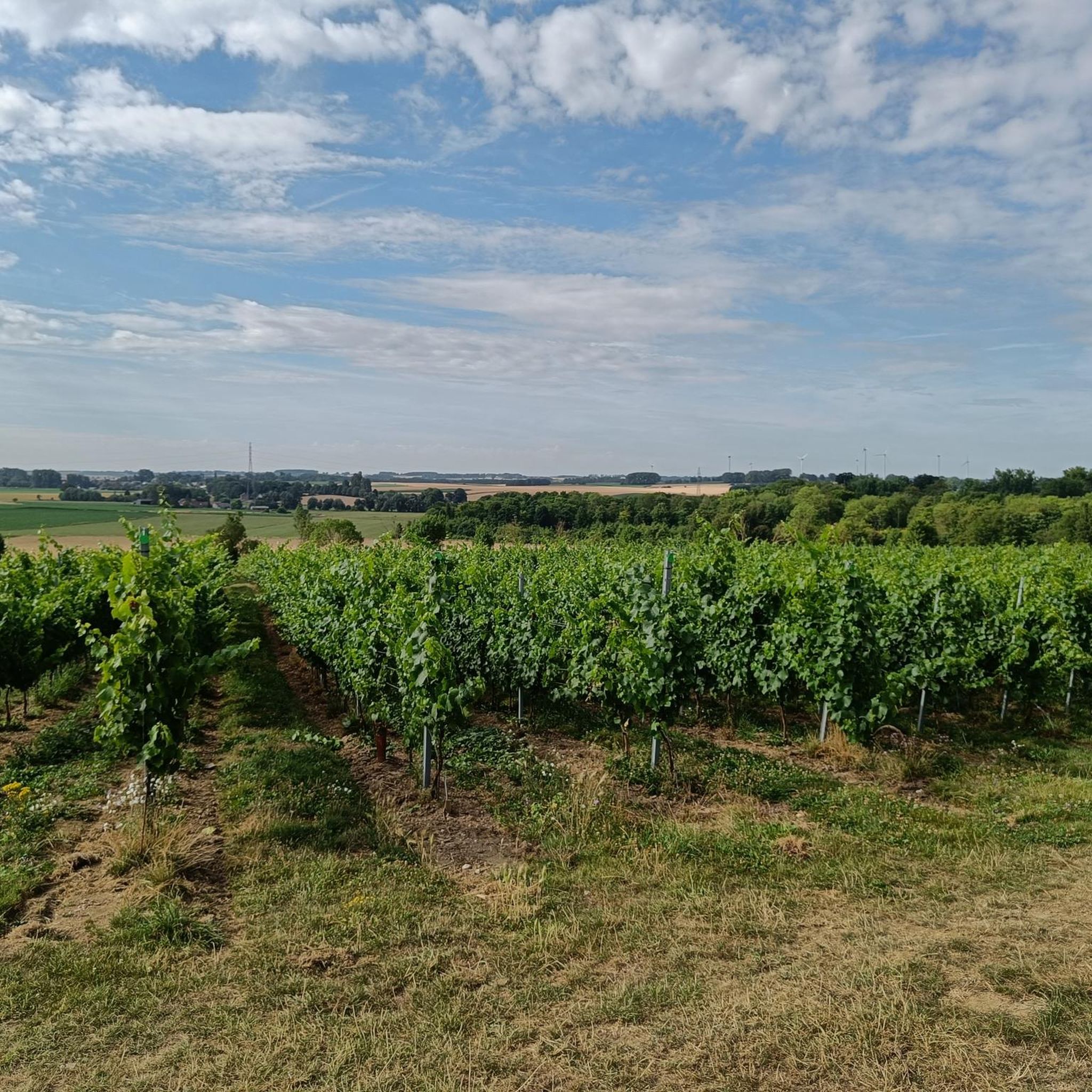
The vineyard is located in Haulchin, between Binche and Mons, on the so-called “Les Agaises” bed on a hillside very rich in limestone and facing south, over which Lord Ruffus reigned in the 12th century. It was in 2002, at a time when Belgian viticulture was quite confidential, that the first two hectares of Chardonnay were planted on a unique terroir, that of “Terres Blanches”. The estate, the very first in Wallonia intended exclusively for the production of sparkling wines, a true spearhead of the wine revival in Belgium, has gradually expanded to reach more than 35 hectares today.
0
0

SAINT PETER'S CHAPEL This is a very special chapel, it looks more like a mining lamp. Take a walk around this building, that one 1842 was restored, and note it Christ monogram, showing the year 1637, with the Virgin to the right Mary holding the deceased Christ. (https://www.merbeslechateau.be/que-faire-a-merbes-le-chateau/promenades/descriptif/promenades-balisees/promenade-des-batelieres.pdf)
2
0
The Neolithic flint mines of Spiennes constitute a vast flint extraction and knapping center covering around a hundred hectares. They were exploited for nearly two millennia between 4350 and 2300 BC. They have been included on the UNESCO World Heritage List since 2000. Find all the information here: https://www.minesdespiennes.org
5
0

The enormous size of the site (nearly 100 ha), its age and its archaeological richness have led to the Spiennes site being recognized as a UNESCO World Heritage site in December 2000. This puts the Neolithic flint mines of Spiennes next to buildings such as the Great Wall of China, the Taj Mahal in India or the cemetery of Machu Picchu in Peru. So it is worth driving by! https://www.visitmons.nl/uitstap-naar-een-vuursteenmijn
8
0
THE LEVEAU FORT Fort Leveau is one of six forts (Sarts, Boussois, Cerfontaine, Bourdiau, Hautmont and Leveau) built on the outskirts of Maubeuge to protect the border. It was built between 1882 and 1884 according to the defense principles of General Séré de Rivières. Now owned by the town of Feignies, it is one of the last witnesses to the Battle of Maubeuge in August-September 1914. The Fort de Leveau museum is largely devoted to the First World War. From local history to a more global vision of the conflict, the daily life of the soldiers and the living conditions of the Poilus are presented from the first days of the war in the forts to the mud of the trenches. The Fort de Leveau Safeguarding Association ensures the safeguarding and enhancement of this fort. The dormant bridge, destroyed by a shell on September 7, 1914, was rebuilt with the support of the Agglomeration, 100 years later with respect for heritage. Association Safeguarding the Fort of Leveau B.P. 51068 FEIGNIES 59606 MAUBEUGE CEDEX Such. / Fax: +33(0)3 27 62 37 07 Email: contact@fortdeleveau.fr URL: http://fortdeleveau.fr/
0
0
Frequently Asked Questions
What historical sites can I visit near Bersillies?
Bersillies itself is home to the Ouvrage de Bersillies, a fortified work of the Maginot Line built between 1935 and 1938. Nearby, you can explore Fort de Leveau, one of six forts built to protect Maubeuge, now housing a museum largely devoted to the First World War. Another significant historical site is Sars-la-Bruyère, known for its 13th-century keep, one of the oldest medieval remains in the region, and an old Roman road.
Are there any ancient archaeological sites in the area?
Yes, the SILEX'S Museum in Spiennes is located near the Neolithic flint mines, a vast flint extraction and knapping center that was exploited for nearly two millennia between 4350 and 2300 BC. This site has been included on the UNESCO World Heritage List since 2000.
What natural parks or forests are available for outdoor activities?
The region boasts natural beauty with parks such as l'Avesnois, located approximately 20 km away, and Scarpe-Escaut, about 43 km away. The Forest of Mormal, the largest forest in the region, also offers extensive trails for various outdoor activities.
What family-friendly attractions are available near Bersillies?
For family fun, consider visiting the Parc Zoologique de Maubeuge, located approximately 5.4 kilometers from Bersillies. Another popular attraction is SPARKOH! in Frameries, offering interactive exhibits. Many historical sites like Fort de Leveau and SILEX'S Museum are also categorized as family-friendly.
Can I visit a vineyard near Bersillies?
Yes, you can visit Ruffus – Agaises Vineyard in Haulchin. This estate, established in 2002, is dedicated exclusively to the production of sparkling wines and has expanded to over 35 hectares. Visitors often enjoy tasting the local sparkling wine, Ruffus.
What outdoor activities can I do near these attractions?
The area around Bersillies offers various outdoor activities. You can find numerous hiking trails, such as the easy "Dandelion loop from Assevent" or moderate routes like "Château de Harvengt loop from Quévy." For cycling, there are road cycling routes like the "Avesnois Greenway loop." Running enthusiasts can explore trails like the "Étang du Peignage loop." You can find more details on these activities in the hiking guide, road cycling guide, and running guide for the Bersillies region.
What is the best time of year to visit Bersillies for outdoor activities?
While specific seasonal advice isn't provided, generally, spring and autumn offer pleasant temperatures for hiking and cycling in the Nord department. Summer can also be enjoyable, especially in forested areas like the Forest of Mormal, but it's always wise to check local weather conditions before planning your trip.
Are there any cultural events or festivals nearby?
The region is known for its cultural vibrancy, including the notable Carnaval de Binche. While Bersillies itself is small, exploring nearby towns can offer insights into local traditions and events.
What do visitors particularly enjoy about the attractions around Bersillies?
Visitors appreciate the blend of historical significance and natural beauty. For instance, the Fort de Leveau is valued for its historical depth and museum, while the Ruffus – Agaises Vineyard is enjoyed for its local sparkling wine tastings. The historical context of places like Sars-la-Bruyère and the ancient flint mines at SILEX'S Museum also draw significant interest.
Where can I find dining options near Bersillies?
While Bersillies is a small commune, the surrounding towns and cities like Maubeuge, Bavay, and Locquignol offer various cafes, pubs, and restaurants. Some attractions, like Ruffus – Agaises Vineyard, may also offer tasting rooms or facilities.
Are there any notable towns or cities to visit near Bersillies?
Yes, nearby points of interest include Maubeuge, home to the Parc Zoologique. The historic Grand-Place de Mons in Belgium is also a significant site featuring historic buildings. Additionally, the town of Maroilles is known for its riverside setting and remnants of its abbey complex.
Most popular routes around Bersillies

Get inspired with the komoot mobile app


Explore more
Still not found the Highlight you’re looking for? See guides of the top attractions in other regions:
