Attractions and Places To See around Wallers-En-Fagne - Top 20
Best attractions and places to see around Wallers-En-Fagne include a mix of historical sites, cultural landmarks, and natural routes. The region, situated near the Ardennes forest, offers varied landscapes of forests, meadows, and charming villages. It is characterized by its historical depth, with sites reflecting centuries of heritage. Visitors can explore both man-made monuments and scenic greenways.
Best attractions and places to see around Wallers-En-Fagne
- The most popular attractions is Chimay Castle, a castle that reflects 1000 years of…
Last updated: October 18, 2026
Chimay Castle
Highlight • Castle
Translated by Google •
Tip by

Voie verte de l'Avesnois
Highlight (Segment) • Other
Translated by Google •
Tip by

Sign up now to discover places like this
Get recommendations on the best single tracks, peaks, & plenty of other exciting outdoor places.
Canadian Prisoners Memorial, Momignies
Highlight • Monument
Translated by Google •
Tip by

Château de Trélon
Highlight • Castle
Translated by Google •
Tip by

Sign up for free to discover even more attractions around Wallers-En-Fagne.
Already have an account?
Start today with a free account
Your next adventure awaits.



Tips from the Community

The aircraft that crashed here was a Vickers Wellington Mk X, a medium-weight twin-engine bomber widely deployed by the Royal Air Force and Allied air forces during World War II. The Wellington was one of the most recognizable British bombers of the early war years and was known for its remarkable geodetic construction designed by aircraft designer Barnes Wallis. This unique structure gave the aircraft exceptional strength, allowing some heavily damaged planes to return to base. By 1943, the aircraft was primarily used for night bombing missions over occupied Europe and Germany. The Wellington HE652 belonged to No. 426 Squadron of the Royal Canadian Air Force, a unit that was part of RAF Bomber Command. This squadron, formed in October 1942, operated from RAF Dishforth in North Yorkshire, England, and primarily conducted nocturnal bombing raids on strategic targets in Germany. On the evening of April 10, 1943, the Wellington HE652 departed from RAF Dishforth as part of a large-scale Allied bombing operation targeting the German city of Frankfurt. Such missions were part of the strategic bombing campaign through which the Allies sought to weaken Germany's industrial capacity and logistical infrastructure. During this flight, the aircraft was intercepted over Belgium by a German night fighter. Investigations suggest that the aircraft was likely shot down by German Luftwaffe pilot Wilhelm Herget, an experienced night fighter ace who downed multiple Allied aircraft during the war. The attack took place in the early hours of April 11, 1943. Around 03:23, the Wellington crashed in the wooded area near Virelles. The impact was devastating; the aircraft was completely destroyed, and the entire crew perished. The crew of Wellington HE652 consisted of five young servicemen, primarily from Canada and the United Kingdom. The pilot was Pilot Officer John H. Sammet. The crew further comprised Sergeant John Hehir, who served as navigator and bomb aimer; Sergeant Douglas A.W. Weller as radio operator; Sergeant George Levins as flight engineer and gunner; and Sergeant Jack G. Budreau as tail gunner. Like so many young men who participated in the air war, they were often barely older than twenty. Their mission over Europe was part of a conflict that claimed thousands of similar lives in the fight against Nazi Germany. After the crash, the bodies were recovered and buried in the military cemetery of Florennes, where they still rest. The crash site remained largely untouched for many years until local historians and residents began to recognize the importance of the location. To keep the memory of the crew alive, a memorial was erected on August 6, 1978, at the exact site of the crash. The monument is intentionally kept simple. It consists of a simple stone or metal commemorative structure with a plaque listing the aircraft's details and the crew members' names. Around the monument are flagpoles, often adorned with Belgian, British, and Canadian flags, symbolizing the international solidarity in remembrance. The area around Virelles played an important role during World War II as a transit area for Allied aircraft en route to Germany. Belgium was situated in a strategic corridor between England and German industrial targets, making its airspace a frequent scene of aerial combat, crashes, and forced landings. Consequently, smaller monuments commemorating downed aircraft can be found throughout the country.
0
0

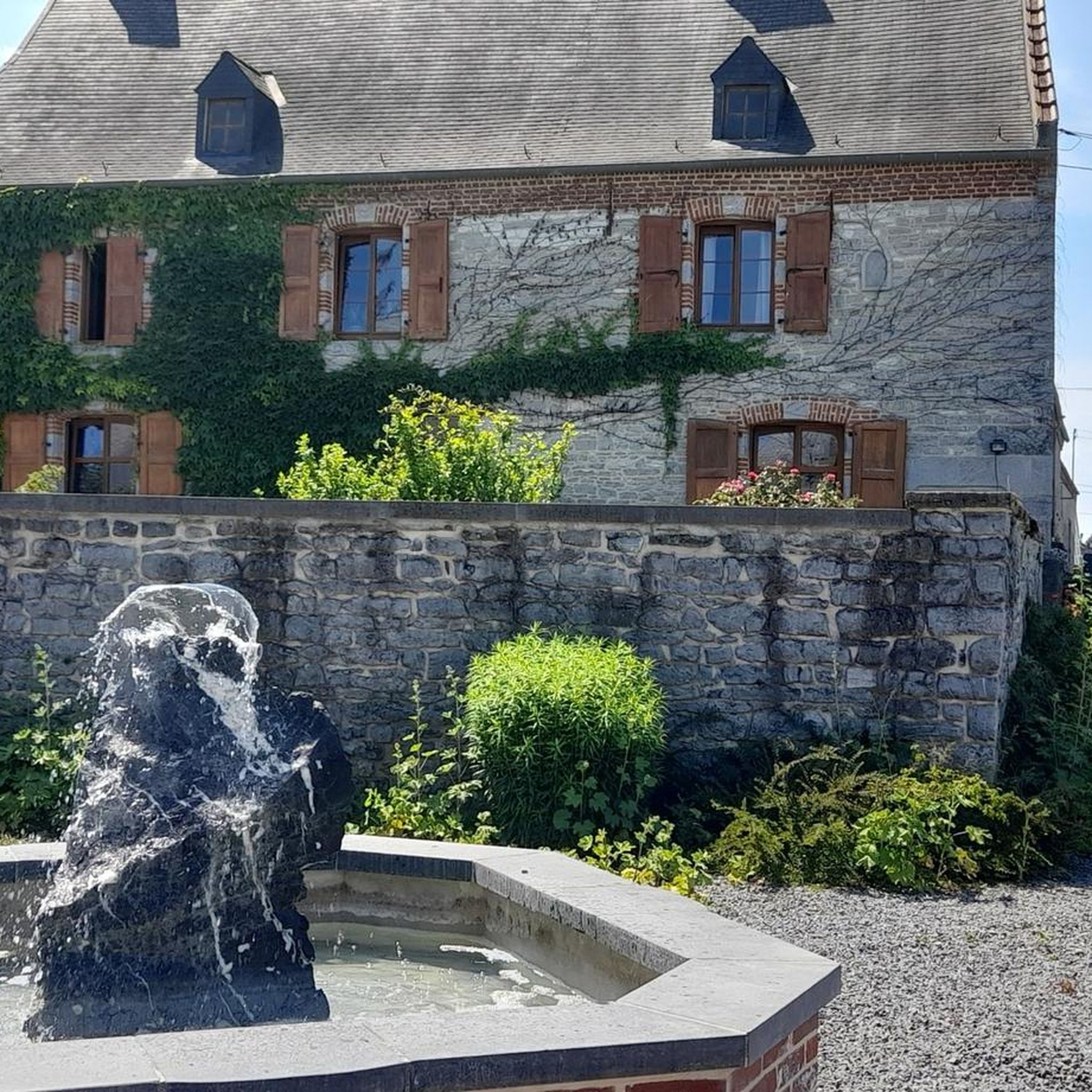
Chimay, before being known for its superb castle, its monastic life, and its famous beer, is above all a forest town. The town is located in a clearing overlooking the Ardennes forest. It is at the Notre-Dame de Scourmont Abbey that the Trappist Cistercian monks make beer and cheese.
3
0

Interesting and worth seeing old town of Chimay.
3
0
Interesting historical reminder.
3
0
Just took a photo from the outside. Nice to look at.
3
0
Very nice asphalted railway line cycle path EV3.
2
0

On the night of April 10 to 11, 1943, Hptm Wilhelm Herget of I./NJG 4 shot down a bomber over Virelles. In the crash of Wellington Sgt Douglas A.W. Weller (radio operator), Sgt George Levins (flight engineer and fuselage turret gunner), Sgt Jack G. Budreau RCAF (tail gunner). They are buried in the municipal cemetery of Florennes. A memorial has been set up for this crew in the forests of Virelles.
1
0
Frequently Asked Questions
What historical sites can I visit around Wallers-En-Fagne?
The region is rich in history. You can explore Chimay Castle, which reflects 1000 years of history and is known for its monastic life and Trappist beer. Another significant site is Château de Trélon, a majestic Louis XIII style house registered as a historic monument. Don't miss the Canadian Prisoners Memorial in Momignies, a poignant reminder of WWII history, or the historic Church of Liessies, part of a former 8th-century abbey.
Are there greenways or cycling paths near Wallers-En-Fagne?
Yes, the Voie verte de l'Avesnois is a fantastic option. This greenway stretches over 100 kilometers, offering a safe and picturesque route for cyclists and walkers through varied landscapes within the Avesnois Regional Natural Park. It connects several charming villages and features sections of old railway lines.
What outdoor activities are available around Wallers-En-Fagne?
The area offers a variety of outdoor activities. You can find numerous hiking trails, including easy and moderate options. There are also dedicated running routes and gravel biking tours that allow you to explore the diverse landscapes of forests, meadows, and river valleys.
Are there family-friendly attractions around Wallers-En-Fagne?
Absolutely. Many attractions are suitable for families. Chimay Castle and Château de Trélon offer historical insights in engaging settings. The Voie verte de l'Avesnois provides a safe and enjoyable path for family walks or bike rides. The Canadian Prisoners Memorial also offers an educational experience for older children.
What is the best time to visit Wallers-En-Fagne attractions?
The best time to visit largely depends on your preferred activities. Spring and summer (April to September) are ideal for outdoor pursuits like hiking, cycling, and exploring greenways, with pleasant weather and lush landscapes. Autumn (October) offers beautiful foliage, while winter can be charming for historical sites, though some outdoor routes might be less accessible.
Are there hiking trails suitable for beginners in Wallers-En-Fagne?
Yes, there are several beginner-friendly hiking options. For example, the 'Moustier-en-Fagne Priory – Priory of Moustier-en-Fagne loop from Moustier-en-Fagne' is an easy 5.5 km route. You can find more details and other suitable trails in the Hiking around Wallers-En-Fagne guide.
Are there any wheelchair-accessible attractions in the area?
The Canadian Prisoners Memorial in Momignies is noted as wheelchair accessible, offering an opportunity for all visitors to engage with its historical significance.
Can I spot wildlife around Wallers-En-Fagne?
Yes, the region, particularly within the Avesnois Regional Natural Park and the surrounding forests like the Ardennes, offers opportunities for wildlife spotting. Keep an eye out for various bird species, deer, and other forest animals while exploring the greenways and hiking trails.
Are there dog-friendly walks near Wallers-En-Fagne?
Many of the outdoor trails and greenways, such as the Voie verte de l'Avesnois, are generally dog-friendly, provided your dog is on a leash. Always check local regulations for specific areas, especially nature reserves, but you'll find plenty of open spaces to enjoy with your canine companion.
What do visitors particularly enjoy about the attractions in Wallers-En-Fagne?
Visitors appreciate the blend of historical depth and natural beauty. The rich history of sites like Chimay Castle and Château de Trélon, combined with the serene landscapes of the Voie verte de l'Avesnois, creates a diverse and engaging experience. The community has shared over 140 photos and given more than 100 upvotes, highlighting the area's appeal for both cultural exploration and outdoor adventures.
Is public transport available to Wallers-En-Fagne attractions?
While Wallers-En-Fagne is a rural area, public transport options might be limited directly to all attractions. It's generally recommended to have a car for flexibility, especially when visiting multiple sites. However, some larger towns nearby may have bus services. Always check local transport schedules in advance for specific routes.
Where can I find cafes or refreshments near hiking trails in Wallers-En-Fagne?
While specific cafes directly on trails are rare, you'll often find small cafes, bakeries, or restaurants in the charming villages that the trails pass through or are near. Towns like Chimay, Trélon, or Momignies offer options for refreshments. It's a good idea to pack some snacks and water, especially for longer hikes, and plan your route to pass through a village for a break.
Most popular routes around Wallers-En-Fagne
Most popular attractions around Wallers-En-Fagne

Get inspired with the komoot mobile app


Explore more
Still not found the Highlight you’re looking for? See guides of the top attractions in other regions:
