Attractions and Places To See around Montrécourt - Top 20
Attractions and places to see around Montrécourt include historical landmarks and natural features within this small rural commune in the Nord department of northern France. The area is characterized by its green setting, offering opportunities for outdoor activities. Montrécourt holds historical significance, evident in its religious heritage and war memorial. The surrounding region provides a broader context for exploring natural landscapes and various outdoor pursuits.
Best attractions and places to see around Montrécourt
- The most popular attractions is Bassin Rond…
Last updated: July 7, 2026
Avesnes-le-Sec
Highlight • Settlement
Translated by Google •
Tip by

Country house of the Abbey of Saint-Aubert in Cambrai
Highlight • Historical Site
Translated by Google •
Tip by
Sign up now to discover places like this
Get recommendations on the best single tracks, peaks, & plenty of other exciting outdoor places.
Sign up for free
Quiévy to Saint-Python Cobbled Sector
Highlight (Segment) • Cycleway
It is quite trying due to its length and its climbs!
Translated by Google •
Tip by

Bassin Rond Cycle Path
Highlight (Segment) • Cycleway
Particularly ideal for family outings.
Translated by Google •
Tip by
La Layette Mill
Highlight • Other
Translated by Google •
Tip by

Sign up for free to discover even more attractions around Montrécourt.
Sign up for free
Already have an account?
Start today with a free account
Your next adventure awaits.
Login or Signup




Tips from the Community

The image speaks for itself
0
0

Many centuries ago, our ancestors discovered the possibility of harnessing the power of the elements - which on the one hand were helpful and useful, but on the other hand could also be a threat as untamed forces of nature - for different purposes and thus did without human or animal muscle power can. Such mills are a good example of the human engineering skills of earlier generations: the heavy millstones with which, for example, grain was ground into grain or oil was pressed, could be powered with the help of the wind or - as here - water.
0
0

Avesnes-le-Sec is a commune in the French Northern Department, in the Hauts-de-France region. It has an area of 10.4 km² and has 1,445 inhabitants (2020). It is part of the arrondissement of Valenciennes and the canton of Denain. Avesnes-le-Sec has a number of sites and heritage that testify to its history and culture. Some examples are: Avesnes-le-Sec Communal Cemetery Extension, a war cemetery from the First World War, where 65 British soldiers are buried. The ruins of the Moulin de Pierre, a tower mill from the 18th century, built with white limestone from the region. The mill was destroyed by a German shell in 1918. The Saint Aubertus Church, a Gothic church from the 12th century, dedicated to the patron saint of the municipality. The church has a remarkable portal with sculptures and an organ from the 19th century. Avesnes-le-Sec is also a pleasant place for walking or cycling, thanks to its green surroundings and its proximity to the River Somme. There are several routes and paths that run along the water or through the countryside. One of the most beautiful routes is the Voie verte du cavalier d'Agincourt, which connects Aniche to Escaudain over a distance of 12 km.
5
0
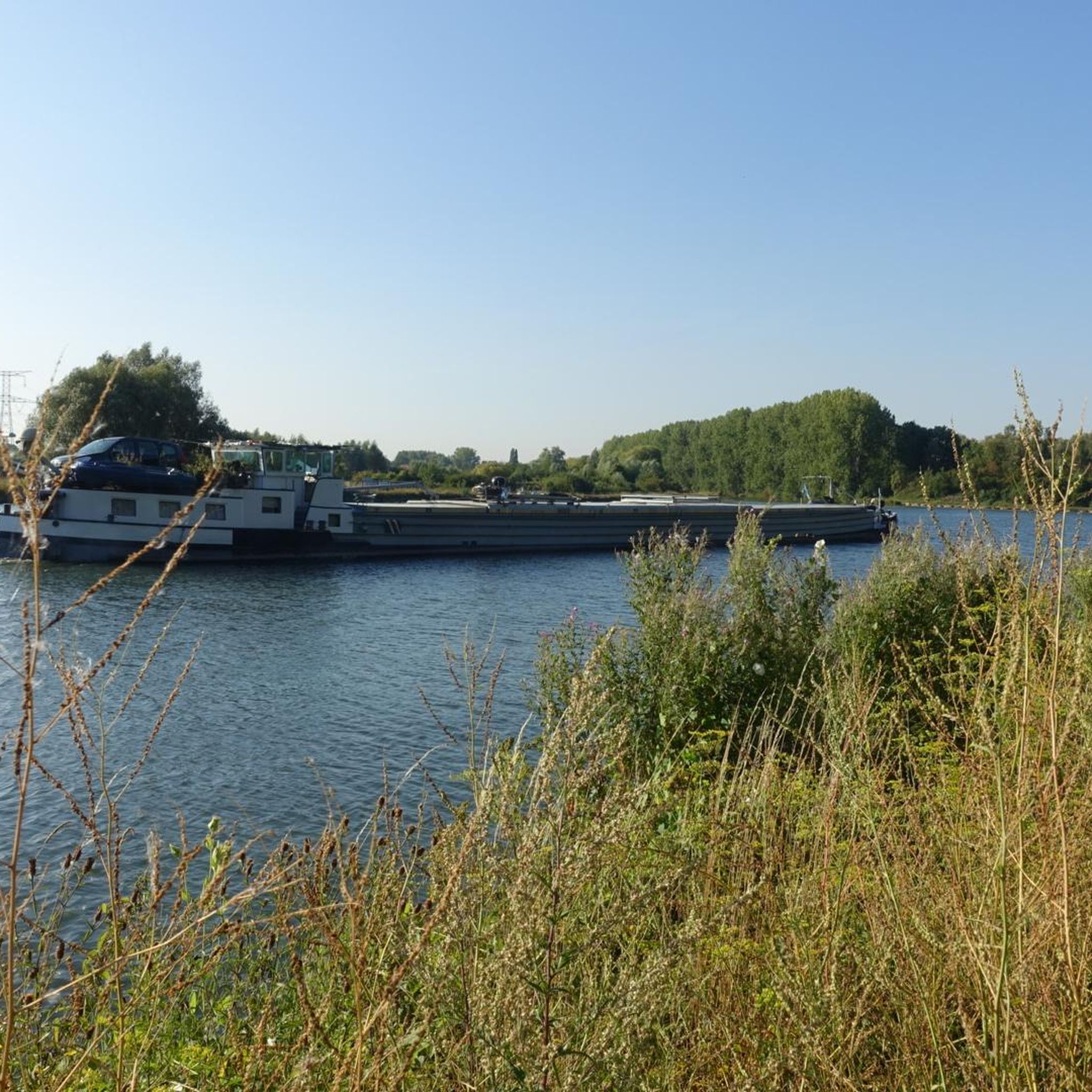
Le Bassin Rond is a former water garage in Bouchain, France. It was constructed to allow the connection between the Canal de l'Escaut and the Sensée1. It is a popular destination for walkers and cyclists, with a 5 kilometer trail along its banks that invites you to go back in time2. There is also a sailing school called Center Départemental De Plein Air Du Bassin Rond CDPA, where you can learn to sail and practice other water sports
1
0
The castle was built in the 17th century and was completed in the 19th century. Originally owned by the Abbaye Saint-Aubert de Cambrai, the castle was built on land owned by the abbey. The plans are said to have belonged to Ange-Jacques Gabriel or Alexandre-Théodore Brongniart. The castle was sold as national property during the Revolution. With the help of a stooge, Count François Marie Joseph de Frahan became the owner. It was sold by his descendants to Pierre Joseph Danjou in 1853 and then to Nicolas Meriaux in 1884. In 1887, Marie-Adélaide Verkinder, wife of deputy Ernest Déjardin, acquired the château. It passed to her daughter and son-in-law, Ambassador Pierre Lefèvre-Pontalis. During the First World War, the castle became the headquarters of Jagdgeschwader and Baron Manfred von Richthofen lived there. The castle, its moats and bridges have been classified as a historical monument since September 21, 1983, while the outbuildings, the old building on the edge of road number 4, the facades and roofs of the pigeon tower and the pavilion in the park and the perimeter wall with its gates since the same date have been registered as a historical monument.
5
0

3700 meters - 4 stars The strip has been in use since 1973 and the last part was re-paved in 2007. For several years now it has been the longest strip and with 4 stars a fierce challenge. The strip has a V-shape and halfway through you actually drive back where you came from. The strip therefore starts and ends on the same road, namely the D113. It is also remarkable that the second part after turning right is an "ordinary" D-road. Because of the length you really look forward to your end. The turn halfway should not be underestimated because the road is narrow and the turn is a bit tight. Especially difficult if you pass here with a large group. Furthermore, it rises false flat in a number of places and that in combination with the bad stones makes it a serious challenge. At the end of the strip on the left is a beautiful farmhouse, the Ferme de la Fontaine au Tertre. This medieval farmhouse played an important role at the end of the First World War when it was converted into a field hospital.
0
0

Former mill of Verchain-Maugré
1
0

Superb cycle path along the Bassin Rond. Particularly ideal for family outings.
1
0
Frequently Asked Questions
What historical landmarks can I explore in Montrécourt?
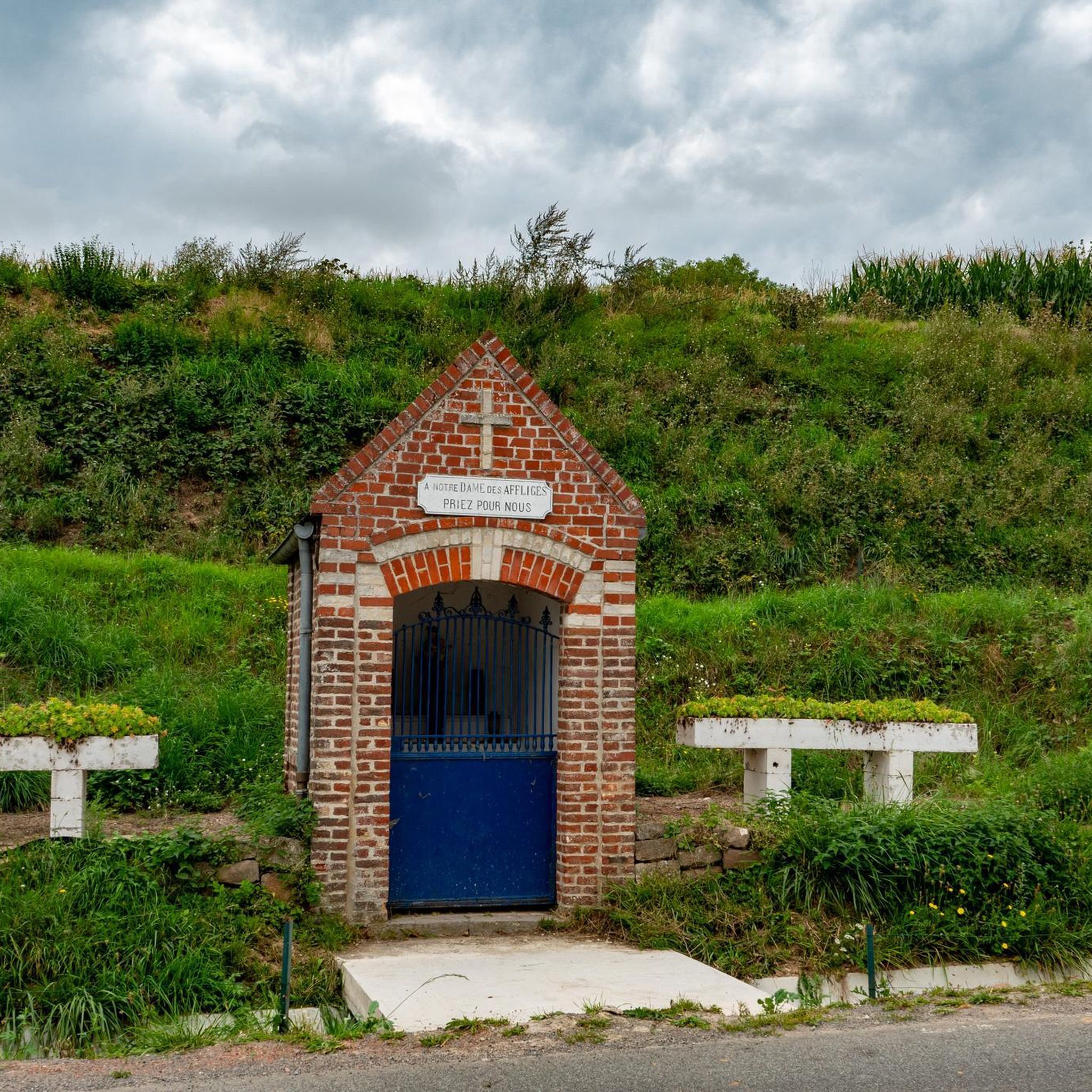
Montrécourt is rich in history. You can visit the 15th-century Saint-André Church, which was rebuilt in 1741. The commune also features a War Memorial (Monument aux morts) and several chapels, including the Notre-Dame des Affligés Chapel and the Saint-Druon Chapel, along with various calvaries and oratories. Nearby, you can also discover the historical site of the Menhir known as Le Gros Caillou or Grès Montfort, which offers a beautiful view of the Ecaillon valley.
Are there good cycling routes around Montrécourt?
Yes, the area offers several cycling opportunities. A popular choice is the Bassin Rond Cycle Path, a superb 5-kilometer trail along the Bassin Rond, ideal for family outings. For a more challenging experience, cyclists can tackle the Quiévy to Saint-Python Cobbled Sector, a 3700m paved section used by the Paris-Roubaix race. You can find more road cycling routes in the area by visiting our guide on Road Cycling Routes around Montrécourt.
What natural features or viewpoints are there in the Montrécourt region?
While Montrécourt itself is a small rural commune, the surrounding area is characterized by its green setting. The Menhir known as Le Gros Caillou or Grès Montfort is a historical site that also serves as a viewpoint, offering magnificent vistas of the Ecaillon valley. The nearby commune of Avesnes-le-Sec is known for its green surroundings and proximity to the River Somme, providing pleasant natural landscapes for exploration.
Are there family-friendly activities or attractions near Montrécourt?
Absolutely! The Bassin Rond Cycle Path is particularly ideal for family outings, offering an easy and enjoyable ride. The Menhir known as Le Gros Caillou or Grès Montfort is also considered family-friendly, providing an accessible spot for a short break with a view. Additionally, Avesnes-le-Sec offers green spaces and routes suitable for walking and cycling with the family.
Where can I find hiking trails around Montrécourt?
The Montrécourt area provides several options for hikers. You can find moderate trails like the 'Moulin Labbez loop from Haussy' or the 'Fountain – Wallerand Mill on the River Selle loop from Haussy'. For an easier option, consider the 'Hiking loop from Vendegies-sur-Écaillon'. Discover more detailed routes and their difficulties in our dedicated guide for Hiking around Montrécourt.
What is the historical significance of Montrécourt?
Montrécourt has a rich historical background, with its name derived from the Latin 'Monasterioli curtis,' meaning 'farm of the small monastery.' Historically, it was one of the twelve 'pairies' of Cambresis, established in 933, and notably, it was the only one not to be hereditary. This heritage is reflected in its ancient church and other historical sites.
Are there any mountain biking trails near Montrécourt?
Yes, there are several mountain biking trails in the vicinity of Montrécourt. You can explore moderate routes such as the 'Green Path – Small village loop from Solesmes' or the 'Small wooded path – Small village loop from Montrécourt'. For more options and detailed information, please refer to our MTB Trails around Montrécourt guide.
What do visitors enjoy most about the attractions around Montrécourt?
Visitors particularly appreciate the blend of historical sites, scenic cycle paths, and natural viewpoints. The Bassin Rond Cycle Path is loved for its pleasant route, while the Menhir known as Le Gros Caillou or Grès Montfort is valued for its historical interest and beautiful views. The green surroundings of places like Avesnes-le-Sec are also highly rated for walking and cycling.
Is there a historical castle or country house to visit nearby?
Yes, you can visit the Country house of the Abbey of Saint-Aubert in Cambrai. This castle, originally owned by the Abbaye Saint-Aubert de Cambrai, has a rich history dating back to the 17th century and was classified as a historical monument in 1983. It even served as the headquarters for Baron Manfred von Richthofen during World War I.
What is the best time of year to visit Montrécourt for outdoor activities?
The Montrécourt area, with its green setting, is generally pleasant for outdoor activities during the warmer months, typically from spring through early autumn. This period offers comfortable temperatures for walking, cycling, and exploring the natural landscapes and historical sites.
Are there any specific walking paths or greenways in the area?
Yes, the surrounding region offers several walking paths. For instance, near Avesnes-le-Sec, you can find the 'Voie verte du cavalier d'Agincourt', which is a pleasant route for walking or cycling along the water or through the countryside. The general rural landscape of Montrécourt also provides many opportunities for leisurely strolls.
Most popular routes around Montrécourt

Get inspired with the komoot mobile app


Explore more
Still not found the Highlight you’re looking for? See guides of the top attractions in other regions:
