The best MTB trails around Moncrabeau
4.3
(25)
215
riders
59
rides
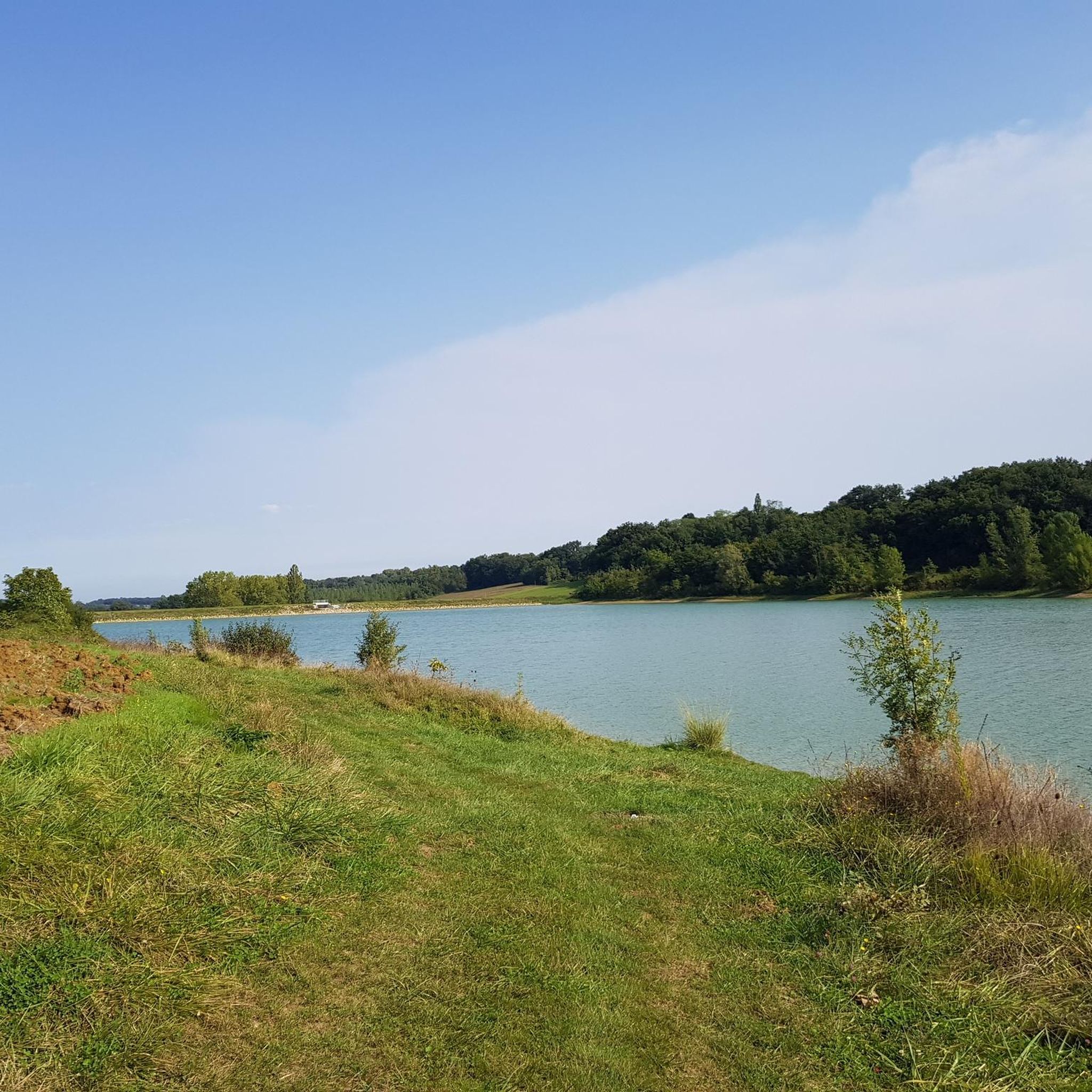
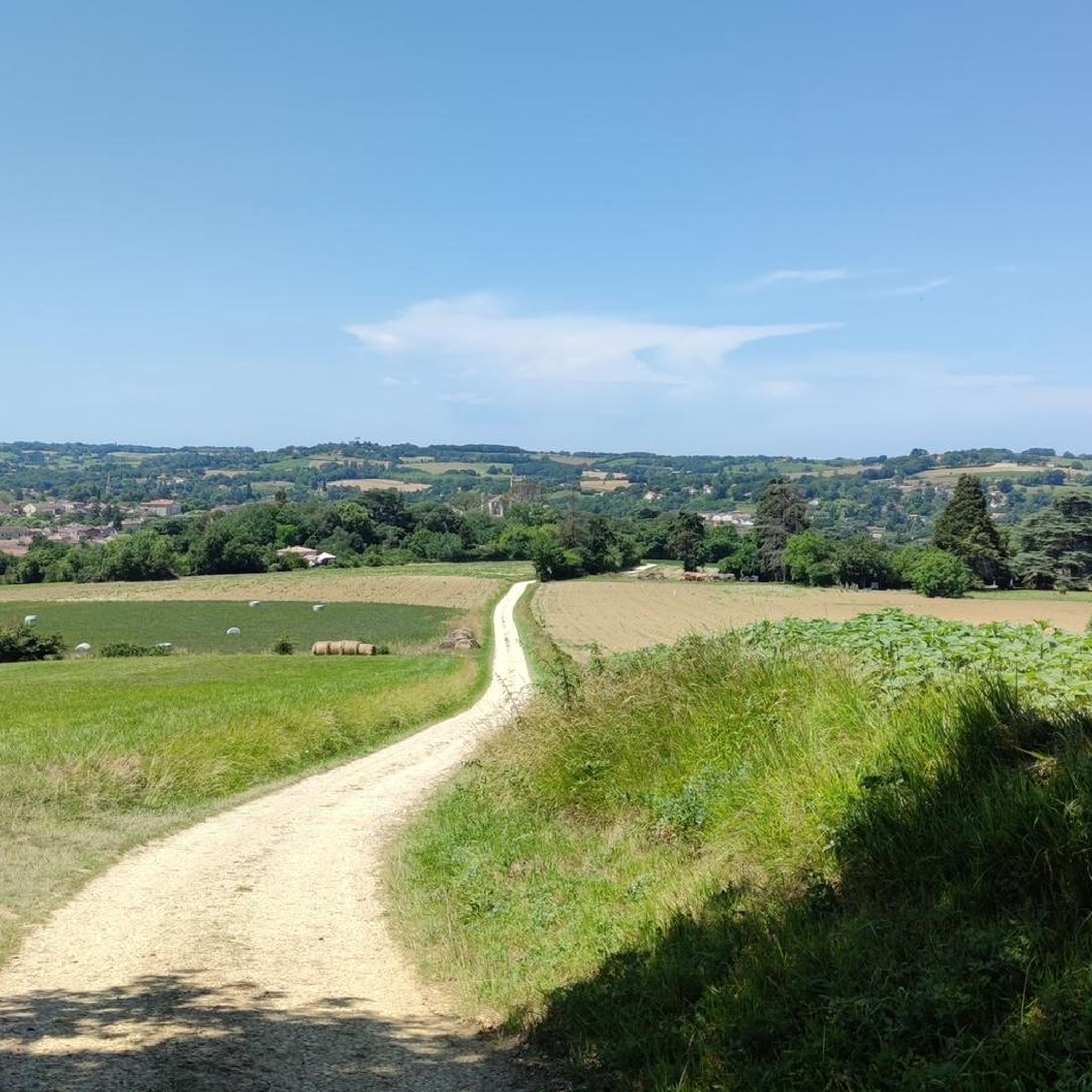
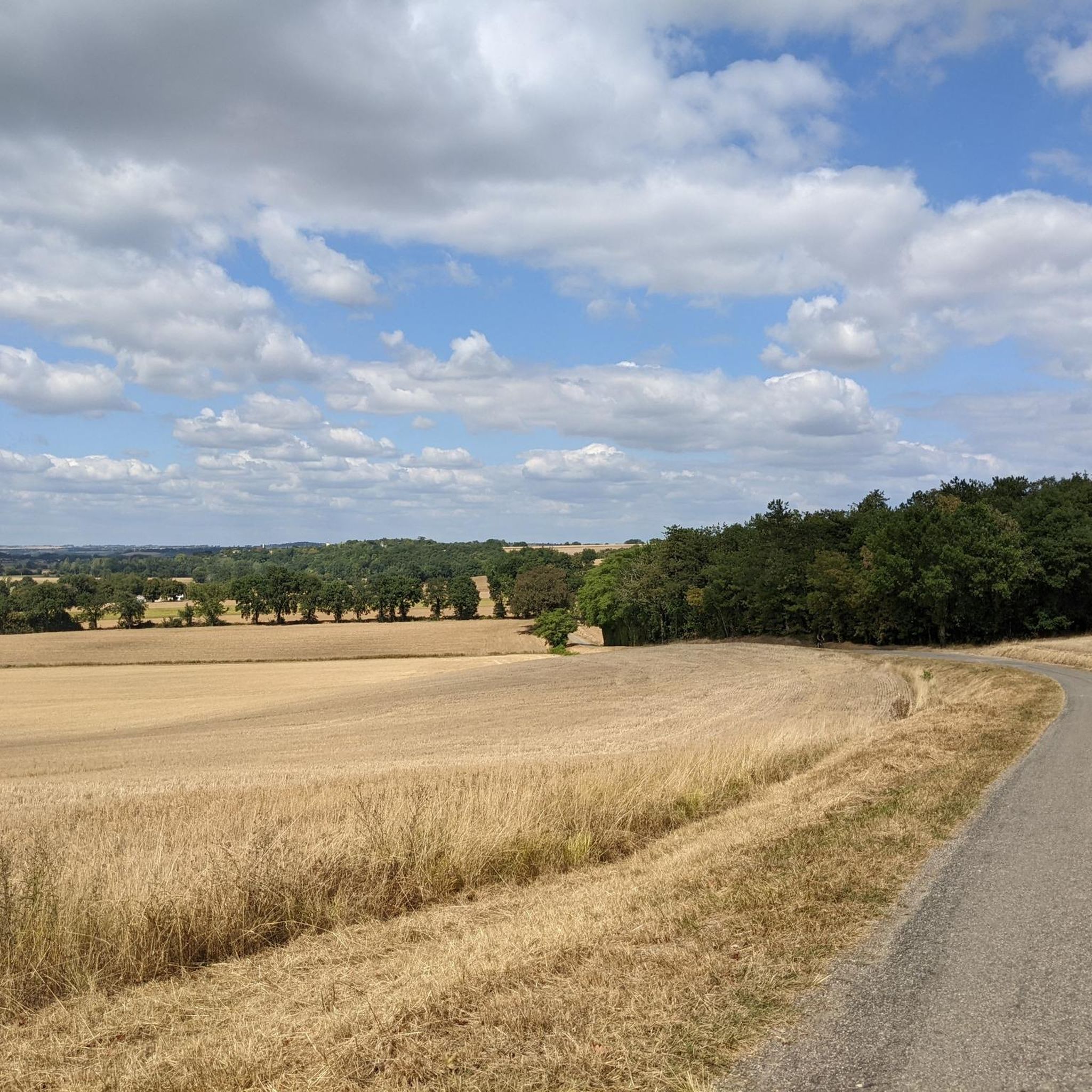
Mountain biking around Moncrabeau traverses a landscape characterized by rural settings and rolling terrain. The region features a network of paths connecting small towns and historical sites. These routes often pass through agricultural areas and provide views of the local countryside. Elevation changes are generally moderate, making the area accessible for a range of mountain biking abilities.
Best mountain bike trails around Moncrabeau
- The most popular mountain bike trail is Château de Nérac – Nérac loop from Nérac, a…
Last updated: June 26, 2026
7
riders
44.2km
03:26
530m
530m
Moderate mountain bike ride. Good fitness required. Advanced riding skills necessary.
17
riders
52.9km
04:16
770m
770m
Moderate mountain bike ride. Good fitness required. Advanced riding skills necessary.

Sign up for free
3.5
(2)
6
riders
35.3km
02:47
360m
360m
Moderate mountain bike ride. Good fitness required. Advanced riding skills necessary.
3.0
(1)
7
riders
29.5km
02:12
290m
290m
Moderate mountain bike ride. Good fitness required. Advanced riding skills necessary.
6
riders
33.1km
02:47
630m
620m
Moderate mountain bike ride. Good fitness required. Advanced riding skills necessary.
Get access to more routes and recommendations from other explorers.
Sign up for free
Already have an account?
Our route recommendations are based on thousands of hikes, rides, and runs completed by other people on komoot.
Start today with a free account
Your next adventure awaits.
Login or Signup

Tips from the Community

The Château Henri IV of Nérac, former residence of the lords of Albret, bears witness to the city's rich Renaissance past. Overlooking the Baïse, it was one of the living places of the future King Henri IV and remains today a must-see to discover the history of Albret.
0
0

Condom, a former episcopal city crossed by the Baïse River, is renowned for its Saint-Pierre Cathedral and its Armagnac-related past. In front of the cathedral stands the famous statue of the Four Musketeers (D'Artagnan and his companions), a tribute to Alexandre Dumas' novel and the famous captain's Gascon roots.
0
0
Don't miss La Romieu to greet Angeline and the cats. I didn't see any, at least not alive ones. I didn't stop there either. To get there, I took the 6 km road; you can also get there via the GR (Greater French National Trail). Its Saint-Pierre collegiate church, a 14th-century Gothic masterpiece listed as a UNESCO World Heritage Site, is imposing. Now for the legend... Around 1342, a terrible famine struck La Romieu. The starving inhabitants went so far as to eat all the cats in the village, thinking they were preserving their meager resources. But a little girl named Angeline, an orphan taken in by a local couple, adored cats. She hid two in the cellar, secretly feeding them, and then they bred. A little later, with all the cats gone, the village was invaded by thousands of rats, destroying the meager grain reserves and causing an even worse disaster. It was then that Angeline freed her cats. They multiplied again, drove out the rats, and saved the village. Angeline was honored by the villagers, and according to legend, her face took on the appearance of a cat, with feline features—a magical transformation to thank her love and loyalty to cats. Today, in tribute to this story, numerous cat statues adorn the streets, facades, and rooftops of the village.
1
0

Nérac Castle was founded in the 14th century, within a medieval town surrounded by walls and backing onto the Baïse River. Beginning in 1491, Alain d'Albret modernized this first tower and had three wings built. The west wing included the drawbridge and service rooms, the north wing housed Jeanne d'Albret's apartments, and the east wing constituted the main building of the castle. It was in this castle that Marguerite de Navarre, sister of Francis I and author of the Heptaméron, lived. A committed humanist, she brought Jacques Lefèvre d'Étaples, nicknamed the French Erasmus, to Nérac. Jeanne d'Albret, her daughter, was also sensitive to the ideas of her time and brought Théodore de Bèze to her court, before converting to Protestantism. It was in this context that Henry III of Navarre, the future King Henry IV, lived. He lived in this château for about ten years with Queen Marguerite de Valois, known as Queen Margot. The latter was responsible for the creation of the 3000-Step Avenue in the Parc de la Garenne, along the Baïse. This avenue, punctuated over the years with new fountains, was then surrounded by walls and accessible from the château by a bridge. The years following the assassination of Henri IV by Ravaillac in 1610 marked the decline of the château, first due to royal reprisals against Protestants and then due to the destruction caused by the French Revolution in 1793, when the château was declared national property. After the revolutionary destruction, only the north wing of the château remained, with its twisted columns so characteristic of the Renaissance style. The château was divided into lots and inhabited by several owners. Gradually, the municipality became interested in restoring the château, and a restoration project was drawn up by Eugène Viollet-le-Duc, whose sketches are on display in the museum. However, it wasn't until 1925 that the city became the owner of the entire building and began a restoration project to house the municipal museum. Since then, the royal residence and writer's home, the Château-Musée Henri IV, has offered visitors a permanent exhibition dedicated to Henri IV and the d'Albret family on the first floor, and the art of living during the Renaissance on the ground floor through various themes.
0
0

Nestled on the banks of the Baïse River, Nérac offers a peaceful atmosphere. Formerly the residence of Henry of Navarre, the future Henry IV, the town preserves a rich heritage with its castle, cobbled streets, and half-timbered houses.
0
0

A must see, go up to the castle, the view is fabulous
0
0

Nérac is, like Amboise, a royal city insofar as the commune is the fief of the lords of Albret who became king of Navarre in the 15th century. It is also the epicentre of Protestantism. After the massacre of Saint Bartholomew, a treaty between the two religions was born in this city. This is the Edict of Nérac which restored rights for Protestants. It was signed on 28 February 1579 between King Henry III and the religionists. After the death of Henry III in 1589, the city lost its influence, because having no descendants, it was Henri de Navarre-Bourbon-Albret who became king of France under the name of Henri IV. It is then said that when the doors of Paris opened to Henry, those of fame closed for Nérac.
3
0

The castle consists of two bodies placed next to each other at right angles. At the two corners of the first body, covered with a gable roof, lower than the second body, there are two cylindrical projecting turrets, the crown of which (certainly a pepperpot roof) has disappeared. Mullions appear on the upper floor, while simple openings open, probably later, on the ground floor.
3
0
Frequently Asked Questions
How many mountain bike trails are available around Moncrabeau?
There are over 60 mountain bike trails documented around Moncrabeau on komoot. These routes traverse rural landscapes, connecting small towns and historical sites, offering a variety of experiences for different skill levels.
Are there easy mountain bike trails suitable for beginners in Moncrabeau?
Yes, Moncrabeau offers a few easy mountain bike trails perfect for beginners or those looking for a relaxed ride. The region's generally moderate elevation changes make it accessible. You can find 3 easy routes in the area.
What kind of terrain can I expect on mountain bike trails in Moncrabeau?
The mountain bike trails around Moncrabeau feature rural settings and rolling terrain. You'll often ride through agricultural areas, past historical sites, and along paths connecting small towns. Elevation changes are generally moderate, providing a balanced riding experience.
Are there any challenging mountain bike routes for experienced riders?
While the majority of trails are moderate, there is at least one difficult mountain bike route available for experienced riders seeking a greater challenge. These routes will test your skills with more significant elevation changes or technical sections.
What is the typical length and duration of mountain bike trails in Moncrabeau?
Trail lengths vary, but many popular routes are between 18 to 28 miles (29 to 45 km). For example, the Château de Nérac – Nérac loop from Nérac is 28 miles (45.1 km) and typically takes around 3 hours 30 minutes. The Château de Poudenas loop from Mézin is 18.3 miles (29.5 km) and takes about 2 hours 10 minutes.
Are there circular mountain bike routes in Moncrabeau?
Yes, many mountain bike routes in Moncrabeau are designed as loops, allowing you to start and finish in the same location. Examples include the Condom – La Romieu loop from Condom and the Roquepousson loop from Mézin.
What are some interesting landmarks or attractions I can see along the mountain bike trails?
The trails often pass by historical sites and charming villages. Notable attractions include the Cloister of the Collegiate Church of Saint-Pierre in La Romieu, the Pont d'Artigues, and the Larressingle Fortified Village. Many routes also offer views of the local countryside and agricultural areas.
What is the best season for mountain biking in Moncrabeau?
The region is generally pleasant for mountain biking from spring through autumn. Spring offers lush greenery, while autumn provides comfortable temperatures and beautiful foliage. Summers can be warm, so early morning rides are often preferred during peak season.
Are there any mountain bike trails suitable for families with children?
Given the prevalence of moderate trails and generally gentle elevation changes, many routes around Moncrabeau can be suitable for families, especially those with some biking experience. Look for the 'easy' rated trails for the most family-friendly options.
What do other mountain bikers say about the trails in Moncrabeau?
The mountain bike trails in Moncrabeau are highly rated by the komoot community, with an average score of 4.3 stars from over 29 reviews. Riders often praise the scenic rural landscapes, the network of paths connecting charming towns, and the accessibility for various skill levels.
Where can I find parking or trailheads for mountain biking in Moncrabeau?
Many routes start from towns like Nérac, Mézin, or Condom, where public parking is typically available. Specific trailhead information and parking suggestions are usually detailed on individual komoot tour pages, such as the starting points for the Château de Nérac – Nérac loop or the Condom – Abbaye de Flaran loop.
Most popular attractions around Moncrabeau

Get inspired with the komoot mobile app


Explore more
Browse the best MTB trails in other regions.
