The best road cycling routes around Domloup
4.3
(727)
14,928
riders
18
rides
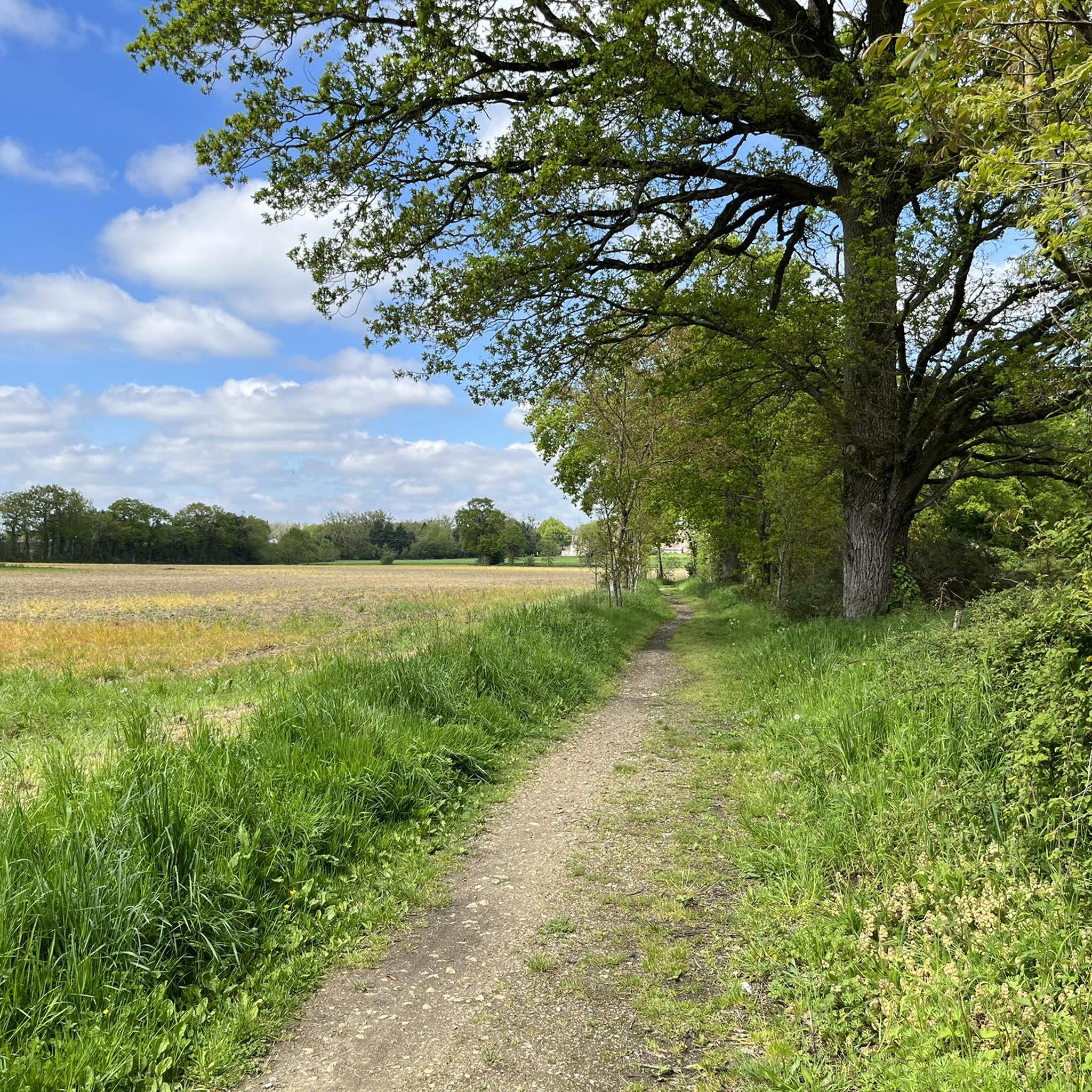
Road cycling routes around Domloup feature a picturesque Breton countryside characterized by rolling hills and valleys. The terrain offers engaging routes with moderate elevation gains, providing a workout while remaining accessible. Cyclists can expect to pass through open fields, agricultural land, and wooded areas. The region's infrastructure includes well-paved surfaces, enhancing the road cycling experience.
Best road cycling routes around Domloup
- The most popular road cycling route is Châteaugiron Castle – Châteaugiron Castle loop from Domloup, a 19.0 miles…
Last updated: August 26, 2026
21
riders
23.1km
00:59
140m
140m
Easy road ride. Great for any fitness level. Mostly well-paved surfaces and easy to ride.
14
riders
31.5km
01:22
230m
230m
Moderate road ride. Great for any fitness level. Some segments of this route may be unpaved and difficult to ride.

Sign up for free
17
riders
47.5km
02:00
360m
360m
Moderate road ride. Good fitness required. Mostly well-paved surfaces and easy to ride.
9
riders
56.2km
02:26
440m
440m
Moderate road ride. Good fitness required. Mostly well-paved surfaces and easy to ride.
10
riders
27.2km
01:11
200m
200m
Easy road ride. Great for any fitness level. Mostly well-paved surfaces and easy to ride.
Get access to more routes and recommendations from other explorers.
Sign up for free
Already have an account?
Our route recommendations are based on thousands of hikes, rides, and runs completed by other people on komoot.
Start today with a free account
Your next adventure awaits.
Login or Signup




Tips from the Community

The Sainte-Marie-Madeleine church was built in the 19th century in a neo-Gothic style by Aristide Tourneux, an architect from Castelgiron. With a touch of humor, the town's priest in 1912 wanted to give "cats to the girons": Arthur Regnault, a sculptor, therefore sculpted cats at the four corners of the bell tower. Having collapsed in 1998 following a severe storm, the bell tower was rebuilt identically in 2000.
0
0
Church attested in the 12th century. Nave flanked by a north aisle, built between 1540 and 1549 (date of consecration by the bishop of Rennes), and by a south aisle, built between 1603 and 1605 (dates inscribed). Inscription on the south door: ESTANT NOBLE ET DISCRET PRESTRE : RENE DE L'ESPINAY RECTEUR DE PIRE : SIEUR DE LA GUAYE FUT CESTE EDIF : CE COMMENCE. SA (NC) TE DEUS SA (NC) TE FORTIS SA (NC) TE IMORTALIS MISERERE NOBIS SA (NC) TE PETRE ORA P (RO) NOBIS : TOUT EST A Dieu 1603. The choir was first rebuilt in 1627, then surmounted by a dome struck by lightning in 1741, then again between 1752 and 1775, flanked by side sacristies. Bell tower at the top of the nave rebuilt in 1669. In 1874, architect Aristide Tourneux had a bay added to the north of the nave and a porch-tower surmounted by a spire built. Stained glass windows signed and dated: Claudius Lavergne 1882, and also stained glass windows from the Rault workshops and the Carmel of Le Mans. South wall of the enclosure redone in the 19th century with a monumental corner staircase.
0
0
The old church of Broons was destroyed in 1843. A new building, consecrated in 1846, was built on its site. Plans from 1839 of the church tower signed by Auguste Marchand are kept in the departmental archives.
0
0
Old church mentioned as early as 1160 and rebuilt in the 16th and 17th centuries (old tower dated 1582). The current church was entirely built to the plans of Arthur Regnault in 1904 (date and attribution by source). He uses the model of the so-called Plantagenet vaulted ceiling for the covering of the nave and aisles, but for the bell tower, he draws inspiration from Cornish bell walls. Two windows from the late 15th and 16th centuries of the old church were reused on the south side of the nave. This church, rebuilt in the Breton flamboyant style, is representative of the architect's style during this period.
0
0
The bell tower is visible from afar and has long dominated the town and its surroundings. The Saint-Pierre church has retained its impact on the local landscape for over a century. It was indeed in 1888 that the Fabrique Council decided to entrust Arthur Régnault, the diocese's architect, with the project for a new construction. His plan was accepted and work began in October 1889, before the blessing of the first stone on March 13, 1890. As an anecdote, the stones are extracted from the quarry of La Bouëxière. Quickly, the inhabitants discovered its citadel-like appearance, Arthur Régnault having wanted to honor the city of Châteaubourg which had not had a castle for a long time! The structural work was completed on March 28, 1893, but due to lack of funds, the bells would wait until 1894. The work on the woodwork and the construction of the high altar took place in 1911, the church being due to host the important Eucharistic congress of 1913. Maintenance work continued over the years, the church having become the property of the municipality since 1905. During the bombings of the summer of 1944, the church was spared. The inhabitants would not forget it: on May 9, 1945, the day after the armistice, the men carried Notre Dame de Boulogne in procession and paraded barefoot through the streets. The centenary was celebrated in 1992 with the decision to install the current organ. The church of Châteaubourg has thus traversed local history from the 15th century – the date of construction of the previous, much smaller church – to that designed by Arthur Régnault.
0
0
The sacristy and tower of the current church were built in 1628 and 1632. A chapel was dedicated to Saint Nicholas in 1643. As for the nave, it dates from 1856. It contains a carved wooden altarpiece, bearing the coat of arms of Brignon, one of the church's financiers.
0
0
This parish belonged to the Collegiate Church Notre Dame de VITRE until the year 1116. It was then handed over to the Abbey of Saint Melaine (in RENNES). SAINT-DIDIER, the patron saint of the Parish, is undoubtedly the holy bishop of RENNES who lived at the end of the 7th century. His statue is part of the altarpiece of the high altar (1721), as well as that of Saint GOLVEN.
0
0

Developed to enhance the daily lives of residents, the ponds of Châteaugiron, Ossé, and Saint-Aubin du Pavail are very popular with walkers, athletes, and fishermen. The Châteaugiron pond, developed at the foot of the castle, offers an exceptional panorama of the north facade of the building. It includes a Crapa course for athletes as well as two playgrounds, one for younger children and the other for older ones. In Châteaugiron, cycling around the pond is tolerated, but priority is given to pedestrians. Source: https://www.ville-chateaugiron.fr/Cadre-de-vie/Environnement/Etangs-La-Glaume
0
0
Frequently Asked Questions
How many road cycling routes are available around Domloup?
Domloup offers a good selection of road cycling routes, with 17 tours currently available on komoot. These routes cater to various skill levels, ensuring there's something for everyone.
What kind of terrain and difficulty can I expect on road cycling routes in Domloup?
The terrain around Domloup is characterized by picturesque Breton countryside with gentle hills and valleys. You'll find routes with moderate elevation gains, providing a good workout without overly strenuous climbs. Out of the 17 available routes, 4 are rated as easy, and 13 are moderate, making the area accessible to a wide range of cyclists.
Are there any family-friendly road cycling routes in Domloup?
Yes, Domloup offers several easy road cycling routes suitable for families. For instance, the Châteaugiron Castle – Châteaugiron Castle loop from Domloup is an easy 30.6 km (19.0 miles) route that takes about 1 hour 19 minutes to complete, looping around the historic castle. Another easy option is the Bois de Gervis loop from Domloup, a shorter 16.6 km (10.3 miles) trail through pleasant forested scenery.
What interesting landmarks or attractions can I see along the road cycling routes?
Many routes in Domloup incorporate historical and natural sights. You can cycle towards and around the impressive medieval Châteaugiron Castle. Routes also pass through the pleasant forested scenery of the Bois de Gervis and offer views of the tranquil Vallée du Rimon. You might also encounter other local points of interest like the Charbonnière Mill or the Saint-Maximilien-Kolbé Church.
Are there any circular road cycling routes available from Domloup?
Yes, many of the road cycling routes around Domloup are designed as circular loops, allowing you to start and finish in the same location. Examples include the Châteaugiron Castle loop, the View of Acigné Mill – Châteaugiron Castle loop, and the Bois de Gervis loop, all starting and ending in Domloup.
What is the best time of year for road cycling in Domloup?
The Ille-et-Vilaine region, including Domloup, generally offers pleasant conditions for road cycling from spring through early autumn. During these seasons, you can expect milder temperatures and less rainfall, making for more enjoyable rides through the countryside and agricultural lands. Always check the local weather forecast before heading out.
What do other road cyclists enjoy most about cycling in Domloup?
The road cycling routes around Domloup are highly rated by the komoot community, with an average score of 4.3 stars from over 600 reviews. Cyclists often praise the picturesque Breton countryside, the well-paved surfaces, and the engaging routes that offer a good balance of challenge and accessibility. The blend of natural scenery and historical landmarks like Châteaugiron Castle is also frequently highlighted.
Are there any longer distance road cycling routes near Domloup?
While Domloup itself offers routes up to 55 km, the broader Ille-et-Vilaine department is part of the extensive 3,300 km Ille & Vélo network. This network provides numerous opportunities for longer distance cycling, including routes along rivers like the Vilaine and canals such as the Ille-et-Rance Canal. For more information on the wider network, you can consult the Ille-et-Vilaine Tourism website.
Is there a new bike path being developed in the area?
Yes, a significant development is underway to enhance cycling infrastructure. A new 6.2-kilometer bike path along the RD 463 is being constructed, connecting Domloup to Chantepie. This project is part of a larger departmental effort and is anticipated to open in 2027, further improving safe cycling continuities in the region.
Can I find routes that offer scenic views or viewpoints?
Absolutely. The routes around Domloup frequently pass through open fields and rural settings, offering panoramic views of the Breton countryside and its agricultural mosaic. The View of Acigné Mill – Châteaugiron Castle loop from Domloup is specifically noted for its scenic views, combining natural beauty with historical sights.
Are there options for beginner road cyclists in Domloup?
Yes, Domloup is suitable for beginner road cyclists. There are 4 easy-rated routes available, offering gentle loops with moderate elevation gains. These routes provide a great way to experience road cycling in the region without being overly challenging, such as the Bois de Gervis loop from Domloup.
What are the typical road surfaces like in Domloup?
Road cycling routes in Domloup generally feature well-paved surfaces, ensuring a smooth and enjoyable riding experience. This is part of the region's developing infrastructure aimed at supporting cycling activities.
Most popular attractions around Domloup

Get inspired with the komoot mobile app


Explore more
Browse the best Road cycling routes in other regions.
