Attractions and Places To See around Lunas - Top 20
Best attractions and places to see around Lunas include a variety of natural and historical sites. The region features diverse landscapes, from the distinctive red earth formations of Salagou to the protected natural areas surrounding Avène. Visitors can explore picturesque villages, significant dams, and scenic routes that highlight the area's natural beauty and cultural heritage. This area offers opportunities for both active exploration and appreciation of its unique environment.
Best attractions and places to see around Lunas
- The most popular…
Last updated: October 10, 2026
The Red Lands of Salagou
Highlight • Natural
It is the iron oxide present in the rock that gives clay and sandstone this particular red color.
Translated by Google •
Tip by

Château de Pézènes
Highlight • Castle
Showing Translation
Tip by

Sign up now to discover places like this
Get recommendations on the best single tracks, peaks, & plenty of other exciting outdoor places.
Moulins de Faugères
Highlight • Viewpoint
Showing Translation
Tip by
Avène, spa town
Highlight • River
Translated by Google •
Tip by

Lunas
Highlight • Settlement
Translated by Google •
Tip by

Sign up for free to discover even more attractions around Lunas.
Already have an account?
Start today with a free account
Your next adventure awaits.
Popular around Lunas
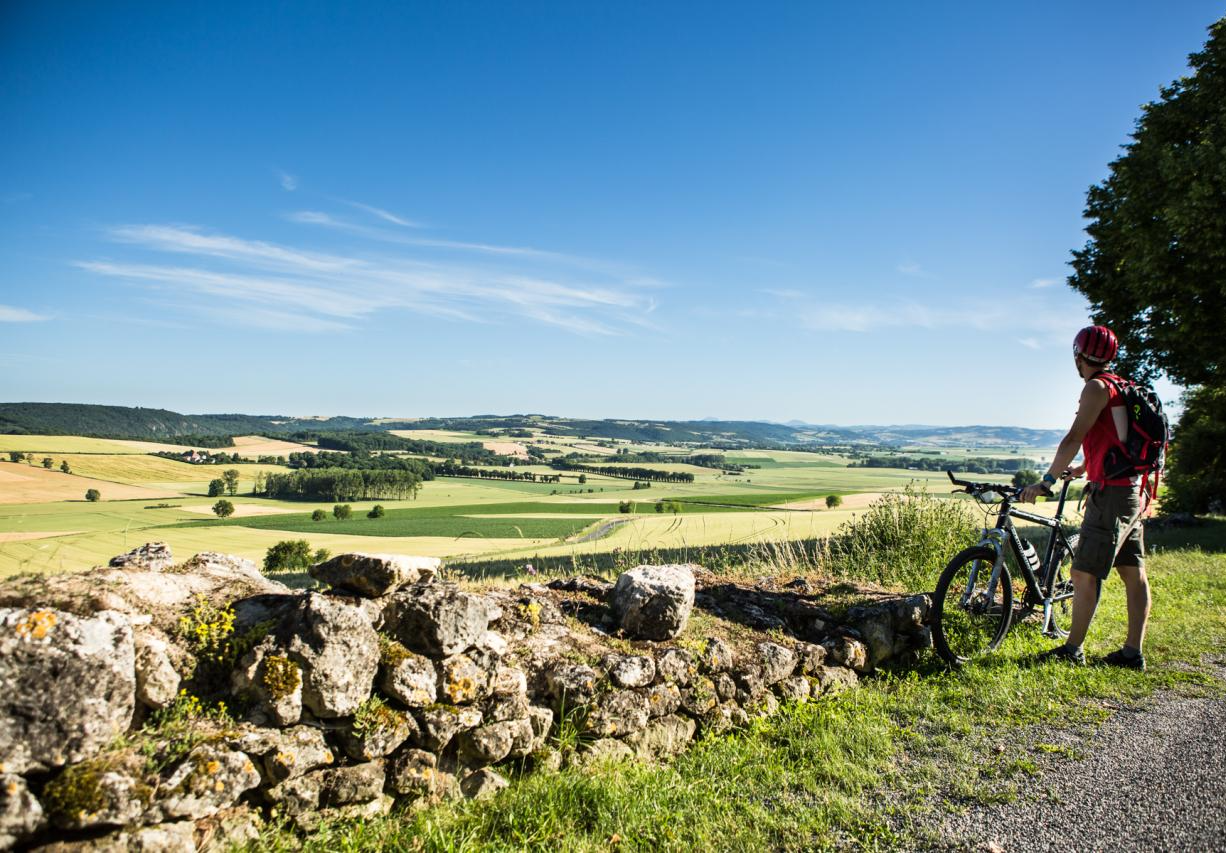
The Grande traversée du Massif Central by gravel bike
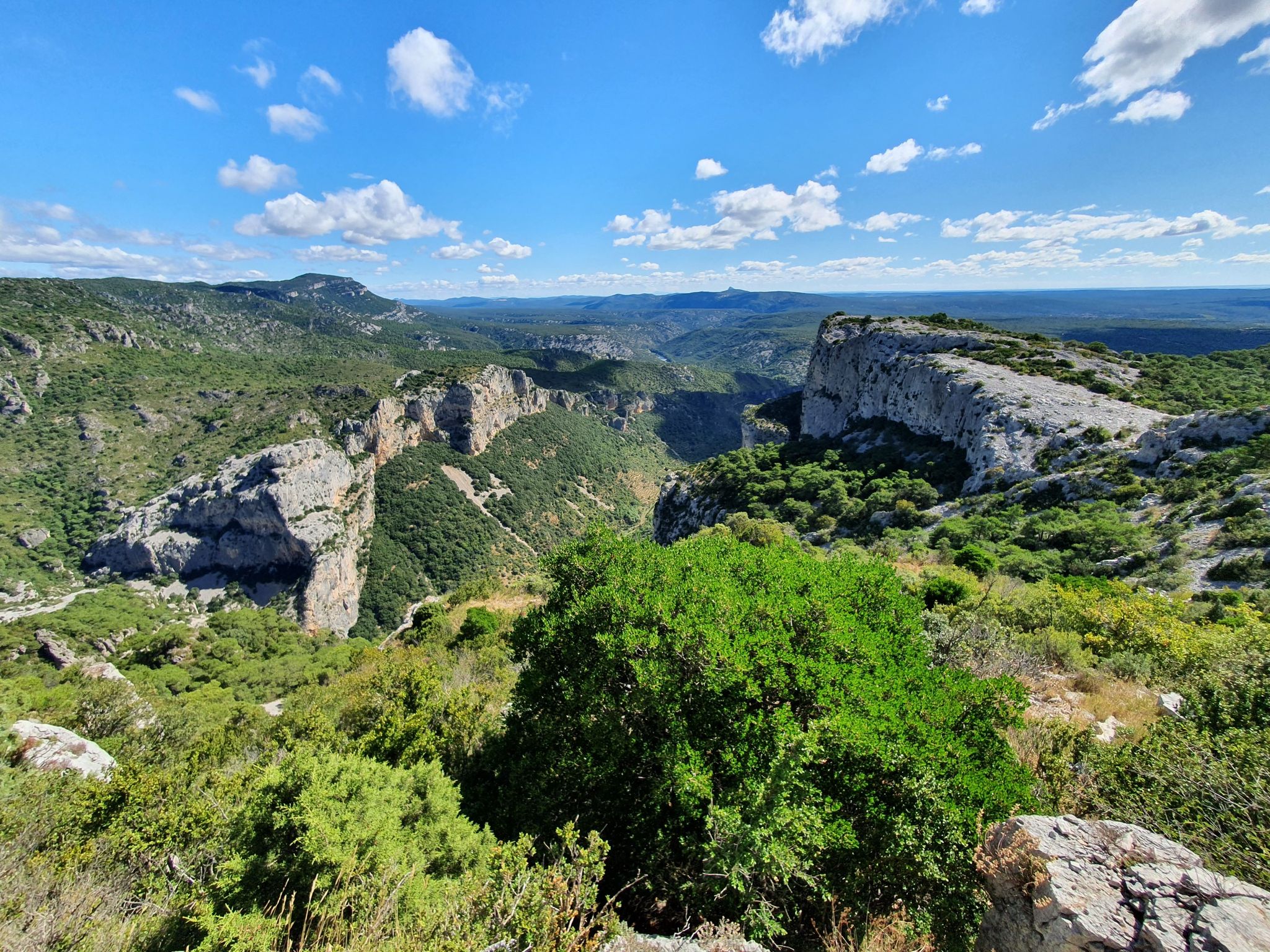
On the way to Compostela – Via Tolosana (Arles Way)
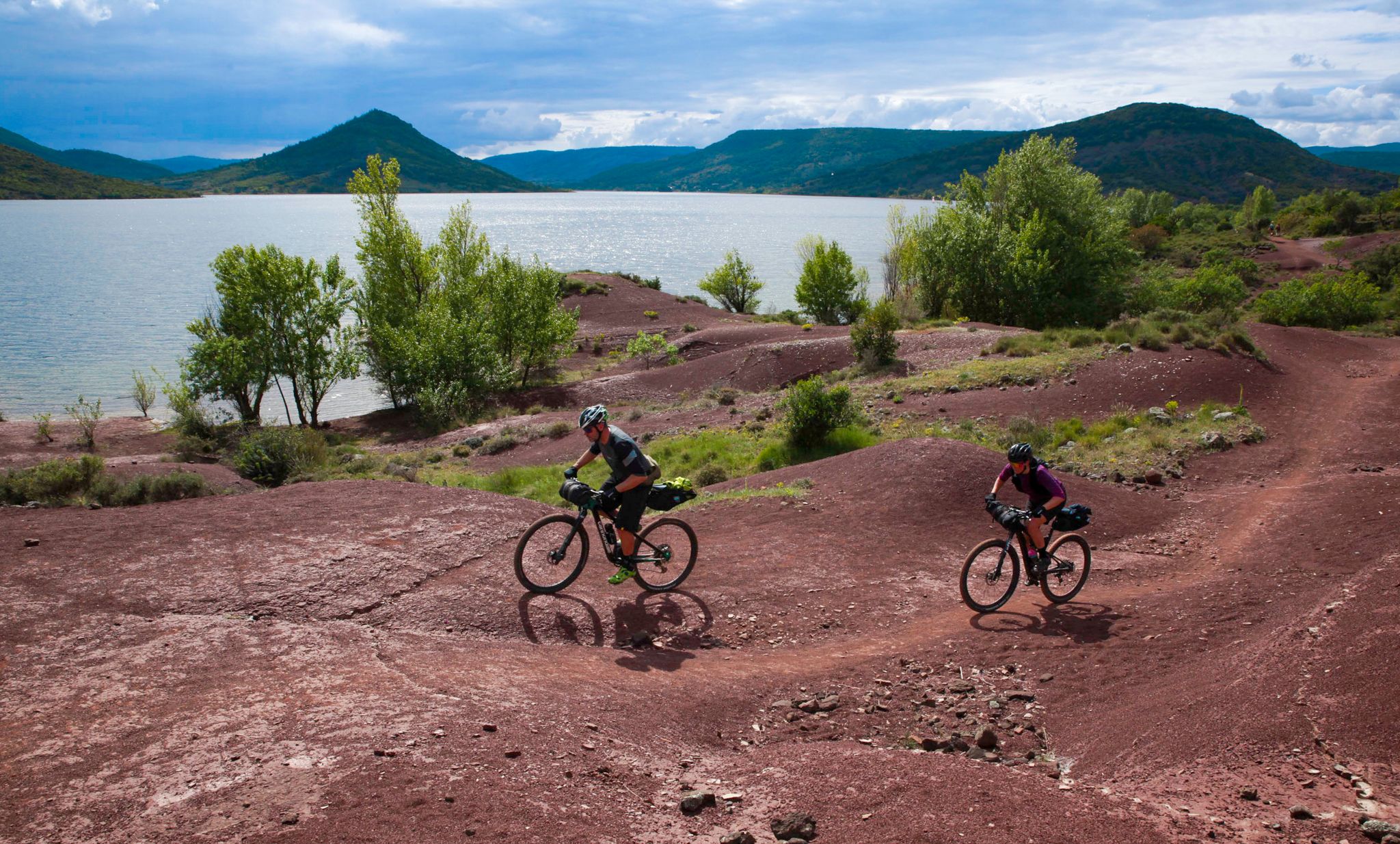
The Great Crossing of France's Massif Central by mountain bike

Road Cycling Routes around Lunas

MTB Trails around Lunas

Gravel biking around Lunas

Cycling around Lunas

Hiking around Lunas

Running Trails around Lunas
Other adventures around Lunas


Tips from the Community

Located in the Hauts Cantons of the Hérault, at the confluence of the Gravezon, Nize, and Dourdou rivers, Lunas is a charming village that combines history and a gentle way of life. Dominated by the Redondel rock, a former fortified site, it reveals pretty streets, a 17th-century castle, and the Saint-Pancrace church, whose origins date back to the 12th century. Don't miss the Notre-Dame-de-Nize chapel and its famous Fontaine des Yeux (Eyes Fountain), nestled in a peaceful natural setting.
0
0
The castle overlooks Pézènes-les-Mines from the upper part of the village. This castle is private, but its facades, roofs, and enclosure have been protected as historical monuments since 1981. Its history is ancient, but the ensemble we see today is the result of several construction and transformation campaigns. The Romanesque chapel, integrated into the castle, dates back to the 12th century. Its apse was later raised in the 14th century to take on a defensive function. The castle itself underwent significant alterations in the 14th, 16th, and 17th centuries. Two gates were notably built into the enclosure in the 17th century. The defensive elements are still very legible: two gates with arrow slits controlled access to the courtyard and were once protected by a drawbridge. Two towers flank the ensemble, while the enclosure follows the natural irregularities of the terrain. The chapel also retains a rather remarkable detail: its door and some of its bays are decorated with basalt inlays, giving the building a discreet but original polychromy. Pézènes-les-Mines was not always the small village one might imagine today. Pézènes was the capital of a marquisate that grouped the communities of Pézènes, Montesquieu, and Valmascle. The castle was therefore at the heart of a larger seigneurial territory. Little-known information: A plan from 1800 shows that behind the castle stretched a long terrace of about 270 meters, arranged as a garden, promenade, and belvedere overlooking the Peyne valley.
2
0
At first glance, three towers standing against the wind are particularly noticeable. However, this site is much more than a viewpoint. The windmills of Faugères were built in the 16th century, at a time when cereals still occupied an essential place in the local economy. Their location is probably no accident: according to tradition and local heritage studies, they were established on older towers, probably of Gallo-Roman origin, which already occupied this strategic position. Already noted in ruins on the Cassini map of 1777, the mills briefly regained their activity thanks to the Rivière brothers from 1829, before being abandoned again. It was not until the 1990s that an ambitious restoration brought the site back to life. Since 1998, one of the mills has been operating again with a traditional mechanism and 19th-century millstones. From the orientation table, the view extends 360° over the Faugères vineyards, the Mediterranean, the Cévennes, the Lozère, and, on a clear day, as far as the Pyrenees.
2
0
From the D8E13 bridge, the viewpoint offers a beautiful postcard of Avène and the Orb.
3
0

Magnificent terrain, it's fun on gravel, and surely even more so on a mountain bike! Plus the scenery is too beautiful!!
0
0

This tiny and peaceful village, with a worldwide reputation for the benefits of its water, is a perfect location for hikers and gravel enthusiasts. You have many options of loops from there. Enjoy!
0
0

The bucolic charm of the places and the banks of the Orb is striking. The economy of Avène has always been based on significant mining activity that began under Roman rule and continued until 1954, when the Rabasse mines closed. Created in 1962 for hydroelectric production and regulation of the Orb, the Lac des Monts d'Orb (or Lac d'Avène) is 6 kilometres long and covers an area of 190 hectares. An old lead and silver mine is now submerged under the lake: the mines and their exploitation were a source of wealth for the Orb valley, from Antiquity until the 1950s. Today, it is above all nature that provides Avène with one of its benefits: water from the depths of the Languedoc earth. This water that has been shaping a destiny for two and a half centuries, a vocation inspired by Thermalism. It is impossible not to go to the Thermal Baths, a stone's throw south of the village (the markings of the Sentier des 2 Lacs allow you to reach the site on foot, and the connection is pretty!). The Thermal Baths site is peaceful, relaxing... like the range of well-being and beauty products from the Avène brand. Beyond the thermal area, there is a magnificent hotel and an excellent restaurant! The establishment is committed to a truly eco-responsible approach: use of local products, innovative and energy-efficient architectural and technical choices...
1
0
A charming village nestled at the confluence of the Gravezon, the Nize and the Dourdou! The history of Lunas dates back to the Roman road that linked the lower Languedoc to Rouergue. Surely succeeding a Gallo-Roman oppidium, the Lunarenses castrum is mentioned as early as 806 in a charter of the Gélone abbey (that of Saint-Guilhem-le-Désert). The town is dominated by the Redondel rock, an ancient fortified castle belonging to the baron of Faugères, Viscount of Béziers. Razed in 1627, it was rebuilt on the banks of the Gravezon in 1641 by Henry de Narbonne. A true summary of the history of Languedoc, and a very pleasant cultural, refreshing and gastronomic stopover… A small detour to enjoy the leisure center of Prades, and a break on the site of the Saint-Georges chapel are essential in Lunas
2
0
Frequently Asked Questions
What natural features can I explore around Lunas?
The region around Lunas offers diverse natural landscapes. You can discover The Red Lands of Salagou, known for its distinctive red earth and gravel paths. Another highlight is Avène, spa town, situated within a protected natural area with thermal waters and a blend of Mediterranean and oceanic climates. The area also features the artificial lake created by the Monts d'Orb Dam.
Are there historical sites or settlements to visit near Lunas?
Yes, the village of Lunas itself is a picturesque settlement with a rich history dating back to 909, featuring a rebuilt castle and being part of the routes to Santiago de Compostela. Additionally, Avène, spa town, while known for its thermal waters, also has historical significance as a settlement.
What kind of trails can I find for cycling or hiking near Lunas?
The area boasts scenic trails for various activities. You can explore Faugères – Bédarieux via the D13E8, a segment of the Véloccitanie route that winds through deep forests and vineyards. The protected natural area around Avène, spa town, also serves as an ideal starting point for numerous hikes and bike rides. For more specific routes, check out the MTB Trails around Lunas, Road Cycling Routes around Lunas, and Running Trails around Lunas guides.
Are there family-friendly activities or attractions around Lunas?
Yes, Avène, spa town, is categorized as family-friendly, offering opportunities for boating or paddleboarding on the artificial lake, water levels permitting. The village of Lunas itself is a charming place to explore with family.
What do visitors enjoy most about the attractions around Lunas?
Visitors particularly appreciate the unique landscapes, such as the distinctive red earth of The Red Lands of Salagou. The charming villages like Lunas and Avène, with their historical character and natural surroundings, are also highly rated. Many enjoy the scenic routes for cycling and hiking, noting the deep forests, vineyards, and quiet roads that invite meditation.
Where can I find scenic viewpoints near Lunas?
Several attractions offer great viewpoints. The Red Lands of Salagou provides stunning views of the red earth landscape and the lake. Avène, spa town, and the Monts d'Orb Dam also offer picturesque vistas, with the dam providing a striking view of the water reservoir and the surrounding area.
Are there opportunities for water activities near Lunas?
Yes, the artificial lake created by the Monts d'Orb Dam, also known as Lake Avène, is a privileged place for fishing. If water levels allow, you can also go boating or paddleboarding on the lake near Avène, spa town.
What is the significance of the Monts d'Orb Dam?
The Monts d'Orb Dam is an impressive 87-meter-high structure built in the early 1960s. It creates the Avène water reservoir, which is crucial for irrigating the surrounding plains and supplying drinking water to parts of the Aude and Hérault departments. Its 'arch-dam' type architecture makes it a notable landmark.
Can I find routes suitable for road cycling around Lunas?
Absolutely. The region is well-suited for road cycling. One notable route is Faugères – Bédarieux via the D13E8, which is part of the Véloccitanie. For more options, you can explore the Road Cycling Routes around Lunas guide, which includes routes like the '360° view of Lake Salagou' loop and the 'Lunas – Cemetery water fountain' loop.
What kind of terrain can I expect on trails like The Red Lands of Salagou?
On trails like The Red Lands of Salagou, you can expect gravel paths winding through distinctive red earth, colored by iron oxide. Some sections might be rocky, making them more suitable for experienced mountain bikers, as noted by visitors.
Is Lunas a good base for outdoor activities?
Yes, Lunas is considered a 'green station' and offers good connections, including a railway station, making it a convenient starting point for exploring the surrounding natural landscapes and trails. Its central location allows access to various hiking, cycling, and running routes in the Haut-Languedoc regional natural park.

Get inspired with the komoot mobile app


Explore more
Still not found the Highlight you’re looking for? See guides of the top attractions in other regions:
